You turn on the kitchen light and see a small tan cockroach disappear behind the refrigerator. It may look like one isolated pest, but German cockroaches can multiply quickly once they find food, moisture, warmth, and narrow hiding places.
A single German cockroach egg case can contain roughly 30 to 40 eggs, according to the University of Florida Institute of Food and Agricultural Sciences. The female carries the case until shortly before the young hatch, which helps protect the next generation while much of the infestation stays hidden.
German cockroaches are common indoor pests in Michigan homes, apartments, restaurants, and other buildings. They often arrive in bags, boxes, packages, used appliances, or personal belongings. Once they reach a kitchen in Kalamazoo, Grand Rapids, or another nearby community, they can settle behind appliances and inside cabinet gaps before you realize how much activity is present.
Why German Cockroaches Multiply So Fast
German cockroach reproduction gives these pests a strong advantage indoors. One female can produce several egg cases during her adult life, and each case holds many developing young. Because she carries the case until close to hatching, the eggs remain with a mobile adult instead of sitting exposed in one place for an extended period.
The speed of a German cockroach infestation also depends on the environment. A kitchen can provide everything adults and nymphs need within a few feet. Warm appliances, moisture near plumbing, food residue, cardboard, and tight cracks allow different life stages to remain close together while avoiding open areas.
Each Egg Case Holds Many Young
The German cockroach egg case is a small capsule that commonly contains about 30 to 40 eggs. Not every egg will survive, but the number explains why an infestation can become established before you begin seeing cockroaches regularly.
German cockroach nymphs are an especially meaningful sign. Nymphs are immature cockroaches, so seeing them in a kitchen indicates that eggs have already hatched indoors. They may be smaller and darker than the adults, which makes them easy to mistake for another insect when they move quickly along cabinet edges or behind appliances.
The Kitchen Supports the Entire Life Cycle
German cockroaches do not need a large amount of food. Grease beneath a stove, crumbs under a refrigerator, residue around a trash container, pet food, spills inside cabinets, and food particles trapped in appliance gaps can support ongoing activity.
Moisture matters just as much. A slow plumbing leak, condensation near an appliance, water under the sink, or a damp sponge can provide a dependable source. When food, water, warmth, and shelter remain available in the same room, adults and nymphs can stay hidden close to the resources they need.
How German Cockroaches Reach Your Kitchen
German cockroaches often enter buildings by hitchhiking. They may arrive in grocery bags, cardboard boxes, food packaging, returned bottles and cans, used appliances, or personal belongings. A clean, well-maintained kitchen can still develop a problem after one infested item enters the building.
Used refrigerators, microwaves, coffee makers, and other appliances deserve careful inspection before they come inside. Cockroaches can hide near motors, insulation, wiring spaces, and food residue inside appliance housings. Cardboard boxes also provide narrow folds and seams where cockroaches or egg cases can remain concealed during transport.
In apartments, duplexes, and other connected buildings, German cockroaches may move through gaps around pipes, utility openings, shared walls, and cabinet voids. This movement can make control more difficult because the visible activity in one kitchen may be connected to hiding areas elsewhere in the structure.
An infestation does not prove that a home is dirty. Sanitation affects how easily cockroaches can feed and remain, but the first introduction may come from a package, delivery, visitor’s belongings, or secondhand item.
Where German Cockroaches Hide While the Population Grows
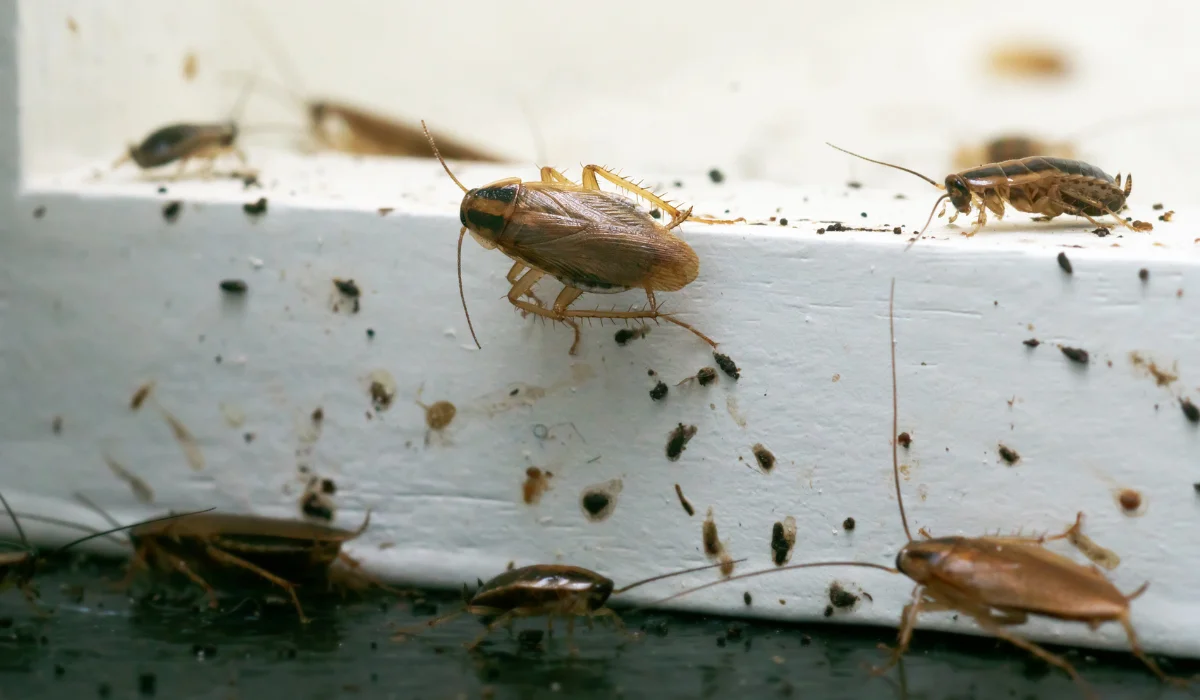
Adult German cockroaches are usually light brown or tan and measure about one-half to five-eighths of an inch long. Two dark parallel stripes appear behind the head. Their small size and flat bodies allow them to fit into narrow spaces that are difficult to inspect during routine cleaning.
Most of a German cockroach infestation stays concealed. You may see one adult cross the counter while egg-carrying females, nymphs, and other adults remain inside cabinet gaps or behind the refrigerator. The cockroaches you see in open areas rarely represent the full extent of the problem.
Appliances and Cabinets
Roaches behind a refrigerator often stay near the motor area, where warmth and food debris may collect. Other common hiding places include stove gaps, dishwasher spaces, cabinet hinges, drawer tracks, countertop seams, and openings where cabinets meet the wall.
Small appliances can also support activity when crumbs, grease, or moisture accumulate inside them. Coffee makers, microwaves, toasters, and similar equipment may offer warmth and protected interior spaces. Avoid taking apart electrical equipment unless you can do so safely and according to the manufacturer’s instructions.
Sinks and Plumbing Openings
Roaches under the kitchen sink may hide around pipe penetrations, damp cabinet bases, loose trim, and wall gaps. Even a minor leak can provide enough water to support continued activity.
Check these areas for dark droppings, shed skins, egg cases, and small nymphs. Sealing gaps can reduce movement, but it works best as part of a broader control plan. Closing one route without locating the main hiding areas may simply redirect the cockroaches into another cabinet, wall space, or room.
Signs of a German Cockroach Infestation
One adult near a recently opened package may represent a new introduction. Repeated sightings, nymphs, egg cases, and droppings in several locations provide stronger evidence that German cockroaches are reproducing indoors.
German cockroach droppings often resemble black pepper or dark coffee grounds. You may find them in cabinet corners, drawer tracks, appliance gaps, wall junctions, and other travel areas. Shed skins show that nymphs are growing nearby, while an egg case indicates that another group of young may be developing or preparing to hatch.
| Sign | What It May Indicate |
|---|---|
| One adult near a box or delivery | A recent introduction may have occurred |
| Small nymphs in cabinets or near appliances | Reproduction is taking place indoors |
| Egg cases in protected gaps | A developing population is nearby |
| Droppings in several cabinet areas | Cockroaches are using multiple hiding or travel routes |
| Repeated daytime sightings | Hiding areas may be crowded or activity may be widespread |
| Musty or oily odor | The infestation may be more established |
Cockroach debris can also affect indoor air quality. A New England Journal of Medicine study on cockroach allergen exposure found greater asthma-related illness among children who were both sensitized and exposed to elevated cockroach allergens. This finding does not mean every infestation causes asthma, but it supports taking droppings, shed skins, and long-term activity seriously.
Why Common DIY Responses Miss German Cockroaches
Killing the cockroach you see does not reach nymphs inside cabinet gaps, females behind appliances, or egg cases in protected spaces. Effective German cockroach control must address the hidden population rather than the occasional adult moving across an open surface.
Foggers are a poor fit for cockroaches that spend most of their time inside cracks, appliance spaces, and wall voids. The released material may not reach those sheltered areas. Broad repellent applications can also cause cockroaches to move deeper into the structure or spread into nearby rooms.
Random trap placement provides limited information. Monitoring traps work best near suspected hiding and travel areas, such as behind appliances, beneath sinks, and along cabinet edges. Their purpose is not just to catch cockroaches. They also help show where activity is concentrated and whether the population is declining.
Cleaning remains part of the solution, but sanitation alone rarely removes an established German cockroach infestation. A spotless counter does not eliminate hidden egg cases, damp cabinet voids, appliance harborages, or activity inside connected walls.
What Effective German Cockroach Control Requires
Effective control combines correct identification, detailed inspection, monitoring, food and moisture reduction, targeted baiting, growth control, and follow-up. Each part addresses a different weakness in the infestation.
Inspection and Monitoring
The first step is confirming that the pest is a German cockroach rather than an outdoor species that wandered inside. A technician then checks appliances, cabinets, plumbing openings, wall junctions, storage areas, and other likely hiding places.
Monitoring traps help identify concentrated activity and measure progress after service begins. A trap behind the refrigerator may show much heavier activity than one beneath the sink, which helps guide where control materials and follow-up inspections should focus.
Food and Moisture Reduction
Store food in sealed containers, remove trash regularly, clean beneath appliances, and avoid leaving pet food out overnight. Repair plumbing leaks, dry damp cabinet areas, and remove unnecessary cardboard from the kitchen and nearby storage spaces.
These steps reduce competing food and water sources. They also make the kitchen less supportive of continued reproduction and help targeted baits work more effectively.
Baiting, Growth Control, and Follow-Up
The University of California Statewide Integrated Pest Management Program supports an approach based on inspection, sanitation, monitoring, exclusion, and properly placed baits. German cockroach treatment may also include an insect growth regulator to interfere with development and slow successful reproduction.
Pest Pros of Michigan follows a structured process that includes inspection, sanitation recommendations, gel bait, growth control, targeted treatment of hiding areas, monitoring, and follow-up. The initial German cockroach service includes a two-week follow-up, with further service considered when the technician finds that activity remains.
Making the Right German Cockroach Control Choice for Your Michigan Kitchen
German cockroaches multiply quickly because each egg case contains many young, and a kitchen can support the full life cycle within a small area. Most of the population may remain hidden behind appliances, inside cabinets, and around plumbing while you see only an occasional adult.
Early action helps limit how far the infestation spreads. Nymphs, egg cases, repeated droppings, or ongoing sightings indicate that removing visible cockroaches is not enough. A complete inspection can locate concentrated activity, identify food and moisture sources, and guide treatment toward the areas where cockroaches are actually living.
Pest Pros of Michigan provides German cockroach control for homes and businesses in Kalamazoo, Grand Rapids, and surrounding communities. To schedule an inspection or discuss recurring kitchen activity, contact Pest Pros of Michigan for a treatment plan built around identification, monitoring, and follow-up.

 Serving Michigan since 2018
 Pest-free guarantee
 Small, local business
 10+ years of pest control experience
 President and CEO of Pest Pros of Michigan
 Resident of Michigan