Yes, German cockroaches live in Michigan year-round. They survive inside heated homes, apartments, restaurants, and other buildings, with kitchens and bathrooms among the places where infestations commonly develop. These roaches often hitchhike indoors on grocery bags, packaging, returnable containers, or belongings from an infested location, and they can move between connected units. Their small size, fast reproduction, and tendency to hide make early identification especially useful.
Are German Cockroaches Common in Michigan?
German cockroaches, Blattella germanica, are one of several cockroach species found in Michigan. Pest Pros encounters them in Southwest Lower Michigan, where they are primarily an indoor pest associated with kitchens and bathrooms.
Cold weather does not solve an infestation inside a heated building. Indoor winter cockroach activity can continue as long as the population has access to food, moisture, warmth, and shelter.
A German cockroach seen in January is therefore more likely to be part of an indoor population than a roach that recently crossed a frozen yard. Once these insects establish themselves inside a home, apartment building, restaurant, or other heated structure, the problem can persist through every season.
Why Kitchens and Bathrooms Are Common Problem Areas
Kitchens concentrate several things German cockroaches need in a small area. Crumbs, food residue, garbage, water near sinks, and narrow spaces around cabinets and appliances can support an indoor population.
Bathrooms provide moisture and hiding areas around plumbing. If small tan roaches repeatedly appear in either room, check for droppings, egg cases, shed skins, and additional activity in nearby concealed areas.
How Do German Cockroaches Get Into Michigan Homes?
German cockroaches are hitchhikers. Unlike some outdoor pests, they do not have to crawl across the yard and enter through a foundation gap. They can be carried directly into the building with items that have been stored or handled where cockroaches were already present.
Grocery bags, packaging, returnable bottles or cans, and other belongings can bring roaches indoors. Once inside, they can leave the item that transported them and settle near food, moisture, and hiding spaces.
A clean home can still develop a German cockroach infestation this way. Sanitation affects how well the population can survive after arrival, but it cannot prevent every hitchhiking introduction.
Apartments and Shared Buildings Add More Pathways
Apartments and other multi-unit buildings create another challenge. Cockroaches can move from neighboring units through walls, plumbing routes, and vents.
That means one resident may continue seeing roaches even after keeping food sealed, cleaning thoroughly, and fixing moisture problems inside the unit. The source may be elsewhere in the building or spread across several connected spaces.
Recurring activity in an apartment should therefore be evaluated beyond the room where the roaches are visible. Identifying how they are moving through the structure can be just as important as finding where they are hiding.
What Do German Cockroaches Look Like?
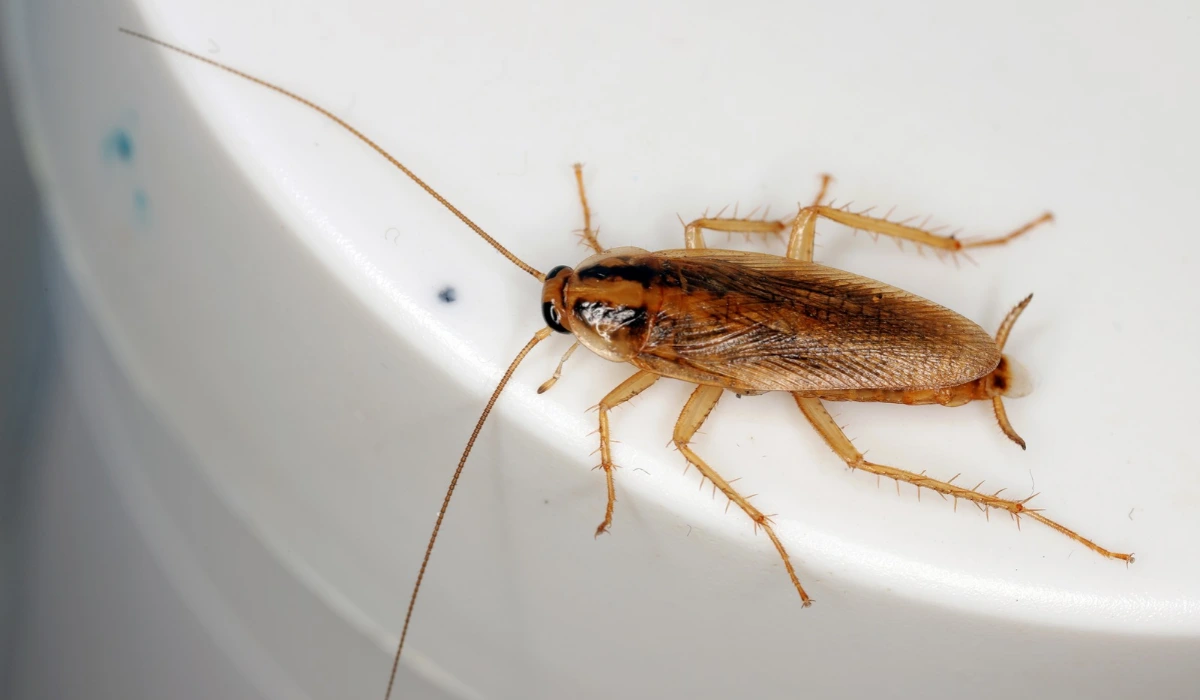
German cockroaches are small, light brown to tan insects. Adults measure about 1/2 to 5/8 inch long, and their clearest identification feature is a pair of dark stripes directly behind the head.
Those stripes are more reliable than color alone. Several cockroach species can look brown or tan, especially when the insect is moving quickly.
German cockroaches have wings but rarely fly. Inside a home, you are more likely to see them run across a floor, counter, cabinet, or other surface before disappearing into a narrow hiding place.
German Cockroaches vs. Asian Cockroaches
Asian cockroaches can look very similar to German cockroaches, but their behavior and usual habitat provide useful differences.
| Trait | German Cockroach | Asian Cockroach |
| Typical setting | Primarily indoors, especially kitchens and bathrooms | Primarily outdoors in lawns, wooded areas, and mulch |
| General color | Light brown to tan | Light brown to tan |
| Markings | Two dark stripes behind the head | Similar dark markings behind the head |
| Flight | Has wings but rarely flies | Strong flier |
| Light response | Not a primary identification clue | Strongly attracted to light |
Because their appearance overlaps, where you found the roach and how it behaved can help narrow down the identification. This distinction matters because German cockroaches require a more involved indoor control approach than an occasional outdoor species.
What Are the Signs of German Cockroaches?
Repeated sightings are an obvious warning, but German cockroaches leave other evidence behind. Droppings, egg cases, shed skins, and odor can reveal an infestation even when few live roaches are visible.
These signs often collect near the places roaches hide and travel, including cabinets, concealed edges, and areas around appliances. Finding several signs in the same area gives you a better indication that a population is established nearby.
Small, Dark Droppings
Cockroach droppings can resemble black pepper or coffee grounds. They may collect inside cabinets, in corners, or along routes the roaches repeatedly use.
After cleaning the area, watch for new droppings. Fresh material appearing in the same place is a practical sign that cockroaches are still active nearby.
Egg Cases and Shed Skins
Cockroach egg cases are called oothecae. Finding them in hidden areas points to reproduction inside the building rather than a single roach passing through.
Young cockroaches also shed their outer covering as they develop. Shed skins found alongside droppings or repeated sightings give you more evidence that the population includes developing roaches.
A Musty or Oily Odor
Larger infestations can produce a noticeable musty or oily odor, particularly in enclosed areas where activity is concentrated.
Odor alone cannot identify the species. When it appears with droppings, egg cases, shed skins, or repeated sightings, it adds to the evidence of an established infestation.
Why Do German Cockroach Infestations Grow So Quickly?
German cockroaches reproduce quickly when food, moisture, warmth, and shelter are readily available. Much of that reproduction happens out of sight, which is why a population can expand before the number of visible roaches seems serious.
Because German cockroaches can multiply quickly once they reach a kitchen, killing one visible adult does little to address egg cases, younger roaches, or insects hidden nearby.
Pest Pros uses an insect growth regulator, or IGR, as part of its German cockroach approach to help slow reproduction. Baiting, sanitation, monitoring, and follow-up address other parts of the infestation rather than relying on one method.
Monitoring Tells You More Than Occasional Sightings
Sticky monitoring traps help show where cockroaches are active and whether that activity changes after service. They can also reveal areas that still need attention even when roaches are no longer crossing open surfaces as often.
Control is better judged by a sustained lack of new sightings, fresh droppings, egg cases, shed skins, and trap activity. One or two quiet days do not provide the same information.
Are German Cockroaches a Health Concern?
Cockroaches can move through garbage, food debris, and damp areas before crossing counters, cabinets, food-storage spaces, and other indoor surfaces. That makes an active infestation in a kitchen, restaurant, or food-handling area more than a cosmetic problem.
Cockroach droppings and shed material can also contribute to allergy and asthma problems, especially for sensitive individuals. Keeping an infestation from expanding reduces the amount of this material accumulating indoors.
The most useful response is to address the population and the conditions supporting it. Food-area contamination, indoor allergens, and continued cockroach activity in occupied spaces are practical reasons to take an infestation seriously.
Sanitation Supports German Cockroach Control
Store food in sealed containers, clean crumbs and spills promptly, wash dishes regularly, and keep garbage from becoming a steady food source. Pet food should also be stored and managed carefully.
Repair leaking plumbing and remove standing water where possible. Reducing clutter can eliminate hiding places and make inspection easier.
Sanitation improves the environment for control, but it may not eliminate an established German cockroach population by itself. Roaches can remain in narrow, concealed spaces that routine cleaning does not reach.
Why Store-Bought Sprays Often Fall Short
A store-bought spray may kill the roach crossing the counter without reaching the insects hidden nearby. German cockroaches commonly remain in cracks, voids, cabinets, and areas around appliances.
Some sprays may push surviving cockroaches deeper into hiding, making the population harder to track. Total-release foggers, often called bug bombs, also have difficulty reaching the cracks and crevices where cockroaches spend much of their time and may scatter the infestation.
That is why fewer visible roaches after a DIY treatment do not necessarily mean the population has been eliminated. Effective German cockroach control has to account for hiding areas, reproduction, food and moisture sources, and what remains active after the first treatment.
Why German Cockroach Service Uses Several Steps
Professional service starts with species identification and inspection. A technician needs to know where the roaches are concentrated, how far activity has spread, and which conditions are helping the population persist.
Pest Pros may use gel bait and an IGR as part of German cockroach service, along with targeted treatment of hiding areas and sticky monitoring. Homeowner preparation and sanitation reduce available food, moisture, and shelter.
Follow-up matters because German cockroach infestations vary in size and location. Monitoring shows whether activity is dropping and where additional attention may be needed.
When Should Michigan Homeowners Schedule an Inspection?
A small tan cockroach with two dark stripes behind the head is worth identifying, particularly if you see more than one. Droppings, egg cases, shed skins, odor, or repeated sightings make an established indoor population more likely.
Consider scheduling an inspection if:
- Small roaches repeatedly appear in the kitchen or bathroom.
- Droppings return after an area has been cleaned.
- You find egg cases or shed skins.
- Roaches are showing up in more than one room.
- Activity continues after DIY treatment.
- You live in an apartment or another connected building where roaches may be moving between units.
An inspection can confirm the species, identify the areas with the most activity, and determine whether the problem is limited to one location or has spread farther through the structure.
What to Expect From German Cockroach Service
Pest Pros of Michigan begins by identifying the cockroach species and inspecting the areas where activity is occurring. Preparation may include clearing cabinets or pantry areas when requested, removing food and dishes from countertops, fixing plumbing leaks, and cleaning areas where droppings have accumulated.
Service can include gel bait, an IGR, targeted treatment of hiding areas, sticky monitoring, and follow-up based on the amount of activity present.
The goal is to address the indoor population behind the sightings, not simply the individual roaches crossing an open surface.
Getting German Cockroaches Under Control in Michigan
German cockroaches are a year-round indoor pest in Michigan. They can hitchhike into buildings, move through connected units, reproduce quickly, and stay hidden in areas that are easy to overlook.
The two dark stripes behind the head are an important identification clue. Repeated sightings, droppings, egg cases, shed skins, and odor provide stronger evidence that the population extends beyond the roaches you happen to see.
If German cockroaches are showing up in your Kalamazoo or Grand Rapids area home or business, Pest Pros of Michigan can identify the species and determine how widespread the activity is. Contact Pest Pros of Michigan to schedule an inspection and discuss the next step for your property.

 Serving Michigan since 2018
 Pest-free guarantee
 Small, local business