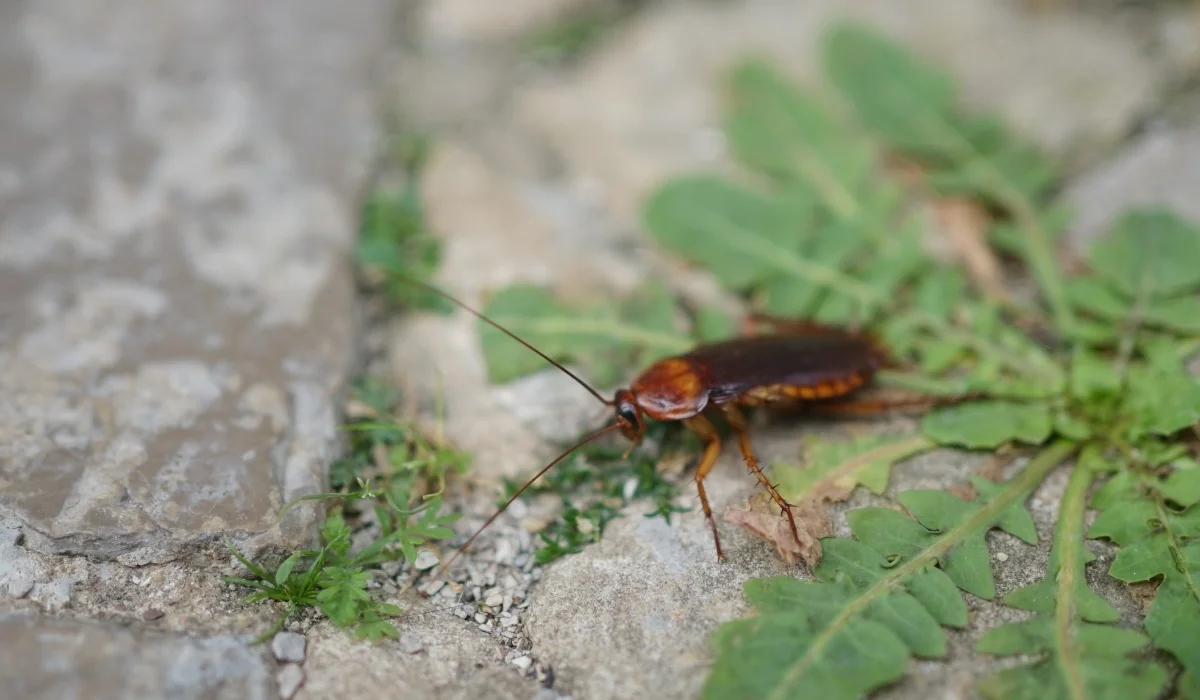
Michigan homeowners are most likely to encounter a few distinct cockroach types, and each has its own look. German cockroaches are small and tan with two dark stripes behind the head, while American cockroaches are much larger and reddish brown. Oriental cockroaches are darker, and wood cockroaches are more closely tied to outdoor areas.
If you are trying to identify what cockroaches look like in Michigan, this guide will help you compare size, markings, habitat, and other clues. You will also learn which species are more likely to reproduce indoors and which ones may have simply wandered in from outside.
What Do Cockroaches Look Like in Michigan Homes?
Most cockroaches have a flattened oval body, six spiny legs, long antennae, and a firm plate directly behind the head. Many adults have wings, although some species rarely fly and others use flight much more readily.
Among the common cockroaches in Michigan, adult size can range from around half an inch to nearly two inches. Young cockroaches, called nymphs, are smaller and do not yet have fully developed wings. Their markings can also look different as they grow.
The question “what do cockroaches look like in Michigan?” is best answered by comparing several traits at the same time. The table below gives you a practical starting point.
| Cockroach | Approximate Adult Size | Color and Main Markings | Common Location |
| German cockroach | 1/2 to 5/8 inch | Tan to light brown with two dark stripes behind the head | Kitchens, bathrooms, appliances |
| American cockroach | 1 1/4 to about 2 inches | Reddish brown with a pale border behind the head | Basements, utility spaces, drains |
| Oriental cockroach | 3/4 to 1 1/4 inches | Dark brown to nearly black | Damp basements, crawl spaces, drains |
| Brown-banded cockroach | About 1/2 inch | Brown with pale bands across the body or wings | Bedrooms, furniture, cabinets |
| Pennsylvania wood cockroach | Roughly 3/4 to 1 inch, depending on sex | Brown, with longer wings on males | Wooded areas, firewood, exterior walls |
These measurements are useful guides rather than rigid cutoffs. Sex and age affect body size, so markings and habitat should carry just as much weight. The University of Minnesota Extension also uses size, color, markings, and preferred habitat to distinguish household species.
Common Types of Cockroaches in Michigan
Michigan cockroaches, sorted by what to do
Not every cockroach sighting means the same thing — some species reproduce indoors in kitchens, bathrooms, and basements, while others are outdoor insects that simply wandered in. Here is how to tell Michigan’s common cockroaches apart and how much each one calls for action.
German Cockroach
Reproduces indoorsSmall and tan to light brown, with two dark parallel stripes running lengthwise directly behind the head.
Where Kitchens, bathrooms, appliances, and cabinet hinges.
Brown-Banded Cockroach
Reproduces indoorsClose in size to the German cockroach, but marked with pale bands across the body or wings instead of stripes behind the head.
Where Bedrooms, furniture, cabinets, shelving, and electronics.
American Cockroach
Humid spacesMuch larger than German or brown-banded roaches, reddish brown with a lighter, pale border behind the head and fully developed wings.
Where Basements, utility spaces, plumbing systems, and floor drains.
Oriental Cockroach
Damp basementsBroad, glossy, and dark brown to nearly black, darker than most other household species.
Where Damp basements, crawl spaces, floor drains, and moisture-prone utility rooms.
Pennsylvania Wood Cockroach
Outdoor visitorBrown, with longer wings on adult males, who can fly; does not normally establish indoor populations.
Where Wooded areas, leaf litter, bark, logs, and firewood.
The main types of cockroaches in Michigan do not all behave the same way. Some can live and reproduce inside buildings, while others are more closely tied to damp utility areas or outdoor environments.
That difference changes what a sighting means. A roach that thrives behind a refrigerator deserves more attention than an outdoor species that came in with firewood.
German Cockroaches
German cockroaches are small, tan to light brown insects. The clearest identifying feature is a pair of dark parallel stripes running lengthwise directly behind the head.
Kitchens and bathrooms give these roaches easy access to food, moisture, warmth, and narrow hiding spaces. Cabinet hinges, gaps around plumbing, areas beneath sinks, and spaces behind refrigerators or other appliances are common places to find them.
German cockroaches often arrive inside belongings rather than walking in from the yard. Boxes, grocery packaging, bags, used appliances, beverage containers, and similar items can move them from one building to another.
American Cockroaches
American cockroaches stand out because of their size. Adults can grow well beyond an inch, making them noticeably larger than German or brown-banded cockroaches.
Their bodies are reddish brown, with a lighter yellowish area around the shield behind the head. Adults also have fully developed wings.
Indoors, American cockroaches are more closely associated with humid lower-level spaces, plumbing systems, utility rooms, floor drains, and some commercial food environments. A large roach near a basement drain fits this pattern better than a small tan roach hiding behind a countertop appliance.
Oriental Cockroaches
Oriental cockroaches have a darker appearance than most other household species. Their bodies are broad, glossy, and dark brown to nearly black.
They favor cooler, damp areas. Basements, crawl spaces, floor drains, utility rooms, and moisture-prone areas around plumbing are worth checking if you find one indoors.
Habitat can be just as useful as color during cockroach identification. A dark roach moving across a damp basement floor points in a different direction from a light brown roach clustered around a warm kitchen appliance.
Brown-Banded Cockroaches
Brown-banded cockroaches are close to German cockroaches in size, so homeowners can easily confuse the two. Their markings make the difference much clearer.
Brown-banded cockroaches have lighter bands running across the body or wings. German cockroaches have two dark stripes running lengthwise behind the head.
Brown-banded cockroaches also tolerate drier rooms. You may find them around furniture, bedrooms, cabinets, shelving, or electronics instead of only near sinks and plumbing.
| Feature | German Cockroach | Brown-Banded Cockroach |
| Main marking | Two dark stripes behind the head | Pale bands across the body or wings |
| Approximate size | 1/2 to 5/8 inch | About 1/2 inch |
| Common rooms | Kitchens and bathrooms | Bedrooms, living areas, cabinets |
| Moisture preference | Often stays near moisture | Handles drier areas better |
| Indoor reproduction | Yes | Yes |
Pennsylvania Wood Cockroaches
Pennsylvania wood cockroaches belong in a different category from the major indoor pest species. They normally live outside around trees, leaf litter, bark, logs, and firewood.
Adult males have long wings and can fly. Porch lights, open doors, and firewood can bring them close to homes, especially on wooded properties in Southwest Michigan.
Finding one near an exterior door does not carry the same meaning as finding several small roaches around a refrigerator. Wood cockroaches are outdoor insects and do not normally establish indoor populations.
Is It an Indoor Cockroach or an Outdoor Visitor?
When you are comparing Michigan cockroaches, the pattern around the sighting often tells you more than one insect does. Where you found it, whether you keep seeing more, and whether young roaches are present can help separate indoor activity from an accidental visitor.
Think about what happened before the sighting. A winged roach appearing shortly after you brought firewood indoors has a plausible outdoor route. Several small roaches showing up night after night in the same kitchen point toward a very different situation.
| What You Notice | What It May Suggest |
| Several small roaches near appliances | An indoor species such as German cockroaches |
| Adults and nymphs in the same room | Reproduction may be occurring nearby |
| Droppings and egg cases inside cabinets | Established indoor activity |
| Dark roaches around a damp basement drain | Conditions that suit Oriental cockroaches |
| One winged brown roach beside a door | Possible outdoor visitor |
| Activity after bringing in firewood | Wood cockroach is worth considering |
| Repeated sightings over several nights | More reason to inspect indoor hiding areas |
This is also why identification should include behavior and location, not just body color. A single brown insect can fit several species, but its surroundings often narrow the possibilities quickly.
What Other Signs Help Identify a Cockroach Infestation?
Signs of a cockroach infestation often appear before you get a clear look at an adult. Nymphs, egg cases, droppings, and shed skins can all show that cockroaches are spending time in a particular area.
Looking for several signs together is more useful than relying on one clue. A single dark speck tells you very little, while repeated sightings, droppings, and young roaches in the same cabinet deserve closer attention.
Nymphs and Egg Cases
Cockroach nymphs look like smaller versions of adults, but they do not have fully developed wings. If you are seeing both small and full-size roaches in the same indoor area, reproduction may be happening close by.
Cockroach eggs develop inside protective cases. German cockroaches reproduce efficiently because females carry the egg case until close to hatching. The University of Florida IFAS reports that a German cockroach egg case typically contains about 30 to 48 eggs.
That number gives useful context when you find several German cockroach nymphs. Multiple young roaches are stronger evidence of an indoor population than one adult that may have arrived in a box or bag.
Droppings and Shed Skins
Small cockroach droppings can resemble dark specks or black pepper. Larger species leave larger material, so the size of the droppings can sometimes add another clue.
Check cabinet corners, appliance gaps, plumbing areas, and other places where roaches can hide during the day. Nymphs also shed their outer covering as they grow, which can leave cast skins behind in active hiding areas.
Cockroach debris has a health connection as well. The U.S. Environmental Protection Agency (EPA) identifies cockroach body parts and droppings as asthma triggers for sensitive people.
Why Correct Cockroach Identification Matters
Different cockroach species use homes in different ways, so identification changes where you should look next. German cockroaches often stay close to kitchens and bathrooms, while Oriental cockroaches favor damp lower-level areas. Pennsylvania wood cockroaches usually point back outside.
The species can also change how you interpret a single sighting. One outdoor roach near a patio door does not mean the same thing as German cockroach nymphs showing up around an appliance.
Start with the room where you found the insect. Note its approximate size, check the markings, and look nearby for droppings, egg cases, or smaller roaches. If you can safely take a clear photo from above, that can make professional identification much easier.
You can also reduce the conditions that support indoor cockroaches while you investigate. Clean food debris from beneath appliances, repair plumbing leaks, keep food in sealed containers, and close gaps around pipes, doors, windows, and vents. Store firewood outdoors until you are ready to use it.
Getting the Right Cockroach Identification in Michigan
When you are trying to answer “what do cockroaches look like in Michigan?”, no single trait should decide the identification. A small tan roach with two dark stripes in a kitchen points toward German cockroaches. A nearly black roach in a damp basement or a flying brown roach near stored firewood points somewhere else.
The most reliable identification combines appearance, location, behavior, and evidence such as nymphs, egg cases, or droppings. That gives you a clearer picture of whether the insect belongs outside or whether cockroaches may be reproducing inside your home.
If you keep seeing cockroaches in a Kalamazoo, Grand Rapids, or Southwest Michigan property, Pest Pros of Michigan can identify the species and inspect the areas where activity is occurring. Once you know which cockroach you are dealing with, you can take the right next step instead of guessing.

 Serving Michigan since 2018
 Pest-free guarantee
 Small, local business