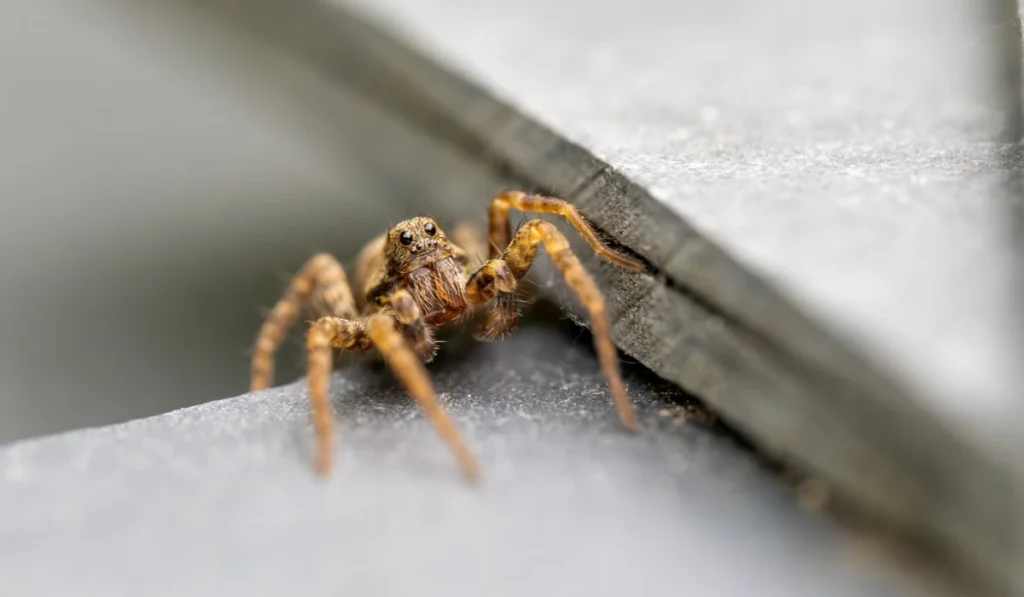
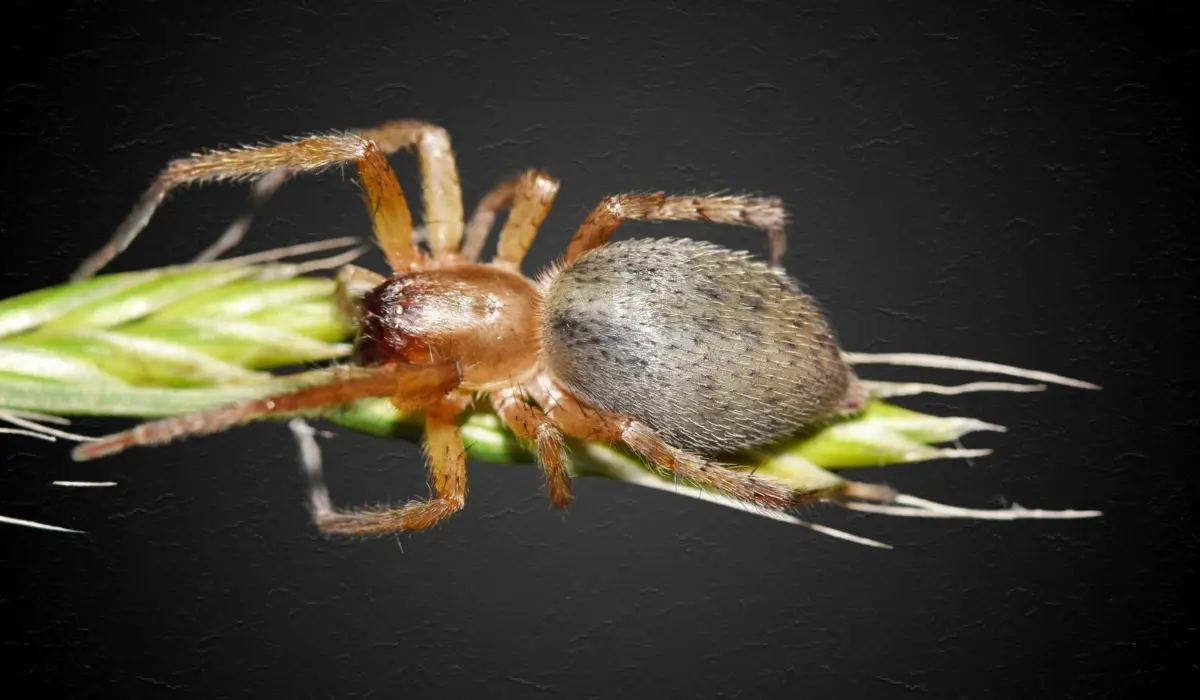
A Michigan sac spider found indoors is often a yellow sac spider, a pale yellow to beige hunter that moves around at night and rests in small silk retreats during inactive periods. Unlike spiders that sit in large prey-catching webs, yellow sac spiders roam across walls, ceilings, furniture, and other surfaces while hunting. Their silk retreats often appear in ceiling corners and wall-to-ceiling joints. They can bite if trapped against the skin, but their medical risk is frequently overstated.
How to Identify a Michigan Sac Spider
Yellow sac spiders belong to the genus Cheiracanthium. They are typically pale yellow, cream, beige, or light tan, with slender legs and relatively plain coloring. On light walls and ceilings, that appearance can make them easy to overlook.
Several spiders can look pale indoors, so color by itself is not a reliable identification method. Yellow sac spiders are wandering hunters rather than spiders that spend their time in the center of a large web. Their movement, the location where you find them, and the type of silk structure nearby provide better context.
The University of Minnesota Extension’s yellow sac spider information describes their pale appearance, wandering habits, and use of silken retreats. Taken together, those characteristics give homeowners a more useful identification profile than color alone.
Look for a Silk Retreat Instead of a Large Web
Yellow sac spiders use silk, but they do not depend on a large capture web to catch prey. Instead, they build small retreats where they rest during inactive periods.
Inside a home, those retreats may appear in:
- Ceiling corners
- Wall-to-ceiling joints
- Areas around trim
- Behind wall hangings
- Behind furniture or stored objects
- Other protected, low-disturbance locations
The silk may resemble a small pocket, tube, or patch attached to a surface. One retreat does not prove that many spiders are present. A single spider can make and use its own shelter.
Why Yellow Sac Spiders Show Up Indoors
Yellow sac spiders can move indoors through small openings around a house. Damaged screens, gaps around doors and windows, garage-door edges, utility penetrations, and openings near exterior trim are among the ways spiders get inside homes.
Homeowners may notice more spider activity around structures as temperatures change in fall and protected spaces become useful shelter. That does not mean every yellow sac spider follows a fixed seasonal migration. Indoor encounters can involve spiders already using protected areas around a building as well as individuals that wander through available gaps.
Food can keep them active once they are inside. Yellow sac spiders prey on small arthropods, so recurring insect activity gives hunting spiders more opportunities to remain in the same areas.
Why They Are Easier to Notice at Night
Yellow sac spiders are primarily active at night. During the day, one may remain inside a silk retreat and stay out of sight. After dark, it can leave that shelter and move across walls, ceilings, floors, or furniture while searching for prey.
This is why the spider itself may appear far from the silk retreat you found earlier. It is not anchored to a capture web.
During Michigan spider season, activity around homes can become more noticeable, especially where spiders have access to sheltered entry points and prey.
Why Yellow Sac Spiders End Up in Beds and Clothing
Yellow sac spiders do not need to be attracted to people to end up in bedrooms, bedding, towels, or clothing. Their hunting behavior regularly takes them across household surfaces.
A spider moving through a bedroom may cross a bed, curtain, laundry pile, piece of furniture, or clothing simply because it is moving through the room. Folds in fabric and other covered spaces can also give a wandering spider temporary shelter.
These encounters matter because a spider trapped between fabric and skin may bite defensively. Clothing or bedding can create that situation when a spider goes unnoticed.
Keeping clothing off the floor and reducing clutter around beds removes places where a roaming spider can remain hidden. Items left undisturbed in storage areas, basements, closets, or other locations with regular spider activity are also worth checking before use.
Are Michigan Sac Spider Bites Dangerous?
Yellow sac spiders can bite, but their medical risk is often exaggerated. Documented bites may involve localized pain, redness, or swelling. Those symptoms are not specific enough to identify the spider that caused them.
Skin infections, bites from other arthropods, and unrelated skin conditions can look similar. Without seeing and identifying the spider, assigning an unexplained lesion to a yellow sac spider is unreliable.
A 2006 peer-reviewed paper by Rick Vetter and colleagues examined verified bites from yellow sac spiders in the genus Cheiracanthium. The study, “Verified bites by yellow sac spiders (genus Cheiracanthium) in the United States and Australia: where is the necrosis?”, did not support the claim that these spiders routinely cause severe necrotic skin lesions.
What to Do After a Suspected Bite
Wash the affected area and monitor your symptoms. Do not try to identify the spider solely from the appearance of the skin.
Seek medical advice if pain, redness, swelling, or other symptoms become severe or continue to worsen. Difficulty breathing, widespread swelling, or another serious reaction requires prompt medical attention.
If the spider can be retained for identification without touching it directly, that information may help. Do not risk another bite just to capture a live spider.
What Yellow Sac Spider Silk Sacs Mean
A yellow sac spider’s small silk retreat is a shelter, not the large prey-catching web most people picture when they think of spiders. The spider may rest there during inactive periods and leave the retreat when it begins hunting.
The Penn State Extension’s yellow sac spider information describes this combination of active hunting and silken shelter use. Indoors, the retreats may be tucked into upper corners, ceiling joints, trim, or protected spaces behind household objects.
One retreat does not tell you how many spiders are present. Several retreats combined with recurring nighttime sightings provide stronger evidence that spiders are regularly using the indoor space.
A Silk Retreat Is Not Necessarily an Egg Sac
A patch of silk in a corner should not automatically be labeled an egg sac or nest. Yellow sac spiders also use silk simply for resting and shelter.
That distinction helps keep the situation in proportion. The presence of one silk retreat tells you that a spider has used the area, not that a large population is reproducing there.
Where Yellow Sac Spiders Hide Indoors
Yellow sac spiders use protected areas where they can remain undisturbed while inactive. Upper wall corners, spaces behind furniture or wall decor, closets, storage areas, and gaps around trim can all provide cover.
Basements can be especially suitable when they contain undisturbed storage, clutter, and small insects. Those same conditions commonly contribute to spiders in Michigan basements.
Finding a spider in a bedroom or living room does not necessarily mean it spends the day there. A yellow sac spider may simply be moving through the room while hunting.
How to Reduce Yellow Sac Spiders Around the House
Recurring yellow sac spider activity usually calls for more than removing the spider you happen to see. Focus on how spiders get inside, where they can hide, and whether prey insects are available.
Seal Useful Entry Points
Inspect the parts of the home where spiders and small insects can enter:
- Check door sweeps for visible gaps.
- Repair damaged window and door screens.
- Inspect the edges of garage doors.
- Seal appropriate gaps around utility penetrations.
- Check exterior trim and building joints for openings.
Start near areas with repeated spider sightings. If spiders consistently appear near one window, door, or utility line, that location deserves attention before unrelated parts of the exterior.
Reduce Hiding Places
Clutter gives spiders undisturbed shelter. Cardboard boxes, clothing piles, crowded storage areas, and objects pushed tightly against walls make it harder to see spider activity and easier for wandering spiders to remain unnoticed.
Keep floor edges and storage areas accessible enough to clean and inspect. Store clothing off the floor, particularly in closets, garages, basements, and other areas where spiders regularly appear.
Vacuuming visible silk retreats removes current shelter. If new retreats keep appearing in the same area, inspect nearby gaps and insect activity rather than treating the silk as the source of the problem.
Reduce Available Prey
Yellow sac spiders hunt other small arthropods. Regular insect activity indoors can therefore support repeated spider activity.
Food storage, moisture control, exclusion, and routine cleaning can reduce conditions that support some household insects. Pay attention to doors, windows, and other exterior openings where insects regularly gather or enter.
When spiders keep returning, access, shelter, and prey may all be contributing. Addressing those conditions together gives you a more complete approach than repeatedly removing individual spiders.
What to Do When Yellow Sac Spiders Keep Appearing
One yellow sac spider indoors may be an isolated encounter. Repeated nighttime sightings, several silk retreats, or spiders returning around the same window, ceiling joint, or storage area point to conditions worth investigating.
Check the areas where activity is concentrated. Look for silk retreats, inspect nearby exterior gaps, reduce undisturbed clutter, and note whether small insects are also present. Those details are more useful than trying to identify a spider from color alone.
If yellow sac spiders continue to appear around your home in Kalamazoo, Grand Rapids, or another Southwest Michigan community, Pest Pros of Michigan can help identify the activity and determine what is supporting it. If recurring spiders or silk retreats are becoming difficult to manage, contact the Pest Pros team to schedule an evaluation.

 Serving Michigan since 2018
 Pest-free guarantee
 Small, local business
 10+ years of pest control experience
 President and CEO of Pest Pros of Michigan
 Resident of Michigan