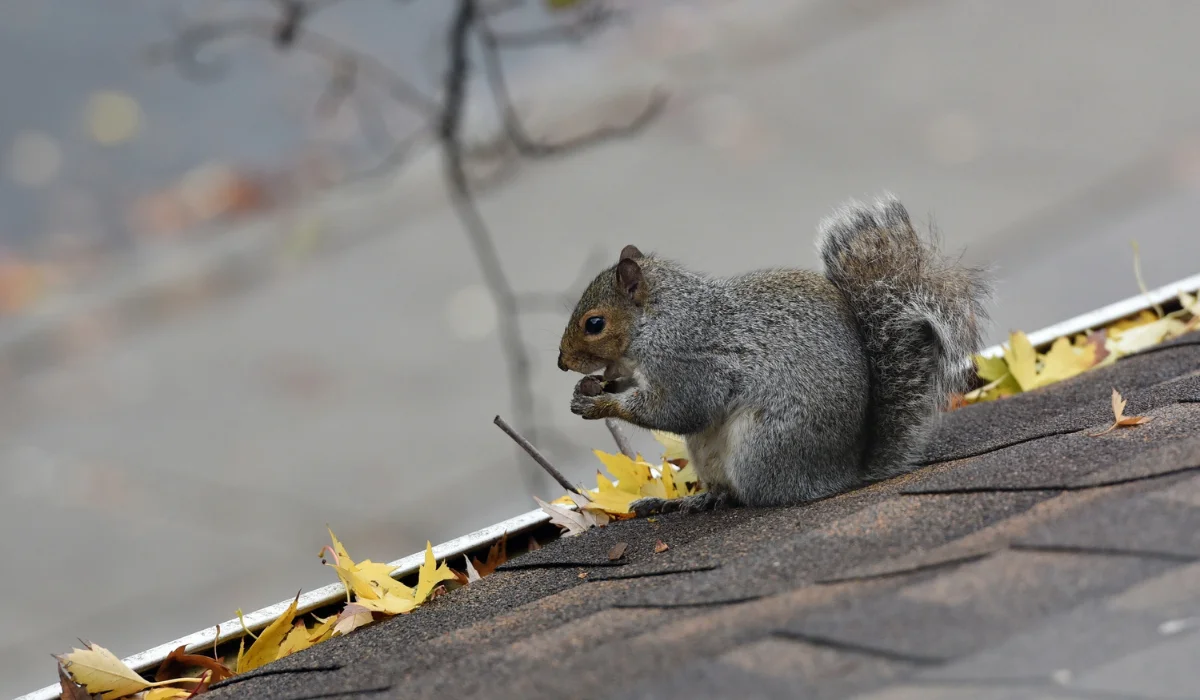
Seeing a squirrel in Michigan running through your yard is part of everyday life. Seeing one disappear into your roofline is different. Once squirrels start using an attic, soffit, vent, or chimney for shelter, you have a home maintenance problem as well as a wildlife problem.
This guide focuses on the questions homeowners actually face once squirrel activity moves from the yard to the structure. You will learn how to spot a squirrel in the attic, where squirrels usually get inside, what damage to check for, how young squirrels affect removal, and when exclusion work makes sense.
When Does a Squirrel in Michigan Become a Home Problem?
A squirrel moving through your yard is normal. Even an occasional trip across the roof may only mean the animal found an easy route between trees, fences, and nearby food.
The pattern changes when you see repeated activity in one place. You may watch a squirrel run to the same section of roof each morning, stop beside a vent, or disappear behind a loose soffit panel. Indoors, you may hear fast movement above a bedroom, hallway, or upper-floor ceiling.
The time of day can help narrow the possibilities. The University of Michigan Animal Diversity Web describes eastern gray squirrels as primarily active during daylight hours. Morning or afternoon scratching in the attic fits squirrel behavior, although sound by itself cannot confirm which animal is inside.
Signs That Point to Squirrel Activity
You get a clearer answer by combining several observations. A single attic noise could come from a bird or another animal. Daytime movement, a visible roof opening, and repeated activity around the same area give you much stronger evidence.
| What You Notice | What It May Mean | What to Check |
| Fast movement above the ceiling during daylight | Possible squirrel in attic | Attic insulation and nearby roof openings |
| Squirrel repeatedly visits one roof section | Regular travel route or entry point | Soffits, vents, fascia, and chimney areas |
| Torn or shifted vent screening | Possible squirrel entry point | Vent cover and surrounding materials |
| Nesting material in the attic | The area may be used for shelter | Whether adults or young are still present |
| Flattened or moved insulation | Wildlife has traveled through the area | Droppings, debris, and nearby damage |
| Gnaw marks around an opening | Repeated use of the access point | Wood, trim, vents, and roof-edge materials |
If you can safely observe the suspected entry area from the ground, watch it for repeated use. Seeing where the squirrel goes tells you more than trying to identify it by size or color.
What Kind of Squirrel Damage Should You Look For?
Squirrel damage can be minor or extensive depending on how long the animal has been inside and where it is moving. Start with the active area instead of assuming the whole attic is affected.
Insulation often shows clear signs of wildlife traffic. Squirrels may flatten it, move it aside, or build a nest in a protected corner. If they spend enough time in one location, droppings and urine can affect nearby materials as well.
Can Squirrels Damage Wiring and Building Materials?
Gnawing is normal rodent behavior. If an active squirrel route passes near wood, trim, plastic components, or other materials, those areas deserve inspection.
Electrical wiring should also be checked when it runs through the nesting or travel area. A squirrel can gnaw wiring, but the presence of a squirrel does not prove that electrical damage has occurred. Look at the actual condition of the wiring before deciding whether electrical repairs are needed.
The same approach applies to vents and roof materials. Repeated entry can make an existing defect worse, especially when the animal keeps using one opening over several days or weeks.
What About Contaminated Insulation?
Cleanup depends on what you find. A small amount of disturbed insulation near an entry point is different from a squirrel nest in the attic surrounded by waste and nesting debris.
Do not rush to replace insulation while the space is still active. New material can be disturbed again if squirrels are still coming and going. Deal with the wildlife activity first, then assess what needs to be cleaned, removed, or restored.
How Do Squirrels Get Into Michigan Homes?
Squirrels often find an opening that already exists. A loose soffit, damaged vent screen, gap along the fascia, or unprotected chimney can give an animal access to a sheltered part of the roof.
Once that route works, the squirrel may use it again. That is why the most useful inspection starts with the area where you have actually seen activity rather than checking the entire house at random.
Common Squirrel Entry Points Around the Roof
Soffits and fascia deserve close attention because they sit along the roof edge. A shifted panel, deteriorated section, or gap where materials meet can expose a protected space behind the exterior surface.
Roof vents and gable vents are also common inspection points. They need to move air, so repairs have to block wildlife without interfering with ventilation. Chimneys can create similar access problems when a cap is missing, loose, or damaged.
| Entry Area | What You May See | What the Repair Should Address |
| Soffit | Loose panel, opening, or chewed edge | Restore damaged material and close access |
| Fascia | Gap along the roof edge | Repair the affected section and nearby joints |
| Roof vent | Bent cover or torn screen | Protect the opening while maintaining airflow |
| Gable vent | Loose or damaged screening | Secure the vent without blocking ventilation |
| Chimney | Missing or damaged cap | Install suitable wildlife protection |
| Roof transition | Gap where building materials meet | Close the confirmed access point with a durable repair |
West Michigan weather can expose weak exterior materials over time. Snow, wind, moisture, and repeated freezing and thawing can affect roof-edge components, which gives you another reason to inspect them periodically.
What Should You Do About Baby Squirrels in the Attic?
You see an adult squirrel leave through a roof opening and assume you have a chance to close it. That can go badly if baby squirrels are still inside.
The University of Michigan reports a gestation period of about 44 days and commonly two to four young per litter for eastern gray squirrels. Those young remain dependent on the adult early in life, so they may be unable to follow her out of the attic.
Why Timing Matters Before You Seal an Opening
An adult leaving the nest to find food does not mean the nesting area is empty. If young squirrels remain inside, sealing the opening can trap them and may cause the adult to work at the repair while trying to get back in.
The safer sequence is to confirm whether the opening is active, check for a nest or young when the space can be accessed safely, and address the animals before permanent repairs begin.
Baby squirrels in the attic also make hidden nesting areas more important. A nest tucked deep inside a soffit or wall void may be difficult to see from the attic entrance. If you cannot tell whether the space is occupied, closing the visible hole first can create a harder problem inside the structure.
Will a Squirrel Leave the Attic on Its Own?
Sometimes a squirrel enters a gap, investigates the space, and moves on. Repeated visits suggest something different. If the attic provides shelter or a nesting site, the animal has a reason to return.
Removing a bird feeder may change where the squirrel finds food, but it does not repair the roof. Once you have confirmed repeated attic entry, the access point becomes the part of the problem that needs attention.
How Squirrel Removal and Exclusion Work Together
Squirrel removal addresses the animals using the structure. Squirrel exclusion addresses the openings that allowed access in the first place.
The order matters. First, identify the active squirrel entry points and determine whether adults or young remain inside. After the structure is clear, repair or protect the openings in a way that fits the building.
| Step | What You Are Trying to Accomplish |
| Observe | Learn when and where activity occurs |
| Inspect | Locate active openings and affected attic areas |
| Check occupancy | Determine whether adults or young remain inside |
| Remove | Clear active squirrels using an appropriate method |
| Exclude | Repair or protect confirmed access points |
| Recheck | Watch repaired areas for renewed activity |
Before attempting squirrel trapping or relocation on your own, review the current Michigan Department of Natural Resources nuisance wildlife guidance. State guidance can vary based on the animal, method, and circumstances, so current local rules should guide the next step.
How Can You Keep Squirrels Out of a Michigan Home?
Long-term squirrel control starts with the structure. Check roof vents, soffits, fascia, chimney areas, and roof transitions for openings or damaged materials. Give extra attention to any place where you have already seen a squirrel stop, climb, or disappear.
Tree branches that provide direct access to the roof may also be worth trimming when it can be done safely and without damaging the tree. This will not remove squirrels from the property. It can make it harder for them to reach vulnerable sections of the roof.
You should also recheck exterior repairs after storms or roof work. A previously secure area can become exposed again when materials shift or screening is damaged.
When Should You Call for Squirrel Removal in Michigan?
Professional help is worth considering when you have confirmed attic entry, cannot locate the opening, suspect young squirrels are present, or hear activity in a part of the structure you cannot safely inspect.
Recurring activity is another useful threshold. If you repaired one opening and squirrels return, there may be another access point nearby or the original repair may not have addressed the full route into the attic.
Getting the Squirrel Problem Solved Properly
A squirrel outdoors usually does not require action. Once you confirm repeated roof entry, attic activity, nesting, or squirrel damage, you have a structural problem to solve along with the wildlife issue. The best result comes from identifying the active opening, making sure the animals are out, and repairing the access point so the same route is harder to use again.
That process is especially useful when the entry point is difficult to find, the nest may contain young, or activity has returned after an earlier repair. A careful inspection gives you a better basis for deciding whether you need removal, exclusion, cleanup, or a combination of those services.
If you are dealing with a squirrel in Michigan that has moved into your attic or roofline, Pest Pros of Michigan can inspect the affected area, handle active wildlife, and recommend exclusion work based on the condition of your home. Contact Pest Pros of Michigan for squirrel removal and wildlife exclusion service.

 Serving Michigan since 2018
 Pest-free guarantee
 Small, local business