Squirrels in attic removal is most effective when homeowners act before Michigan’s cold weather settles in. During fall, tree squirrels search for protected places where they can escape wind, snow, and freezing temperatures. An attic offers warmth, shelter, and room for nesting, especially when damaged soffits, loose vents, or gaps along the roofline provide an easy way inside.
Homeowners often discover the problem after hearing scratching, running, or gnawing above a ceiling during the day. Gray squirrels are active during daylight hours, so daytime attic noises can help distinguish them from mice and other animals that tend to move after dark. Once squirrels establish a nest, they may damage insulation, wood, vent covers, stored belongings, and electrical wiring.
Addressing squirrels before winter also gives a wildlife control professional better access to the roof and attic. The inspection can identify active entry points, check for young squirrels, evaluate damage, and determine which repairs are needed. Completing squirrels in attic removal before snow and ice arrive can prevent a temporary shelter from becoming a recurring seasonal problem.
Why Squirrels Move Into Attics Before Winter
Squirrels in attic removal becomes more difficult when an animal has already settled into a protected nesting area. Attics shield squirrels from harsh weather while keeping them close to food sources in yards, gardens, bird feeders, and mature trees. Once a squirrel finds a dependable opening, it may use that route repeatedly.
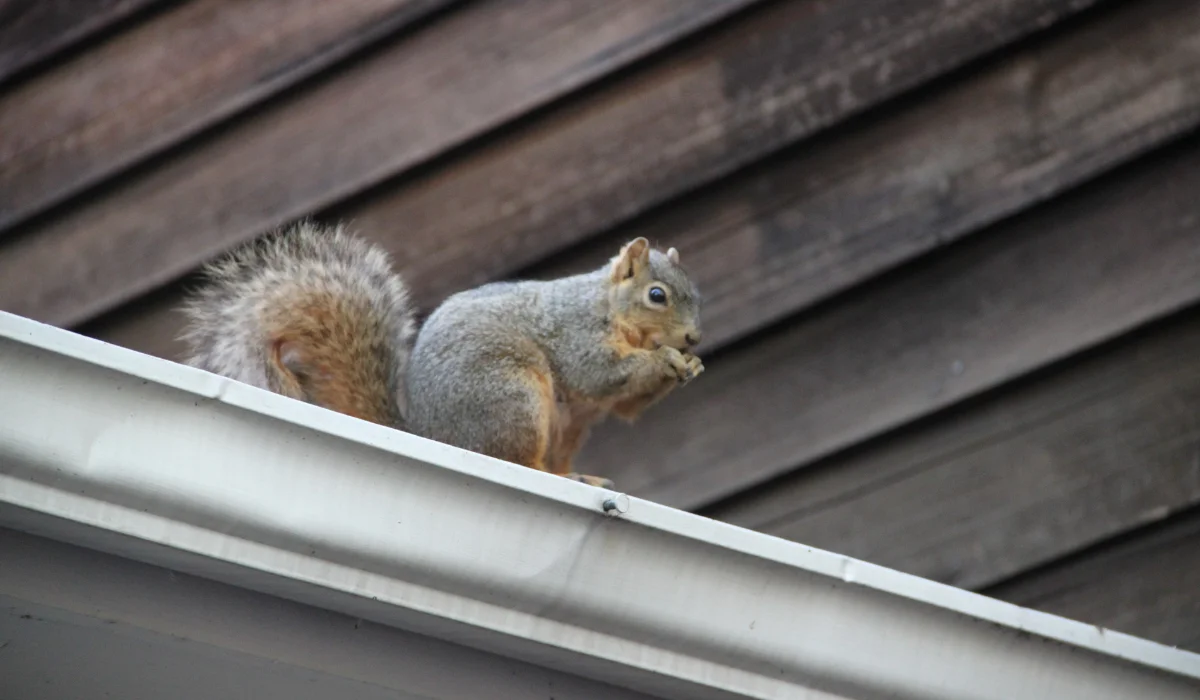
Eastern gray squirrels and fox squirrels are both common in Michigan. Information from the Michigan Department of Natural Resources helps homeowners understand the tree squirrel species found across the state. Their ability to climb trunks, fences, utility lines, and siding makes roof access relatively easy in many residential neighborhoods.
Squirrels can enter through openings roughly 1.5 to 2 inches wide. They may squeeze through loose soffits, damaged fascia, uncovered roof vents, or gaps near eaves and roof intersections. The opening may look minor from the ground, but repeated use and gnawing can make it larger over time.
Why Michigan Homes Can Be Vulnerable
Homes in Kalamazoo, Grand Rapids, and surrounding communities often sit near mature trees, wooded lots, neighborhood parks, or connected rooflines. These features give squirrels several ways to approach a structure. Older homes may also have weathered wood, aging vent covers, or previous repairs that create weak points along the roof.
Newer homes are not immune. Wind damage, roof work, loose construction materials, or a fallen branch can create a new squirrel entry point. A roofline that was secure last season may develop a gap after severe weather.
Removing the animal without correcting the opening leaves the home exposed. Another squirrel may discover the same access point days or months later. Effective wildlife removal combines animal removal with exclusion work that closes active and vulnerable openings.
Signs You May Need Squirrels in Attic Removal
A squirrel infestation often begins with sound. Homeowners may hear fast running, scratching, rolling, or chewing above bedrooms, hallways, or upper-floor rooms. Because gray squirrels are active during the day, noises that occur in the morning or afternoon deserve prompt attention.
The location and timing of the sound can provide useful clues. Repeated movement near a soffit, roof vent, or chimney may point to the entry area. Noise that travels across a larger portion of the attic may indicate that the squirrel is moving between a nest and an exterior opening.
Exterior signs may include bent vent covers, chewed wood, disturbed roof materials, or dark rub marks around a gap. Inside the attic, droppings, nesting debris, compressed insulation, and damaged stored items can confirm that an animal has been spending time in the space.
| What You Notice | What It May Indicate |
|---|---|
| Fast movement during daylight hours | Tree squirrel activity |
| Scratching near the roof edge | An opening near a soffit, fascia board, or vent |
| Repeated chewing sounds | Gnawing on wood, wiring, or building materials |
| Disturbed insulation | Travel routes or a nesting area |
| Exterior damage near the eaves | An active squirrel entry point |
Why the Inspection Must Come First
A thorough attic inspection determines which animal is present, where it entered, and whether more than one squirrel is using the space. It also allows the technician to check for squirrel babies before beginning exclusion work.
Eastern gray squirrels can have two breeding seasons each year. That makes nest checks necessary during more than one part of the calendar. Sealing an opening without inspecting the nesting area can separate a mother from her young or leave animals trapped inside the attic.
The exterior inspection should cover soffits, fascia, roof vents, eaves, chimney areas, siding transitions, and places where different roof sections meet. A complete inspection identifies the active entrance and other weak areas that could become future access points.
Why Waiting Until Winter Can Make the Problem Worse
Delaying attic squirrel removal gives the animal more time to build a nest, travel through insulation, and damage the opening it uses. Squirrels have continuously growing incisors, so they gnaw regularly. Inside a home, that behavior may be directed toward framing, stored items, plastic vent components, roof materials, or electrical wiring.
The USDA APHIS Wildlife Services program emphasizes managing both wildlife activity and the conditions that allow conflicts to continue. This approach is especially relevant for attic infestations because removing one squirrel does not prevent another from using the same opening.
Winter weather can also limit safe roof access. Snow, ice, freezing rain, and shorter daylight hours make it harder to inspect and repair soffits, vents, and steep roof sections. Work that may be straightforward in fall can require more planning after severe weather arrives.
Why Squirrels May Stay Once They Get Inside
Homeowners sometimes expect squirrels to leave when outdoor temperatures drop. In practice, an attic protects the animal from the weather that would otherwise force it to find better shelter. If the squirrel has a nest, a reliable entrance, and access to outdoor food sources, it has little reason to abandon the space.
A quiet attic does not always mean the animal is gone. The squirrel may be outside gathering food, resting near its nest, or moving through another section of the structure. Activity can also decrease temporarily during periods of severe weather.
A professional should confirm that all squirrels have exited before the opening is sealed. Closing an entry point too soon can trap an animal inside or force it to damage another part of the roof while trying to escape.
Damage Squirrels Can Cause Inside an Attic
Squirrel damage often develops gradually and may remain hidden until the infestation has continued for some time. Repeated movement can compress or displace insulation, leaving uneven coverage in areas the animal uses as travel paths. Nesting activity can also move insulation, leaves, and other materials into corners or enclosed spaces.
Chewing creates a separate concern. Squirrels may gnaw on wood framing, vent covers, plastic components, stored belongings, and electrical wiring. Damaged wiring should be evaluated promptly because exposed or compromised electrical components can create a safety hazard.
Squirrels may also enlarge exterior openings. A small gap near the fascia or soffit can become wider as the animal works around the edges. That damage may later allow moisture, insects, or other nuisance wildlife to enter.
Odors, Droppings, and Damaged Materials
Droppings, urine, and nesting debris can collect near a squirrel’s resting area. These materials may create odors and soil insulation or stored belongings. The amount of cleanup needed depends on how long the squirrels were present and how much of the attic they used.
Attic restoration may involve removing nesting material, replacing damaged insulation, securing vent covers, and repairing entry points. Cleanup alone will not solve the problem if the exterior opening remains available.
Homeowners should avoid disturbing an active nest before confirming whether adult squirrels or young are present. A controlled inspection protects the animals from being trapped and helps prevent damage from spreading to another part of the attic.
How Professional Squirrel Removal Works
Professional squirrel removal begins with identifying the species, active entry points, nesting area, and visible damage. The technician then develops a plan based on the home’s construction, the squirrel’s travel route, and the possibility of young animals.
One-way exclusion devices may be used when conditions are appropriate. These devices allow squirrels to leave through the active opening while preventing them from re-entering. The area must then be monitored so the technician can confirm the animals are gone before completing final repairs.
Guidance from Penn State Extension identifies exclusion as a central part of resolving wildlife conflicts around buildings. For attic squirrel removal, exclusion works best when the full roofline is evaluated rather than focusing only on the most obvious hole.
Sealing the Home After Removal
Once the squirrels have exited, the active opening can be repaired with durable materials suited to that part of the structure. A damaged soffit may require a different repair than an uncovered roof vent or a gap near the chimney.
Nearby weak points should also be secured. A squirrel that loses access to one opening may test another section of the roofline. Closing secondary gaps helps prevent the problem from shifting to a different area of the attic.
Tree branches that provide direct roof access may also need attention. Trimming should account for tree health, property conditions, and local requirements. The goal is to reduce easy travel routes where practical while keeping the property’s landscaping intact.
How to Keep Squirrels Out Before Next Winter
Preventive home exclusion should focus on the upper parts of the structure. From the ground, homeowners can look for loose soffits, damaged fascia boards, missing vent screens, open chimney areas, and storm damage near the eaves. Any visible opening should be evaluated before squirrels begin using it regularly.
Roof and attic inspections are especially useful after high winds, falling branches, exterior renovations, or roofing work. These events can create gaps that were not present during an earlier inspection. Finding and repairing an opening early is far easier than dealing with an established nest.
Pay attention to the timing and location of attic noises. Record when the sounds occur and which part of the ceiling seems most active. Those details can help a wildlife control professional narrow the inspection area and identify the animal’s likely travel route.
Protect Your Michigan Home Before Winter Arrives
A small opening near the roof can turn into an ongoing squirrel problem when it provides dependable attic access. Acting before winter gives a technician time to identify the animal, check for young squirrels, complete removal, repair entry points, and address damaged materials before snow and ice interfere with exterior work.
Pest Pros of Michigan serves homeowners in Kalamazoo, Grand Rapids, and nearby communities with wildlife inspection, removal, and exclusion services. To address attic noises, suspected nesting, or visible roofline damage, contact Pest Pros of Michigan before cold weather gives squirrels another reason to stay.

 Serving Michigan since 2018
 Pest-free guarantee
 Small, local business
 10+ years of pest control experience
 President and CEO of Pest Pros of Michigan
 Resident of Michigan