Michigan flying ants are reproductive ants that leave established colonies to mate. Seeing them outdoors during warm weather is common, but finding several emerging inside your house, especially during colder months, deserves a closer look. Winged ants can resemble termite swarmers, making identification an important first step. Where and when you find them can help determine whether you’re seeing normal seasonal activity or signs of a colony nearby.
What Are Michigan Flying Ants, and Why Do They Appear?
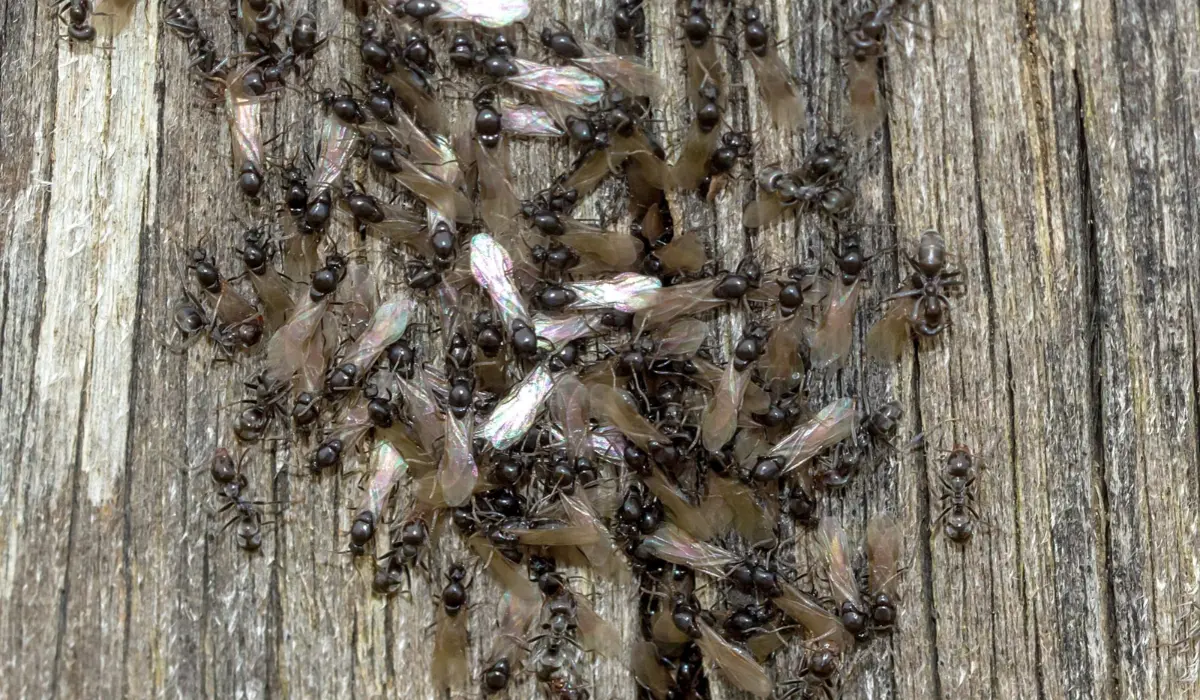
Flying ants aren’t a separate species. They’re reproductive males and females, called swarmers or alates, produced by established ant colonies. Worker ants collect food and maintain the nest, while reproductive ants leave to mate.
When conditions are suitable, winged ants depart from their colony. Several may appear within a short period, which explains why homeowners sometimes encounter a sudden group of flying ants after weeks of seeing only workers.
What Happens During an Ant Swarm?
During mating flights, reproductive ants leave their original colony. Successfully mated queens may establish new nests, while males generally die after mating.
Queens beginning new colonies typically shed their wings. If you find loose wings on a windowsill, they could belong to ants or termite swarmers.
The location of the swarm helps you understand its significance. Flying ants outside near a sidewalk may have come from an established outdoor colony, while several emerging from interior trim suggest activity worth investigating.
Flying Ants vs. Termites: How Can You Tell the Difference?
Flying ants and termite swarmers both have wings during their reproductive stages. Their body shapes, however, provide useful identification clues.
Carpenter ants can excavate wood to create nesting galleries, while termites consume wood. Knowing which insect you’ve found helps determine what areas of your home may need inspection.
Compare Antennae, Waist Shape, and Wings
| Feature | Flying Ant | Termite Swarmer |
| Antennae | Bent or elbowed | Relatively straight and beadlike |
| Waist | Narrow and visibly pinched | Broad, without a pronounced constriction |
| Wings | Front pair generally longer than hind pair | Front and hind pairs approximately equal in length |
| Body shape | Distinct body sections with a narrow connection | More uniform body width |
| Wood concerns | Depend on species and nesting location | Wood-feeding termites can damage building materials |
The University of Kentucky Department of Entomology is a useful institutional source for insect identification and ant-versus-termite distinctions.
Look at the antennae and waist first, particularly if the insect has lost its wings. Discarded wings can occur after termite swarms in Michigan as well as ant swarms, so an intact specimen provides better identification clues.
When Do Flying Ants Appear in Michigan?
Flying ants become more noticeable during Michigan’s warmer seasons. The exact timing depends on the species and local conditions.
Some ants swarm in spring, while others produce winged reproductives later in the warmer months. Temperature and moisture can influence their activity.
The Michigan State University Extension provides locally relevant information on ants and seasonal insect activity. The month of a sighting can offer context, but it doesn’t establish which ant species is present.
Why Flying Ants in Winter Deserve Attention
Winged ants appearing indoors during cold Michigan weather warrant investigation. Outdoor swarming is less likely under those conditions, while a colony in a heated or protected location may remain active.
Carpenter ants are one possibility because they can establish nests in wooden building materials. However, winter activity alone doesn’t confirm the species or indicate that structural damage has occurred.
Record the room where the insects appear and whether you notice repeated activity over several days. These details are helpful when tracing the source.
Why Do I Have Flying Ants Inside My House?
Flying ants inside your house may have entered during an outdoor swarm or come from a colony within or near the building.
An open window, damaged screen, or frequently used exterior door can provide access during warm weather. Ordinary ant entry into Kalamazoo homes can occur through small exterior gaps, although reproductive ants may enter differently from workers searching for food.
Flying Ants Near Windows and Lights
Winged ants may gather near illuminated windows and light fixtures. If an outdoor swarm occurs close to your house, some insects may enter and collect in these brighter areas.
An occasional flying ant beside an open summer window is less concerning than repeated activity along a closed window frame.
If several insects appear in the same location, observe whether they’re coming through a nearby opening. That behavior provides more useful information than their position on the glass alone.
Signs of a Nearby Ant Nest
Repeated winged ants emerging from the same gap deserve attention. Other clues include workers following consistent routes, activity around damp wooden trim, or insects appearing from enclosed spaces.
Check whether the activity remains concentrated in one room or occurs throughout the house. Workers may travel indoors from outdoor nests, while swarmers emerging from concealed nesting spaces can appear suddenly.
These observations help narrow down potential nesting locations without requiring you to disturb walls or other building materials.
Which Michigan Ant Species Produce Winged Swarmers?
Carpenter ants, pavement ants, and other Michigan ant species produce winged reproductive forms. Their appearance, nesting habits, and reproductive schedules differ.
Pavement ants may establish colonies in soil around sidewalks, driveways, and foundations. Carpenter ants deserve particular attention around wooden building materials because some species establish nests inside structures.
Carpenter Ants and Wood Nesting
Carpenter ants excavate wood to create nesting galleries rather than consuming it as food.
Moisture-damaged wood provides favorable conditions for some carpenter ant colonies, although they may also occupy sound wood. Their nesting activity can remain concealed within building components.
The University of Minnesota Extension provides information about carpenter ant identification, nesting behavior, and structural concerns.
Where Carpenter Ants May Nest Around Your Home
Windows, doors, and areas affected by recurring water problems deserve attention when carpenter ants are suspected. Damp trim, leaking plumbing, and other moisture-affected materials may offer suitable nesting locations.
Excavating carpenter ants sometimes leave coarse, sawdust-like debris containing wood fragments and other material near openings. This can help identify an area of activity, although debris alone doesn’t confirm a carpenter ant nest.
Because carpenter ants in Michigan homes can occupy concealed wooden spaces, examining nearby moisture problems is an important part of assessing suspected nesting activity.
Are Flying Ants Harmful to People or Homes?
The risks associated with flying ants depend on the species and nesting location. Wings indicate a reproductive stage, not a greater threat to people or property.
An outdoor swarm may pass without affecting your home. A colony established within wooden building materials presents a different concern, particularly when carpenter ants are involved.
Do Flying Ants Bite or Sting?
Some ant species can bite or defend themselves when disturbed. Carpenter ants have jaws capable of biting, although winged ants aren’t generally aggressive toward people during swarming.
Other species have different defensive behaviors. Avoid handling unfamiliar winged insects with bare hands.
A cup and a piece of paper can help you collect a specimen without direct contact.
Can Flying Ants Damage Wood?
Wood damage depends on the species and its nesting habits rather than the presence of wings.
Carpenter ants excavate galleries that can affect wood over time. Termites consume wood, so the inspection and control approach differs.
If winged insects repeatedly appear around weakened trim or areas with recurring moisture, an inspection can establish whether nesting activity is occurring.
What Should You Do When You Find Flying Ants Indoors?
Start by recording where the insects appear and whether the activity repeats. You don’t need to open walls or search for a concealed nest yourself.
An intact specimen and a few photographs can help a pest professional identify the insect and determine which areas deserve further inspection.
Save a Sample and Record the Sighting
Follow these steps when you discover flying ants indoors:
- Place a clear cup over an insect and slide a piece of paper underneath.
- Keep one intact specimen, including its wings if possible.
- Photograph the insect from the side and above.
- Record the room, approximate number of insects, and time of the sighting.
- Note whether similar insects have appeared near the same opening before.
If the insects are already dead, collect one carefully. Detached wings can be kept with the sample, but an intact insect is more useful for identification.
Check for Moisture and Other Ant Activity
Look around accessible windows, door frames, plumbing fixtures, and wooden trim. Water stains, persistent dampness, and deteriorating wood are worth noting when carpenter ants are suspected.
Watch for worker ants following the same route or repeatedly entering a gap. Debris near wooden openings may also help narrow down an area for inspection.
Avoid removing wall coverings or damaging building materials to search for a nest.
Why Spraying Visible Swarmers May Not Solve the Problem
Removing visible flying ants doesn’t necessarily affect the colony that produced them. If the insects came from outdoors, treatment may not be needed.
If they’re emerging from a concealed indoor nest, addressing only the swarmers can leave the source untouched.
Once the species and likely nesting location are established, a pest professional can recommend an appropriate response.
When Should Michigan Homeowners Request an Ant Inspection?
An occasional outdoor swarm during warm weather generally doesn’t justify an inspection. More concerning situations include repeated indoor emergence, winged ants appearing during cold months, or insects coming from wooden building components.
An inspection is also appropriate when you suspect carpenter ants around moisture-damaged wood or can’t confidently distinguish flying ants from termites.
A professional can examine likely nesting locations and determine whether control is necessary. This helps address established problems without treating ordinary seasonal swarms as emergencies.
Getting Help With Flying Ants in Your Michigan Home
Most flying ants outdoors are part of normal reproductive activity. If you’ve found several indoors, especially during cold weather, preserve a specimen and note where they’re appearing. Those details can help determine whether the insects entered accidentally or came from a nearby colony.
For help with recurring ant activity, turn to Pest Pros of Michigan. The locally owned company provides ant control services for homeowners and businesses.
You can review services available in Kalamazoo and Grand Rapids. If you’re finding winged ants inside your home, contact Pest Pros of Michigan and share where the insects appeared, when you noticed them, and any photographs you’ve taken.
Frequently Asked Questions About Michigan Flying Ants
Do Flying Ants Mean I Have an Infestation?
Not always. An outdoor swarm may come from an established colony in nearby soil or landscaping. Several flying ants repeatedly emerging inside your home are more concerning, especially if they appear from the same opening. The species, season, and location help determine whether an inspection is warranted.
Do Flying Ants Lose Their Wings?
Yes. Mated queens that establish new colonies typically shed their wings. Termite reproductives can also lose theirs after swarming, so discarded wings alone won’t identify the insect. An intact specimen offers more reliable identification features.
Should I Worry About Flying Ants in Winter?
Repeated indoor flying ants during Michigan’s cold season deserve investigation. A colony in a heated or protected location may remain active when outdoor conditions are unsuitable for swarming. Carpenter ants are one possibility, but the species and nesting location need to be confirmed before assessing any damage.

 Serving Michigan since 2018
 Pest-free guarantee
 Small, local business
 10+ years of pest control experience
 President and CEO of Pest Pros of Michigan
 Resident of Michigan