Bees in Michigan include honey bees, bumble bees, carpenter bees, sweat bees, mason bees, and other native species. Most bees visiting your flowers aren’t a problem, but insects entering a wall gap or drilling holes in your deck deserve a closer look. The difference comes down to identification and nesting behavior. Here’s how to recognize common Michigan bees, distinguish them from wasps, and decide when a nest can stay or needs professional attention.
What Types of Bees Are Common in Michigan?
Michigan homeowners encounter bees with different appearances and nesting habits. Honey bees and bumble bees form social colonies, while carpenter bees and many smaller native bees generally maintain individual nests.
Where you see a bee provides useful clues. A large bee hovering beside a wooden railing could be a carpenter bee, while several small bees moving in and out of bare soil may be solitary ground-nesting bees.
| Type of Bee | Identifying Features | Typical Nesting Location | Homeowner Concern |
| Honey bee | Brown to golden-brown body with darker bands and fine hairs | Hives, hollow trees, building cavities | Colonies established inside walls |
| Bumble bee | Rounded, densely hairy body, often black and yellow | Underground cavities and sheltered spaces | Nests close to walkways or play areas |
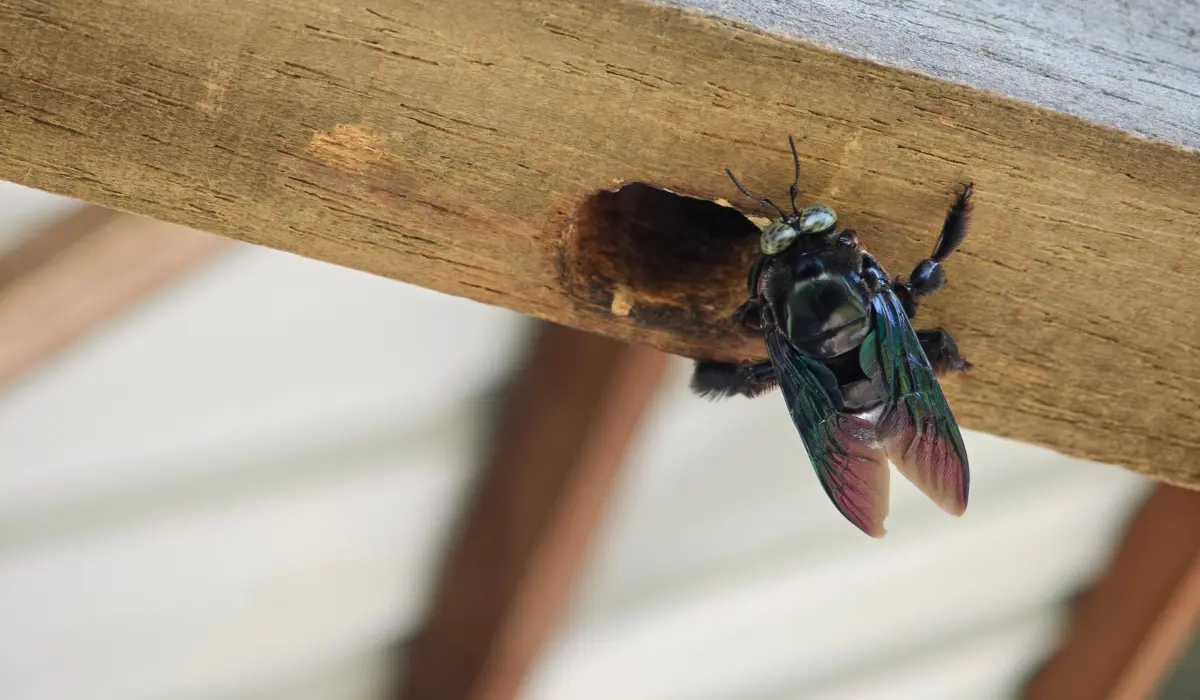
| Carpenter bee | Large body, often with a smooth, shiny abdomen | Tunnels excavated in wood | Repeated nesting in decks and exterior trim |
| Sweat bee | Usually small; some have metallic green coloring | Often soil, depending on species | Usually little concern away from busy areas |
| Mason bee | Small to medium-sized, often dark or metallic | Existing holes, hollow stems, nesting tubes | Generally little property concern |
| Other solitary ground-nesting bees | Size and color vary | Individual soil tunnels | Temporary activity in lawns or garden beds |
Use appearance and nesting behavior together. Color alone isn’t reliable, especially when comparing large bees with yellow jackets or other wasps.
How to Identify Bees in Michigan
Most identification questions can be narrowed down by checking the insect’s body, what it’s doing, and whether it repeatedly returns to a particular opening.
Watch from a comfortable distance. You don’t need to approach or disturb a nest to notice where the insects are traveling.
Honey Bees
Honey bees have relatively slender bodies with fine hairs and brown or golden-brown coloring. Workers collect nectar and pollen from flowers and return to their colony.
Unlike solitary bees, honey bees maintain colonies with a queen, workers, developing young, and wax comb. They may occupy managed hives, hollow trees, or suitable building cavities.
One honey bee on a flower doesn’t indicate a nearby colony. Repeated flights through a single opening in siding or trim are more significant, especially when the activity continues throughout the day.
Bumble Bees
Bumble bees are easy to recognize by their rounded bodies and thick hair, often patterned in black and yellow.
They form seasonal colonies in sheltered places, including abandoned animal burrows and underground cavities. Some nest beneath vegetation or in other protected spaces near homes.
A bumble bee moving between flowers is primarily gathering food. The concern changes when a colony is located where someone might accidentally step on or disturb its entrance.
Carpenter Bees
Large carpenter bees resemble bumble bees, but their abdomens often look smoother and shinier. They also behave differently around buildings.
Females excavate round entrance holes in suitable wood, creating tunnels for their young. Repeated hovering near deck boards, fascia, or exposed trim may indicate nesting activity.
Male carpenter bees sometimes approach people while defending territory, but they cannot sting. Females can sting if threatened or handled, although they generally avoid confrontation.
Carpenter bees don’t eat wood. They remove material to build nesting galleries, which can become a maintenance concern when the same area is used repeatedly.
Sweat Bees, Mason Bees, and Other Solitary Bees
Not every Michigan bee is large or yellow. Some sweat bees are metallic green, while others are small and dark. Many nest in soil.
Mason bees commonly use existing cavities, hollow stems, or nesting tubes. They gather pollen to provision individual nesting chambers for their young.
Because solitary bees don’t maintain large colonies of defensive workers, they usually create less conflict around homes. A few small nests in an unused garden bed often require no action.
Bee vs. Wasp vs. Hornet: How to Tell the Difference
Michigan homeowners frequently call any black-and-yellow stinging insect a bee. That can lead to the wrong response, especially when the insect is actually a yellow jacket or another wasp.
Appearance and Behavior
Many bees have noticeably hairy bodies, which help them carry pollen. Wasps often look smoother and have a more sharply defined waist.
Yellow jackets may have bright black-and-yellow markings and are often interested in food, sugary drinks, and trash around outdoor gatherings. Bees are more commonly seen visiting flowers.
Neither appearance nor behavior provides a perfect identification on its own. Observe both before deciding what you’re dealing with.
Nest Construction
Wasps in Michigan occupy several kinds of nests. Paper wasps build exposed, paper-like combs, while some other wasps construct enclosed paper nests or use underground cavities.
Bees generally use different structures. Carpenter bees excavate wood, many solitary bees tunnel into soil, and honey bees build wax comb inside suitable cavities.
Hornets belong to the wasp group. Finding a paper nest under an eave is therefore a different situation from discovering carpenter bee holes in a railing.
Where Do Bees Nest Around Michigan Homes?
Nest location often tells homeowners more than appearance alone. Look for repeated travel into soil, wood, or a structural opening instead of assuming every bee near the house lives there.
Lawns and Garden Beds
Small holes in exposed soil may belong to solitary ground-nesting bees. Several bees can nest close together without forming one large colony.
Some bumble bees also nest underground, often in existing animal burrows. These social nests deserve more caution than individual solitary bee tunnels because workers can defend the colony.
If the insects are nesting in an unused section of the yard, leaving them undisturbed may be the simplest solution. Avoid mowing directly over an active entrance until the insects have been identified.
Decks, Railings, and Exterior Trim
Carpenter bees commonly investigate exposed wood around decks, porch ceilings, fascia boards, and railings. Their entrance holes are typically round, and fresh excavation may leave small amounts of wood debris below the opening.
One hole doesn’t establish the extent of any damage. Repeated activity and additional holes in the same wood are better reasons to arrange an inspection.
The effects of carpenter bee nesting in Michigan depend on the condition of the wood and whether nesting continues across seasons.
Walls and Other Building Cavities
Honey bees may establish colonies in enclosed spaces that provide suitable shelter. Repeated movement through the same gap in siding or trim can indicate that insects are using a cavity.
If bees are entering your walls, watch their flight path from a safe location and avoid blocking the entrance.
Sealing an occupied opening can trap insects inside and complicate removal. An established honey bee colony may also leave wax comb and stored food that need attention after the bees are removed.
When Do Bees Become a Problem for Homeowners?
Most bees near flowering plants don’t require intervention. The situations that deserve attention involve damage to building materials, nesting inside occupied structures, or a location where people are likely to disturb a colony.
Repeated Carpenter Bee Damage
Carpenter bees excavate tunnels for nesting. A single entrance hole is not proof of serious structural damage, but repeated tunneling can affect more wood over time.
Pay attention to new holes, ongoing activity around the same boards, and visible deterioration in the affected area.
A professional can assess whether active nesting is present. Repairs and maintenance may also be needed after the nesting problem has been addressed.
Honey Bee Colonies Inside a Building
A swarm resting on a tree branch differs from an established colony living inside a wall. A swarm is a group of bees traveling together, while an established colony may have built comb inside a protected cavity.
An experienced beekeeper or qualified bee removal professional can evaluate an exposed swarm and determine whether collection is practical.
Colonies inside buildings may require access to the cavity and removal of comb. Relocation isn’t guaranteed in every situation, so the first step should be identification and assessment rather than sealing the entrance.
Sting Risks Near Busy Areas
Bees can sting when threatened, particularly around a defended nest. The location matters: a colony beside a doorway creates a different concern from bees visiting a flower bed.
If someone in your household has a known severe sting allergy, avoid disturbing nearby nests and seek qualified assistance.
Difficulty breathing, swelling of the throat or tongue, or faintness after a sting can indicate a severe allergic reaction. Seek emergency medical care immediately if these symptoms occur.
Should You Remove a Bee Nest or Leave It Alone?
The decision depends on whether the insects are creating a genuine conflict with how you use the property.
Many bees can remain where they are. Others need professional attention because their nesting site creates a safety concern or affects the building.
When Leaving Bees Alone Is Appropriate
Solitary bees using an unused patch of soil, mason bees occupying hollow stems, and bees feeding on flowers generally don’t need treatment.
Native bees support flowering plants, and different species depend on soil, stems, and existing cavities for nesting. The Xerces Society for Invertebrate Conservation supports protecting these pollinators and their habitats.
Where bees aren’t creating a problem, avoid disturbing their nests. Keeping people and pets away from an active nesting spot may be enough.
When Removal or Relocation Makes Sense
Professional assessment is appropriate when a honey bee colony occupies a wall, carpenter bees repeatedly tunnel into exposed wood, or a social bee nest is close to a heavily used entrance.
An exposed honey bee swarm may be suitable for collection by an experienced beekeeper. An established colony inside a wall is more complicated and may require specialized removal.
Don’t assume that every colony can be relocated or that all removal situations follow the same procedure.
Why Spraying Isn’t Always the Answer
Spraying unidentified insects can affect bees that aren’t causing any problem. It may also fail to address a colony concealed inside a structural cavity.
Michigan State University Extension provides Michigan-specific insect and pest education relevant to identification and nesting behavior.
For solitary bees away from busy areas, leaving the nest undisturbed is often appropriate. For bees inside a structure, the priority is determining what occupies the cavity before deciding how to address it.
When Are Bees Active in Michigan?
Bee activity changes with the seasons, but different groups follow different life cycles. Spring is especially noticeable around nesting sites, while summer brings steady foraging around flowering plants.
Spring and Summer
Carpenter bees become noticeable around suitable wood during their nesting period. Bumble bee queens that survived winter begin establishing new colonies as conditions become favorable.
Honey bees forage when weather permits and flowers provide resources. Smaller solitary bees appear at different points in the season, depending on their species.
Around Kalamazoo and Grand Rapids, a warm spring can bring earlier activity, but there’s no single date when all Michigan bees become active.
Fall and Winter
Cold weather reduces most outdoor bee activity. Honey bee colonies can survive winter together inside a protected hive or cavity.
Bumble bee colonies generally decline at the end of the season, with newly produced queens surviving to begin the next generation. Many solitary bees overwinter in protected developmental stages.
Different bee groups therefore reappear at different times when warmer weather returns.
When to Call Pest Pros of Michigan for Bee Control
If insects are repeatedly entering a wall, carpenter bees keep returning to the same wooden structure, or a nest is interfering with access to your home, professional identification is a sensible next step.
Pest Pros of Michigan assesses stinging insect concerns and determines management options based on the insects involved and their nesting location. The company’s approach generally avoids treating honey bees unless they present a safety concern.
For carpenter bees, inspecting the nesting site helps establish whether active tunneling is occurring and which wood surfaces need attention. When a honey bee colony occupies a building cavity, the appropriate response depends on the location and accessibility of the colony.
Homeowners can visit Pest Pros of Michigan for information about the company’s pest control services or review local availability in Kalamazoo and Grand Rapids.
If you’re finding new holes in your deck, seeing steady bee traffic through siding, or dealing with a nest near a doorway, contact Pest Pros of Michigan to discuss an assessment and appropriate next steps.
Frequently Asked Questions
What Are the Most Common Types of Bees in Michigan?
Homeowners commonly encounter honey bees, bumble bees, carpenter bees, sweat bees, mason bees, and other solitary bees. Their size, coloring, and nesting habits vary. A bee’s appearance can help narrow down its identity, but observing where it nests often provides a more useful clue.
Are Ground-Nesting Bees in Michigan Dangerous?
Many solitary ground-nesting bees are unlikely to defend their nests aggressively and can be left alone when they aren’t interfering with regular yard activities. However, some social stinging insects also nest underground and may defend their colonies. Avoid disturbing a ground nest until the insects have been identified.
What Should I Do If Honey Bees Are Living Inside My Wall?
Don’t seal the entrance or attempt to remove the colony yourself. Repeated movement through one structural opening may indicate bees are established inside a cavity. Contact a qualified bee removal professional or experienced beekeeper to assess the situation. Removal may involve specialized access and attention to comb left inside the wall.

 Serving Michigan since 2018
 Pest-free guarantee
 Small, local business
 10+ years of pest control experience
 President and CEO of Pest Pros of Michigan
 Resident of Michigan