Seeing a wasp nest on your property can change your plans fast. In Michigan, stinging insects ramp up as the season warms, and tensions rise in late summer when colonies get bigger and more defensive. That is when a small wasp problem near your patio can turn into a serious wasp infestation near your family, tenants, or customers.
The safest approach is calm, controlled pest control thinking: protect people first, then handle the nest properly. This matters even more if anyone has a history of allergic reactions, since one wasp sting can become a medical emergency.
Key Takeaways
- If you find a wasp nest, create distance, avoid disturbance, and observe from far back.
- Yellow jackets, hornets, and bald-faced hornets can defend nests aggressively, especially in late summer.
- Avoid DIY removal, since hidden nesting sites, protected larvae, and wall voids can quickly raise the risk.
- Prevention works best when you seal entry points, reduce food sources like fallen fruit and sugary drinks, and use ongoing pest control to limit new nests and future infestations.
Safe First Steps After Finding a Nest
Finding a nest is a safety issue first. Your goal is to prevent stings, keep people away from the area, and gather enough info for a safe plan.
Create Distance And Control Traffic
When you find a wasp nest, back away and keep others out of the area. For commercial properties, reroute foot traffic. For tenants, post a quick note and use a different entry if possible.
Do Not Disturb The Nest
Do not poke, spray water, or “test” the nest. Disturbing hornets or yellow jackets can trigger repeated wasp stings because they can sting more than once.
Observe From A Safe Distance
Stand well back and watch flight patterns.
Are insects slipping under the eaves, entering siding gaps, or disappearing into wall voids? Are they flying into the ground?
This tells you where the main entry points are, which helps an exterminator plan safer insect control.
Prioritize Health And Allergy Risk
If anyone has had an allergic reaction to a sting, treat it as an urgent situation. Keep an epinephrine device accessible if prescribed, and avoid the area completely.
Wasp Nest Types And Danger Signs
Not all nests mean the same level of risk. Knowing what you’re looking at helps you judge urgency and avoid mistakes that can trigger aggressive behavior.
Yellow Jacket Ground And Wall Nests
Yellow jackets often build nests in the ground, but they also nest in wall voids when they find a gap. If you see steady traffic into a small hole in the lawn, or into a crack near siding, you are likely dealing with a larger infestation than you can see.
Paper Wasp Nests Under Eaves
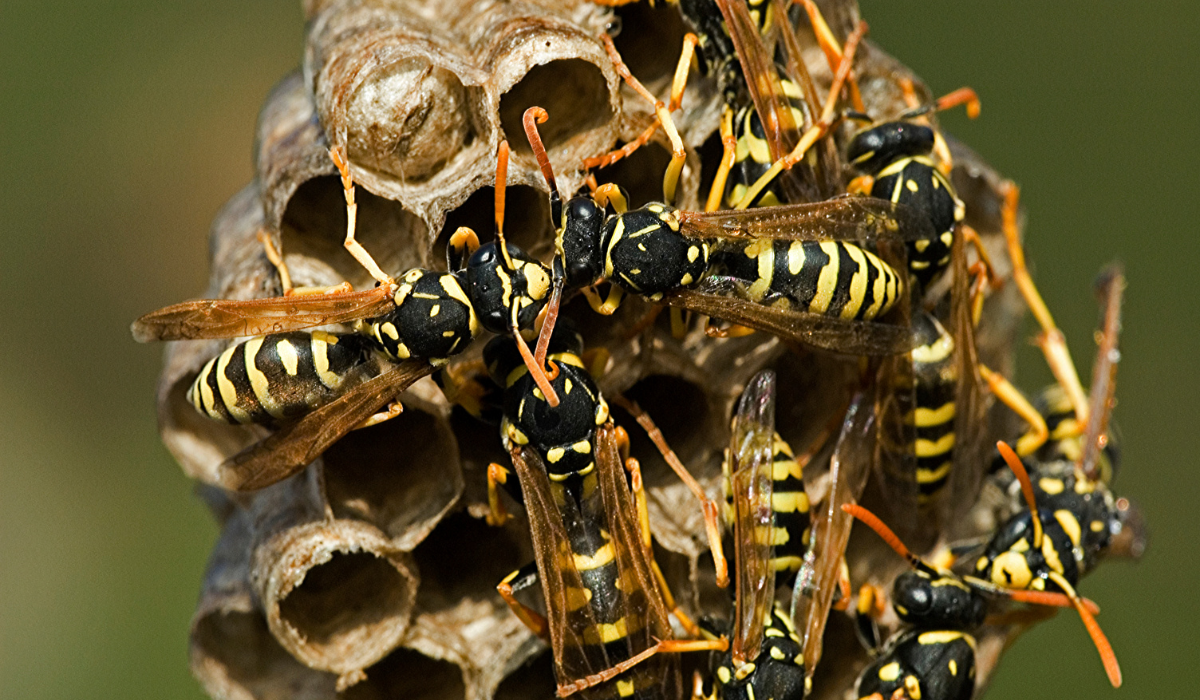
Paper wasps usually form open, umbrella-shaped nests under eaves, porch ceilings, and deck beams. Early new nests can look small, but the colony grows as more adults protect the larvae.
Hornet Nests On Buildings And Trees
Hornets create enclosed hornet nests that look like gray paper footballs. Bald-faced hornets are common in Michigan and may attach a nest to a tree branch or the side of a structure.
Look-Alikes: Bees And Beneficial Species
Not every flying insect near a nest is a wasp. Honey bees and bumble bees are pollinators, and carpenter bees behave differently, too. Mud dauber activity can look alarming, but they are often less defensive than social wasps.
DIY Removal Options And When To Stop
Most wasp problems get worse when people try to handle them without the right equipment or plan. These guidelines explain why pros discourage DIY and when you should stop and call for help.
Why Professionals Recommend Avoiding DIY
A quick spray may not reach the queen, the protected larvae, or the deeper cavity, especially in wall voids. That can increase defensive behavior, making the wasp infestation harder to control.
High, Hidden, Or Structural Locations Are Stop Signs
If the nest is in the eaves above a roofline, inside siding, in soffits, or deep in wall voids, do not attempt removal.
Falls, stings, and trapped insects indoors are common outcomes. These locations require trained application methods and protective gear used by an experienced exterminator.
Traps Are Limited Tools
Wasp traps can reduce activity in a small area, but they do not remove the nest. They can help distract foragers away from sugary drinks or patio dining, but traps alone do not solve a wasp problem when a colony is established.
If you still see heavy traffic, plan on professional wasp nest removal.
Prevention To Reduce Re-Nesting
Once the immediate nest is handled, prevention is how you avoid the same problem next season. A few property fixes and routine pest-control steps can reduce new nesting activity.
Seal Entry Points And Crevices
Prevention starts with exclusion. Seal entry points around vents, trim gaps, soffits, and siding seams. Close crevices where insects can access protected nesting sites.
Reduce Outdoor Food Sources
Wasps shift toward sweets in late summer. Keep lids on trash, rinse cans, and clean spills quickly. Remove fallen fruit and watch outdoor eating areas. Open sugary drinks are a strong draw for yellow jackets, and lingering smells can pull them back day after day.
Stay Ahead With Routine Pest Control
An ongoing pest control service can help reduce future infestations by treating common nesting sites before colonies form.
Book Wasp Nest Removal In Michigan
If you need wasp nest removal in Michigan, Pest Pros of Michigan starts with a free site evaluation to identify the pest and the safest approach.
For properties in Grand Rapids and surrounding areas, request a free quote and share the location, activity level, and any recent stings.
Contact us to schedule a pest control service quickly.
FAQs
What should I do if I cannot see the nest but see heavy wasp activity?
If you see repeated flight paths into siding gaps, soffits, or wall voids, assume a hidden nest. Keep a distance and limit traffic near that area. Hidden nesting sites are common with yellow jackets. Contact an exterminator for inspection and targeted wasp control.
How long does it take to calm down a wasp problem?
Timing depends on nest size and location, but activity can stay high when a colony is established. Traps may reduce foragers, yet they do not remove the nest. Professional wasp nest removal targets the colony source to stop repeat activity and reduce the infestation.
Can I prevent new nests next season?
Yes. A recurring pest control service can also treat common nesting sites and help stop new nests from forming.

 Serving Michigan since 2018
 Pest-free guarantee
 Small, local business
 10+ years of pest control experience
 President and CEO of Pest Pros of Michigan
 Resident of Michigan