If you’ve looked at your eaves and seen a large black-and-white insect, you may wonder if it is a bald-faced hornet or a wasp. This confusion is very common. Many homeowners think any large, aggressive insect is a hornet.
Knowing the difference between a bald-faced hornet and a wasp helps you choose the right response. Some species are highly defensive. Other species build nests inside wall voids or attics, where they may stay hidden at first. In Kalamazoo, Grand Rapids, and nearby areas, we treat homes and commercial properties for these stinging insects.
Before handling a nest, identify the species and understand why professional pest control is often the safest option.
Key Takeaways
Bald-faced hornet or wasp?
A large black-and-white insect on the eaves is often a bald-faced hornet, but yellowjackets and paper wasps get blamed too. Tell them apart before anyone gets close.
Bald-faced Hornet
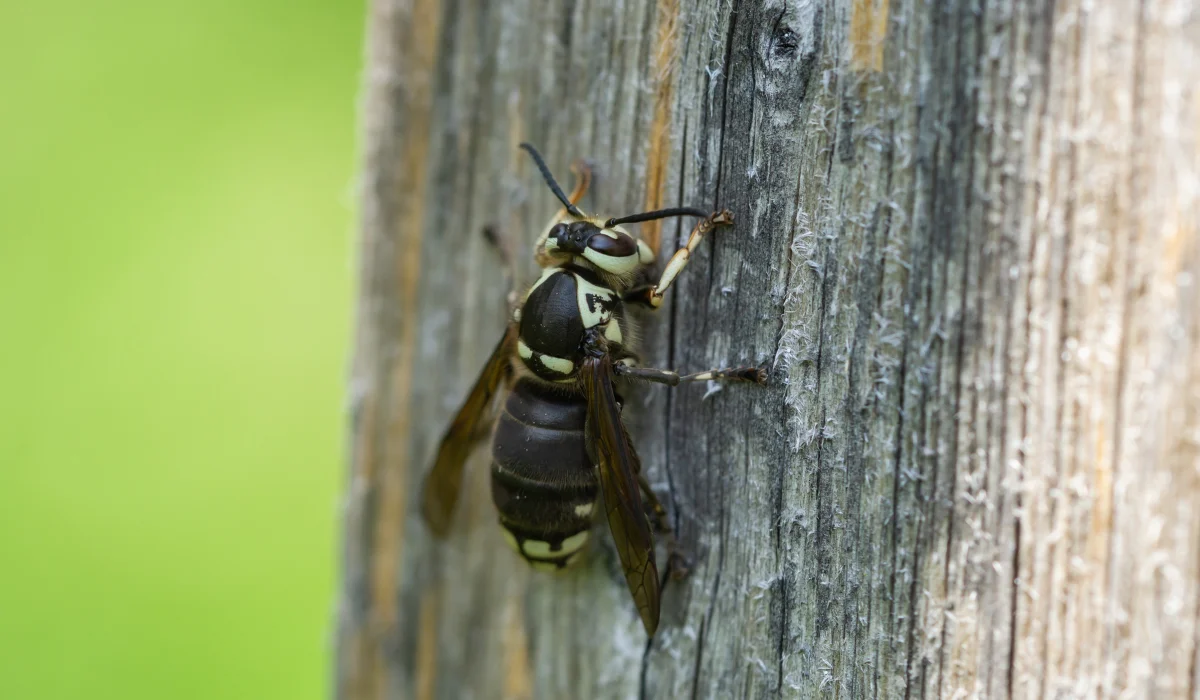
AggressiveLarge black body with bright white face and markings; big enclosed paper nest.
Where Hanging from trees or attached to homes
Yellowjacket
AggressiveSlimmer yellow-and-black body; hidden nest defended fiercely.
Where Ground, hollow trees, or wall voids; near trash cans
Paper Wasp
StingsSlimmer than a hornet with an open, umbrella-shaped nest.
Where Under eaves, porch ceilings, or attic entry points
- The bald-faced hornet is a type of wasp known as Dolichovespula maculata.
- Yellowjackets and paper wasps are common look-alikes in Michigan.
- Social wasps can deliver multiple stings and become more aggressive in late summer.
- Proper hornet and wasp control reduces sting risk and limits future nesting near your property.
Bald-Faced Hornet vs Wasp: Are They Actually Different?
A bald-faced hornet is a type of wasp, not a true hornet. It belongs to the order Hymenoptera, which includes wasps, bees, and ants.
In Michigan, it is closely related to yellowjackets, even though its name suggests something different. The name “bald-faced hornet” is a common name that often causes confusion when identifying stinging insects.
Bald-faced hornets stand out because of their larger size, bold black bodies, and bright white markings on the face, thorax, and abdomen. Most other wasps around homes in areas like Kalamazoo or Grand Rapids have yellow-and-black coloration and a slimmer build.
Bald-faced hornets build large, enclosed paper nests from chewed wood fibers. These nests hang from trees or attach to homes.
Other wasp species build smaller or more open nests. Misidentifying a nest can lead to underestimating how defensive social wasps can be near their colony.
Common Michigan Wasps It’s Mistaken For
When homeowners report a bald-faced hornet vs wasp issue, it is often one of these social wasps.
Yellowjacket
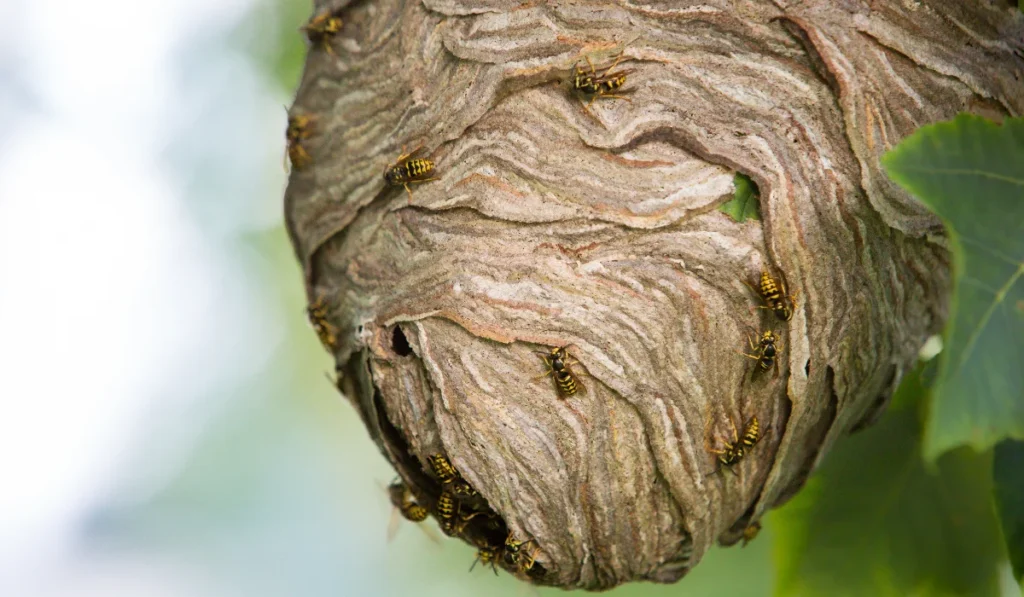
A yellowjacket is one of the most common look-alikes in Michigan. These social wasps aggressively defend their nests and build them in the ground, hollow trees, or wall voids.
In late summer, colonies reach peak size as new queens prepare for overwintering. Female workers become more defensive and actively search for food. This behavior causes yellowjackets to disrupt picnics and outdoor seating areas.
Paper Wasps
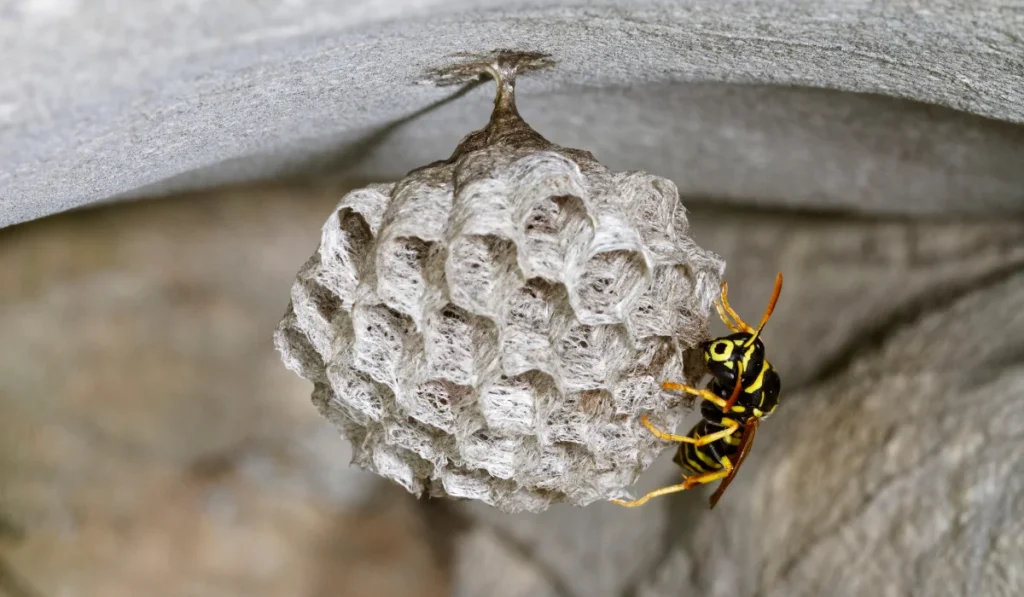
Paper wasps are slimmer than bald-faced hornets. A paper wasp nest is open and attaches under eaves, porch ceilings, or attic entry points.
They act as pollinators and control caterpillars, but nests near doorways or play areas can cause painful stings if disturbed.
European Hornet
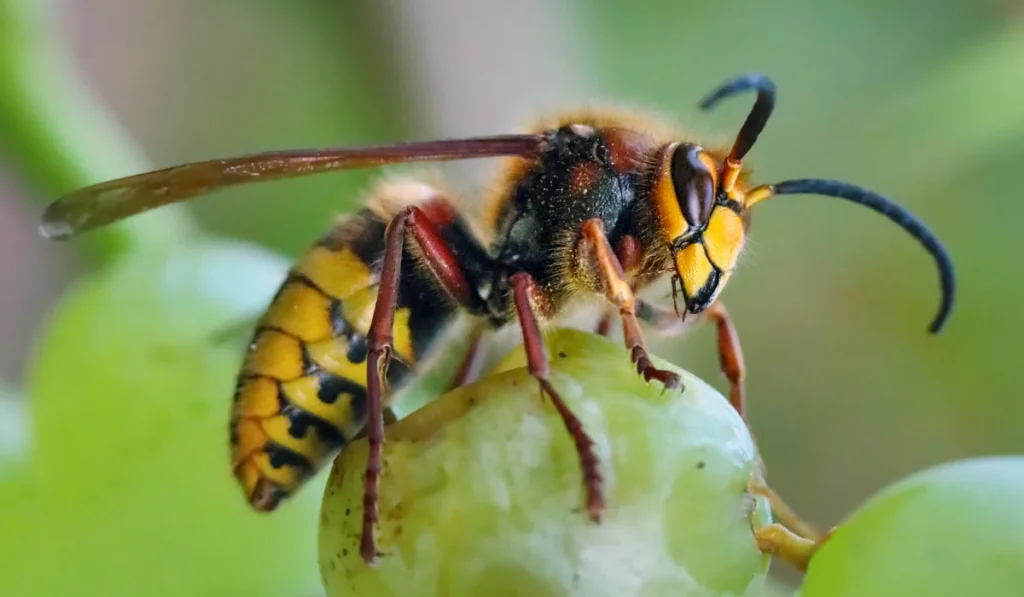
The European hornet is the only true hornet commonly found in Michigan. It is larger than most wasp species and more active at night, often flying toward lights.
Unlike bald-faced hornets and honey bees, European hornets prefer to nest in hollow trees, attics, or deep wall voids. Because they are active at night, they can surprise homeowners who mistake them for other wasps.
Which Stinging Insects Are Riskiest Near Your Home
Not all stinging insects pose the same risk. The location of the nest, colony size, and seasonal activity all play a role.
Nest Location Around Structures
When wasps build nests under eaves, inside attics, or in wall voids, the risk increases because of their proximity to daily activity. Routine tasks like lawn care, siding repairs, or opening a garage door can trigger defensive behavior.
In commercial pest control, we often find yellowjacket nests near trash cans, loading docks, and dumpsters. These environments encourage wasps to scavenge, which increases the chance of human contact.
Colony Size and Life Cycle
Social wasps expand their colonies throughout spring and summer as female workers feed larvae protein-rich foods such as caterpillars and other insects.
By late summer, colonies reach peak population levels. At this stage, new queens prepare for overwintering while workers shift toward sugar sources. This increase in activity leads to more frequent hornet and wasp stings.
Health Concerns and Allergic Reactions
Most insect stings cause temporary swelling and discomfort, but reactions can vary. Some individuals may experience allergic reactions that require medical attention.
Multiple stings from aggressive social wasps increase the risk. When a bald-faced hornet nest or a hidden yellowjacket colony is near high-traffic areas, pest control professionals in Michigan often recommend stinging insect control.
Schedule Hornet or Wasp Removal in Michigan
When you’re facing a bald-faced hornet vs wasp situation, proper identification is the first step. At Pest Pros of Michigan, technicians perform detailed inspections to determine the exact wasp species, nest location, and colony size before starting treatment.
For residential pest control, we safely treat nests along eaves, overhangs, and hard-to-reach areas. For commercial pest control, we address nests near signage, dumpsters, and structural crevices that pose a risk to staff and customers. Our goal is to control the active colony and help reduce the chance of new queens establishing nests next season, though results can vary.
If you’re seeing increased wasp activity, frequent hornet stings, or a visible wasp nest on your property, don’t wait for someone to get hurt.
Contact us today and let our team handle the problem safely.
FAQs
What is the difference between a bald-faced hornet and a true hornet?
A bald-faced hornet is actually a social wasp called Dolichovespula maculata. A true hornet in Michigan is the European hornet, Vespa crabro. They belong to different genera and have distinct coloration and nesting habits.
Are bald-faced hornets more aggressive than other wasps?
Bald-faced hornets are very defensive of their bald-faced hornet nest and can deliver multiple stings. Yellowjackets are often more aggressive around food sources in late summer. Professionals should handle both cases if nests are near homes or businesses.
Do wasps reuse old nests the following year?
Most social wasps do not reuse old nests. Fertilized new queens survive overwintering and build fresh nests in spring. However, they often return to the same general area, which is why preventative pest control services are helpful.

 Serving Michigan since 2018
 Pest-free guarantee
 Small, local business
 10+ years of pest control experience
 President and CEO of Pest Pros of Michigan
 Resident of Michigan