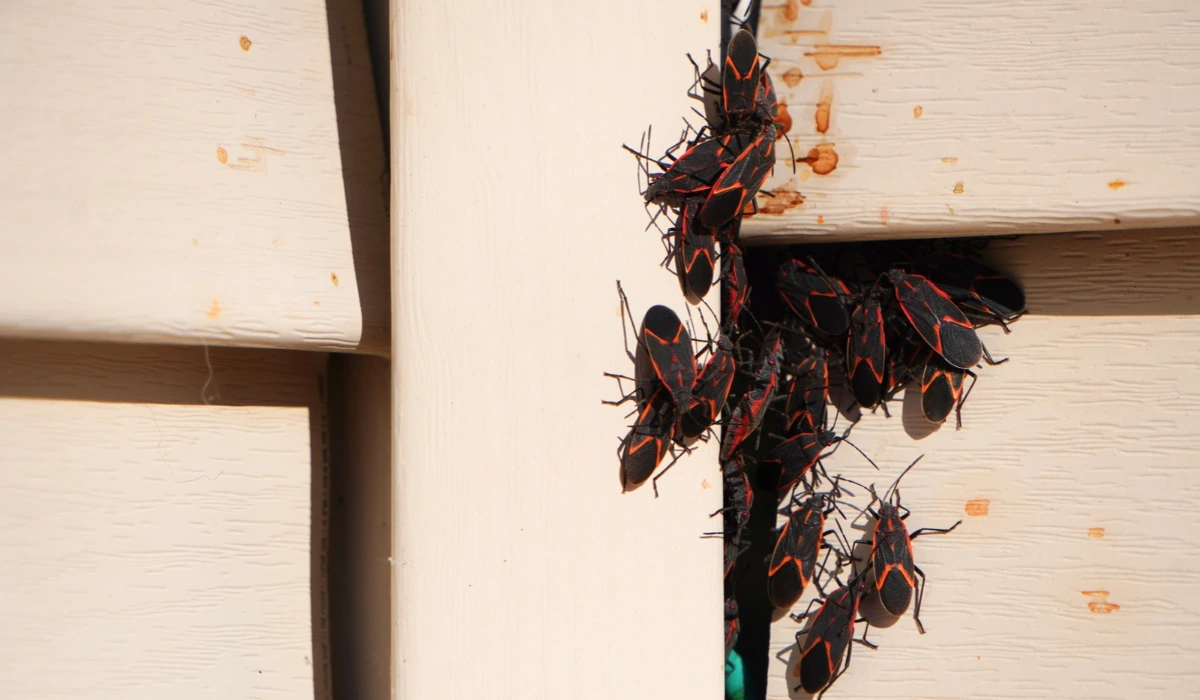
A Michigan boxelder bug is a black insect with red-orange markings that commonly gathers on warm exterior walls before winter. These bugs do not damage your home’s structure, feed on people, or establish a breeding population indoors. The real problem is seasonal entry: adults can slip through exterior gaps and spend winter behind siding, inside wall voids, and in other protected areas. Identifying them early and sealing those openings before fall activity builds can reduce the number that make it indoors.
Michigan Boxelder Bug Identification: What to Look For
Adult boxelder bugs are easy to recognize once you know their markings. According to University of Minnesota Extension’s boxelder bug guidance, adults are about half an inch long. Their bodies are mostly black, with narrow red-orange lines along the thorax and wings.
The bugs have a longer, flatter profile than several other insects that appear around Michigan homes. That shape, combined with the red-orange markings, is more useful for identification than color alone. Other house bugs in Michigan can become noticeable as seasons change, but they may require a different response once they get inside.
What Young Boxelder Bugs Look Like
Immature boxelder bugs, called nymphs, have much more red coloring than the adults. Their darker markings become more noticeable as they mature.
You are more likely to encounter nymphs outdoors around host plants during warmer weather. By fall, adult boxelder bugs become the bigger concern around homes because that is when they begin searching for winter shelter.
Boxelder Bugs Compared With Other Fall Invaders
Several Michigan pests approach buildings as cold weather nears, so a cluster on the siding does not automatically mean boxelder bugs.
| Pest | Typical Appearance | Fall Behavior Around Homes |
| Boxelder bug | Black, elongated body with red-orange markings | Gathers on warm surfaces and seeks winter shelter |
| Brown marmorated stink bug | Mottled brown, shield-shaped body | Moves toward protected building spaces for winter |
| Asian lady beetle | Rounded body that ranges from yellow-orange to red | Collects on exterior surfaces before seeking shelter |
A broad, shield-shaped insect is more likely to be a stink bug. Stink bugs in Michigan also move toward buildings in fall. Rounded yellow, orange, or reddish beetles may be Asian lady beetles, another seasonal invader that can gather on exterior walls.
Why Michigan Boxelder Bugs Gather on Houses in Fall
Boxelder bugs spend the warmer months outside around their host plants. Boxelder trees are their primary host, and boxelder is a maple species. They can also use other maples, so you may have boxelder bugs around your property even without a boxelder tree beside the house.
Their behavior changes as colder weather approaches. Adults begin searching for places where they can remain sheltered through winter. Cracks around siding, trim, windows, and other exterior features can lead to spaces that provide that protection.
Why Sunny Walls Draw Large Groups
Warm exterior surfaces are common gathering points during the fall migration. Colorado State University Extension’s boxelder bug guidance describes adults collecting on sun-warmed parts of buildings while seeking overwintering sites.
South- and west-facing walls often receive strong sunlight during the day, which can make them common aggregation areas in cool fall weather. The pattern can be striking: one side of a house may have a heavy concentration while shaded areas have far less activity.
The bugs are not feeding on the siding. They are gathering on a favorable surface while looking for shelter nearby. A wall that repeatedly attracts boxelder bugs is worth checking closely for openings before the next fall season.
Where They Enter
Boxelder bugs can take advantage of openings around:
- Window and door frames
- Damaged screens
- Siding and trim joints
- Soffits and vents
- Utility penetrations
- Foundation gaps
After entering, adults may settle behind exterior materials or inside wall voids. A bug that shows up at an interior window weeks later may have entered somewhere else along that exterior wall.
Are Michigan Boxelder Bugs Harmful?
Boxelder bugs are nuisance pests rather than structural pests. They do not eat framing, structural wood, fabric, or stored food. They also do not feed on people and are not considered biting household pests.
Their indoor impact is mostly inconvenience. Bugs may appear around windows, doors, ceilings, or other bright areas after spending time hidden inside the structure. Crushing them can stain some surfaces, so vacuuming is usually a cleaner option for bugs that make it into living areas.
Heavy exterior activity can still be frustrating, particularly around frequently used entrances. The number of bugs on the siding, however, should not be confused with structural damage.
Why They Show Up Inside During Winter
Boxelder bugs spend winter as adults. Indoor sightings during cold weather usually come from insects that entered the structure during fall, not from a population reproducing inside the home.
Warm conditions can make sheltered adults active again. When that happens, they may move out of concealed areas and appear around windows or other bright parts of a room.
If additional adults are still hidden in protected spaces, some may become active at different points during winter. That is why removing one visible bug does not always end indoor sightings for the season.
How to Prevent Boxelder Bugs Before Fall Entry
Prevention is most useful before boxelder bugs have moved into the structure. Late summer gives you time to inspect the exterior, make repairs, and close likely entry points before adults begin gathering heavily around the house.
Start with the areas where building materials meet. Check doors, windows, siding edges, soffits, vents, utility lines, and foundation transitions. Homes that have had boxelder bugs in previous years can provide another clue: the walls with the heaviest past activity deserve the closest inspection.
Seal Practical Entry Points
Repair torn screens and worn weather stripping, and close accessible cracks around trim and utility penetrations. Pay particular attention to openings near walls where boxelder bugs have gathered before.
Exterior maintenance will not eliminate every insect around the property. It can, however, reduce the number of easy routes from the siding into protected spaces.
Complete that work before fall aggregations become heavy. Once adults have moved behind siding or deeper into wall voids, exterior prevention has missed its best window for that season.
Should You Remove a Boxelder Tree?
A boxelder tree can support boxelder bug populations, but removing one tree is not a dependable fix for insects entering the house. Boxelder bugs can use other maples and may come from trees beyond your property.
For that reason, start with the structure itself. Closing entry points addresses the part of the problem you can control directly without removing a healthy tree solely because boxelder bugs are present.
What to Do When Boxelder Bugs Are Already Inside
If boxelder bugs are already in your living space, vacuuming is a practical way to remove them without crushing them against walls, curtains, or other finished surfaces.
Indoor removal deals with the bugs you can see, but it does not reach adults already hidden in inaccessible areas. Make note of where sightings occur so you can inspect the corresponding exterior walls and openings before the next fall migration.
Do Not Tear Into Walls for a Nuisance Pest
Boxelder bugs inside a wall void are not consuming the structure. Opening finished walls simply to reach individual adults is generally disproportionate to the problem.
Remove bugs that enter occupied rooms, then shift your attention to prevention. The following late summer is the better time to seal the routes that allowed them inside.
When Professional Boxelder Bug Control Makes Sense
Professional service becomes more useful when large groups return every year, bugs keep entering after accessible gaps have been sealed, or the main activity is concentrated around upper stories and other areas that are difficult to reach safely.
Timing matters. Exterior service is most useful while boxelder bugs are still active around the building. After adults have moved behind siding or into wall voids, much of the population may be inaccessible.
Pest Pros of Michigan includes boxelder bugs among the occasional invaders covered by its residential pest service options. That makes perimeter service a practical next step when exclusion alone is not keeping seasonal activity under control.
When a Perimeter Treatment Is Worth Considering
A perimeter treatment may make sense when your home has recurring fall aggregations around siding, foundations, windows, or roofline transitions. It can also help when the building has numerous exterior joints or difficult access points that make complete DIY exclusion unrealistic.
Professional identification is useful when more than one fall invader is present. A technician can distinguish boxelder bugs from other seasonal pests and focus service on the areas where the actual activity is occurring instead of treating the entire problem as a generic indoor bug issue.
Keeping Michigan Boxelder Bugs Outside This Fall
Boxelder bugs are easier to manage before they disappear into the structure. Check exterior gaps in late summer, repair screens and weather stripping, and pay close attention to sun-exposed walls where adults have gathered in previous years. If a few bugs make it indoors, vacuum them rather than crushing them on finished surfaces.
Recurring heavy activity calls for a different approach. Pest Pros of Michigan provides residential pest service for boxelder bugs and other occasional invaders in West Michigan. If bugs continue getting inside despite exclusion work, contact Pest Pros of Michigan to discuss exterior service before the next wave moves into wall voids.

 Serving Michigan since 2018
 Pest-free guarantee
 Small, local business