Hornets do not produce the kind of honey people harvest and eat. That job belongs to honey bees. Hornets are wasps, and in Southwest Michigan, the insects homeowners often call hornets are usually bald-faced hornets, European hornets, yellowjackets, or other wasp species.
The difference matters because a honey bee hive and an active hornet or wasp nest should not be handled the same way. Bees are important pollinators. Hornets and wasps can also have a role outdoors, but nests near patios, doors, play areas, rooflines, trees, or wall openings can create a sting risk.
Key Takeaways
- Hornets do not make edible honey like honey bees.
- Many “hornets” in Michigan are actually wasps.
- Honey bees and hornets have different nests and behavior.
- Active nests near people, pets, or entry points need caution.
- Professional identification helps avoid the wrong response.
Why Hornets Do Not Make Honey
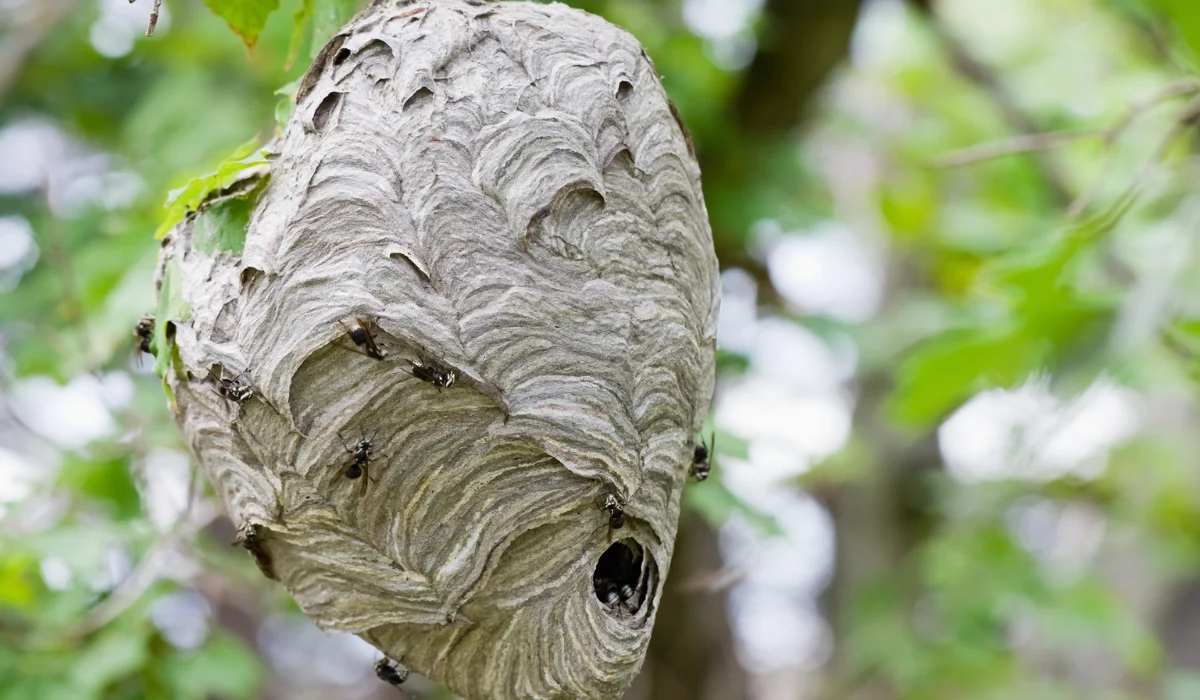
Honey bees collect nectar, process it, and store honey in wax combs so the colony can use it for food. Hornets do not build honey-producing hives. They build paper-like nests from chewed wood fibers and use the nest to raise their young.
Hornets and wasps may visit flowers, tree sap, fruit, sugary drinks, or outdoor food, but that does not mean they are making honey. They are usually feeding themselves, feeding larvae, or searching for protein and sugar sources around the property.
If you see a large paper nest in a tree, shrub, roof peak, attic area, or wall void, treat it as a stinging insect nest, not a honey source.
Hornets, Wasps, And Bees Are Not The Same
Michigan State University Extension explains that bees are different insects than hornets or wasps, and identification matters before anyone tries to handle a nest. A bee colony may need a different response than a wasp or hornet nest.
Here is the simple distinction:
- Honey bees are usually fuzzier and may nest in cavities or managed hives.
- Bald-faced hornets are black and white wasps that build enclosed paper nests.
- Yellowjackets are wasps that often nest in the ground, walls, or enclosed spaces.
- Paper wasps often build open, umbrella-shaped nests under eaves or overhangs.
A quick photo from a safe distance can help with identification, but do not move close to an active nest to get one.
Common Hornet And Wasp Nest Signs In Southwest Michigan
Southwest Michigan homeowners often notice stinging insect activity around yards, decks, sheds, garages, and rooflines during warm months. Activity can become more noticeable as nests grow through the season.
Watch for:
- A gray, paper-like nest hanging from a tree or roofline
- Repeated flight in and out of one wall gap or ground hole
- Wasps gathering around trash, fruit, or outdoor food
- Buzzing inside a wall, attic, shed, or soffit
- Stinging insects gathering near a patio, deck, or play area
- More insects appearing each time you walk near one spot
Our wasp, bee, and stinging insect control service is built around finding the source of the activity, identifying the insect, and treating the nest when removal or control is needed.
Why The Nest Location Matters
A nest high in a tree away from people may not create the same concern as a nest beside a door, walkway, grill, mailbox, or children’s play area. Location helps determine how quickly you should act.
Nests become more concerning when they are near:
- Entry doors
- Decks and patios
- Outdoor dining areas
- Playsets
- Garages or sheds
- Attic vents
- Wall openings
- Shrubs beside walkways
- Pet areas
Michigan State University Extension notes that larger yellowjacket and bald-faced hornet nests with a paper-like envelope can be more challenging and are best left to pest control professionals. If the nest is active and close to daily activity, do not wait for someone to get stung before addressing it.
What To Do If You Find A Hornet Nest
The safest first step is distance. Do not hit the nest, spray randomly, seal an entry hole, or try to knock it down while insects are active. Stinging insects can defend the nest quickly when disturbed.
A safer approach is to:
- Keep children and pets away from the area.
- Avoid mowing, trimming, or using loud tools near the nest.
- Keep outdoor food, drinks, and trash covered.
- Watch the flight path from a safe distance.
- Do not seal wall openings while insects are still active.
- Call for help if the nest is near people or hard to reach.
MSU’s yellowjacket guidance warns against plugging nest openings in exterior house walls because it can force wasps farther into the structure. That is one reason professional inspection matters when insects are entering a wall, attic, or siding gap.
What If The Nest Belongs To Bees?
If the insects are honey bees, the response may be different. Bees are important pollinators, and a honey bee colony should not be treated like a hornet nest without proper identification.
Signs that may point to bees include steady traffic to a cavity, a fuzzier body shape, and activity around flowers or a wall opening. Honey bees may nest inside walls, trees, sheds, or other cavities.
If we inspect the area and find bees instead of hornets or wasps, we can help you understand the next step. The goal is to solve the problem safely without misidentifying beneficial pollinators.
How We Help With Hornets And Stinging Insects
We start by inspecting the activity, identifying the insect, and locating the nest or entry point. That matters because bald-faced hornets, yellowjackets, paper wasps, and bees may all require a different approach.
For Southwest Michigan homes, our team can help with:
- Visible nest inspection
- Hornet and wasp identification
- Nest treatment when needed
- Bee activity inspection
- Wall void and attic activity checks
- Follow-up guidance to reduce future nesting
We also provide local service for nearby communities, including wasp, hornet, and bee control in South Haven, where stinging insect activity can affect yards, porches, lake homes, sheds, and outdoor gathering spaces.
How To Reduce Nesting Around Your Home
You cannot stop every flying insect from entering the yard, but you can reduce the conditions that make nests and foraging activity more likely.
Focus on simple exterior steps:
- Keep trash lids tight.
- Clean spills from outdoor food and drinks.
- Pick up fallen fruit when possible.
- Seal small exterior gaps after old nests are inactive.
- Repair torn screens and loose vent covers.
- Check eaves, sheds, and deck areas in spring.
- Keep shrubs trimmed away from doors and walkways.
Do not seal an active nest opening. Wait until the activity is properly treated and inactive, then close gaps to help prevent future nesting.
Schedule Stinging Insect Control In Southwest Michigan
If you found a hornet, wasp, yellowjacket, or bee nest near your home, we can inspect the activity and recommend the right next step. Identification comes first, especially when the nest is close to people, pets, doors, patios, or wall openings.
Contact Pest Pros of Michigan to request stinging insect service in Southwest Michigan.
Frequently Asked Questions
Do Hornets Produce Honey Like Bees?
No. Hornets do not produce edible honey like honey bees. They may feed on sugary materials, nectar, sap, fruit, or outdoor food, but they do not build honey-producing hives.
Are Hornets And Wasps The Same Thing?
Hornets are a type of wasp. In Michigan, many insects people call hornets may be bald-faced hornets, yellowjackets, paper wasps, or European hornets. Proper identification helps determine the right response.
What Does A Hornet Nest Look Like?
Many hornet nests look gray and paper-like. Bald-faced hornet nests are often enclosed and may hang from trees, shrubs, roof peaks, or structures. Yellowjackets may nest in the ground or inside wall voids.
Should I Remove A Hornet Nest Myself?
We do not recommend disturbing an active nest, especially near doors, patios, play areas, or wall openings. Hitting, spraying, or sealing the nest can make stinging insects defensive.
When Should I Call Pest Pros Of Michigan?
Call when the nest is active, close to people or pets, hard to reach, inside a wall or attic, or when you are unsure whether you have bees, hornets, yellowjackets, or wasps.

 Serving Michigan since 2018
 Pest-free guarantee
 Small, local business
 10+ years of pest control experience
 President and CEO of Pest Pros of Michigan
 Resident of Michigan