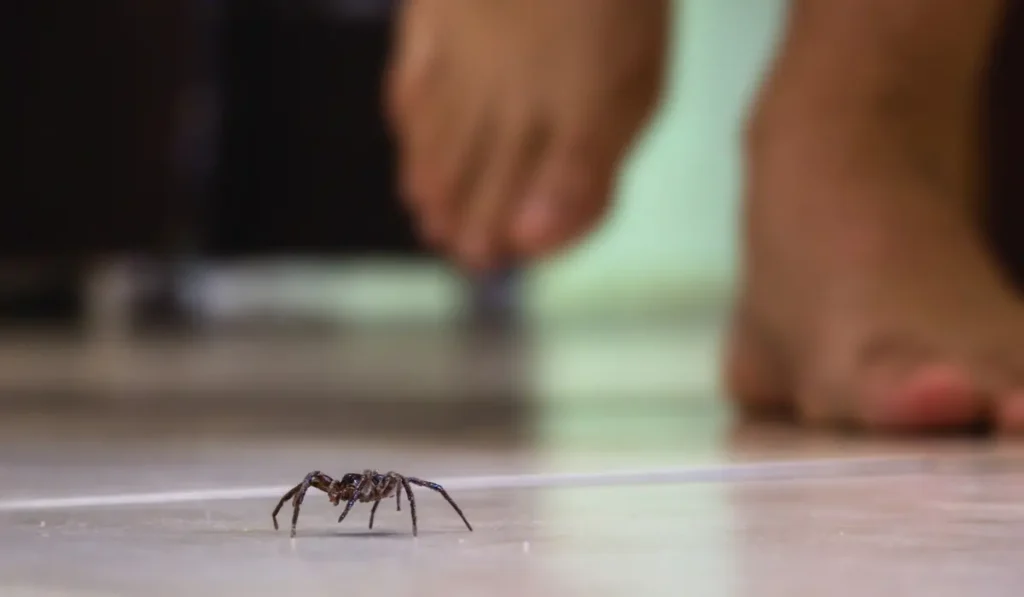
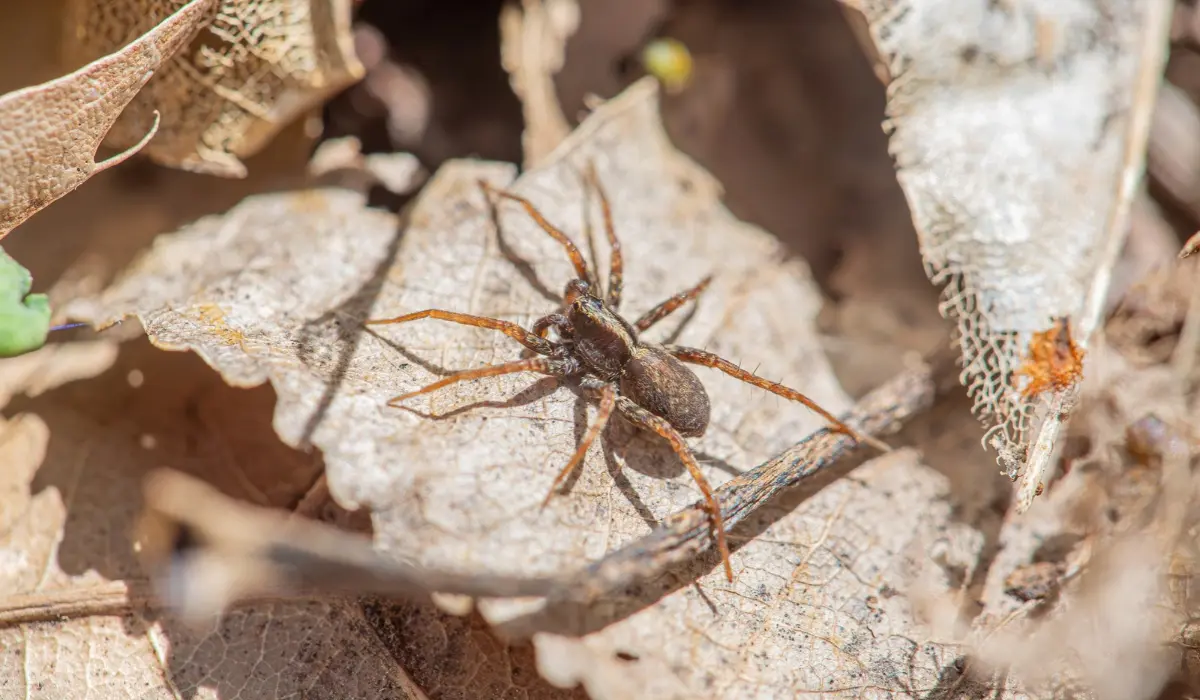
A large, hairy spider darts across your basement floor and disappears beneath a storage shelf. Is it dangerous? Could it be a brown recluse? If you’ve found a wolf spider in Michigan, there’s usually little reason for concern. Wolf spiders are ground-hunting spiders that feed on insects and generally avoid people. An occasional indoor sighting doesn’t establish an infestation. Here’s how to recognize one, understand its behavior, and keep unwanted spiders out of your home.
Are Wolf Spiders in Michigan Dangerous?
Wolf spiders can look intimidating, but they generally pose little risk to people. They have venom for catching prey and can bite when trapped or handled, although they usually try to escape contact.
These spiders belong to the family Lycosidae. Unlike spiders that wait for insects to become trapped in webs, wolf spiders hunt along the ground. You may encounter them in grass, gardens, leaf litter, or sheltered areas around your foundation.
A wolf spider running across the garage floor is usually moving between hiding places or searching for food. Its speed can make the encounter startling, but fast movement isn’t a sign of aggression.
How to Identify a Wolf Spider in Michigan
Wolf spider identification works best when you consider several features together. A brown body or large size isn’t enough to identify one because other Michigan spiders can look similar.
Body Shape, Size, and Markings
Wolf spiders typically have sturdy bodies, strong legs, and noticeable hair. Their coloring often includes brown, gray, and darker markings that blend with soil, leaves, and other outdoor surfaces.
Some wolf spiders have stripes along their backs, while others have mottled patterns. Size varies by species, and long legs can make an individual appear larger than its body actually is.
If you’ve spotted a large brown spider, pay attention to its overall shape and markings. A clear photograph can be useful, especially if the spider has already moved into a hiding place.
The Wolf Spider’s Distinctive Eyes
Wolf spiders have eight eyes arranged in three rows. Four small eyes form the lower row, two prominent eyes sit in the middle, and another pair appears above them.
The large middle eyes are one of the group’s most recognizable features. They can help distinguish wolf spiders from other ground-dwelling spiders with similar coloring.
You may not be able to see the eye pattern without magnification or a close photograph. Don’t handle an unfamiliar spider just to examine its face.
The University of Minnesota Extension’s information on spiders provides a useful reference for recognizing household spiders and understanding their behavior.
Wolf Spider vs. Brown Recluse: What Is the Difference?
Brown recluses are frequently mentioned when homeowners find an unfamiliar brown spider. Wolf spiders and brown recluses look different in several ways, and their known distributions are also different.
Color alone isn’t enough to identify either spider. Their body markings and eye arrangements offer more useful clues.
Physical Differences
Wolf spiders are usually hairy and patterned, with sturdy legs and a compact appearance. Brown recluses generally have a more uniform tan or brown body and less conspicuous hair.
Wolf spiders have eight eyes in three rows. Brown recluses have six eyes arranged in three pairs. A brown recluse may also have a darker violin-shaped marking, but that marking isn’t sufficient for identification on its own.
| Feature | Wolf Spider | Brown Recluse |
| Body | Typically sturdy and hairy | Generally less hairy-looking |
| Color | Brown or gray, often patterned | Usually more uniform tan or brown |
| Eyes | Eight, arranged in three rows | Six, arranged in three pairs |
| Markings | Stripes or mottled patterns are common | May have a darker violin-shaped marking |
| Behavior | Hunts actively along the ground | Often remains concealed in sheltered places |
| Michigan occurrence | Occurs in Michigan | Outside its commonly recognized established range |
These differences are helpful, but homeowners shouldn’t attempt to pick up a spider to check its eyes. A photograph or professional identification is preferable when the species is uncertain.
Do Brown Recluses Live in Michigan?
Michigan is outside the commonly recognized established range of brown recluse spiders. Individual spiders can occasionally be transported beyond their usual distribution, so an isolated occurrence isn’t impossible.
Finding a brown spider in a Michigan home, however, doesn’t establish that it’s a brown recluse. The distinction between brown recluse and common house spiders in Michigan depends on several features, not simply body color.
Michigan State University Extension is a relevant local educational resource for insect and spider identification. When a spider’s identity matters because of possible health concerns, accurate identification is more useful than relying on photographs of vaguely similar species.
Fishing spiders and some funnel-weaving spiders can also resemble wolf spiders at a glance. That is another reason to avoid identifying spiders by size or color alone.
How Wolf Spiders Hunt and Care for Their Young
A wolf spider’s behavior can be more distinctive than its appearance. These spiders hunt on foot, and females have an unusual way of carrying their eggs and newly hatched young.
Why Wolf Spiders Don’t Build Capture Webs
Wolf spiders move through grass, gardens, leaf litter, and other ground-level habitats searching for insects and small arthropods. Some pursue prey, while others remain hidden until something moves nearby.
Certain species use burrows or sheltered retreats. These locations provide cover while the spider isn’t actively moving.
Wolf spiders produce silk, but they don’t construct the familiar capture webs used by many other spiders to trap flying insects. Webs around basement windows, porch lights, and garage corners are usually made by different spider groups.
Outdoors, wolf spiders are part of the natural community of predators that feed on small arthropods. Their presence in a lawn or garden doesn’t automatically mean a pest problem needs attention.
Why Wolf Spiders Carry Babies on Their Backs
Female wolf spiders carry their egg sacs attached behind their abdomens. The rounded silk sac stays with the female as she moves through her surroundings.
After the eggs hatch, the spiderlings climb onto their mother’s back and remain there temporarily. They eventually disperse and begin living independently.
A female carrying spiderlings can look unusual because her back may appear covered with tiny spiders. This is normal reproductive behavior for wolf spiders, even though it can surprise someone who sees it indoors.
Why Wolf Spiders Enter Michigan Homes
Wolf spiders spend much of their lives outdoors, but they can wander through openings around a building while moving across the ground. Homes with accessible gaps near doors, foundations, and garage entrances provide potential routes indoors.
Where You’re Most Likely to Find Them
Basements, garages, crawl spaces, and ground-floor rooms are common places to encounter wandering spiders. These areas often connect directly or indirectly to exterior openings.
A garage door with a worn bottom seal can leave a gap along the concrete. Basement openings around utility lines or accessible foundation cracks can also allow small arthropods to enter.
Sheltered corners and stored items provide places for spiders to hide. In some homes, small insects and other arthropods may also contribute to spiders gathering in Michigan basements.
Finding a spider near cardboard boxes or furniture doesn’t prove it has lived there for months. It may simply have moved into cover after entering.
Why You May Notice Them During Fall
Some Michigan homeowners notice wolf spiders in fall, especially around garages and lower levels of the house. Seasonal changes can influence outdoor spider activity and when people encounter them.
That doesn’t mean every wolf spider deliberately moves inside to escape winter. Species differ in their seasonal patterns, and indoor sightings can occur at other times of year.
When sightings repeat, look for accessible ground-level openings and places where insects gather. Those details are more useful for prevention than the month in which you found the spider.
Do Wolf Spiders Bite?
Wolf spiders can bite, but ordinary encounters rarely lead to bites. They generally try to avoid people and are more likely to bite if caught against the skin or handled.
A wolf spider bite may produce localized discomfort, redness, or swelling. Reactions vary, and a skin mark alone cannot reliably identify the spider responsible.
An unexplained bump or sore should not automatically be labeled a spider bite because a spider was found nearby. If there are health concerns following a suspected bite, seek guidance from a qualified healthcare professional rather than relying on the appearance of the mark.
Avoid picking up an unidentified spider with your hands. Removing it without direct contact reduces the chance of trapping it against your skin.
How to Keep Wolf Spiders Out of Your Michigan Home
The most useful prevention measures address how spiders enter and what draws them toward the building. Focus on exterior openings, nearby hiding places, and insect activity around entrances.
Close Ground-Level Entry Points
Check the doors leading to your yard, patio, and garage. Door sweeps should fit closely against the threshold, and weatherstripping should not leave visible openings along the frame.
Inspect accessible cracks around the foundation and gaps where pipes or other utilities enter. Properly sealing suitable openings can reduce access for spiders and other small arthropods.
Garage doors deserve particular attention. A damaged bottom seal can leave a continuous gap that is easy to overlook when the door is closed.
If spiders keep appearing near the same basement wall or doorway, examine that area before making changes elsewhere.
Reduce Insect Activity and Outdoor Shelter
Wolf spiders hunt insects and other small arthropods, so reducing prey activity near the home may help limit spider activity around entrances.
Outdoor lights can attract flying insects. Where practical, adjusting lighting placement or turning off unnecessary lights can reduce gatherings near doors and windows.
Loose boards, unused containers, and stored materials against exterior walls create sheltered spaces. Move these items away from the foundation, and trim dense vegetation where it provides cover immediately beside the house.
These steps won’t eliminate outdoor spiders, which are part of the surrounding environment. They can, however, make frequently used entrances and storage areas less accommodating.
What to Do When You Find One Indoors
If you’re comfortable removing the spider, place a container over it and carefully slide a stiff piece of paper underneath. You can then release it outdoors away from doors and other frequently used entrances.
Avoid grabbing it directly, particularly when identification is uncertain.
If the spider runs beneath furniture, there’s usually no need to pull the room apart. Check the closest exterior openings and pay attention to whether similar sightings happen again.
For recurring problems, how spiders enter homes often matters more than where the last spider disappeared.
When to Contact Pest Pros of Michigan About Wolf Spiders
A single wolf spider in the basement or garage usually doesn’t require a full pest control service. Repeated indoor sightings, unfamiliar spiders you can’t confidently identify, or persistent insect activity around the house may justify a closer look.
Professional spider control can help address recurring activity and identify conditions that contribute to unwanted encounters. The right response should reflect what is happening at your property instead of treating every outdoor spider as a problem.
If spiders keep appearing in your home, Pest Pros of Michigan provides pest and spider control services for homeowners in Kalamazoo, Grand Rapids, and nearby communities. Contact Pest Pros of Michigan to discuss what you’ve been seeing and arrange an evaluation of your property.
Frequently Asked Questions
Are Wolf Spiders Dangerous in Michigan?
Wolf spiders generally pose little risk to people. They have venom for catching prey, but they usually avoid human contact. A bite can occur if a spider is trapped or handled. Their size and speed may be startling, although these characteristics don’t mean the spider is aggressive.
Can Wolf Spiders Be Mistaken for Brown Recluses?
Yes. Both can appear brown, but wolf spiders tend to be hairier and more patterned. Wolf spiders have eight eyes in three rows, while brown recluses have six eyes in three pairs. Michigan is outside the commonly recognized established range of brown recluse spiders, making careful identification especially useful.
Why Does a Wolf Spider Carry Babies on Its Back?
Female wolf spiders carry their egg sacs behind their abdomens. After hatching, the young spiderlings ride on the mother’s back for a period before dispersing. Seeing this behavior indoors can be surprising, but it doesn’t establish that many adult spiders are living inside your home.
Why Do Wolf Spiders Appear in Basements During Fall?
Wolf spiders move across the ground while hunting and may enter through door gaps, foundation openings, or other accessible spaces. Some homeowners notice them during fall, but indoor encounters aren’t limited to that season. Repeated sightings are a reason to inspect entry points and insect activity around the home.

 Serving Michigan since 2018
 Pest-free guarantee
 Small, local business