Small holes in your lawn and a striped animal darting underground may point to a ground squirrel in Michigan. The thirteen-lined ground squirrel is a native species that lives in open grassy areas, including residential yards. Although these animals rarely threaten people, their digging can disturb turf, garden beds, and soil around outdoor structures. Knowing what they look like, how to recognize an active burrow, and when to address the problem will help you protect your property without unnecessary wildlife removal.
What Ground Squirrels Live in Michigan?
The thirteen-lined ground squirrel (Ictidomys tridecemlineatus) is the species homeowners are most likely to encounter in Michigan’s open, grassy residential areas. Unlike gray squirrels, which regularly climb trees and use aboveground nests, thirteen-lined ground squirrels rely on underground burrows for shelter.
The University of Michigan’s Animal Diversity Web species account describes the thirteen-lined ground squirrel as an inhabitant of open grassland environments. Residential lawns with suitable soil can provide similar conditions, especially near fields and other open spaces.
What Does a Thirteen-Lined Ground Squirrel Look Like?
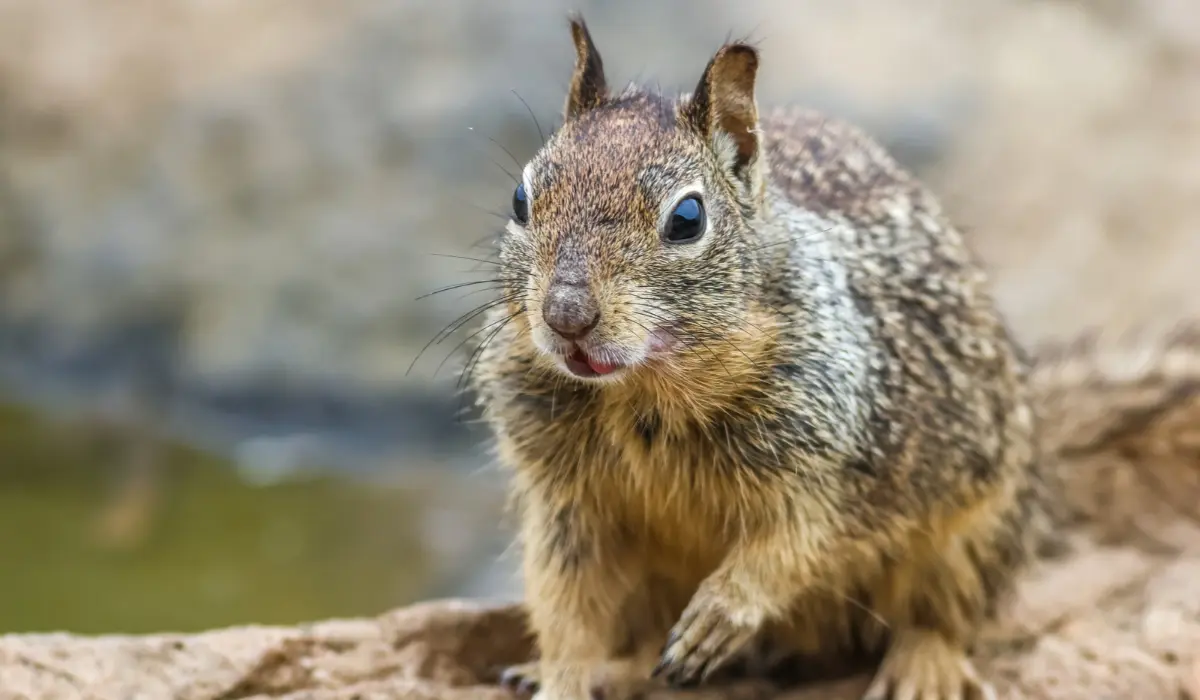
Look for a small, slender animal with alternating light and dark stripes running along its back. The darker bands contain rows of pale spots, giving the coat a pattern that distinguishes it from a chipmunk’s more continuous stripes.
Thirteen-lined ground squirrels also have small ears and relatively narrow tails. Their brown and tan coloring makes them difficult to see against dry grass and exposed soil, but the striped and spotted back is a useful clue when you get a clear view.
Where Do Ground Squirrels Live in Michigan?
Open fields, grassy parks, and maintained lawns provide suitable ground squirrel habitat. The animals forage aboveground and retreat into underground tunnels when they need shelter.
Homeowners around Kalamazoo and Grand Rapids may notice them on properties bordering fields or other grassy land. An established lawn can attract ground squirrels even when it’s regularly maintained, because short grass is part of the habitat they naturally use.
Ground Squirrel vs. Chipmunk, Tree Squirrel, Gopher, and Groundhog
A striped animal running across the lawn is easy to mistake for a chipmunk. Larger burrows can also lead homeowners to confuse ground squirrels with groundhogs or other digging mammals.
Start with the animal’s markings, body size, tail, and surroundings. These features provide more reliable identification clues than a hole in the ground.
| Animal | What It Looks Like | Where You’ll Usually Notice It |
| Thirteen-lined ground squirrel | Small, slender body with narrow stripes and spotted dark bands | Open grass, lawns, and underground burrow entrances |
| Eastern chipmunk | Small body with distinct facial and back stripes | Wooded edges, stone walls, logs, and nearby burrows |
| Eastern gray squirrel | Larger body with a long, bushy tail | Trees, branches, fences, and lawns beneath trees |
| Pocket gopher | Compact body with specialized digging features and a short tail | Underground tunnels and areas with excavated soil mounds |
| Groundhog | Large, stocky body with strong digging limbs | Grassy areas near substantial burrow entrances |
Ground Squirrel vs. Chipmunk
Eastern chipmunks and thirteen-lined ground squirrels both have striped coats and use underground burrows. The differences become clearer when you examine their markings.
Chipmunks have prominent stripes along their faces, while thirteen-lined ground squirrels have alternating stripes and spots running across their backs. Chipmunks also frequently use wooded edges, fallen logs, and stone walls for cover.
Ground squirrels are more closely associated with open grassy areas. If the animal spends much of its time in short grass away from dense cover, its surroundings support a ground squirrel identification.
Ground Squirrel vs. Tree Squirrel
Eastern gray squirrels are larger than thirteen-lined ground squirrels and have distinctly bushy tails. They’re also strong climbers that regularly move between trees, fences, and rooftops.
Ground squirrels remain closer to the soil and use underground burrows instead of elevated nests. Watching how an animal moves around the property can help distinguish these squirrels in Michigan, particularly when several species visit the same yard.
Ground Squirrel vs. Gopher
Pocket gophers and ground squirrels are different groups of rodents. Pocket gophers are adapted for underground digging and spend most of their lives below the soil.
Their excavation often creates noticeable mounds of displaced earth. Thirteen-lined ground squirrels, by comparison, regularly emerge from their burrows to forage aboveground.
The name “gopher” is sometimes used loosely for several ground-dwelling rodents. For an accurate identification, rely on the animal’s appearance and behavior instead of the name alone.
Ground Squirrel vs. Groundhog
Groundhogs are much larger than thirteen-lined ground squirrels. Their heavy bodies, powerful digging limbs, and substantial burrows make them a different kind of yard nuisance.
A large entrance beneath a shed or near a patio deserves particular attention because it may indicate groundhog activity. The size of the animal and its burrow location can help distinguish groundhog habits and burrow damage from the smaller disturbances associated with ground squirrels.
What Do Ground Squirrel Holes and Burrows Look Like?
Ground squirrel holes typically appear as relatively small openings at ground level. They lead into underground tunnels used for shelter, nesting, and hibernation.
You may notice bare soil around the entrance or a patch of disturbed grass. Some openings are difficult to see until you’re standing nearby, particularly when the surrounding lawn is uneven.
A hole’s appearance offers a starting point, but it cannot confirm the species on its own. Chipmunks and other small mammals also use underground burrows.
How Can You Tell Whether a Burrow Is Active?
Watching the entrance is the most useful first step. If a striped animal repeatedly enters and exits the same opening, you have stronger evidence that it’s using the burrow.
Other clues include fresh soil movement or newly disturbed grass around the entrance. These changes suggest activity, although they don’t identify the animal responsible.
Observe from a distance and take a photograph when possible. Avoid standing directly beside the entrance or filling the hole before determining whether an animal is inside.
Where Do Ground Squirrel Burrows Appear?
Ground squirrels commonly dig in open grassy spaces with suitable soil. Around a home, that may include lawns, garden edges, and grassy areas bordering patios or walkways.
Pay attention to openings close to places you regularly walk or mow. A small hole in a distant lawn area may cause little inconvenience, while repeated digging beside a paved walkway can create an ongoing maintenance concern.
Mark or photograph new openings so you can compare their locations during later inspections. This makes it easier to recognize whether digging is continuing in the same area.
What Damage Can Ground Squirrels Cause?
Most ground squirrel damage involves turf, planting areas, and disturbed soil. These animals are generally more of a landscaping nuisance than a direct danger to homeowners.
The amount of damage depends on where the burrows are located and whether activity continues. An isolated opening in an unused section of lawn is different from repeated excavation beside a patio or garden.
Lawn Damage From Burrowing
Ground squirrel burrows leave openings in the turf that can interrupt mowing and make the lawn uneven underfoot. Fresh digging may expose soil or loosen grass around the entrance.
Where activity continues, the same area may develop additional bare patches. These changes are often more frustrating in frequently used parts of the yard than in open spaces away from regular foot traffic.
Before repairing damaged turf, determine whether the burrow is active. Otherwise, the animal may continue using the area after you’ve filled the opening.
Damage to Gardens, Seeds, and Bulbs
Thirteen-lined ground squirrels eat seeds, plant material, insects, and other small animal food sources. Gardens can provide feeding opportunities, particularly where seeds have recently been planted.
Digging may loosen soil around young vegetables or disturb newly established plants. If an animal repeatedly forages in the same bed, the damage can interfere with planting and garden maintenance.
Missing flower bulbs or damaged roots aren’t enough to identify ground squirrels as the cause. Other wildlife can produce similar damage, so look for animal sightings and nearby activity before selecting a control method.
Burrows Near Patios, Walkways, and Foundations
Burrowing near patios and walkways deserves attention because digging can disturb the soil surrounding these structures. Repeated excavation may be a concern where the ground supports paving or landscaping features.
Inspect the area for loose soil, new gaps along paving edges, or visible settling. These changes are more useful indicators of a potential problem than the presence of a burrow alone.
A hole near your foundation doesn’t prove that the animal has caused structural damage. If you notice significant cracking, movement, or settlement, have a qualified professional determine the cause before making repairs.
When Are Ground Squirrels Active in Michigan?
Thirteen-lined ground squirrels are primarily active during daylight, making them easier to identify when they’re foraging aboveground. Their activity also changes substantially with Michigan’s seasons.
They spend an extended period underground during hibernation, unlike gray squirrels that remain visible through winter. The time of year can therefore affect whether a burrow shows obvious surface activity.
Spring and Summer Activity
During the warmer months, ground squirrels leave their burrows to search for food and move through nearby grassy areas. You may see them pause near an entrance or retreat underground when approached.
Spring and summer sightings provide opportunities to identify the species and locate active burrows. If you’ve noticed several holes, watch which openings the animals actually use.
Pay attention to activity around newly planted gardens and heavily used lawn areas. These observations can help you decide where protective barriers or other preventive changes would be most useful.
Do Ground Squirrels Hibernate in Winter?
Yes. Thirteen-lined ground squirrels hibernate underground through much of Michigan’s colder season. Their emergence and return to hibernation vary with environmental conditions and individual animals.
An entrance that shows no activity during winter isn’t necessarily abandoned. Closing a burrow based only on the absence of sightings could disturb an animal sheltering belowground.
If a winter burrow is close to a structure or walkway, document its location and seek appropriate guidance before sealing it.
How to Keep Ground Squirrels Out of Your Yard
Ground squirrel prevention works best when you reduce accessible food sources and protect the parts of your property where burrowing would cause problems.
Because thirteen-lined ground squirrels naturally inhabit open grass, changing lawn appearance alone may not discourage them. Targeted garden protection and regular monitoring are more practical starting points.
Remove Accessible Food Sources
Seeds and other available foods can attract wildlife into residential yards. Cleaning up food that accumulates around your property helps reduce unnecessary feeding opportunities.
Start with these measures:
- Remove spilled seed beneath bird feeders.
- Keep outdoor animal feed in secure containers.
- Clean up food scraps around patios and outdoor eating areas.
- Cover vulnerable seedbeds where wildlife repeatedly forages.
These steps won’t eliminate every natural food source in your yard. They can, however, make particular areas less attractive for repeated feeding.
Maintain Landscaping and Monitor Burrows
An organized yard makes new digging easier to spot. Check lawn edges, planting beds, and areas where you’ve previously found openings.
Remove unnecessary debris that makes the ground difficult to inspect. If you discover a fresh hole, photograph its location and check later for additional disturbance.
Avoid relying on shorter grass as a deterrent. Thirteen-lined ground squirrels already prefer open areas with relatively short vegetation, so mowing more closely won’t necessarily reduce their activity.
Protect Gardens With Physical Barriers
Garden fencing and protective screening can help keep burrowing wildlife away from vulnerable plants. The design needs to account for animals attempting to pass beneath the barrier.
Check that screening fits securely and doesn’t leave gaps along the edges. Raised beds may also benefit from protective barriers where digging regularly disturbs the surrounding soil.
Focus on the beds or planting areas experiencing repeated problems. Protecting a specific garden is generally more manageable than attempting to exclude ground squirrels from an entire open lawn.
Should You Fill Ground Squirrel Holes?
Filling an active burrow isn’t a dependable ground squirrel control method. If an animal is still using the tunnel, it may reopen the entrance or dig elsewhere.
Blocking an occupied burrow can also interfere with animals sheltering underground. Before repairing the area, observe the opening and determine whether it remains active.
For persistent digging near patios or other sensitive locations, seek advice about appropriate wildlife management before altering the burrow.
When Is Professional Ground Squirrel Control Necessary?
An occasional ground squirrel sighting doesn’t always require intervention. If the animal is foraging in an open area without causing meaningful damage, observation may be sufficient.
Professional evaluation becomes more useful when new burrows continue appearing, digging repeatedly affects garden beds, or activity occurs beside structures and paved surfaces.
What Can a Wildlife Inspection Determine?
The first question is which animal is actually using the property. A chipmunk, groundhog, or thirteen-lined ground squirrel may require a different management approach.
An inspection can help identify active locations, assess visible disturbance, and determine whether exclusion or habitat changes are appropriate. It can also help homeowners avoid repairing a burrow area while the animal continues using it.
The goal is to match the response to the species and the specific property concern instead of assuming every hole requires removal.
What Are Michigan’s Rules for Trapping and Relocation?
Wildlife trapping and relocation in Michigan are subject to state requirements that depend on the animal and circumstances involved.
The Michigan Department of Natural Resources is the appropriate authority for checking current rules before attempting to capture, handle, or relocate a ground squirrel.
Don’t assume that moving an animal to another property is automatically permitted. Confirm the applicable requirements or consult a qualified wildlife control professional before proceeding.
Protect Your Michigan Yard With Pest Pros of Michigan
Ground squirrels generally create more lawn and garden concerns than direct threats to your home. Identifying the animal early helps you avoid unnecessary removal efforts and focus on the areas where digging is causing trouble.
Start by checking for active burrows, reducing accessible food, and protecting vulnerable garden beds. Repeated digging near patios, walkways, or foundations deserves closer attention, particularly when soil conditions appear to be changing.
If you’re dealing with persistent burrows or aren’t sure which animal is responsible, Pest Pros of Michigan can help you discuss the concern and available pest and wildlife service options. Homeowners in Kalamazoo, Grand Rapids, and surrounding communities can contact Pest Pros of Michigan to describe the activity and ask about an appropriate property assessment.
Frequently Asked Questions
Are Ground Squirrels Common in Michigan?
The thirteen-lined ground squirrel is native to Michigan and occurs in suitable open grassy habitats. Homeowners may see these animals in lawns, fields, parks, and similar areas. Their presence varies with local habitat and season, so the animal’s markings and behavior are more useful for identification than the location alone.
What Do Ground Squirrel Holes Look Like?
Ground squirrel holes generally appear as relatively small openings at ground level, sometimes surrounded by disturbed grass or exposed soil. The entrance leads to an underground burrow. Because chipmunks and other mammals create similar openings, watching an animal repeatedly use the hole provides stronger evidence of its identity.
Can Ground Squirrels Damage a House Foundation?
Ground squirrel digging can disturb soil near a foundation, but finding a burrow nearby doesn’t establish structural damage. Look for visible soil loss, settlement, or changes around adjacent paving. Significant cracks or movement should be evaluated by a qualified professional to determine the actual cause before repairs begin.

 Serving Michigan since 2018
 Pest-free guarantee
 Small, local business