The Michigan dog tick, also called the American dog tick, is a brown tick with pale markings that’s commonly found in grassy and brushy areas. If you’ve discovered one attached to your skin or your dog’s coat, remove it promptly rather than waiting to identify it. American dog ticks aren’t established vectors of Lyme disease, but they can transmit pathogens linked to other illnesses. Knowing what distinguishes them from deer ticks, where you’re likely to encounter them, and how to prevent bites will help you make informed decisions after finding a tick.
What Is the Michigan Dog Tick?
The American dog tick (Dermacentor variabilis) is one of the tick species found in Michigan. It feeds on the blood of mammals, including dogs and people, and can attach when a host brushes against vegetation where the tick is waiting.
American dog ticks don’t fly or jump. They use a behavior called questing, holding onto vegetation and extending their front legs to make contact with a passing host. This explains how a dog can pick up a tick during a walk without coming into direct contact with another animal.
Where American Dog Ticks Live
Grassy fields, overgrown trails, and brushy property edges provide suitable conditions for American dog ticks. These are familiar settings around Kalamazoo, Grand Rapids, and other communities where residential neighborhoods border open land.
A tick found on your dog doesn’t necessarily mean it came from your lawn. It could have attached during a walk or another outdoor activity. Consider where your pet has been before deciding which areas of your property need attention.
The Centers for Disease Control and Prevention’s tick information covers tick identification, bites, and prevention practices for people who spend time outdoors.
How to Identify an American Dog Tick
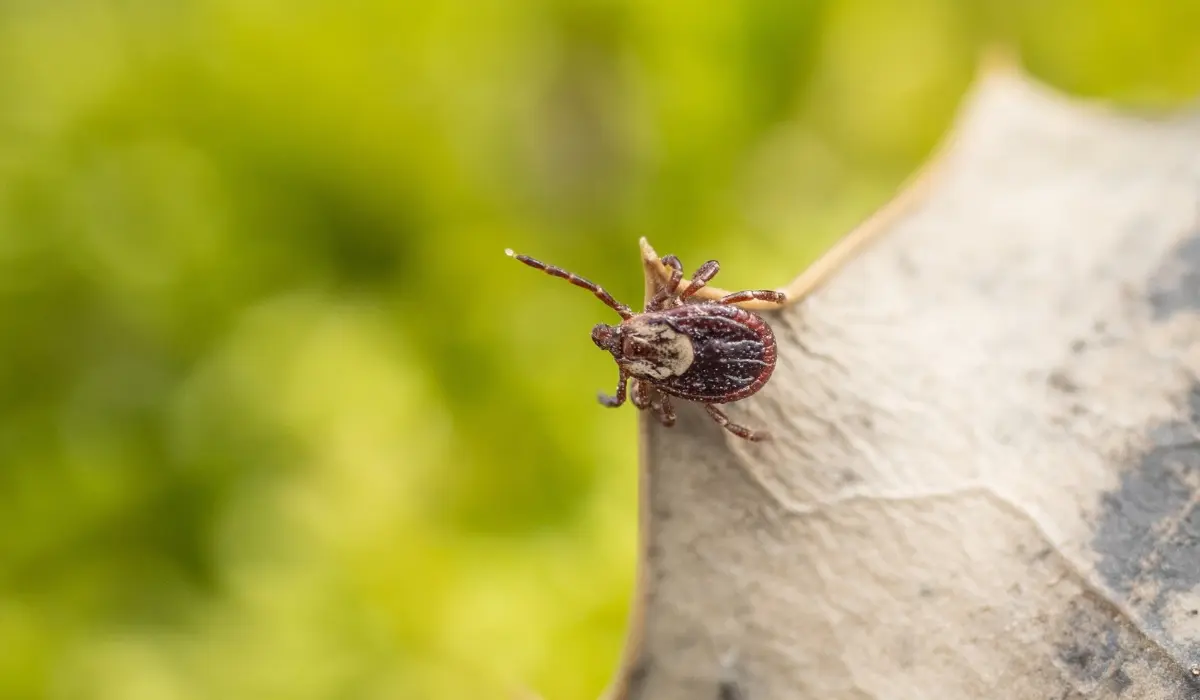
An adult American dog tick has a brown body with cream-colored or whitish markings on its back. This pattern is one of the clearest differences between American dog ticks and blacklegged ticks.
Adult ticks have eight legs and a relatively flat body before feeding. After a female tick feeds, its body expands and may appear rounded or swollen, making the original markings harder to recognize.
Male vs. Female American Dog Ticks
Female American dog ticks have a patterned shield near the front of the back, immediately behind the mouthparts. The rest of the body is largely brown before feeding and expands as the female takes a blood meal.
Males have pale markings spread across more of their backs. Their appearance is therefore more extensively patterned than that of an unfed female.
These distinctions are useful when you’re examining an adult tick with a clear view of its upper surface. Immature ticks are harder to identify, and an engorged specimen may not resemble the unfed ticks commonly shown in identification photographs.
Dog Tick vs. Deer Tick: How to Tell Them Apart
The difference between a dog tick and a deer tick matters because the species are associated with different infections. American dog ticks are not established vectors of the bacterium responsible for Lyme disease. Blacklegged ticks (Ixodes scapularis), commonly called deer ticks, are established vectors.
Their adult markings provide the easiest starting point. American dog ticks have a pale ornamental pattern, while adult female blacklegged ticks have a dark shield and a reddish-brown body without those pale markings.
| Feature | American Dog Tick | Blacklegged (Deer) Tick |
| Scientific name | Dermacentor variabilis | Ixodes scapularis |
| Adult markings | Brown with pale patterned areas | Dark shield; adult female has a reddish-brown body |
| Ornate white markings | Present on adults | Absent |
| Common habitat | Grassy fields, brush, and trails | Wooded areas, leaf litter, and brush |
| Lyme disease transmission | Not an established vector | Established vector |
| Other disease associations | Rocky Mountain spotted fever and tularemia | Anaplasmosis, babesiosis, and other infections |
Can You Identify a Tick by Size?
Size provides a clue, but it isn’t enough on its own. A young tick is smaller than an adult, and a female tick’s body can expand considerably after feeding.
Lighting, body position, and the tick’s attachment site can also make its markings difficult to see. A clear photograph taken after removal may help with identification, particularly when the tick is still intact.
Species identification helps clarify possible exposures. It cannot establish whether an individual tick carries a pathogen or whether a bite caused an infection.
Where and When Are Dog Ticks Active in Michigan?
American dog ticks are most often encountered in grassy and brushy habitats during the warmer part of the year. People and dogs can pick them up when walking along field margins, hiking through tall vegetation, or working around overgrown landscaping.
The tick doesn’t need to live inside your house to become a problem. It can attach outdoors and remain unnoticed beneath clothing or a pet’s coat until someone checks for it.
When Is Tick Season in Michigan?
American dog tick activity is associated primarily with warmer weather, but Michigan’s overall tick season isn’t limited to summer. Different tick species have different activity patterns, and blacklegged ticks can be active during cooler conditions.
Weather and habitat affect when people encounter ticks, so a calendar date alone isn’t a dependable signal that exposure has ended. Tick checks remain useful whenever you or your pets have spent time in suitable habitat.
Michigan State University Extension provides Michigan-specific outdoor pest and seasonal information, including considerations relevant to preventing tick encounters.
Where Are Ticks Most Likely to Attach?
Dog walks along unmowed field edges and trails can bring a pet’s legs, belly, and face into contact with vegetation. People working in tall grass or clearing brush may encounter ticks along clothing and exposed skin.
Around a home, the transition between closely maintained lawn and taller plants deserves attention. Dogs often investigate these boundaries, making them sensible places to monitor for recurring tick encounters.
Wildlife can also bring ticks onto residential properties. A tidy yard can reduce certain exposure opportunities, but it cannot prevent every tick from arriving.
What Diseases Can American Dog Ticks Transmit?
American dog ticks can transmit pathogens associated with Rocky Mountain spotted fever and tularemia. That capability doesn’t mean every American dog tick is infected or that every bite causes illness.
The distinction from Lyme disease is useful, but it shouldn’t lead homeowners to ignore an attached tick. Remove it promptly and seek medical advice if concerning symptoms develop.
Rocky Mountain Spotted Fever
Rocky Mountain spotted fever is a bacterial illness that can spread through bites from certain infected ticks, including American dog ticks. Despite the name, it is not restricted to the Rocky Mountain region.
Symptoms may include fever, headache, and rash. They don’t always develop together, and a rash may be absent early in the illness.
If you develop a fever or other unexplained symptoms following tick exposure, seek prompt medical attention. Tell the clinician about the bite, even if you aren’t sure when the tick is attached.
Tularemia
Tularemia is another infection that can spread through bites from infected ticks. It also has other transmission routes, so tick bites aren’t the only possible source of exposure.
The illness can produce fever and other symptoms that vary with the circumstances of infection. An American dog tick bite alone does not establish that someone has tularemia.
A healthcare professional should assess new or concerning symptoms after exposure. Don’t attempt to determine the cause from the tick’s appearance or symptoms alone.
When Should You Contact a Doctor or Veterinarian?
Contact a healthcare professional if you develop fever, rash, or unexplained illness after a tick bite. Mention any recent outdoor activity and the approximate time of exposure if you know it.
For dogs, watch for unusual behavior or signs of illness after tick exposure and contact your veterinarian with concerns. Veterinary guidance is also appropriate if a tick is difficult to remove or you’re unsure which prevention product suits your pet.
How to Remove a Dog Tick Safely
Remove an attached tick as soon as you discover it. You don’t need to identify the species before taking action, and household remedies shouldn’t delay removal.
The standard method uses clean, fine-tipped tweezers and steady pressure. Keep the tick intact when possible and avoid squeezing its body unnecessarily.
Safe Tick Removal Steps
- Grasp the tick close to the skin. Use clean, fine-tipped tweezers to hold the tick as close to the skin’s surface as possible.
- Pull upward with steady pressure. Don’t twist or jerk the tick, since that can cause its mouthparts to break off.
- Clean the area. After removal, thoroughly clean the bite site and your hands with soap and water or rubbing alcohol.
- Dispose of the tick safely. Seal it in a container, wrap it securely, or use another suitable disposal method. Taking a clear photograph can preserve details for identification.
- Watch for symptoms. Contact a healthcare professional if you develop a fever, rash, or unexplained illness after the bite.
Avoid petroleum jelly, nail polish, heat, or burning the tick. These methods aren’t recommended for removal and can delay the appropriate response.
What If the Mouthparts Stay in Your Skin?
A tick’s mouthparts sometimes remain in the skin after removal. If you can grasp them easily with clean tweezers, you may be able to remove them carefully.
If they don’t come out without digging into the skin, leave the area alone and allow the skin to heal. Seek medical advice if irritation persists or you notice signs of infection.
Removing a Tick From Your Dog
Keep your dog still and work carefully, especially if the tick is attached around the ears, eyes, or another sensitive area. Use an appropriate removal tool and avoid squeezing the tick’s swollen body.
After removal, check the rest of your dog’s coat for additional ticks. If your dog becomes distressed, the tick is difficult to reach, or the bite area concerns you, contact your veterinarian.
How to Prevent Dog Ticks Around Your Home and Pets
The most practical tick prevention plan addresses three points of exposure: vegetation around your property, the places your pets visit, and what you wear or use during outdoor activities.
Each step has a different purpose. Yard maintenance reduces contact with overgrowth, pet checks find ticks after outdoor exposure, and personal precautions help protect people in grassy or brushy areas.
Keep Grass and Brush Managed
Mow regularly used lawn areas and trim vegetation that extends into walking paths, play spaces, and outdoor seating areas. Remove unnecessary overgrowth where people or dogs frequently brush against plants.
Pay close attention to yard boundaries adjoining fields or wooded areas. Clearing access paths and maintaining a defined edge between usable lawn and tall vegetation can help limit routine contact with tick habitat.
A maintained yard still needs regular monitoring. Wildlife can carry ticks across property boundaries, and vegetation management alone won’t eliminate them.
Check Your Dog After Walks
Inspect your dog’s coat after walks in tall grass, along trails, or near brushy areas. Pay particular attention to the ears, beneath the collar, around the legs, and between the toes.
Run your hands through the coat slowly enough to notice small bumps or attached ticks. Finding one tick is also a reason to check for others before your dog settles indoors.
Routine inspections are an important part of tick prevention in Michigan, particularly for pets that spend time near open fields and brush. Ask your veterinarian about suitable prevention products and follow the directions for your pet’s species and health needs.
Protect Yourself Outdoors
When gardening, hiking, or clearing vegetation, wear clothing that limits exposed skin. Tucking pants into socks can also help reduce direct contact around the ankles when walking through tall grass.
Use an appropriate EPA-registered repellent according to its label, and follow CDC guidance for protective clothing and tick checks. After spending time outdoors, inspect your body, including the backs of your knees, around your waist, and along your hairline.
Don’t assume you would notice a tick attaching. A careful check after outdoor activity is more dependable than waiting to feel a bite.
When Does Professional Tick Control Make Sense?
Repeated tick encounters near patios, play areas, or frequently used walking routes are a reasonable reason to consider professional yard tick control.
A property assessment can examine vegetation, yard boundaries, and areas where people and pets are most likely to contact ticks. Depending on the setting, targeted treatment may complement mowing, brush management, and regular inspections.
Professional treatment does not guarantee that ticks will never return. The goal is to reduce exposure in areas that matter most to your household.
Protect Your Yard With Pest Pros of Michigan
If you’re finding ticks repeatedly around your home, start by identifying where the encounters happen. A dog returning from field walks presents a different exposure pattern from ticks found regularly near a backyard play area.
Pest Pros of Michigan provides mosquito, flea, and tick control services for homeowners in Kalamazoo, Grand Rapids, and surrounding communities. Our team can discuss your property’s conditions and available service options.
Ready to address recurring tick activity? Contact Pest Pros of Michigan to ask about tick control for your yard and the next steps for your property.
Frequently Asked Questions
Are American Dog Ticks Common in Michigan?
American dog ticks are an established species in Michigan and are associated with grassy and brushy environments. People and pets may encounter them along field edges, trails, and overgrown property boundaries. Their activity changes with seasonal conditions, so checking for ticks after outdoor exposure is a sensible habit.
Can a Michigan Dog Tick Give You Lyme Disease?
American dog ticks are not established vectors of Lyme disease. In Michigan, infected blacklegged ticks are the primary concern for Lyme disease transmission. American dog ticks can transmit pathogens associated with Rocky Mountain spotted fever and tularemia, so remove any attached tick promptly and seek medical attention if symptoms develop.
What Should I Do If I Find a Tick on My Dog?
If the tick is attached, remove it promptly with an appropriate tool, grasping close to the skin and pulling steadily. Check the rest of your dog’s coat, particularly the ears, collar area, legs, and toes. Contact your veterinarian if removal is difficult, your dog develops unusual symptoms, or you need help choosing preventive care.

 Serving Michigan since 2018
 Pest-free guarantee
 Small, local business