You spot a brown, shield-shaped bug clinging to warm siding in September. A few months later, another crawls across an upstairs window while snow sits outside. A stink bug in Michigan usually gets into a house while searching for protected winter shelter, not because it wants to feed or reproduce indoors.
To handle the problem, you need to recognize the insect, understand when stink bugs in Michigan move toward houses, remove the ones already inside, and close the openings that let them enter. Those steps are far more useful than chasing individual bugs from room to room all winter.
This guide explains what homeowners should know about the stink bug in Michigan and when it’s best to get professional nuisance pest control.
How to Identify a Stink Bug in Michigan
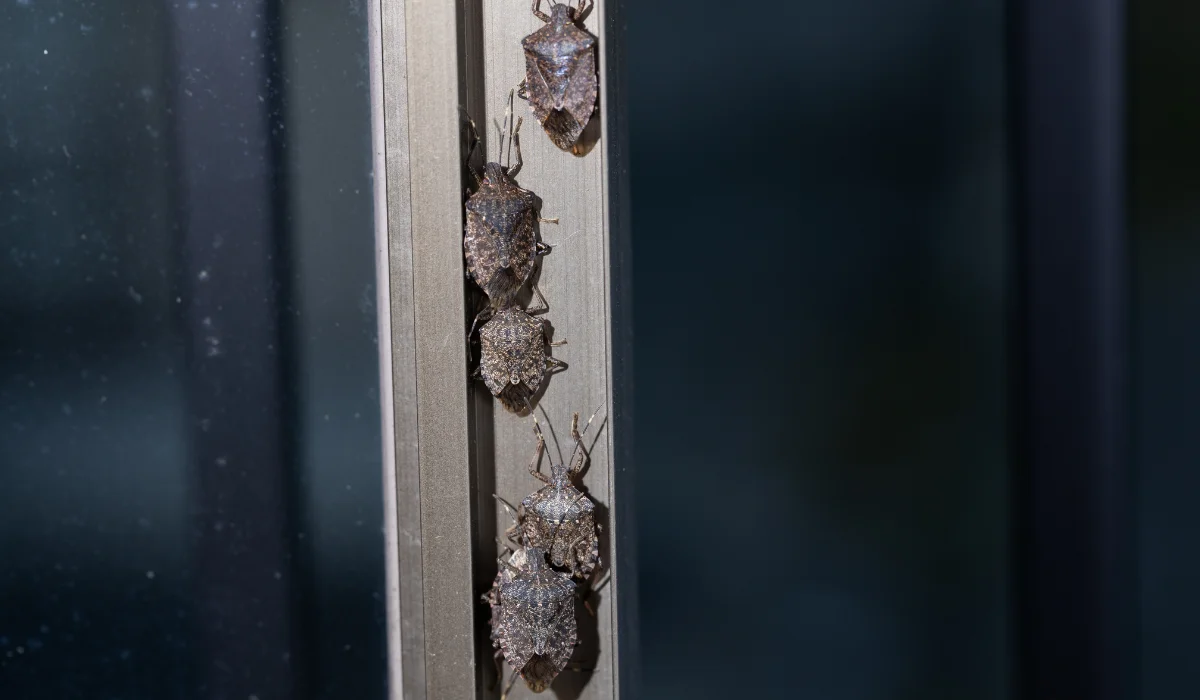
Michigan has several stink bug species, but the brown marmorated stink bug is the one most often associated with large seasonal gatherings around homes. It is an invasive stink bug with a broad, flattened body and mottled brown coloring.
Look beyond color when making an identification. Brown marmorated stink bugs have light bands on their antennae and alternating pale and dark markings along the outside edge of the abdomen. Adults are about 1/2 to 5/8 inch long, so they are easy to see on siding, curtains, window glass, or light-colored walls.
According to Michigan State University Extension, the species is established in Michigan and has become both a household nuisance and an agricultural concern.
Stink Bug Identification: At a Glance
If you are trying to tell a brown marmorated stink bug from another brown insect, these features are more useful than body color alone.
| Feature | What You May See |
| Body shape | Broad, flat, and shield-shaped |
| Color | Mottled brown or gray-brown |
| Adult size | About 1/2 to 5/8 inch long |
| Antennae | Light bands across darker antennae |
| Abdomen | Alternating pale and dark markings along the outer edge |
| Common locations | Siding, windows, curtains, ceilings, and upper walls |
| Defense | A strong stink bug odor when disturbed or crushed |
Not every shield-shaped bug around your property is a household pest. Michigan has native stink bug species as well, and some remain outdoors without causing the seasonal indoor problem associated with brown marmorated stink bugs.
Why Stink Bugs Enter Michigan Homes
Stink bug season around homes becomes most noticeable as late summer turns into fall. Adult brown marmorated stink bugs begin searching for dry, protected places where they can remain through cold weather. Your house can offer exactly that.
They may slip around a loose window frame, worn door seal, vent, utility line, soffit, fascia board, or piece of siding. From there, a bug can reach an attic, wall void, or another sheltered area and remain hidden for weeks or months.
What attracts stink bugs to a house during this period is primarily shelter. Warm, sunlit exterior surfaces can also become gathering areas before the insects move into protected spaces. You may notice dozens on one sunny side of the house while another wall has almost none.
Why Stink Bugs Appear in Winter
You can still find stink bugs in your home during January or February. Those winter sightings do not necessarily mean insects are entering through the snow and cold.
An adult may have been overwintering inside the structure since fall. A sunny afternoon warms the wall, or indoor heat reaches its hiding place. The bug becomes active and moves toward light, which often puts it near a window, ceiling, or upper wall.
| Season | Typical Activity | What You May Notice |
| Spring | Overwintered adults become active | Bugs near windows and moving outdoors |
| Summer | Feeding and reproduction take place outside | Activity on trees, gardens, shrubs, and crops |
| Late summer | Adults begin looking for winter sites | Bugs resting on sunny exterior walls |
| Fall | Entry into protected spaces increases | Activity around siding, windows, soffits, and eaves |
| Winter | Adults remain sheltered until warmed | Scattered indoor sightings on sunny or warmer days |
For homeowners around Kalamazoo and Grand Rapids, late summer is a useful time to start checking the exterior. Once overwintering stink bugs have moved behind siding or into wall spaces, you have fewer practical ways to reach them.
Are Stink Bugs Harmful to Your Home or Family?
A brown marmorated stink bug inside your house is mostly a nuisance. It does not feed on structural wood, drywall, clothing, or stored household materials while sheltering indoors. Seeing one on the wall does not mean the building itself is being eaten.
The smell is usually the more immediate problem. When threatened or crushed, stink bugs can release a strong odor from defensive glands. If one is walking across a curtain or painted wall, removing it intact is cleaner than pressing it into the surface.
Do Stink Bugs Bite or Damage Homes?
Homeowners often search for whether stink bugs bite because their size and shape make them look more threatening than they are. Brown marmorated stink bugs are plant feeders. They are not household blood-feeding pests, and their indoor presence is not associated with structural damage.
Their feeding becomes more relevant once you move outside. Brown marmorated stink bugs pierce plant tissue and feed on fruits, vegetables, ornamental plants, and field crops. The damage can show up as discoloration, dimpling, or misshapen plant tissue.
The U.S. Environmental Protection Agency reports that the species feeds on various types of plants. Apples, peaches, pears, soybeans, corn, and ornamental plants are among its many possible hosts.
| Location | What the Bug Is Doing | Main Concern |
| Living space | Moving after leaving shelter | Odor and nuisance |
| Wall void or attic | Spending the winter in a protected area | Recurring indoor sightings |
| Exterior siding | Resting or searching for shelter | Potential entry into the house |
| Home garden | Feeding on plant tissue | Damage to fruit, vegetables, or ornamentals |
| Orchard or field | Feeding on developing crops | Agricultural injury |
A few stink bugs resting on siding do not automatically mean you have a stink bug infestation inside. The pattern matters more than a single sighting.
How to Get Rid of Stink Bugs Inside Your Home
When one or two stink bugs turn up indoors, keep the removal simple. Place a cup or container over the insect and slide a stiff piece of paper underneath. You can also vacuum up stink bugs when they are on a ceiling, high wall, or another spot that is difficult to reach.
Avoid crushing them. The stink bug smell can cling to fabric or leave an unpleasant odor in the room. If you use a vacuum for several insects, empty the bag or canister outside afterward rather than letting the smell remain inside the machine.
What Repeated Indoor Sightings Mean
Finding another bug three days later does not always mean a new one just entered. Several adults may already be tucked behind trim, siding, insulation, or other building materials and become active at different times.
Watch where they appear. If you repeatedly see stink bugs in your house near the same upstairs window, attic access, or wall, that area can give you a clue about where the insects are sheltering or how they originally got inside.
Indoor removal handles the bug in front of you. It does not close the opening that allowed it into the structure. That work happens outside.
How to Keep Stink Bugs Out of Your Michigan Home
Stink bugs are easier to keep out before fall entry starts. Inspect the exterior during late summer, with extra attention to places where two building materials meet or where something passes through the wall.
Check doors and windows for worn seals, damaged screens, or visible gaps. Inspect siding edges, soffits, fascia, vents, and utility penetrations. Seal cracks and gaps where practical, and replace weather stripping that no longer sits tightly against a door or window frame.
Michigan’s temperature swings can be tough on exterior caulk, seals, and trim. An opening that was tight several years ago may have widened enough for occasional invaders to use.
Where to Check Before Stink Bug Season Peaks
Start with the side of the home where you already see insects. Warm walls that get strong afternoon sun can attract noticeable stink bug activity in late summer and early fall.
| Area to Inspect | What to Check |
| Exterior doors | Door sweeps, thresholds, and worn weather stripping |
| Windows | Torn screens, frame gaps, and loose seals |
| Siding | Open corners, loose edges, and gaps around trim |
| Roofline | Soffits, fascia, and vent openings |
| Utility lines | Openings around pipes, wires, cables, and conduit |
| Attic vents | Missing, loose, or damaged screening |
| Sunny exterior walls | Areas where stink bugs repeatedly gather |
The same inspection can help reduce other occasional invaders. Boxelder bugs and Asian lady beetles also use small exterior openings when looking for seasonal shelter.
Do this work before you begin seeing stink bugs in bedrooms, bathrooms, and hallways. Once the insects are already inside protected spaces, prevention for that season becomes much harder.
When Professional Stink Bug Control Makes Sense in Michigan
One stink bug in Michigan near a window does not automatically call for professional service. A recurring pattern is different. If bugs appear in several rooms, collect on the exterior in large numbers each fall, or return to the same parts of your house year after year, it is worth finding out where the activity starts.
Professional stink bug control in Michigan can be useful because the visible insect is only part of the picture. An inspection can focus on exterior gathering areas, likely access points, and parts of the structure where seasonal pests may be sheltering. That gives you a practical plan instead of relying on indoor removal every time another bug appears.
Pest Pros of Michigan handles stink bugs and other occasional invaders for homeowners in the Kalamazoo and Grand Rapids areas. If you deal with the same stink bug in Michigan problem every fall, contact Pest Pros of Michigan to have the property evaluated. Finding the routes pests use to enter your home gives you a better reason for service than simply removing one more bug from the window.

 Serving Michigan since 2018
 Pest-free guarantee
 Small, local business