When house flies seem worse in fall, your windows can help explain what is happening. Flies may enter through damaged screens or gaps around the frame, but they also gather on glass after entering somewhere else. Bright windows act like exit signs for flies already inside your home.
In Kalamazoo, Grand Rapids, and other Michigan communities, cooling nights and warm fall afternoons often bring seasonal fly activity into view. Some insects may be true house flies. Others may be cluster flies that entered through exterior openings and settled inside attics, wall voids, or other protected spaces.
Knowing which fly you have changes what you need to inspect. House fly control starts with finding waste, moisture, or decaying organic material. Cluster fly control focuses more on exterior gaps and the sheltered spaces they use during colder months.
Why House Flies Get Worse in Fall
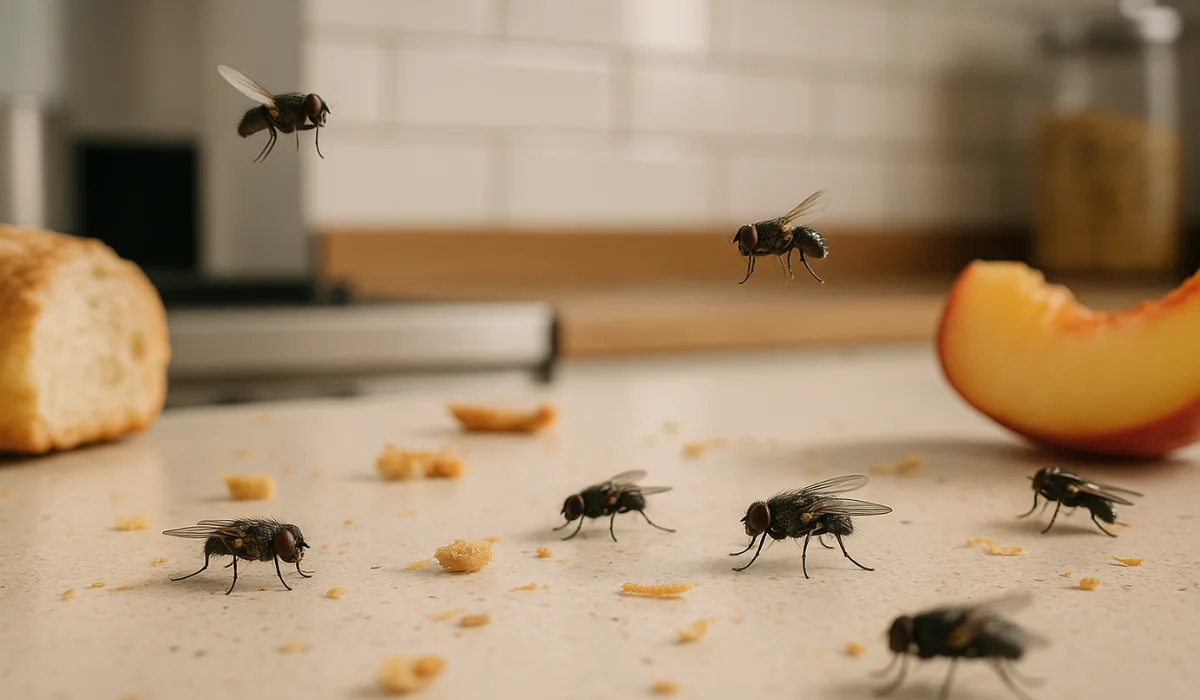
House flies can remain active while fall weather stays mild. Outdoor trash containers, pet waste, food residue, and other moist organic material may continue supporting fly activity near homes and businesses. Each open door or damaged screen gives adult flies another route indoors.
The University of Florida IFAS house fly profile explains that house flies lay eggs in decaying organic material and can develop quickly when conditions are warm and suitable. This is why cleaning only the visible adult flies from a window rarely solves the full problem. New adults may continue appearing until the breeding source is removed.
Fall routines can also create more opportunities for flies to enter. Yard work, deliveries, moving outdoor items into storage, and frequent trips through the garage all increase door activity. A small tear in a screen or a worn seal around a door may go unnoticed until flies begin collecting indoors.
Not every fall fly problem comes from house flies. Cluster flies enter buildings as seasonal conditions change, then remain in protected areas until warmth or light draws them into living spaces. That is why a fall window covered with sluggish flies may point to a structural entry problem rather than a sanitation issue.
Why Flies Gather at Windows
Flies often move toward light when they are trying to leave a room. A bright window becomes the most obvious route, so flies may walk across the glass, rest on the frame, or buzz along the sill.
The Window May Be an Exit Point
A group of flies on a closed window does not prove that they entered there. Flies can move from an attic, wall void, ceiling opening, or trim gap into a room, then head toward the brightest surface. The window shows where they ended up, not always where they first entered.
This pattern can become more visible on sunny fall days. Warmth near the glass may increase activity, while daylight draws flies out of hidden spaces. You may notice little activity in the morning, followed by several flies at one window later in the day.
The Window May Also Be an Entry Point
Windows can admit flies when screens are torn, frames fit poorly, or weather stripping has worn down. Openings behind exterior trim or along siding can also lead into wall spaces, even when the window itself is shut and locked.
Inspect the complete window assembly rather than focusing on the screen alone. Check screen corners, frame joints, exterior trim, seals, and nearby siding. Flies may use a gap several inches from the glass and still appear to be coming through the window.
House Flies vs. Cluster Flies at Windows
Correct identification keeps you from spending time on the wrong solution. House flies and cluster flies may both gather near windows, but their breeding habits, movement, and seasonal behavior are different.
| Feature | House Flies | Cluster Flies |
|---|---|---|
| Typical movement | Fast and active | Slower and more sluggish |
| Main source | Decaying organic material, waste, or food residue | Develop outdoors through earthworm hosts |
| Common fall pattern | Enter from nearby outdoor activity or indoor sources | Move into buildings for seasonal shelter |
| Common indoor locations | Kitchens, trash areas, food spaces, and doors | Windows, attics, upper rooms, and wall voids |
| Main control focus | Source removal, sanitation, and exclusion | Exterior sealing, inspection, and seasonal exclusion |
Signs You Are Seeing House Flies
House flies are active and often appear near kitchens, trash containers, pet feeding areas, loading doors, and places where food or waste is handled. Repeated sightings may point to garbage residue, pet waste, spoiled food, or another source of moist organic material.
Their presence does not mean a home is dirty. A small amount of residue beneath an appliance, inside a trash container, or under a recycling bin can be enough to keep flies nearby. The source may be outdoors, especially when waste containers or pet areas sit close to doors and windows.
Signs You Are Seeing Cluster Flies
Cluster flies are more closely tied to fall entry and indoor overwintering. Penn State’s guidance on cluster flies explains that they develop outdoors through earthworm hosts, then enter buildings for shelter.
Inside, cluster flies often move more slowly than house flies and may gather in groups near upper windows, sunny walls, or attic access points. They are not using kitchen waste as a breeding source, so repeated cleaning will not correct the openings that allowed them inside.
This difference matters. House flies call for a careful search for breeding material. Cluster flies call for close attention to siding gaps, vents, roofline openings, window trim, and other exterior access points.
What Keeps House Flies Active Indoors
House flies need access to suitable organic material. Common indoor sources include residue inside garbage cans, food debris beneath appliances, neglected pet waste, spoiled produce, and spills in places that do not receive regular cleaning.
Outdoor sources can keep pressure high near the home. An uncovered trash can, dirty recycling bin, compost area, or pet-waste zone near an entrance can attract adult flies. Once they gather near the building, every opening door gives them a chance to move inside.
Look Beyond Counters and Floors
A clean kitchen surface does not rule out a hidden source. Liquid can collect beneath a trash bag, food residue can remain inside container seams, and debris can build up under refrigerators, shelving, or storage racks.
In a business, the same issue may occur near dumpsters, loading areas, floor drains, food-preparation spaces, or waste-storage rooms. The useful question is not simply, “Where are the flies?” It is, “What nearby source is allowing them to keep returning?”
A sudden group of larger flies may also point to another fly species or hidden decaying material. Identification should come before service so the response matches the insect and its source.
How Flies Get Inside When Windows Are Closed
Closed windows do not make a building fully sealed. Flies may enter through gaps around vents, soffits, roof intersections, utility lines, garage doors, siding, and exterior trim.
They may also have entered days or weeks earlier and remained hidden. When indoor warmth or sunlight increases their activity, they move toward windows and become noticeable. This is common with flies that use wall voids or attic spaces for seasonal shelter.
The location of the flies can help narrow the search. Activity near a kitchen door may point toward outdoor house flies. Repeated clusters near an upper-story window may suggest entry near the roofline, siding, or attic.
How to Keep Fall Flies Away From Windows
The best prevention plan combines source removal, structural repairs, and monitoring. Each step addresses a different part of the problem.
Repair Screens and Seal Exterior Gaps
Replace torn screens and correct loose mesh around the frame. Repair worn weather stripping, seal gaps around exterior trim, and inspect vents, soffits, siding joints, roofline openings, and utility penetrations.
Exterior repairs are most useful before large numbers of seasonal flies enter protected spaces. Sealing only an interior crack may redirect flies into another room without correcting the outside opening.
Remove House Fly Breeding Sources
Use garbage containers with secure lids and clean residue from the inside of each container. Rinse recyclable items that held food or drinks, pick up pet waste regularly, and keep outdoor waste areas away from frequently used entrances when the property allows it.
Clean beneath appliances, shelving, and storage areas where spills may stay hidden. Correct moisture problems that keep organic debris wet, since house flies rely on suitable breeding material rather than the window itself.
Track Where Activity Appears
Note which rooms, windows, and times of day show the most activity. A few fast-moving flies near a kitchen entrance suggest a different source than several sluggish flies at an upper window on a sunny afternoon.
The U.S. Environmental Protection Agency’s integrated pest management guidance supports a process based on identification, monitoring, prevention, and targeted control. This approach helps you correct the source instead of reacting only to the adult flies you can see.
Vacuuming can remove isolated flies from windows and sills. Traps can help monitor activity, but they work best as part of a broader plan that includes source correction and exclusion.
When Professional Fly Control Makes Sense
Professional inspection can help when flies keep returning after cleaning and basic repairs. It is also useful when activity appears to come from attics, wall voids, high windows, commercial waste areas, or exterior openings that are difficult to inspect safely.
A trained technician can identify the fly, review likely breeding or overwintering areas, and locate structural access points. The service plan should match the species instead of treating every fly problem the same way.
Getting the Right Fly Control for Your Michigan Home
Fall window activity tells you where flies are collecting, but not always where the problem began. House flies point toward waste, moisture, and decaying organic material. Slow-moving groups near upper windows often point toward cluster flies and seasonal entry through exterior gaps.
Pest Pros of Michigan helps homeowners and businesses in Kalamazoo, Grand Rapids, and nearby communities identify the fly, locate the source, and address the conditions keeping it active. When flies continue returning, contact Pest Pros of Michigan to schedule an inspection and get a plan built around the species and the structure.

 Serving Michigan since 2018
 Pest-free guarantee
 Small, local business
 10+ years of pest control experience
 President and CEO of Pest Pros of Michigan
 Resident of Michigan