Cooler nights in Kalamazoo and Grand Rapids often push mice to search for warmer, protected places. Garages, basements, attics, utility rooms, and wall voids can offer shelter once outdoor conditions become less comfortable. Setting traps before mice become established indoors gives you a better chance to catch early activity and limit how far they spread.
The right way to set mouse traps starts with inspection. You need to find the routes mice use, place traps where they are likely to encounter them, and monitor each location long enough to learn what is happening. Bait matters, but trap position, quantity, and follow-up usually matter more.
Trapping should also be paired with food control and rodent exclusion. Catching the mice already inside will not solve the problem if gaps around doors, siding, foundations, or utility lines remain open. A complete plan addresses both the current activity and the conditions that allowed it.
Why Set Mouse Traps Before Fall?
As temperatures drop, mice may move toward homes and businesses that provide warmth, food, nesting material, and protection. In Michigan, common access points include worn garage door seals, foundation gaps, openings around pipes, loose siding, vents, and spaces around exterior doors.
Setting traps in late summer or early fall allows you to use them as monitoring tools before activity becomes widespread. A trap placed near a suspected entry route can reveal whether mice are moving through a garage, basement, pantry, or utility area. Early placement also gives you time to adjust locations before colder weather drives more activity indoors.
Do not assume the kitchen is the only place worth checking. A mouse may enter through the garage, travel along a basement wall, and reach a food source through a wall void. The first sighting may be far from the original entry point, which is why inspection should come before trap placement.
Inspect for Mouse Activity Before Placing Traps
Effective mouse trap placement follows evidence. Look for droppings along walls, beneath sinks, behind appliances, near stored food, or around utility lines. Gnaw marks, shredded paper or insulation, damaged packaging, and dark rub marks along a repeated travel route can also indicate activity.
Pay close attention to protected edges. Inspect behind the refrigerator and stove, along pantry shelving, beside basement walls, near garage corners, and around pipes or wires that enter the building. Mice often stay close to cover instead of crossing open areas.
The University of California Integrated Pest Management guidance for house mice recommends combining inspection, trapping, sanitation, and exclusion. That approach is more effective than scattering traps around a room and hoping mice find them.
Once you identify several signs in the same area, place traps along the route instead of directly in the middle of the room. Fresh signs deserve priority. Old droppings or damaged materials can remain after activity has shifted, so continue checking for new evidence.
How to Set Mouse Traps the Right Way
When you set mouse traps, focus on four details: trap size, bait amount, trigger position, and safe placement. Each one affects whether a mouse approaches the trap and activates it.
Choose Snap Traps Made for Mice
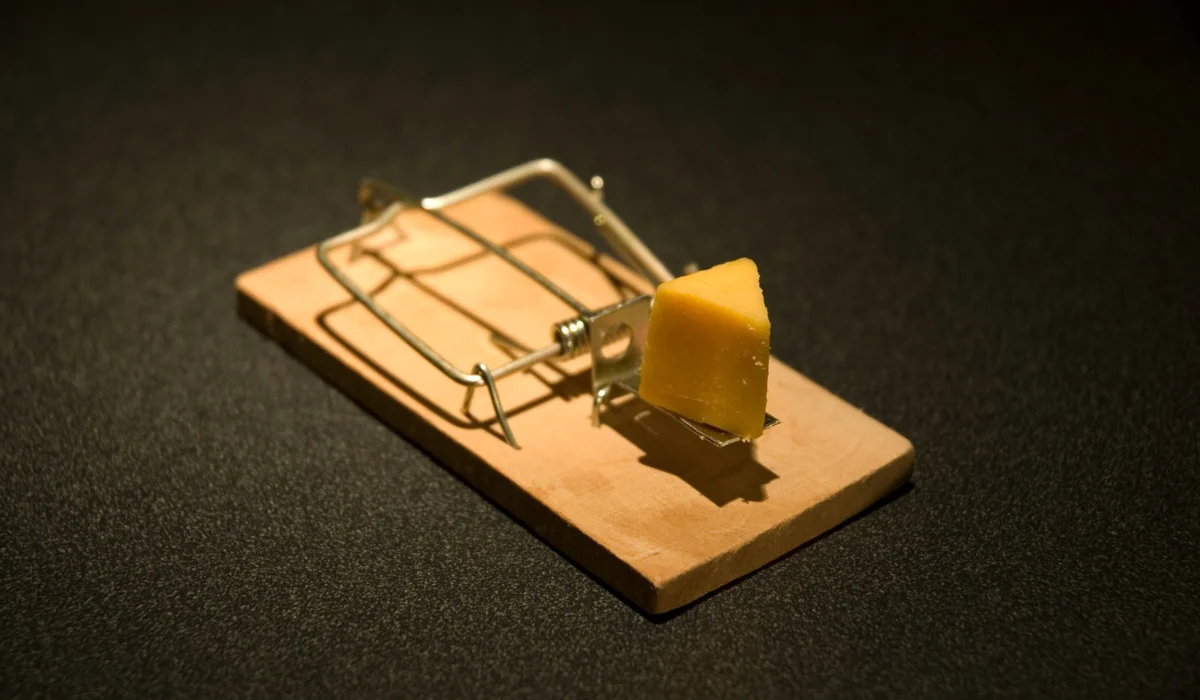
Use snap traps sized for mice rather than larger traps designed for rats. Mouse-sized traps fit more easily along baseboards, behind appliances, and in narrow travel areas.
Inspect each trap before setting it. The trigger should move freely, the base should sit flat, and the trap should not be cracked or damaged. Follow the manufacturer’s directions because trigger designs and setting mechanisms vary.
Snap traps also make monitoring straightforward. You can see whether a trap has been disturbed, sprung, or activated, which helps you decide whether to keep the placement or move it.
Use a Small Amount of Bait
A large lump of bait can make the trap less effective. A mouse may pull at the edge without pressing the trigger. A small amount placed directly on or into the bait area encourages contact with the working part of the trap.
Food-based bait can help attract attention, but it does not replace good placement. A carefully baited trap in the wrong room may remain untouched while mice continue following a route a few feet away.
Reduce competing food sources before resetting traps. Clean crumbs from behind appliances, store pantry goods in sturdy containers, and avoid leaving pet food out overnight. The fewer easy food options mice have, the more useful your trap setup becomes.
Point the Trigger Toward the Wall
The trigger end should sit next to the wall or travel edge. This position puts the active part of the trap where the mouse is most likely to encounter it.
The University of Kentucky guide to controlling house mice recommends placing traps along active routes and using several traps instead of relying on one. In practice, that means positioning traps beside walls, cabinets, shelving, or structural edges where fresh signs appear.
Do not place every trap in the same direction without considering the route. In narrow passages, using traps on both sides of an active path can improve coverage. The goal is to intercept normal movement, not force the mouse into an exposed area.
Protect Children and Pets
Keep traps outside the reach of children and pets. Avoid placing an exposed snap trap beside toys, pet bowls, low cabinets, or walking paths.
Covered trap stations may offer a more protected option in occupied areas. Whatever design you choose, follow the product directions and make sure you can inspect the trap without creating a new safety concern.
Where to Place Mouse Traps Around Your Home
The best locations depend on where you find activity. Use the room layout, structural edges, and fresh signs to guide placement.
| Area | Signs to Watch For | Better Trap Locations |
|---|---|---|
| Kitchen | Droppings, crumbs, damaged packaging | Behind appliances, beneath the sink, or along lower cabinets |
| Pantry | Gnawed boxes, scattered food, droppings | Along wall-floor junctions and behind shelving |
| Basement | Droppings, rub marks, gnawing | Beside foundation walls, utility lines, and sill plates |
| Garage | Activity near seed, pet food, or stored materials | Along side walls and near garage door corners |
| Utility Room | Droppings near pipes or equipment | Beside plumbing and service penetrations |
| Attic | Nesting material, droppings, visible runways | Along joists, wall edges, and established travel paths |
In kitchens, place traps behind the refrigerator, stove, dishwasher, or lower cabinets when signs appear nearby. Beneath the sink can also be productive when plumbing gaps provide a route. Keep traps away from areas where hands regularly reach.
In garages and basements, inspect a larger area before setting traps. Mice may travel along foundation walls, behind stored boxes, or beside utility lines. Remove unnecessary clutter so you can see droppings and monitor whether new activity appears.
Attic placement requires extra care. Follow joists and visible runways, and do not step between framing members. When activity is inside insulation, wall voids, or an area you cannot inspect safely, professional rodent control is the better option.
Common Mouse Trap Mistakes That Reduce Results
Using too few traps is one of the most common problems. One trap can miss an active route, especially when mice are moving through several rooms or floors. Place multiple traps where signs are strongest, then compare the results.
Poor orientation can also reduce catches. A trap placed parallel to the wall with the trigger facing into the room may allow a mouse to pass beside it. Keep the trigger close to the edge the mouse follows.
Do not use extra bait to make up for weak placement. Too much bait can allow feeding without activation, while open pantry goods, crumbs, birdseed, or pet food create easier alternatives.
Inconsistent checking creates another issue. A sprung, empty, or occupied trap cannot continue monitoring activity. Inspect traps regularly, replace spoiled bait, and note which locations produce results.
Avoid moving every trap after one quiet night. Mice may take time to encounter a new object, and their travel routes can shift. Use fresh droppings, gnawing, and trap activity to decide when a placement should change.
Pair Mouse Trap Placement With Rodent Exclusion
Trapping removes mice that are already inside, but it does not close the route they used. Long-term mouse control requires an exterior inspection and repairs around doors, foundations, vents, soffits, siding, pipes, and utility lines.
A mouse may enter through an opening about one-quarter inch wide. Small gaps around garage doors and service penetrations deserve close attention. Use durable materials that fit the opening instead of loose filler that rodents can pull apart.
The U.S. Environmental Protection Agency’s integrated pest management principles support combining monitoring, prevention, and targeted control. For a mouse problem, that means pairing traps with better food storage, sanitation, structural repairs, and follow-up inspections.
Pest Pros of Michigan uses the same type of step-by-step approach. Technicians inspect the interior and exterior, place snap traps in active areas, and return after one week to check results and adjust locations. When activity remains high, additional visits may be scheduled every seven to fourteen days.
After exclusion work, traps remain in place for another one to two weeks. This monitoring period helps identify mice that may still be inside after exterior access points have been sealed.
Get Ahead of Fall Mice in Kalamazoo and Grand Rapids
The right way to set mouse traps starts with finding active routes, not guessing. Choose traps sized for mice, use a small amount of bait, position the trigger beside the wall, and monitor several locations. Then remove easy food sources and correct the gaps that allowed entry.
Some mouse problems extend into attics, crawl spaces, wall voids, or several rooms. Those situations often require a broader inspection and a coordinated trapping and exclusion plan. Learn more about Pest Pros of Michigan and the company’s approach to local rodent control.
Preparing before colder weather arrives can make the problem easier to manage. When you need help identifying entry points, placing traps, or building a long-term prevention plan, contact Pest Pros of Michigan to schedule an inspection.

 Serving Michigan since 2018
 Pest-free guarantee
 Small, local business
 10+ years of pest control experience
 President and CEO of Pest Pros of Michigan
 Resident of Michigan