Many homeowners in Michigan notice basement spiders appearing in corners, storage rooms, and along baseboards. Basements provide the cool, quiet environment spiders prefer. These spaces often contain stored items, cardboard boxes, and undisturbed areas that make ideal hiding spots.
Spiders also follow their food source. Insects such as cockroaches, flies, and other small pests commonly live in damp basements. When insects move in, spider populations soon follow.
Understanding why basement spiders gather in Michigan homes helps you prevent a spider infestation and keep your basement pest-free year-round.
Key Takeaways
- Basements provide cool temperatures, stable humidity levels, and undisturbed areas that spiders love.
- Basement spiders often gather where insect activity creates a reliable food source.
- Cracks, crevices, and gaps around foundations provide easy access for spiders to enter homes.
- Professional pest control focuses on inspection, exclusion, and long-term spider control strategies.
Why Spiders Gather in Basements
Spiders gather in basements because the environment supports hunting, hiding, and reproduction. When pest control professionals inspect homes with lots of spiders, they usually find conditions that support spider populations.
Reliable Food Source
Spiders gather where prey insects are active. Basement environments often support pests like roaches, cockroaches, flies, and even small beetles. These insects become a consistent food source for house spiders and wolf spiders.
If insect populations increase, spider populations usually grow as well. A basement with frequent insect activity can quickly develop a spider infestation. Pest control professionals often start by reducing the insect population before focusing on spider control.
Quiet Undisturbed Areas
Spiders prefer undisturbed areas where they can build spider webs without disruption. Basements often have storage rooms filled with cardboard boxes, plastic bins, and other stored items that create perfect hiding spots.
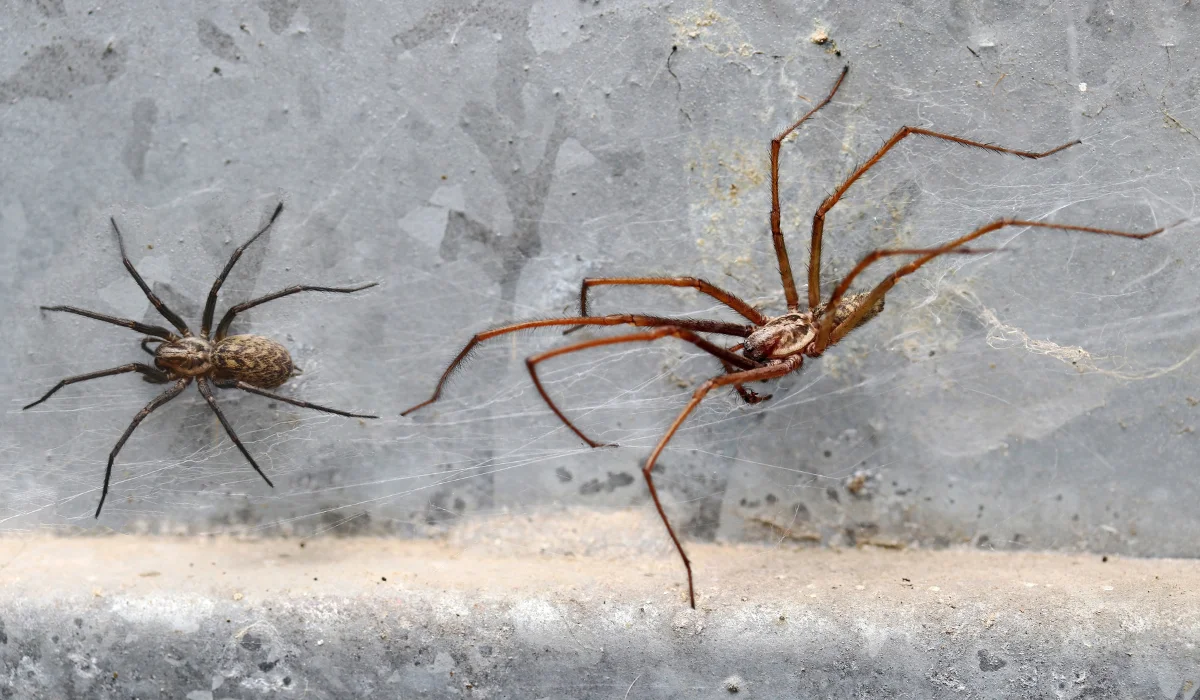
Cellar spiders, commonly called daddy long-legs, often build cobwebs in these quiet spaces. Because these areas are rarely cleaned or moved, spider webs and egg sacs can accumulate over time.
Shelter From Outdoor Weather
Michigan’s seasonal climate also drives spiders indoors. Cold winters and changing temperatures push many spiders into protected spaces where they can survive year-round.
Basements provide a steady shelter that protects spiders from freezing temperatures. This is why homeowners often notice basement spiders even during colder months.
Michigan Basement Conditions That Attract Spiders
Michigan homes often have basement environments that naturally attract spiders to basements. Pest control inspections frequently identify several environmental conditions that allow spider populations to grow.
High Humidity Levels
Basements often maintain higher humidity levels than other areas of the home. Moist environments attract insects such as cockroaches, which spiders feed on.
If humidity levels remain high, spiders love these conditions because their food source thrives there. Installing a dehumidifier can help reduce moisture levels and make the environment less attractive to pests.
Storage and Clutter
Decluttering is one of the most effective ways to reduce the number of spiders in the basement. When basements contain piles of stored items, cardboard boxes, or old furniture, spiders gain many hiding spots.
Plastic bins are often better storage solutions than cardboard boxes. Cardboard creates dark, dry crevices where spiders can hide and lay egg sacs.
Crawl Spaces and Structural Gaps
Many Michigan homes have crawl spaces connected to basements. These spaces often remain dark and undisturbed, which makes them ideal environments for spiders and other pests.
Spiders frequently move between crawl spaces and basements through small openings, allowing spider populations to expand across the home.
How Spiders Get in and Settle
Basement spiders do not appear randomly. They enter through structural openings and settle in areas where they can find shelter and prey.
Cracks and Foundation Crevices
Spiders often enter homes through cracks in the foundation or small crevices around basement walls. Even narrow openings can provide easy access for spiders.
Professional pest control inspections often focus on identifying these structural gaps so they can be sealed properly.
Doors, Windows, and Weatherstripping Gaps
Basement windows and doors can also allow spiders inside. Worn weatherstripping, loose window frames, and unsealed openings allow pests to enter unnoticed.
Sealing entry points around doors and windows helps reduce the number of spiders entering the basement.
Stored Items and Moving Boxes
Spiders sometimes enter homes hidden inside stored items. Cardboard boxes, furniture, and decorations moved from garages or outdoor areas may already contain spiders or egg sacs.
Once these items reach the basement, spiders settle into quiet areas and begin building spider webs.
How to Reduce Basement Spider Hotspots
Reducing spider populations requires more than simple DIY methods. Pest control professionals focus on eliminating food sources, removing hiding spots, and sealing entry points.
Seal Cracks and Entry Points
The first step is sealing structural gaps around the foundation. Pest control technicians often apply caulk to cracks and crevices where spiders enter.
Weatherstripping around doors and windows should also be inspected and replaced if damaged. These small improvements help reduce spiders’ easy access.
Control Humidity and Moisture
Lowering humidity levels can reduce the insect populations that attract spiders. Many Michigan homeowners benefit from using a basement dehumidifier to stabilize moisture levels.
Reducing damp conditions also helps discourage pests such as cockroaches and termites that can become prey for spiders.
Declutter and Improve Storage
Decluttering basement storage areas removes hiding spots where spiders gather. Replace cardboard boxes with plastic bins whenever possible.
Regularly cleaning baseboards, corners, and shelves helps remove spider webs and prevents egg sacs from developing into larger spider populations.
Use Targeted Deterrents
Some homeowners try DIY deterrents such as peppermint oil mixed with water in a spray bottle. These deterrents may temporarily discourage spiders, but rarely resolve larger spider infestations.
Professional pest control focuses on long-term spider control strategies rather than short-term repellents.
Schedule a Michigan Basement Spider Inspection
If you notice lots of spiders appearing in your basement, it may signal a larger pest issue. Spiders rarely appear without a food source, which means other pests may already be present.
A professional exterminator can inspect your home, identify conditions supporting spider populations, and recommend effective spider control solutions. Inspections often include identifying entry points, reducing insect activity, and addressing environmental conditions that attract basement spiders.
For homeowners and businesses across Michigan, Pest Pros of Michigan provides residential pest control and commercial pest control services designed to keep basements spider-free. If basement spiders are becoming a problem in your home or building, contact us to schedule a professional spider control inspection.
FAQs
Why are there so many spiders in my basement?
Basements often provide cool temperatures, high humidity levels, and quiet hiding spots. These conditions attract insects, which become a food source for spiders. When insects are present, spider populations often increase.
Are basement spiders dangerous?
Most basement spiders found in Michigan, such as cellar spiders and house spiders, are harmless. Venomous species like the black widow or brown recluse are extremely rare in Michigan basements.
How can I get rid of spiders in my basement?
The most effective approach combines sealing entry points, reducing humidity, removing clutter, and eliminating insect populations. Professional pest control services often provide the most reliable long-term spider control.

 Serving Michigan since 2018
 Pest-free guarantee
 Small, local business
 10+ years of pest control experience
 President and CEO of Pest Pros of Michigan
 Resident of Michigan