Bat activity in attics can cause costly problems when early signs are missed. Learn what attracts bats to attics, the signs, risks, and when to call Pest Pros of Michigan.
Key Takeaways
- Bats can squeeze through gaps as small as 3/8 of an inch, using openings in rooflines, soffits, fascia, gable vents, chimneys, and loose siding to access your attic.
- Accumulated bat droppings can create strong odors and may harbor histoplasmosis, a fungal infection that affects the lungs. Bats can also carry rabies and introduce bat bugs into your home.
- Bats are protected species in Michigan, so proper exclusion is the only legal approach. Attempting removal on your own can result in fines or increased disease exposure.
- Pest Pros of Michigan uses one-way door approaches and sealing techniques, with a one-year guarantee on all bat exclusion work.
How to Identify What’s Attracting Bats to Your Attic
Understanding what draws bats into your attic starts with recognizing the signs they leave behind and the entry points they favor. Even minor openings around your roofline may be enough to invite them in. Knowing what to look for helps you act before a small concern grows.
How to Tell Bat Species Apart
Bats are not the only attic invaders you may notice. According to Kansas State University Extension, the term “attic flies” refers to several fly species, including house flies, blow flies, and face flies, that enter homes in the fall and become pests during winter or spring. Seeing clusters of flies in your attic does not necessarily mean you have bats, so correctly identifying the pest matters.
Bat droppings, called guano, are small, dark, and pellet-like. They often appear near entry points and have a distinct ammonia-like odor. Fly activity, by contrast, tends to look different. As Kansas State University Extension notes, most attic flies do not bite, will not reproduce in the home, and do not feed during winter, though their spring appearance can be messy and annoying.
How to Spot Bat Activity Inside Your Home
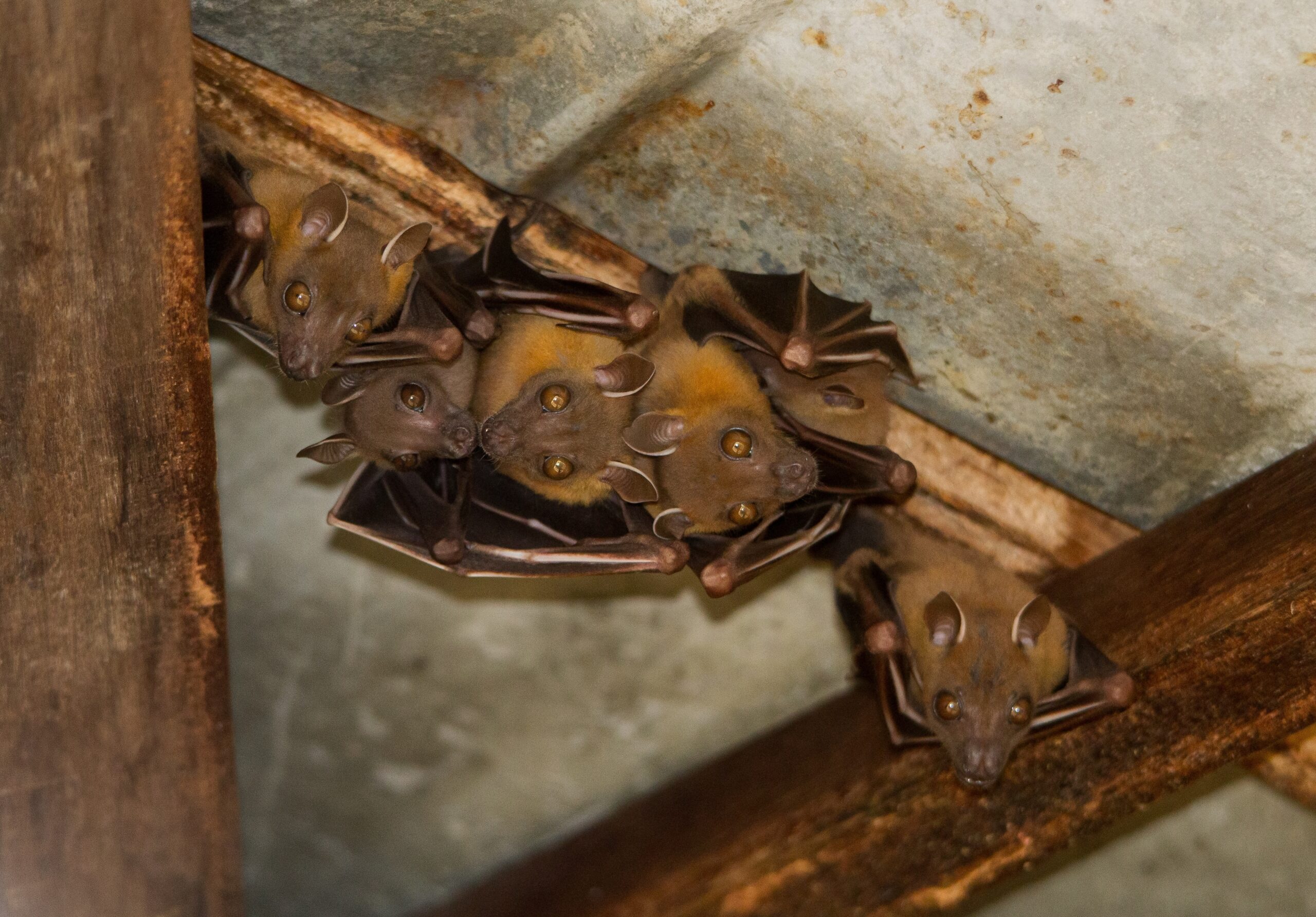
Common signs of bat activity include scratching or chirping sounds in walls or attics at night. You may also find guano accumulating in corners or along attic floor edges. A strong ammonia-like smell from guano buildup is another reliable indicator that bats have settled in.
Seeing bats entering or exiting your home at dusk is one of the clearest confirmations. If you hear persistent nighttime sounds but cannot spot droppings, the activity may be happening behind walls or in hard-to-reach attic spaces.
Where Bat Activity Shows Up Around Homes
Guano and urine staining tend to concentrate near the openings bats use most. Check areas around roofline gaps, gable vents, and soffits for dark streaks or droppings on exterior walls and the ground below. These visible traces help confirm which part of the structure bats are using.
Inside, attic insulation may show signs of disturbance or staining. Dark pellet-like droppings scattered across insulation or attic flooring point to active roosting above.
Exterior Entry Points Bats Use
Bats commonly enter through roofline gaps, chimneys, soffits and fascia, gable vents, loose siding, brick or stone gaps, and open attic vents. Even small gaps in Even small gaps in building materials, as narrow as 3/8 of an inch, may serve as access points.
Inspecting these areas at dusk, when bats are most active, can help you pinpoint exactly where they are getting in. Look for dark staining or droppings near gaps, which can indicate bats are actively using a particular entry point.
Why Bat Problems Develop in Your Attic
Bats look for quiet, sheltered spaces that offer protection from weather and predators. Your attic checks every box. Understanding why bats move toward residential structures helps you recognize conditions that make your home a target.
Outdoor Nesting Areas That Attract Bats
Bats naturally roost in trees, caves, and rock crevices. When those outdoor options become crowded or disturbed, bats may turn to nearby buildings. According to the University of Tennessee Extension, pests seeking shelter build nests or hibernate within the walls, attic, or in living quarters. An attic with stable temperatures and minimal disturbance mimics the conditions bats seek in their natural roosts.
Food and Shelter That Attract Bats to Your Attic
A single bat can eat thousands of insects per night. Homes surrounded by insect activity give bats a reason to stay close. Attics also provide dry, enclosed shelter where bats can rest during the day. Bat bugs live in attics and eaves associated with bats, which means an established roost can bring secondary pests into the same space, as the University of Minnesota Extension notes.
How Bats Move Around Homes
Small openings that seem insignificant to a homeowner may be more than enough for a bat to pass through. Roofline gaps, chimneys, vents, and loose building materials all serve as access points. This movement can be difficult to notice because bats typically enter and exit at dusk.
Trails and Entry Points Bats Use
All cracks and crevices along the roofline and attic perimeter can serve as pathways. Stainless steel mesh can be used to block attic vents and limit access. Sealing entry routes requires careful attention because of the small gap sizes bats can use.
Timing matters as well. Exclusion should not happen when young bats are unable to leave the roost, which in Michigan falls during maternity season from May to mid-August. Outside that window, one-way door approaches allow bats to exit without returning, and once all bats have departed, the openings can be sealed.
Risks Associated With Bats in Your Attic
When bats find their way into your attic, the problems go beyond the initial surprise. The same features that draw bats in, such as sheltered spaces, damp conditions, and nearby insect activity, also set the stage for ongoing health and property concerns once a colony settles in.
Health Risks Linked to Bats in the Attic
According to UF/IFAS Extension, rabies is a potential health hazard with bats. Accumulated guano can also harbor histoplasmosis, a serious fungal lung infection. If you find a bat in a bedroom where someone was sleeping, contact local health authorities to discuss possible rabies exposure.
Bats can also bring bat bugs into your home, which resemble bed bugs. Because guano buildup produces a strong ammonia-like odor, the longer bats remain in your attic, the more these health concerns can compound.
Property Damage From Bats in the Attic
Bats may enter buildings and become a nuisance through their squeaking, scratching, scrambling, and crawling in attics, walls, and chimneys. Bat droppings can accumulate and cause a strong stench inside the structure, along with an unsightly mess on building exteriors. Over time, guano buildup may require insulation removal and replacement, plus disinfection and deodorization to address odor and pathogens.
Food Areas and Bat Activity
Exterior lights positioned close to your home can attract insects, which in turn draw bats to the area. Damp conditions beneath buildings and in attics can also support insect populations that bats feed on. Reducing these attractants helps limit the food sources that pull bats toward your home in the first place.
Switching to sodium vapor lights near the home and increasing ventilation to reduce damp areas in your attic are practical steps that address what brings bats close to the structure.
When to Look Closer at Bat Activity
If you hear scratching or chirping sounds at night, see bats entering or exiting at dusk, or notice small dark droppings near roofline gaps, it is worth taking a closer look. A thorough inspection of the interior, exterior, crawl space, and attic can reveal the scope of any issue.
Unsealed openings and crevices leading to the attic, crawl space, and outside deserve close examination. Even minor gaps along the roofline and building envelope may serve as entry points.
Professional Pest Control for Bats in Your Attic
Understanding what draws bats toward your attic is the first step toward keeping them out. Street and porch lights can attract flying insects, which in turn attract bats looking for food. Bats may also roost behind shutters, under wood shingles, roofing, drain gutters, awnings, overhang trim, and flashing around chimneys. Once they find gaps in your roofline, bats can enter wall voids and attics where they often congregate in large numbers to spend the winter.
How to Reduce Attractants for Bats
Proactive exclusion is the only legal way to keep bats from overwintering in your attic or other building locations. Start by addressing what pulls bats close to your home. Bats fly around swimming pools to drink and to catch insects, so reducing standing water and outdoor lighting near your roofline can make your property less appealing.
Sealing all potential entry points along the roofline, vents, chimneys, and other building openings is essential before bats settle in for the season.
Why Bat Control Starts With an Inspection
Regular inspections of your structures, including the crawl space and attic, help you catch bat activity early. Look for guano near entry points, listen for sounds at night, and watch for bats at dusk. A strong ammonia-like odor from guano is another sign worth investigating.
Professional inspection matters because bats are protected species. According to UF/IFAS Extension, excluding bats from buildings is the only legal solution, and exclusion methods can be applied only from August 15 through April 15, outside of the maternity season.
What to Expect During Professional Bat Treatment
Pest Pros of Michigan uses one-way bat eviction devices that allow bats to exit but not return. Once all the bats are gone, the entry hole is sealed. Exclusion techniques then address all remaining entry points in the problem area. The process usually takes 2 to 4 weeks, depending on bat activity levels and weather conditions. Exclusion devices must stay in place for at least two weeks to confirm all bats have left before final sealing.
After bats are excluded, the area may need treatment for external parasites, including bat bugs, fleas, mites, and lice. Pest Pros also offers HEPA vacuuming of guano for sanitation, along with disinfection and deodorization. Insulation removal and replacement may be necessary if contamination is extensive.
What to Expect From a Bat Control Plan
The best time for bat exclusion is late summer through early spring, outside of maternity season (May to mid-August) when juvenile bats are flightless. A basic bat exclusion typically starts between $500 and $1,500, though prices can be higher if extensive sealing or attic sanitation is needed.
Pest Pros of Michigan backs all bat exclusion work with a one-year guarantee. If bats return through a sealed area within that period, the team will re-service at no charge. The warranty does not cover new damage caused by wildlife, storm damage, or areas not included in the original exclusion scope.
What Attracts Bats to Your Attic: Bottom Line
Bats seek out attics because these spaces offer warmth, shelter, and easy access through small gaps in your roofline, soffits, vents, and chimneys. Once inside, they can create odor problems from droppings and pose health concerns, including potential rabies exposure and histoplasmosis. Because bats are protected species, exclusion must follow legal methods and timing restrictions. If you suspect bats in your attic, contact Pest Pros of Michigan to schedule a professional assessment and get the problem resolved.
Frequently Asked Questions
How Do Bats Get Into an Attic?
Common entry points include roofline gaps, gable vents, soffits, fascia, loose siding, chimneys, and open attic vents. Even minor wear along your roofline can create enough space for bats to enter.
What Are the Signs of Bats in an Attic?
Look for scratching or chirping sounds in walls or the attic at night. Small, dark, pellet-like droppings near potential entry points are another indicator. You may also notice bats entering or exiting your home at dusk or detect a strong ammonia-like odor from guano buildup.
When Can Bats Be Removed From an Attic?
Exclusion work can be performed from August 15 through April. During maternity season, from May to mid-August, juvenile bats may be flightless, so removal during that window is not permitted. The exclusion process usually takes two to four weeks depending on bat activity and weather conditions.
Can I Remove Bats From My Attic on My Own?
No. Bats are protected, and unlicensed removal can lead to fines or legal consequences. Improper handling also increases the risk of exposure to rabies and histoplasmosis. Professional one-way door approaches allow bats to exit safely, after which all entry points are sealed.

 Serving Michigan since 2018
 Pest-free guarantee
 Small, local business
 10+ years of pest control experience
 President and CEO of Pest Pros of Michigan
 Resident of Michigan