Seeing flying termites inside your home or business can be unsettling. In many cases, termite swarmers appear without much warning, gathering near windows, light fixtures, or doorways. For homeowners, tenants, and property managers in Michigan, that sudden activity often raises the same question: why are they inside in the first place?
Just as important, indoor swarmers can point to a larger termite problem. Sometimes they enter from outside. In other cases, they are emerging from an active infestation already inside the structure. That is why pest control professionals consider the location, timing, and number of swarmers before recommending termite treatment or protection.
Key Takeaways
- Indoor termite swarmers usually appear because a mature termite colony is trying to reproduce.
- In Michigan, subterranean termites are the main concern during swarming season.
- Flying termites often gather near window sills and light fixtures because they are attracted to light sources.
- A professional termite inspection helps determine whether the swarm came from outside or from an active infestation indoors.
Why Termite Swarmers Show Up Inside
When termite swarmers appear indoors, there is usually a clear reason behind it. In Michigan, pest control professionals first look at where the swarmers showed up and how many were present. That helps determine whether you are seeing a one-time nuisance or a warning sign of deeper termite activity.
A Mature Termite Colony is Producing Swarmers
The most direct reason termite swarmers show up inside is that a mature termite colony has started reproducing. These winged termites, also called alates, leave the main colony during a termite swarm so they can pair off and form new colonies.
If that termite swarm begins indoors, it may mean the termite colony is already inside the structure. This is especially important for subterranean termites, the primary termite species of concern in Michigan. Unlike drywood termites or dampwood termites, subterranean termites live in the soil and move into structures through hidden access points.
They are Drawn to Light Sources Indoors
Even when swarmers come from outside, they often end up indoors because they are attracted to light sources. Once they enter through gaps around doors, windows, vents, or utility lines, they tend to collect around light fixtures and window sills.
That is why many homeowners first notice flying termites near lamps, patio doors, or bright rooms. If you see large numbers of winged termites clustered in these areas, it is worth having the situation checked rather than assuming they are just stray insects.
Moisture and Food Sources Make a Structure Attractive
Termites in Michigan need moisture and cellulose to survive. In practical terms, that means damp wood, wet framing, paper-backed drywall, and other common building materials can all support termite activity. Leaks, poor drainage, wet crawl spaces, and foundation issues make conditions even better for them.
Outside, mulch near the foundation, wood debris, and other food sources can also increase risk. Once worker termites find a reliable path to the structure, the termite colony can keep feeding quietly for months or longer before anyone notices flying termites indoors.
They are Often Mistaken for Flying Ants
Another reason indoor termite swarmers create confusion is that they are often mistaken for flying ants. At a glance, the two can look similar, especially during spring when both may appear around the same time of the year.
However, termite swarmers have straight antennae, a more uniform body shape, and two pairs of wings of about equal length. Flying ants have bent antennae, narrow waists, and uneven wing sizes. That difference matters because misidentifying winged termites can delay proper termite control.
What Indoor Swarmers May Indicate
Indoor swarmers do not always mean severe damage, but they should never be ignored. In the field, pest control professionals treat them as clues. The goal is to determine whether the swarm indicates an established termite infestation, a hidden entry point, or conditions that could support new colonies.
An established termite infestation may already be present
When swarming termites appear inside, one possibility is that the structure already has an active infestation. In that case, the visible swarm is only the reproductive stage of a much larger hidden problem.
By the time a termite colony produces swarmers, worker termites may have already been feeding behind walls, under floors, or along sill plates and baseboards. Because termite damage often starts out of sight, many homeowners do not realize there is a problem until they see flying termites or signs of termites near a window or doorway.
New colonies may be starting nearby
A termite swarm is also part of the process of forming new colonies. After swarmers land, they drop their termite wings and begin looking for a place to nest. That means even if the original colony is not inside the main living space, nearby activity can still lead to future problems.
This is one reason termite swarming season matters so much in Michigan. A brief burst of activity may seem small, but it can signal the start of a much larger termite problem if the source is left unaddressed.
The species and timing matter
In Michigan, indoor swarms are most often tied to subterranean termites, not drywood termites. That distinction affects how pest control service providers inspect the property and choose treatment options.
Subterranean termites rely on soil contact and moisture, so professionals will focus on foundations, crawl spaces, expansion joints, and mud tubes. They also consider timing. Spring is the most common swarming season, but indoor conditions can sometimes make activity appear earlier or later than expected.
Signs the Problem May Be Active
A few termite swarmers do not tell the full story by themselves. However, when they appear alongside other warning signs, the odds of an active infestation go up. This is where a careful inspection becomes especially important.
Discarded wings around indoor surfaces
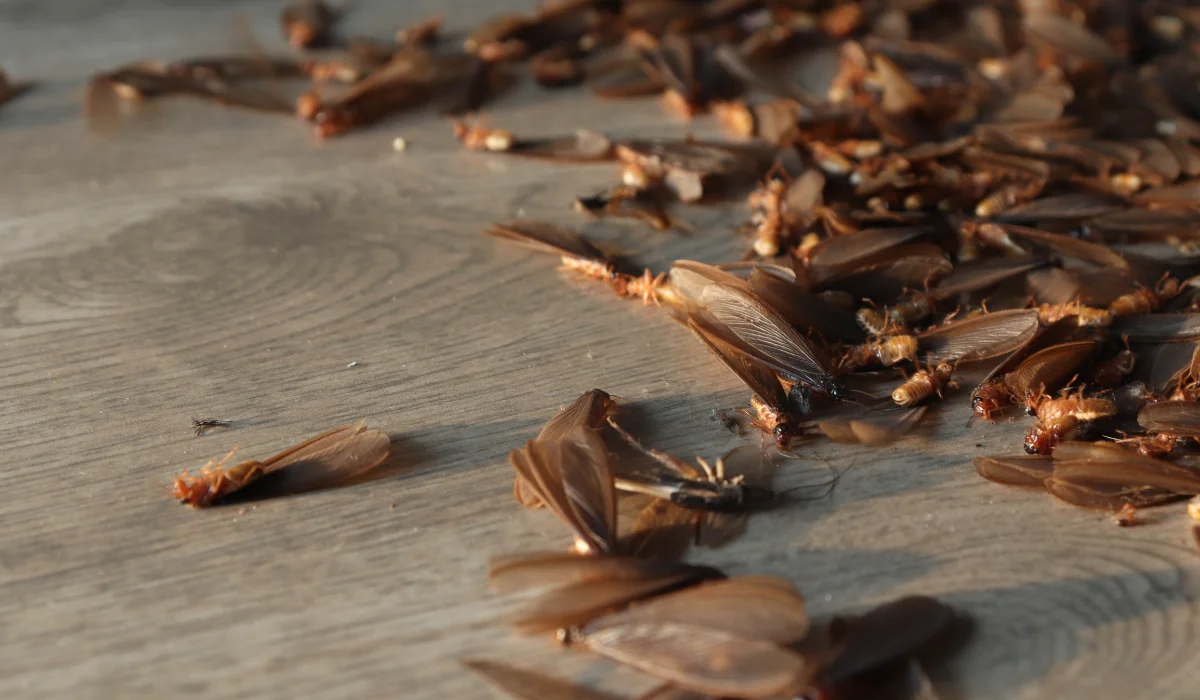
One of the clearest signs of termites is finding discarded wings on window sills, floors, or near baseboards. After reproductive termites land, they shed their wings before trying to form new colonies.
If you keep seeing termite wings indoors, especially in the same area, that is a strong warning sign. It suggests the swarm happened inside or very close to the structure.
Mud tubes on the foundation or lower walls
Subterranean termites build mud tubes to stay protected while traveling between the soil and the structure. These tubes are often found on basement walls, foundation surfaces, crawl space piers, or other lower structural areas.
Mud tubes are among the strongest signs of termites because they indicate active travel routes. When pest control professionals find them, they use that evidence to help locate the termite colony and assess the level of termite activity.
Hidden termite damage may already be developing
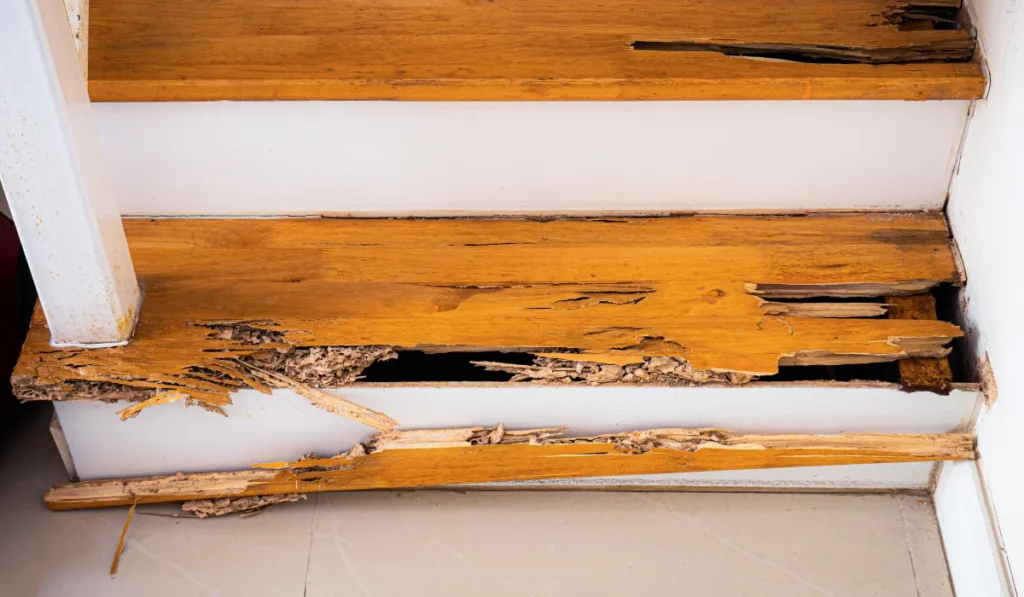
Not all termite damage is obvious at first. Wood may sound hollow, paint may bubble, or trim may start to look uneven. In more advanced cases, you may notice soft spots, warped baseboards, or signs of structural damage around doors and windows.
Because termites work from the inside out, visible damage often shows up late. That is why waiting for obvious damage to occur is rarely a good strategy, whether you manage a home, a rental property, or a commercial building.
Schedule a Michigan Termite Inspection
If you are seeing termite swarmers indoors, the next step should be a professional termite inspection. That is the best way to determine whether the swarm came from outside, whether you have an active infestation, and which termite treatment makes sense for the property.
Pest Pros of Michigan focuses on the places termites actually use, including foundation edges, crawl spaces, basement walls, wood-to-soil contact points, and moisture-prone areas. From there, a pest control company can recommend a treatment plan based on how the termites are moving and where the colony is likely located. In some cases, that may include a baiting system as part of long-term termite protection.
DIY steps rarely solve the full issue because they do not reach the source of the termite colony. If you have noticed termite swarmers, flying termites, discarded wings, or other warning signs, schedule us for an inspection with Pest Pros of Michigan. Whether you need residential pest control, commercial pest control, or focused termite control, early action gives you the best chance to limit termite damage and protect your property year-round.
FAQs
What do termite swarmers look like?
Termite swarmers are winged termites with straight antennae, a thick waist, and two pairs of equal-length wings. They are often confused with flying ants, but flying ants have bent antennae, narrow waists, and front wings that are longer than the back wings.
Do indoor termite swarmers always mean an active infestation?
Not always, but they are a strong reason to schedule a termite inspection. Some termite swarmers come in from outside during the termite swarming season. Still, when they appear in large numbers indoors, they can point to an active infestation or a nearby termite colony.
What do pest control professionals do after finding termite swarmers?
A pest control company starts with a professional termite inspection to confirm the termite species, locate activity, and check for mud tubes, termite damage, and entry points. From there, the technician may recommend termite treatment, a baiting system, or another termite control plan based on the findings.

 Serving Michigan since 2018
 Pest-free guarantee
 Small, local business
 10+ years of pest control experience
 President and CEO of Pest Pros of Michigan
 Resident of Michigan