If you are comparing photos because you found wings, mud tubes, damaged wood, or pale insects around your Kalamazoo home, focus on the details that matter most: body shape, wings, antennae, shelter tubes, and where the sign appeared. Termites can look similar to ants at first glance, especially during swarming season.
In Michigan, the main termite concern is the Eastern subterranean termite. These termites live in soil, move through mud shelter tubes, and may damage wood before the problem is easy to see. Clear photos can help, but a professional inspection is still the safest way to confirm activity.
Key Takeaways
- Termite swarmers are often confused with flying ants.
- Straight antennae and equal-length wings are key termite clues.
- Mud shelter tubes often point to subterranean termite movement.
- Damaged wood near moisture or soil contact deserves inspection.
- Photos help, but they do not replace a professional inspection.
What Termites Look Like In Michigan
Eastern subterranean termites are the main species Kalamazoo homeowners should know. Michigan State University Extension identifies Eastern subterranean termites as Michigan’s most serious wood-destroying pest.
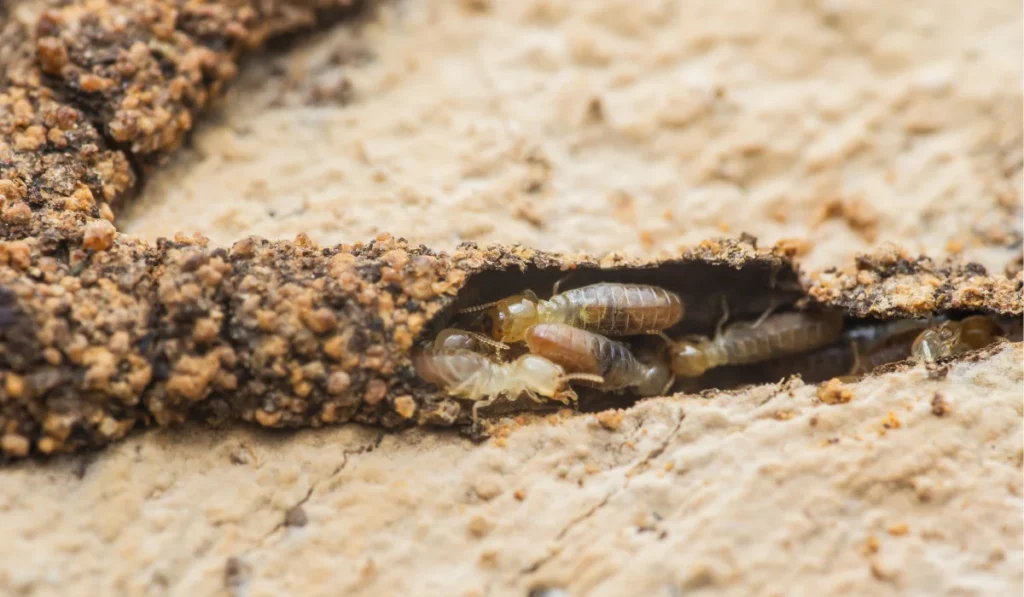
Different termites in the colony can look different. Workers are usually pale and soft-bodied. Soldiers may have larger heads. Swarmers are winged termites that leave a colony to start new colonies.
If you find insects indoors, look for:
- Straight antennae
- A broad waist without a narrow pinch
- Four wings of similar length on swarmers
- Pale or cream-colored workers
- Soft bodies compared with ants
- Activity near wood, moisture, mud tubes, or basement areas
Do not rely on color alone. Lighting, age, and the insect’s role in the colony can change how it appears.
Termite Swarmers Vs. Flying Ants
Termite swarmer or flying ant? Sorted by what matters
Winged insects near a Kalamazoo window or basement light can mean two very different things. Antenna shape, waist, and wing length separate a termite swarmer worth acting on from a flying ant that is just a look-alike.
Termite Swarmer
Structural riskStraight antennae, a thick, straight body shape, and wings that are about the same size and may break off easily.
Where Near windows, doors, basement lights, and other bright areas.
Flying Ant
Mistaken IDBent antennae, a pinched waist, front wings longer than the back wings, and a more segmented body shape.
Where Near windows, doors, basement lights, and other bright areas.
Many homeowners first suspect termites after seeing winged insects near windows, doors, basement lights, or other bright areas. Flying ants can look similar, so the details matter.
A termite swarmer usually has:
- Straight antennae
- A thick, straight body shape
- Wings that are about the same size
- Wings that may break off easily
A flying ant usually has:
- Bent antennae
- A pinched waist
- Front wings that are longer than the back wings
- A more segmented body shape
If you find dead swarmers or shed wings indoors, save a few in a small bag or container. That can help with identification during the inspection.
Mud Shelter Tubes
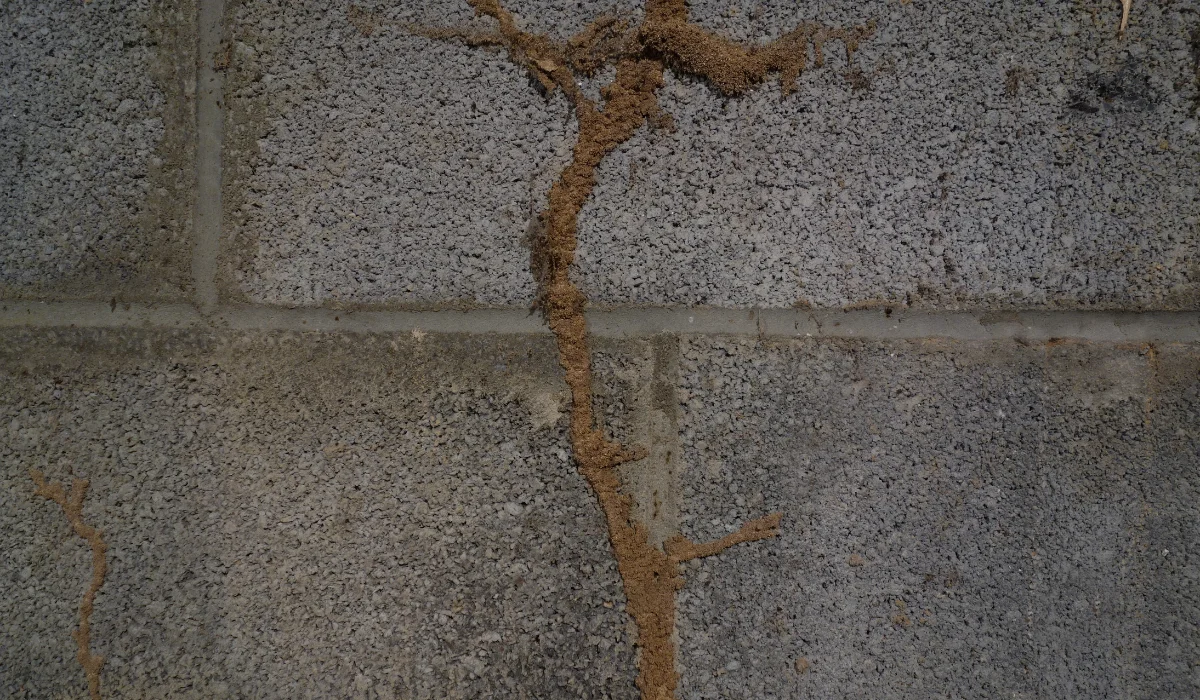
Mud shelter tubes are one of the strongest visual signs of subterranean termite activity. These tubes may look like narrow dirt-colored lines, pencil-width trails, or mud packed into cracks.
You may find them on:
- Basement walls
- Foundation walls
- Crawl space supports
- Garage slab edges
- Porch posts
- Utility openings
- Areas where wood meets soil
- Cracks or seams near the foundation
Do not scrape them away before an inspection. The tube location can help us understand where termites may be entering and whether the activity appears active, old, or connected to a larger issue.
Wood Damage Clues
Termite-damaged wood may not look dramatic from the outside. In some cases, the surface remains thin while the inside has been hollowed or layered.
Look for:
- Wood that sounds hollow when tapped
- Soft or blistered surfaces
- Dirt-like material inside damaged wood
- Thin outer layers over damaged interiors
- Damage near moisture or soil contact
- Sticking doors or windows near damaged framing
- Sagging or weakened wood around porches or basements
Wood damage can also come from moisture, rot, carpenter ants, or age. That is why the location, insect evidence, and moisture conditions all matter.
Where Kalamazoo Homeowners Should Look
You do not need to open walls to do a basic visual check. Start with safe, accessible areas where subterranean termites are more likely to leave signs.
Check:
- Basement corners
- Rim joists and sill plates where visible
- Crawl space areas
- Garage edges
- Porch and deck supports
- Foundation walls
- Window sills and basement windows
- Areas near leaks or drainage problems
- Wood stored near the home
- Mulch or soil built up against siding
If an area is dark, tight, damp, or unsafe, leave it alone and schedule an inspection.
What To Photograph Before Service
Photos can help us understand what you found, especially if swarmers appeared briefly or a sign was cleaned up before the appointment. Take photos from a safe distance and avoid disturbing active evidence.
Helpful photos include:
- Close-ups of insects beside a coin or ruler
- Shed wings near windows or floors
- Mud tubes on foundations or basement walls
- Damaged wood before repairs
- The wider area where the sign appeared
- Moisture issues near the damage
- Porch, deck, or crawl space areas with visible signs
Try to keep the evidence in place when possible. A photo is helpful, but the physical location tells us more.
What Not To Do After Finding Signs
It is natural to want to clean or repair the area right away, but removing evidence can make inspection harder.
Avoid these steps before service:
- Do not scrape away mud tubes.
- Do not spray random products into cracks or walls.
- Do not remove damaged wood unless there is a safety issue.
- Do not paint or caulk over suspicious areas.
- Do not assume the problem is gone because no insects are visible.
- Do not rely on online photos alone for a final answer.
Termite activity can stay hidden. A professional inspection helps confirm whether the signs are active, old, or caused by a different pest or moisture problem.
How We Inspect Termite Signs
Our termite control service starts with inspection and detection. We look for mud shelter tubes, damaged wood, swarm evidence, moisture concerns, and visible entry points around the structure.
For Kalamazoo homes, we may check accessible areas such as basements, crawl spaces, foundation walls, garage edges, porches, decks, and exterior wood near soil. If we find activity, we explain what we see and recommend a treatment plan based on the evidence.
We do not treat based on a photo alone. We use the photo as a starting point, then inspect the property to confirm what is happening.
Local Termite Help In Kalamazoo
Pest Pros of Michigan provides pest control services in Kalamazoo for homes and businesses, including termite inspection, detection, and control. If you found suspicious insects, wings, tubes, or damaged wood, we can help identify the issue and explain the right next step.
The sooner the evidence is checked, the easier it is to understand whether you are seeing termite activity, flying ants, carpenter ants, moisture damage, or old evidence.
Schedule Termite Service In Kalamazoo
If you found suspicious insects, wings, mud tubes, or damaged wood, we can inspect the area and help you understand what the signs mean.
Contact Pest Pros of Michigan to request termite service in Kalamazoo.
Frequently Asked Questions
What Do Termites Look Like In Michigan?
Workers are usually pale, soft-bodied insects. Swarmers have wings, straight antennae, and a broad waist. In Michigan homes, Eastern subterranean termites are the main structural concern.
How Can I Tell A Termite Swarmer From A Flying Ant?
Termite swarmers usually have straight antennae, a thick waist, and wings of equal length. Flying ants usually have bent antennae, a pinched waist, and front wings that are longer than the back wings.
Are Mud Tubes A Sign Of Termites?
Mud shelter tubes can be a sign of subterranean termite movement. They may appear on foundations, basement walls, crawl spaces, porch supports, or garage edges. Leave them in place until inspection.
Should I Send Photos Before A Termite Inspection?
Photos can help, especially if you saw swarmers or found damage that may change before the appointment. Still, an inspection is needed to confirm whether the activity is active and where it may be coming from.
When Should Kalamazoo Homeowners Call Pest Pros Of Michigan?
Call when you find winged insects indoors, shed wings, mud tubes, soft wood, or damage near basements, crawl spaces, foundations, porches, decks, or garage areas.

 Serving Michigan since 2018
 Pest-free guarantee
 Small, local business
 10+ years of pest control experience
 President and CEO of Pest Pros of Michigan
 Resident of Michigan