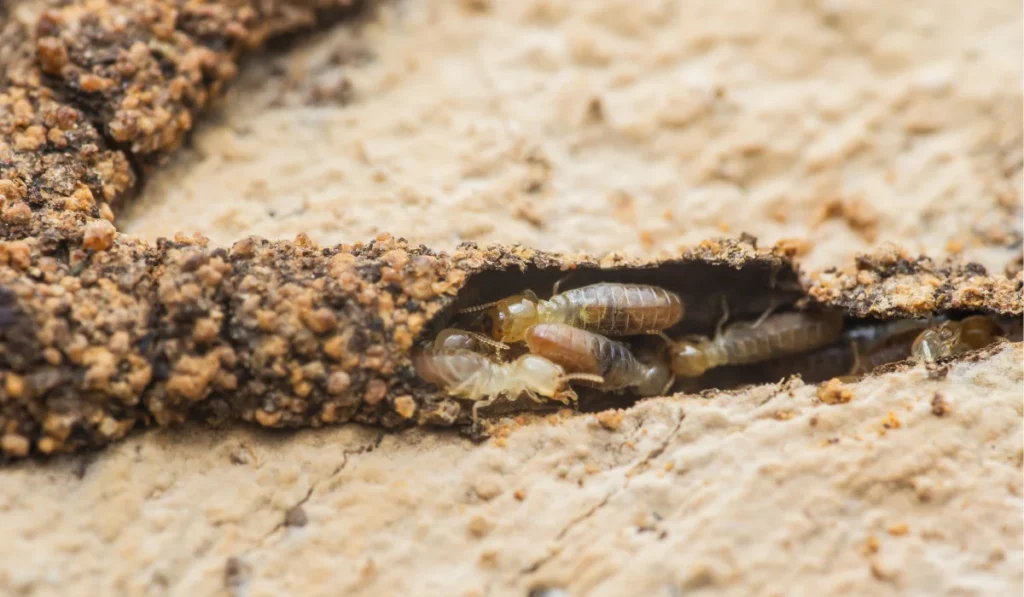
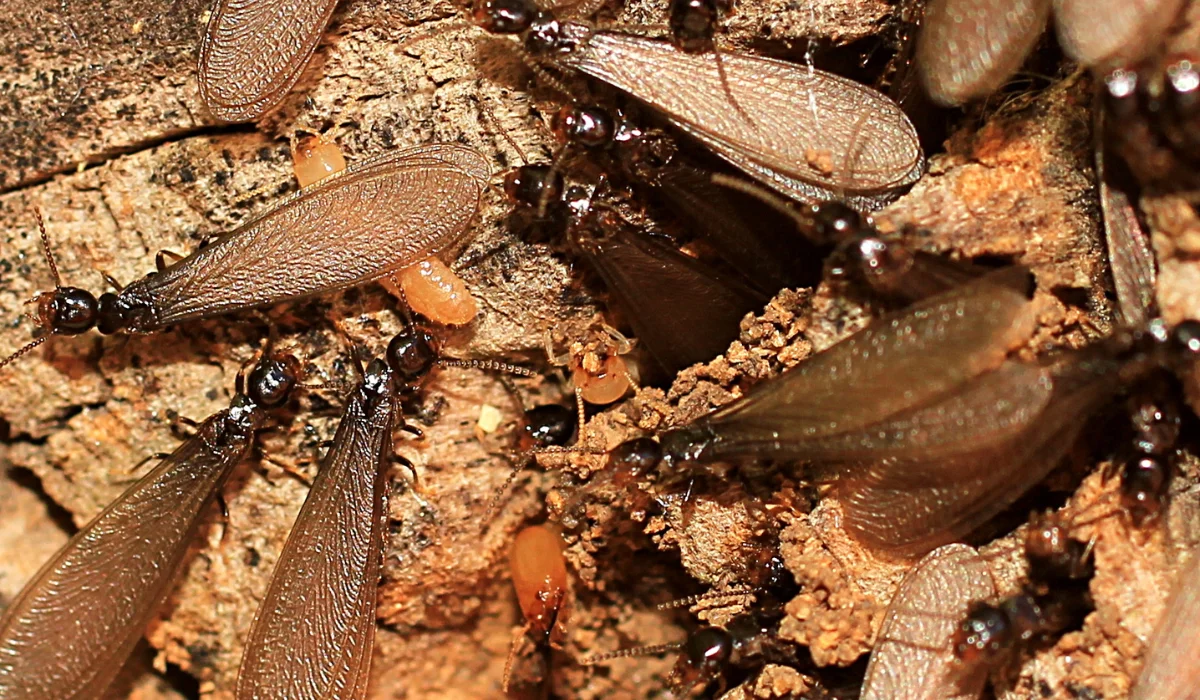
Winged termites are reproductive termites that leave an established colony to start new colonies. Around Plainwell homes, seeing them indoors can be an important warning sign because it may point to termite activity inside or very close to the structure.
The insects may appear suddenly near windows, basement lights, sliding doors, or other bright areas. A few flying insects outside may not confirm an infestation, but winged termites inside the home, shed wings, mud tubes, or damaged wood should be inspected before cleanup or repairs cover the evidence.
Key Takeaways
- Winged termites are reproductive termites leaving a colony.
- Indoor sightings are more concerning than outdoor sightings.
- Flying ants can look similar, so identification matters.
- Shed wings, mud tubes, and soft wood should not be ignored.
- A professional inspection confirms whether activity is active.
Why Winged Termites Appear
A mature termite colony can release winged reproductive termites when conditions are right. Their job is to leave the colony, pair off, and attempt to start new colonies.
Most of them will not survive long indoors. Still, their presence matters because it can show that a colony is nearby. If they are emerging from a wall, basement area, crawl space, or window frame, the source may be inside the structure.
Michigan State University Extension explains that Eastern subterranean termites are the main termite species associated with serious wood damage in Michigan. These termites live in soil and may reach wood through mud shelter tubes, cracks, gaps, or direct wood-to-soil contact.
Winged Termites Vs. Flying Ants
Flying ants are often mistaken for termite reproductives. The difference matters because ants and termites require different treatment plans.
Winged termites usually have:
- Straight antennae
- A broad waist
- Four wings of similar length
- Wings that may fall off easily
- A softer, straighter body shape
Flying ants usually have:
- Bent antennae
- A pinched waist
- Front wings that are longer than the back wings
- A more segmented body shape
If you are not sure what you found, save a few insects in a small bag or container. That can help during the inspection.
Where Plainwell Homeowners May Find Them
In Plainwell homes, winged termites are often noticed because they move toward light. That means the first signs may show up indoors even when the termite activity started near soil, basement framing, or hidden structural wood.
Check areas such as:
- Basement windows
- Window sills
- Sliding door tracks
- Light fixtures
- Crawl space access points
- Garage edges
- Foundation walls
- Porch and deck connections
- Areas near moisture or plumbing leaks
Finding wings in the same area more than once is a stronger reason to schedule service.
Other Termite Signs To Look For
Winged termites are one clue, but they are not the only sign. Subterranean termite activity often shows up through mud shelter tubes and hidden wood damage.
Look for:
- Mud tubes on foundation or basement walls
- Shed wings near windows or lights
- Soft or hollow-sounding wood
- Dirt-like material inside damaged wood
- Sticking doors or windows near damaged framing
- Damage near porches, decks, or garage edges
- Moisture around basement or crawl space wood
MSU Extension notes that rim joists and sill plates are common places where mud and shelter tubes may be detected in homes with basements. If you see those signs, leave them in place until they can be inspected.
Why Indoor Sightings Matter More
Winged termites outdoors may come from a nearby stump, woodpile, or underground colony in the yard. That still deserves attention, but it does not always mean the home is infested.
Indoor sightings are different. If winged termites are inside, they may have entered from an active colony in or near the structure. They may also leave shed wings on window sills, floors, or basement surfaces after trying to fly toward light.
Do not assume the problem is gone because the insects died. The winged termites may disappear quickly, while the colony remains active.
What To Do Before Cleaning Up
If you find winged termites indoors, it is okay to clean up eventually, but document the evidence first. Photos and samples can help us identify the insect and understand where activity appeared.
Before cleaning:
- Take clear photos of the insects and wings.
- Save a few specimens in a small bag or container.
- Note the room and exact location.
- Check nearby baseboards, windows, and basement areas.
- Leave mud tubes or damaged wood undisturbed.
- Avoid spraying random products into cracks or walls.
Spraying the insects you can see does not solve the colony or the entry route. Inspection should come first.
Why DIY Treatment Can Miss The Source
Subterranean termites are connected to soil and moisture. If you only treat the visible insects, you may miss the actual colony, shelter tubes, entry points, or damaged wood.
DIY treatment can also disturb evidence before the structure is inspected. That makes it harder to determine whether activity is active, old, or tied to another part of the home.
A professional inspection helps confirm:
- Whether the insects are termites or ants
- Where activity may be coming from
- Whether mud tubes or damaged wood are present
- Which areas of the structure are affected
- What treatment plan fits the home
Our termite control service starts with inspection and detection, then moves into treatment only when the evidence supports it.
How We Help Plainwell Homeowners
We inspect accessible areas where termite activity is most likely to appear, including basements, crawl spaces, foundation walls, garage edges, porch supports, deck connections, and visible wood near soil or moisture.
Our local Plainwell pest control team serves homes and businesses with termite, pest, and rodent control support. If we find termite evidence, we explain what we see and recommend the next step based on the structure and level of activity.
The goal is to identify the source, not simply remove the insects you noticed.
Schedule Termite Service In Plainwell
If winged termites, shed wings, mud tubes, or damaged wood have appeared in your Plainwell home, we can inspect the area and explain what the signs mean.
Contact Pest Pros of Michigan to request termite service in Plainwell.
Frequently Asked Questions
Are Winged Termites A Sign Of An Infestation?
They can be, especially if they appear indoors. Outdoor sightings may come from a nearby colony, but indoor activity, shed wings, or repeated sightings should be inspected.
How Do I Know If I Found Termites Or Flying Ants?
Termites usually have straight antennae, a broad waist, and wings of similar length. Flying ants usually have bent antennae, a pinched waist, and front wings that are longer than the back wings.
Should I Vacuum Up The Wings?
Take photos first and save a few insects or wings if possible. After that, cleanup is fine, but leave mud tubes or damaged wood in place until inspection.
Where Do Winged Termites Usually Show Up Indoors?
They often appear near windows, doors, basement lights, sliding doors, and other bright areas. They may also be found near damaged wood, foundation walls, or crawl space access points.
When Should Plainwell Homeowners Call Pest Pros Of Michigan?
Call when winged termites appear indoors, shed wings collect near windows, mud tubes show up on basement or foundation walls, or wood feels soft near moisture or soil contact.

 Serving Michigan since 2018
 Pest-free guarantee
 Small, local business
 10+ years of pest control experience
 President and CEO of Pest Pros of Michigan
 Resident of Michigan