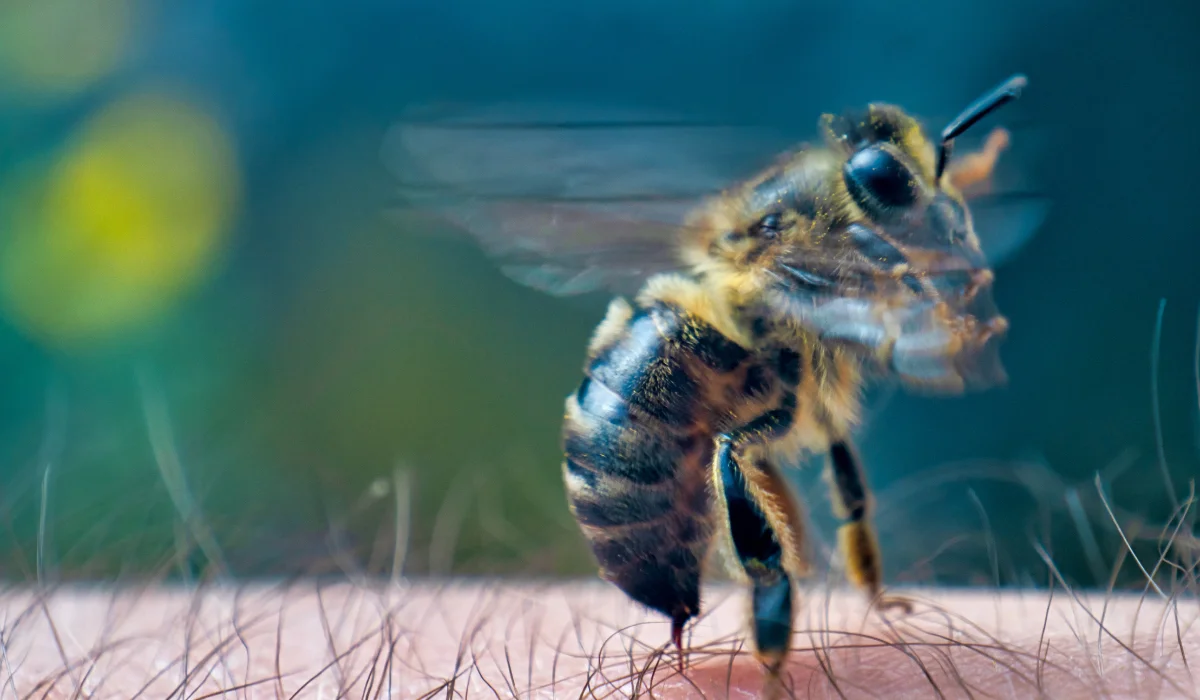
A bee sting can hurt, swell, itch, and stay irritated for a short time. For many people, the reaction stays near the sting site and improves with basic first aid. That said, some reactions are more serious and need medical attention right away.
At Pest Pros of Michigan, we help reduce stinging insect risks around Plainwell homes by inspecting nests, identifying activity, and treating problem areas when service is needed. We do not diagnose sting reactions. If symptoms seem severe, unusual, or fast-moving, medical care comes first.
Key Takeaways
- A typical sting may cause pain, redness, itching, and swelling near the site.
- Honey bees may leave a stinger behind; remove it promptly if visible.
- Trouble breathing, dizziness, or swelling away from the sting site can be serious.
- Bees, wasps, hornets, and yellow jackets are often confused.
- Call Pest Pros when stinging insects are nesting near daily activity.
What A Typical Local Reaction Can Look Like
A common bee sting reaction usually stays close to where the sting happened. The area may feel painful at first, then become red, swollen, itchy, or tender.
You may notice:
- Sharp pain at the sting site
- Redness around the area
- Mild to moderate swelling
- Itching
- Warmth or tenderness
- Irritation that changes over the next day or two
MedlinePlus recommends watching over the next several days for signs that symptoms are worsening, including increasing redness, swelling, or pain.
Basic First Aid After A Sting
If the person is not showing signs of a serious allergic reaction, basic first aid can help reduce discomfort. Follow medical guidance and product labels.
General steps include:
- Move away from the nest or insect activity.
- Remove a visible stinger if one is present.
- Wash the area with soap and water.
- Apply a cold pack wrapped in cloth.
- Avoid scratching the sting site.
- Monitor symptoms over the next several days.
MedlinePlus’ insect bite and sting guidance recommends using ice wrapped in a washcloth for short intervals and watching for signs of infection or worsening symptoms.
When A Sting May Need Emergency Help
Some reactions are not typical local irritation. A serious allergic reaction can affect more than the sting site and may develop quickly.
Seek emergency medical help right away if there is:
- Trouble breathing
- Swelling of the face, lips, tongue, or throat
- Dizziness or faintness
- Widespread hives
- Tightness in the chest or throat
- Vomiting or severe weakness
- A known severe allergy to stings
Do not wait for pest control if someone may be having an allergic reaction. Medical care should come first.
Why The Insect Matters
Homeowners often call every stinging insect a bee, but bees, wasps, hornets, and yellow jackets behave differently. Identification matters because the nest location, sting risk, and removal approach can change.
Michigan State University Extension’s bee, wasp, and hornet nest guide explains that homeowners should identify the nest before trying to destroy it.
Common differences include:
- Honey bees are usually fuzzy and may leave a stinger behind.
- Bumble bees are larger and often forage around flowers.
- Paper wasps build open, umbrella-shaped nests.
- Yellow jackets may nest underground or in wall voids.
- Hornets may build larger covered paper nests.
Do not get close to identify the insect. Watch from a safe distance and note where activity is coming from.
Where Stings Happen Around Plainwell Homes
Stings often happen when people or pets get too close to a nest without realizing it. Outdoor chores can also disturb hidden activity.
Risk areas include:
- Decks and patios
- Porch ceilings
- Eaves and soffits
- Sheds and garages
- Mailboxes
- Shrubs near walkways
- Ground openings
- Wall voids
- Play areas
- Pet spaces
Our Plainwell wasp control team handles bees, wasps, and hornets around homes, with inspection and treatment based on the nest location and risk.
What Not To Do After A Sting Or Nest Sighting
A painful sting can make people react quickly, but fast reactions around stinging insects can create more risk.
Avoid these mistakes:
- Do not swat near an active nest.
- Do not stand close to watch the nest.
- Do not block a wall void or ground entrance.
- Do not use a ladder near active insects.
- Do not let pets investigate the area.
- Do not spray randomly without identifying the nest.
- Do not ignore symptoms that are spreading or severe.
If the sting reaction is concerning, call a medical professional. If the nest location is the problem, call a pest professional.
How To Reduce Sting Risk Around The Home
You may not prevent every bee, wasp, or hornet from entering the yard, but you can reduce common attractants and spot nests earlier.
Helpful steps include:
- Keep trash lids closed.
- Clean food and drink spills outdoors.
- Avoid leaving sweet drinks open outside.
- Repair torn screens.
- Seal gaps around siding, soffits, and trim.
- Check eaves and porch ceilings in spring and summer.
- Trim shrubs away from walkways.
- Watch for repeated flight paths into one opening.
Early inspection can help catch a small nest before it becomes a larger problem.
When To Call Pest Pros Of Michigan
Call us when stinging insects are nesting near places your household uses often. You should also call if the nest is hidden, hard to reach, or located inside a structure.
Professional service makes sense when:
- Insects are entering and exiting the same spot.
- A nest is near a door, deck, patio, or walkway.
- Activity is close to children or pets.
- Someone in the home is allergic to stings.
- The nest is in a wall, attic, soffit, or ground opening.
- You are unsure whether the insect is a bee, wasp, hornet, or yellow jacket.
- Activity is increasing as the season goes on.
Our stinging insect control service focuses on inspection, identification, and treatment based on the insect and nest location.
Schedule Stinging Insect Control In Plainwell
If bees, wasps, hornets, or yellow jackets are active near your Plainwell home, we can inspect the area and recommend the safest next step.
Contact Pest Pros of Michigan to request stinging insect control in Plainwell.
Frequently Asked Questions
What Does A Typical Bee Sting Look Like?
A typical sting may cause pain, redness, itching, warmth, and swelling near the sting site. Symptoms should be monitored, especially if swelling or pain increases.
How Long Does A Bee Sting Stay Swollen?
Swelling can last longer than the first few hours for some people. If swelling is severe, spreading, or getting worse over several days, contact a medical professional.
When Is A Bee Sting An Emergency?
Seek emergency medical help if there is trouble breathing, swelling of the face or throat, dizziness, widespread hives, chest tightness, or any known severe allergy concern.
Do Wasps And Hornets Cause Similar Reactions?
They can. Bees, wasps, hornets, and yellow jackets can all cause painful stings and allergic reactions in some people. Identification helps with nest control, but medical symptoms should be treated seriously either way.
When Should Plainwell Homeowners Call Pest Pros Of Michigan?
Call when stinging insects are nesting near daily activity, entering a structure, building in a wall void, or creating a sting risk for children, pets, guests, or anyone with allergies.

 Serving Michigan since 2018
 Pest-free guarantee
 Small, local business
 10+ years of pest control experience
 President and CEO of Pest Pros of Michigan
 Resident of Michigan