Flies are easier to control when you identify where they are coming from before placing traps. In Southwest Michigan homes, fly activity often starts with food residue, drains, trash, pet areas, moisture, open doors, damaged screens, or seasonal entry points around attics and wall voids.
Catching adult flies can help reduce what you see, but traps alone rarely solve the source. The best approach is to remove breeding material, clean problem areas, seal entry points, and use the right trap for the type of fly you are seeing.
Key Takeaways
- Fly traps work best when paired with sanitation and source removal.
- Fruit flies often come from overripe produce, residue, and drains.
- House flies are drawn to trash, food spills, and open entry points.
- Cluster flies may enter homes in fall and appear near windows later.
- Recurring fly activity may need a professional inspection.
Start By Identifying The Fly
Not every fly problem starts in the same place. A few small flies around a sink are different from large flies around trash or slow-moving flies gathering at windows in cooler months.
Common fly issues around Southwest Michigan homes include:
- Fruit flies around produce, drains, bars, trash, and sticky spills
- House flies around garbage, doors, pet waste, and food residue
- Drain flies around wet drains and organic buildup
- Cluster flies around attics, wall voids, and sunny windows
- Blow flies near decaying organic material or dead animals
If you treat every fly the same way, you may miss the source. Identification helps decide whether you need a drain brush, trash cleanup, exclusion work, light trap, sticky trap, or professional inspection.
Use Traps As A Tool, Not The Whole Plan
Traps catch adult flies, which helps reduce activity you can see. They do not remove eggs, larvae, hidden breeding sites, or entry points.
Michigan State University Extension explains that trapping can be used for both monitoring and control in home pest management. That makes traps useful, but only when they are paired with cleanup and prevention.
For homes, common trap options include:
- Sticky traps near problem areas
- Light traps placed away from competing light sources
- Fruit fly traps near produce or sink areas
- Window traps for flies gathering near glass
- Drain monitoring traps to confirm drain activity
Place traps where flies are active, but do not scatter them randomly across the house. The location of trapped flies can help reveal the source.
Fruit Flies Around Kitchens And Drains
Fruit flies are small and often appear around kitchens, bars, trash cans, recycling bins, and drains. They are attracted to fermenting material, sugary residue, overripe produce, and damp organic buildup.
To reduce fruit flies:
- Throw away overripe produce.
- Store fruit in sealed containers or the refrigerator.
- Empty trash and recycling regularly.
- Rinse bottles and cans before recycling.
- Clean sticky spills under appliances and cabinets.
- Scrub drains where residue may collect.
- Use a fruit fly trap as a supplement, not the main fix.
MSU Extension notes that eliminating immature fly food sources and using frequent sanitation are the best ways to keep fruit fly numbers down. Adult sprays or traps may reduce visible flies, but they do not solve the breeding source by themselves.
House Flies Near Doors, Trash, And Pet Areas
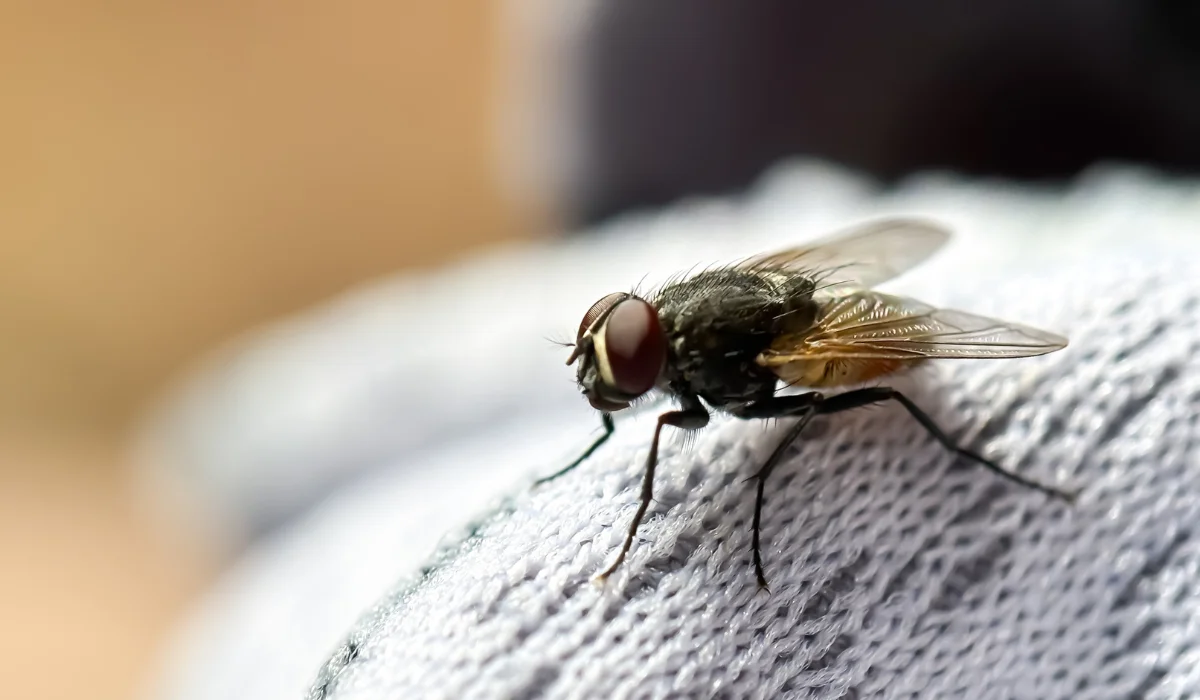
House flies are larger than fruit flies and often enter through doors, damaged screens, garages, or gaps around exterior openings. They may also gather around trash, pet waste, food spills, compost, and outdoor eating areas.
To reduce house flies:
- Keep trash lids tight.
- Clean trash cans when residue builds up.
- Pick up pet waste regularly.
- Keep doors closed when possible.
- Repair torn screens.
- Seal gaps around doors and windows.
- Clean food spills quickly.
- Keep outdoor dining areas cleared after meals.
If flies keep appearing indoors, check where they are landing and where they are entering. Repeated activity near one door, window, or garage edge may point to an entry issue.
Drain Flies Around Sinks And Wet Areas
Drain flies are small, fuzzy-looking flies that often rest near sinks, tubs, floor drains, laundry rooms, or damp utility areas. They can develop in organic buildup inside drains or other wet areas.
To check for drain activity, place a clear cup or sticky tape near the drain overnight without blocking the drain fully. If small flies appear around that location, the drain may need deeper cleaning.
Helpful steps include:
- Brush-clean the drain, not only the surface.
- Remove slime and organic buildup where possible.
- Fix leaks or standing water.
- Clean floor drains and utility sinks.
- Keep rarely used drains flushed.
- Avoid relying on bleach alone.
If drain flies keep returning after cleaning, the source may be deeper than the visible drain opening.
Cluster Flies In Fall And Spring
Cluster flies behave differently from kitchen flies. They often enter homes in late summer or fall to overwinter in attics, wall voids, and other protected spaces. Later, they may appear near windows on warm winter or spring days as they try to get outside.
Our guide to preventing cluster flies in South Haven homes explains that exclusion matters because these flies can hide in wall spaces and attics once they get inside.
To reduce cluster fly issues:
- Seal gaps around soffits, vents, siding, and windows.
- Repair damaged screens.
- Check attic and wall entry points before fall.
- Use window or light traps for indoor adults.
- Avoid crushing flies on walls or curtains.
- Schedule preventive exterior service before they enter.
Once cluster flies are already hidden indoors, control can be harder than prevention.
Where To Place Fly Traps
Trap placement matters. A trap in the wrong place may catch a few flies without helping you understand the source.
Use these placement tips:
- Place fruit fly traps near produce, sinks, bars, or trash.
- Place sticky traps near fly resting areas.
- Place light traps away from bright windows when possible.
- Use window traps where flies gather on glass.
- Keep traps away from food prep surfaces.
- Replace traps when they fill or dry out.
- Track which trap catches the most flies.
Do not place bright light traps where they attract flies deeper into living spaces. The goal is to intercept activity, not pull flies across the home.
What Not To Do
Quick fixes can waste time or spread the problem if the source is still active.
Avoid these mistakes:
- Do not rely on sprays alone.
- Do not ignore drains, trash, or recycling bins.
- Do not leave fruit out while trapping fruit flies.
- Do not place traps beside open food.
- Do not overlook pet waste or outdoor trash.
- Do not seal gaps before checking for hidden activity.
- Do not assume every small fly is a fruit fly.
If flies return after cleanup and trapping, the source may be hidden in drains, wall voids, attics, crawl spaces, trash areas, or exterior entry points.
When To Call Pest Pros Of Michigan
Call for professional help when flies keep coming back, several fly types appear at once, traps fill quickly, or the source is not obvious. A recurring fly issue is usually a source problem, not just an adult fly problem.
Our team can inspect likely breeding and entry areas, including drains, trash areas, kitchens, basements, garages, attics, exterior gaps, and other problem spots. We also help identify whether the issue is tied to sanitation, exclusion, moisture, seasonal cluster flies, or another pest concern.
Pest Pros of Michigan provides residential pest control services for homes throughout the area, and we can recommend the right next step based on what is actually driving the fly activity.
Schedule Fly Control In Southwest Michigan
If flies keep returning after cleanup and traps, we can inspect the problem areas, identify the source, and recommend a control plan that fits your home.
Contact Pest Pros of Michigan to request pest control service in Southwest Michigan.
Frequently Asked Questions
What Is The Best Way To Catch Flies Indoors?
Use traps that match the fly type. Fruit fly traps work near produce and drains, sticky traps help monitor activity, and window or light traps can help with flies gathering near glass. Cleanup still matters most.
Why Do Flies Keep Coming Back After I Trap Them?
Traps catch adults, but they do not remove eggs, larvae, residue, trash, drains, or entry points. If the source stays active, new flies keep appearing.
What Attracts Fruit Flies In A House?
Fruit flies are attracted to overripe fruit, sugary spills, alcohol residue, trash, recycling bins, and organic buildup in drains. Removing those sources is the main control step.
Are Cluster Flies The Same As House Flies?
No. Cluster flies often enter homes in fall and hide in attics or wall voids. They may appear near windows later. House flies are more often tied to trash, food, doors, and outdoor entry points.
When Should I Call Pest Pros Of Michigan?
Call when flies keep returning, traps are not enough, activity is coming from drains or hidden areas, or you cannot identify where the flies are breeding or entering.

 Serving Michigan since 2018
 Pest-free guarantee
 Small, local business