Grasshoppers and locusts are closely related, but they are not usually the same kind of problem for Southwest Michigan homeowners. Grasshoppers are the insects you are more likely to notice feeding on garden plants, flowers, ornamental leaves, and lawn edges during warm months. Locusts are certain grasshoppers that can shift into a swarming phase under specific conditions.
For local homeowners, the practical concern is usually plant damage, not a true locust swarm. If you are seeing large jumping insects around your yard, the next step is to check the plants, look for feeding patterns, reduce conditions that support heavy activity, and call for help if the issue is spreading.
Key Takeaways
- Locusts are a type of grasshopper with swarming behavior.
- Southwest Michigan homeowners are more likely to notice grasshopper feeding.
- Grasshoppers chew large, ragged holes in leaves.
- Healthy yards can still see seasonal activity.
- Pest control may help when outdoor pest pressure becomes hard to manage.
What Is The Difference?
The main difference is behavior. A grasshopper usually lives and feeds as an individual insect. A locust is a grasshopper species that can change behavior under crowded conditions and form moving groups or swarms.
The Food and Agriculture Organization explains that locusts differ from grasshoppers because they can react to high densities by changing behavior and eventually forming bands or swarms. That is a specialized biological response, not what most homeowners are dealing with in a backyard garden.
In Southwest Michigan, a homeowner seeing jumping insects on plants is usually looking at grasshopper activity rather than a true locust event.
What Grasshoppers Look Like
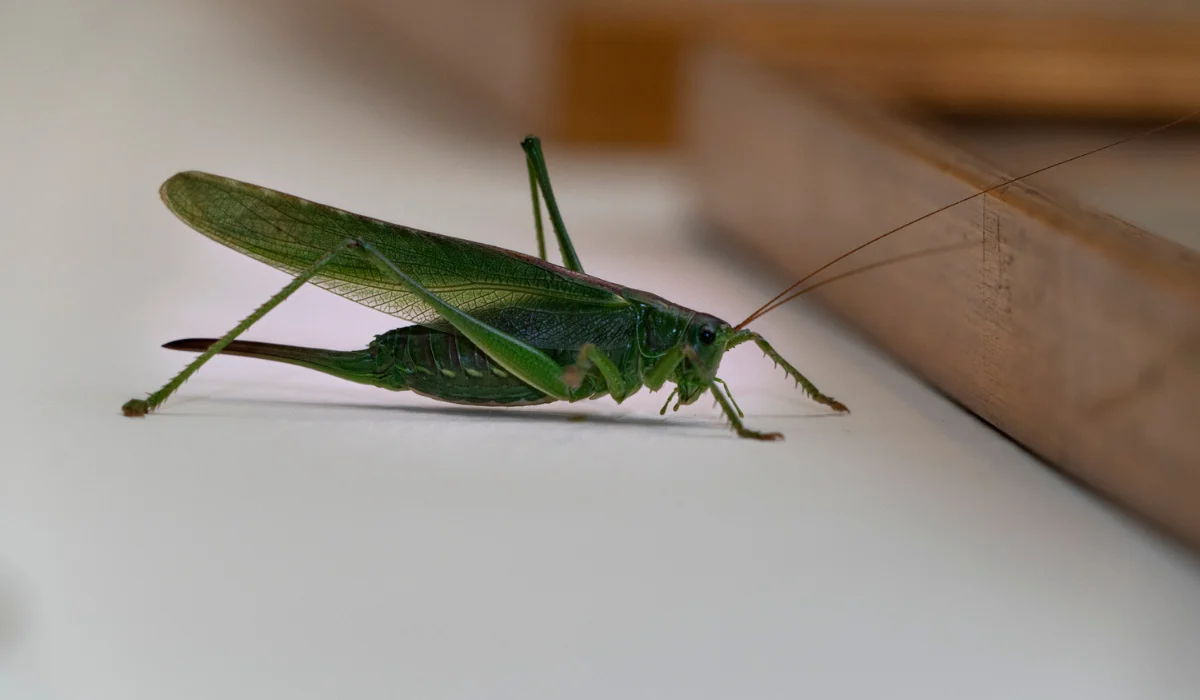
Grasshoppers are easy to recognize once you know the basic features. They have long back legs for jumping, chewing mouthparts, and bodies that may be green, brown, tan, or mottled depending on the species and habitat.
You may notice them:
- Jumping away when you walk through grass
- Resting on leaves or stems
- Feeding during the day
- Blending into dry grass, weeds, or garden plants
- Moving from nearby weedy areas into gardens or ornamental beds
Michigan State University Extension notes that grasshoppers have long hind legs adapted for jumping and tend to feed during the day, creating large, ragged holes in plant leaves.
What Damage Looks Like
Grasshopper damage usually appears on leaves rather than inside the home. These insects chew plant tissue, so the damage often looks torn, uneven, or ragged.
Check for:
- Large irregular holes in leaves
- Chewed edges on vegetables or flowers
- Missing plant tissue between leaf veins
- Damage on ornamental plants
- Activity near weedy borders or tall grass
- More feeding during warm, dry periods
One or two grasshoppers may not be a serious issue. Repeated feeding across several plants, young garden starts, or ornamental beds may need closer attention.
Are Locusts A Home Pest In Southwest Michigan?
True locust swarms are not a typical household pest issue in Southwest Michigan. The term “locust” is often used loosely, and some insects with “locust” in the name are simply grasshoppers in everyday homeowner terms.
That said, grasshoppers can still be frustrating around yards and gardens. Heavy activity can damage plants quickly, especially if insects are feeding on young vegetables, flowers, or tender ornamental growth.
The best response is to focus on the visible problem: what plant damage is occurring, where the insects are coming from, and whether the activity is limited or spreading.
Why Grasshoppers Show Up Around Homes
Grasshoppers often build up in grassy, weedy, or open areas before moving into yards and gardens. They may be more noticeable near unmowed edges, fields, vacant lots, fence lines, and landscape beds with plenty of plant material.
Common attractors include:
- Tall weeds near the yard
- Overgrown grass along edges
- Vegetable gardens
- Flower beds
- Dry, sunny areas
- Untended lots or field borders nearby
- Dense plant growth close to the house
You may not be able to control what is happening in nearby fields or open areas, but you can reduce conditions close to the home.
What Homeowners Can Do First
For light activity, start with simple yard and garden steps. The goal is to make the area less supportive and protect the plants most likely to be damaged.
Helpful steps include:
- Remove weeds near garden beds.
- Keep lawn edges trimmed.
- Use row covers for vulnerable young plants.
- Inspect plants during the day.
- Remove heavily damaged plant material when needed.
- Avoid letting tall grass grow against the home.
- Keep garden borders clean and easy to inspect.
MSU Extension notes that grasshoppers can be difficult to control with contact sprays because they are strong fliers and highly mobile. That is why prevention and monitoring matter before populations become harder to manage.
What Not To Do
Grasshopper activity can be annoying, but broad spraying without a clear plan can miss the target and affect other insects. It can also fail if new grasshoppers keep moving in from nearby areas.
Avoid these mistakes:
- Do not spray randomly across the yard.
- Do not assume every jumping insect needs treatment.
- Do not ignore weeds and tall grass near garden edges.
- Do not treat plants without checking product labels.
- Do not use outdoor products inside the home.
- Do not expect one trap or spray to stop insects moving in from nearby areas.
If you are unsure what insect is causing plant damage, identification should come before treatment.
When Pest Control Makes Sense
Grasshoppers are usually an outdoor plant-feeding issue, but professional pest support may make sense when outdoor pest activity becomes hard to identify, manage, or separate from other insects.
Call for help when:
- Plant damage is spreading quickly.
- You are not sure what insect is causing the damage.
- Outdoor pest activity is affecting patios or entry areas.
- You are seeing several pest issues at the same time.
- You want help inspecting the home’s exterior and yard conditions.
- Insects are also moving indoors or gathering around doors and windows.
Pest Pros of Michigan provides residential pest control services for common pest problems around homes. If the issue is not a standard treatment target, we can still help inspect, identify what you are seeing, and recommend the right next step.
How To Reduce Outdoor Pest Pressure
Long-term prevention depends on keeping the area around your home easier to inspect and less attractive to pests.
Start with these habits:
- Trim grass and weeds near the foundation.
- Keep garden beds maintained.
- Remove plant debris after heavy damage.
- Seal gaps around doors and windows.
- Repair torn screens.
- Reduce insects around exterior lights.
- Keep patios and outdoor dining areas clean.
- Watch for activity near doors, garages, and basement entries.
These steps can also reduce other insects that use the same yard conditions, gaps, and sheltered areas.
Schedule Pest Control In Southwest Michigan
If jumping insects, plant damage, or recurring outdoor pest activity are becoming a problem around your Southwest Michigan home, we can inspect the area and help identify the right next step.
Contact Pest Pros of Michigan to request pest control service in Southwest Michigan.
Frequently Asked Questions
Are Locusts The Same As Grasshoppers?
Locusts are a type of grasshopper that can shift into group behavior and form swarms under certain conditions. Most backyard jumping insects in Southwest Michigan are better understood as grasshoppers.
Do Grasshoppers Damage Gardens?
Yes. Grasshoppers chew leaves and can create large, ragged holes in plants. Damage is often most noticeable on vegetables, flowers, ornamental plants, and plants near tall grass or weeds.
Are Locust Swarms Common In Southwest Michigan?
True locust swarm events are not a typical household pest concern in Southwest Michigan. Homeowners are more likely to deal with ordinary grasshopper feeding in yards and gardens.
What Attracts Grasshoppers To A Yard?
Tall weeds, grassy borders, sunny dry areas, vegetable gardens, ornamental plants, and nearby open lots can support grasshopper activity.
When Should I Call Pest Pros Of Michigan?
Call when plant damage is spreading, you cannot identify the insect, outdoor pest activity is affecting patios or entry areas, or you want help inspecting conditions around the home.

 Serving Michigan since 2018
 Pest-free guarantee
 Small, local business
 10+ years of pest control experience
 President and CEO of Pest Pros of Michigan
 Resident of Michigan