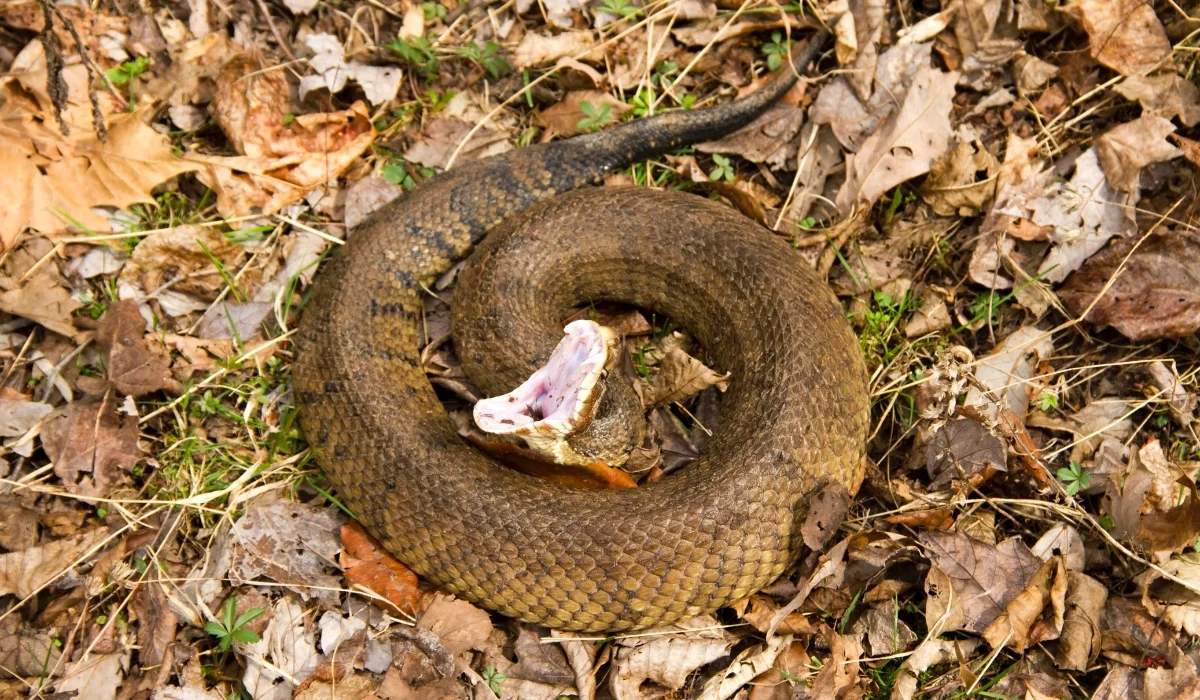
Cottonmouth and water moccasin are two common names for the same snake. The more important point for Plainwell homeowners is that this snake is not a typical Michigan species. If you see a dark snake near water, a basement, a crawl space, or a garage, it is more likely to be one of Michigan’s native nonvenomous snakes than a true cottonmouth.
That does not mean you should handle it. Snakes can bite when threatened, and identification can be difficult from a quick look. The safest response is distance, a photo if possible, and professional help if the snake is inside or too close to daily activity.
Key Takeaways
- Cottonmouth and water moccasin refer to the same snake.
- Cottonmouths are not a normal Plainwell or Michigan snake concern.
- Michigan’s only venomous snake is the eastern massasauga rattlesnake.
- Northern water snakes are often noticed near water and can be misidentified.
- Call for help when a snake is indoors, trapped, or hard to identify safely.
Are Cottonmouths Found In Plainwell?
A true cottonmouth is not something Plainwell homeowners should expect to find around the home. Michigan’s native snake list does not include cottonmouths. The state’s only venomous snake is the eastern massasauga rattlesnake.
That matters because many dark, thick-bodied, or water-loving snakes are misidentified as cottonmouths. In Michigan, a snake near a pond, creek, ditch, lake edge, or wet yard may be a northern water snake or another native species.
Even when the snake is likely nonvenomous, do not pick it up. A frightened snake may defend itself, and a photo from a safe distance is more useful than a close encounter.
Why The Names Cause Confusion
The name “water moccasin” can make people think any snake near water might be dangerous. That is not accurate. The cottonmouth is a semi-aquatic venomous snake found in parts of the southeastern and south-central United States, not a normal part of Michigan’s snake community.
Plainwell homeowners are more likely to see native snakes that use wet areas, lawns, gardens, basements, crawl spaces, or garages for food, shelter, or warmth. Some may look alarming at first, especially if they flatten their body, hold still, or move quickly when surprised.
The safest approach is not to guess from color alone. Body shape, head shape, habitat, behavior, and location all matter, and even those clues can be misleading.
What Plainwell Homeowners May Be Seeing Instead
Michigan has several native snakes, and most are harmless to people when left alone. Around Plainwell homes, snakes may appear near water, woodpiles, tall grass, stone edges, sheds, basements, garages, and crawl space access points.
Possible sightings may include:
- Northern water snakes near ponds, streams, lakes, and wet areas
- Garter snakes in lawns, gardens, and foundation edges
- Milk snakes near barns, garages, or rodent activity
- Rat snakes in wooded or rural areas
- Brown snakes in gardens, leaf litter, or damp spots
- Eastern massasauga rattlesnakes in specific wetland or open habitats
Michigan DNR lists northern water snakes among the state’s native nonvenomous snakes and identifies the eastern massasauga as the state’s only venomous snake.
How To Respond If You See A Snake
If you see a snake outside, give it space and let it move away. Most snakes want to avoid people. The situation changes when a snake is inside the home, trapped in a garage, near pets, or in an area where someone may step on it.
Use these steps:
- Keep children and pets away.
- Do not try to grab or pin the snake.
- Do not corner it.
- Take a photo from a safe distance if you can.
- Close interior doors if it is inside.
- Avoid using glue traps or harmful DIY methods.
- Call for help if the snake is indoors or hard to identify.
If you believe someone was bitten, seek medical guidance promptly. Do not wait for pest control to identify the snake first.
Why Snakes Come Close To Homes
Snakes usually move near homes because they are looking for food, shelter, warmth, or a safe place to hide. If your property has rodents, insects, tall vegetation, gaps under doors, or cluttered storage areas, snakes may have more reason to pass through.
Common attractors include:
- Mice or other small prey
- Tall grass near the foundation
- Woodpiles
- Stone walls or landscape rocks
- Gaps under garage doors
- Open crawl space access
- Damp basement areas
- Brush piles or leaf debris
- Sheds and outbuildings
Reducing prey and hiding spots can make the property less inviting.
How To Reduce Snake Activity Around The House
Prevention focuses on exclusion, cleanup, and reducing the pests snakes may feed on. You do not need to remove every natural feature from the yard, but the areas close to the home should be easier to inspect.
Helpful steps include:
- Keep grass trimmed near the foundation.
- Move firewood away from the house.
- Seal gaps under doors and garage edges.
- Repair torn screens and vent covers.
- Remove brush piles and unused debris.
- Keep basement and crawl space access secure.
- Address rodent activity quickly.
- Store pet food and birdseed in sealed containers.
- Check sheds, garages, and crawl spaces before reaching into dark areas.
If snakes keep appearing, the property may need a closer inspection for entry points, rodents, or sheltered access areas.
When To Call Pest Pros Of Michigan
Call us when a snake is inside, trapped, recurring around the same entry point, or located in a basement, crawl space, garage, shed, or other area where removal is not safe for the homeowner.
Our Plainwell wildlife removal service includes snake removal from basements, crawl spaces, and garages, along with entry-point identification. We inspect the situation, remove the animal when appropriate, and help identify conditions that may be allowing snakes inside.
Professional help makes sense when:
- The snake is indoors.
- You cannot identify it safely.
- Pets or children use the area.
- It is hiding in a garage, basement, or crawl space.
- You keep seeing snakes near the same opening.
- You also have signs of mice or other prey activity.
- You need help sealing entry points after removal.
What If It Is A Massasauga?
The eastern massasauga rattlesnake is Michigan’s only venomous snake. It is not the same as a cottonmouth. It is a rattlesnake, and it is protected.
If you think you may have seen one, keep distance and do not attempt removal yourself. Michigan DNR’s eastern massasauga information can help with basic awareness, but a safe distance matters more than a close look.
If a snake is rattling, coiled, or cannot be avoided safely, back away slowly and keep people and pets out of the area.
Schedule Snake Removal In Plainwell
If a snake is in your basement, garage, crawl space, shed, or another area where it should not be, we can inspect the situation and help remove it safely.
Contact Pest Pros of Michigan to request wildlife removal in Plainwell.
Frequently Asked Questions
Are Cottonmouths And Water Moccasins The Same Snake?
Yes. They are two common names for the same snake. In Plainwell, the more important point is that this snake is not a normal Michigan species.
Are Cottonmouths Found In Michigan?
Cottonmouths are not listed among Michigan’s native snakes. Michigan’s only venomous snake is the eastern massasauga rattlesnake.
What Snake Is Often Mistaken For A Cottonmouth In Michigan?
Northern water snakes are often noticed near water and may be misidentified by homeowners. They are native to Michigan and listed by the state as nonvenomous.
What Should I Do If I Find A Snake In My House?
Keep children and pets away, avoid handling it, close off the room if possible, and call for professional removal. A photo from a safe distance can help with identification.
When Should Plainwell Homeowners Call Pest Pros Of Michigan?
Call when a snake is indoors, hiding in a basement or garage, trapped in a crawl space, recurring near entry points, or when you are unsure how to remove it safely.

 Serving Michigan since 2018
 Pest-free guarantee
 Small, local business
 10+ years of pest control experience
 President and CEO of Pest Pros of Michigan
 Resident of Michigan