Ant trails can create costly problems when early signs are missed. Learn ant trails meaning, what to look for, why it matters, and when to call Pest Pros of Michigan.
Key Takeaways About Ant Trails
- A visible line of ants moving along the same path typically means foraging workers have found food or water and are guiding others back to the colony.
- Cleaning up ant trails can temporarily disrupt the scent path, but addressing the colony itself is the key to long-term control.
- Most ant species nest outdoors and enter your home only to forage, so the trail you see indoors often leads to a nest somewhere outside.
- An exterior perimeter treatment, like the plans Pest Pros of Michigan offers, targets ants where they travel rather than just the visible trail inside your home.
How to Identify Ant Trails in Your Home
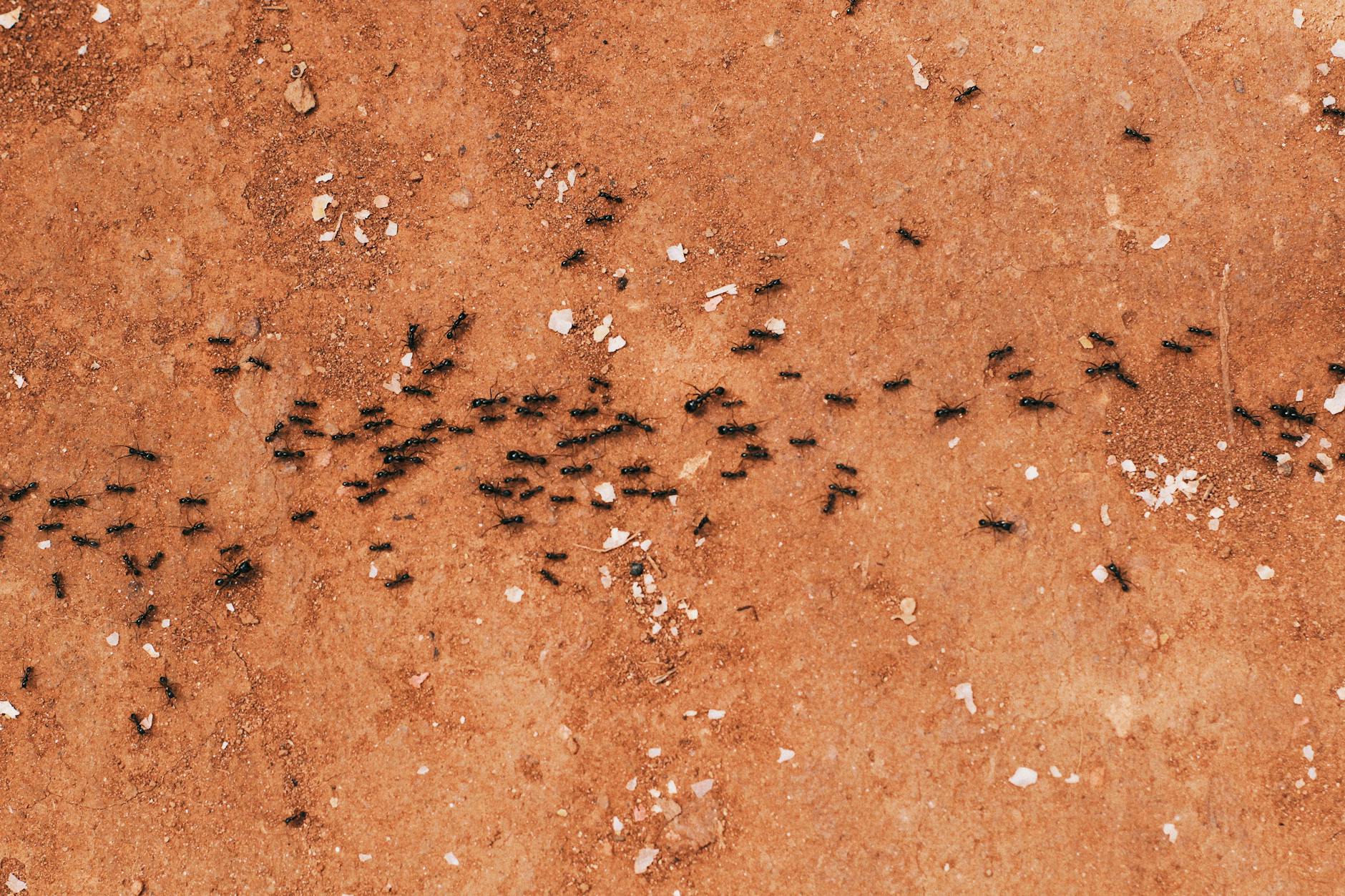
When you notice a steady line of ants moving along a consistent path in your home, you are looking at an ant trail. Most ant species nest outdoors and become a nuisance when foraging ants enter homes. According to Kansas State University Extension, if they find food, ants may bring in others, creating the characteristic trail that can become a source of irritation for homeowners. Understanding what these trails mean helps you figure out what you are dealing with.
How to Tell Ant Trail Types Apart
Different ant species have different food preferences, and the trail you spot can offer clues about which species is involved. Some ant species feed mostly on sugar or sucrose, while others prefer oils or proteins. Some species, such as imported fire ants, feed on many types of foods. The food source the ants are targeting, whether it is something sweet like corn syrup or something oily like peanut butter, can help narrow down the species.
Nest depth also varies by species. Some ant species build nests that are often shallow, extending just below the soil surface. Other ant species may nest deeper or in different materials. Noting the trail pattern and what the ants are attracted to gives you a starting point for telling species apart.
How to Spot Ant Trail Activity Inside Your Home
Indoor ant trails typically appear as a consistent single-file or clustered line of ants moving between a nest and a food or water source. You may notice these trails along countertops, near sinks, or on floors where food has been left out. When foraging ants locate food inside your home, they can recruit more ants to the source, and the trail grows more visible over time.
Pay attention to what the ants seem drawn to. Trails leading to sugary spills may point to a sugar-feeding ant species, while trails near greasy residue may suggest a protein-feeding species. Attractive food materials for various ant species can include peanut butter, mint apple jelly, or corn syrup.
Where Ant Trail Activity Shows Up Around Homes
Because most ant species nest outdoors, trails often originate from a nest in the soil near your home and extend indoors. Some species build shallow nests just below the soil surface, which can be close to your foundation. Trails may run along the edges of structures where ants travel between outdoor nests and indoor food sources.
Exterior Entry Points Ants Use
Ant trails follow the path of least resistance from an outdoor nest to your interior. Look for lines of ants moving along your home’s foundation, where the soil meets the structure. Since many species nest just below the soil surface nearby, trails can emerge right at ground level and follow the exterior wall before finding a gap to enter. Tracking the trail back toward the nest outdoors helps you understand where the activity is centered.
Why Ant Trail Problems Develop
Ant trails appear for a straightforward reason: foraging workers have found a food source or water supply and are guiding the rest of the colony to it. In many species, foragers create a pheromone trail that leads other ants directly to that resource, according to Kansas State University Extension. Understanding why these trails form around your home helps you address the real problem, which is the colony behind the line of ants.
Outdoor Nesting Areas for Ants
Some species commonly nest outdoors and enter a home just to look for food. Ant colonies do not nest in permanent locations, so outdoor nests can shift over time. Parent carpenter ant colonies sometimes establish one or more satellite nests in nearby indoor or outdoor sites, and workers move frequently between those nests and the parent colony.
Food and Shelter That Attract Ants
Worker ants from outside or inside nests may forage for food and water inside your home. Once a forager locates a food source, it secretes a pheromone trail so other workers can follow. The ants carry food back to the colony and share it with the queen and brood. If nothing is done about the food source, more ants will be attracted to it, and the problem can take longer to resolve.
How Ants Move Around Homes
Some ant colonies form large colonies with more than one queen ant. When colonies grow, one or more queens along with workers and brood may leave the nest and move to a new location. This means ant trails can appear in different areas of your home over time as colonies shift and expand into new nesting spots.
Trails and Entry Points Ants Use
Foraging workers of some species secrete pheromone trails to lead other ants to food and water. Simply removing the visible ants on a trail does not address the colony itself. As Texas A&M AgriLife Extension notes, treatments that target only ant trails may kill a few foraging workers but do not address the ant colonies producing them. Washing ants and trails with soap and water can disrupt the scent trail from the food source to the nest, which is a helpful first step toward reducing activity inside your home.
Risks From Ant Trails
When you spot a line of ants moving through your home, the trail itself is a signal worth understanding. Different ant species carry different risks, and what seems like a minor nuisance can point to a larger concern depending on the type of ant involved.
Health Risks Linked to Ant Trails
Some ant species pose direct physical risks. Red imported fire ants, which are not native to the United States, inflict a painful sting. According to the University of Georgia pest guide, these ants build mounds in sunny, disturbed habitats such as yards, parks, and playgrounds. Trails leading to or from outdoor mounds near your home deserve attention.
Mound ants (Formica spp.) do not sting, but they can bite while releasing formic acid. This combination can be unpleasant if you accidentally disturb a nest or encounter a trail near a doorway or walkway.
Property Damage From Ants
Argentine ant colonies can contain tens of thousands of ants. Colonies of that size nesting in mulch and leaf litter near a structure can create persistent, well-established trails during summer. The sheer volume of ants trailing into a home creates ongoing nuisance pressure that can be difficult to manage without addressing the colony outdoors.
Thief ants nest in soil, cracks in walls, and even within the nests of other ant species. At roughly 1/16 of an inch, they can access gaps you might not notice, and trails may appear inside wall voids or along baseboards with little warning.
Food Areas and Ant Trail Activity
Ant trails point toward food sources in most cases. According to Texas A&M AgriLife Extension, thief ants are drawn to grease found in cheeses and meats as well as sweets, and their swarming season runs from late July through September. Kitchens and food-storage areas are common destinations for these trails.
Argentine ants also follow trails toward accessible food indoors. Because their outdoor colonies can be so large, a single trail into a food area can escalate to a high number of foraging ants.
When to Look Closer at Ant Trail Activity
A trail that reappears in the same spot day after day usually means the colony is nearby and established. If you notice trails emerging from cracks in walls, along foundation edges, or near outdoor mounds in sunny areas of your yard, the species and nest location matter for deciding next steps.
Persistent trails from large colonies, stinging species building mounds close to your home, or tiny ants accessing food-prep areas are all situations that warrant a closer look at what the trail is telling you.
Professional Pest Control for Ant Trails
Understanding what ant trails mean is the first step toward controlling them. The visible line of ants moving through your home follows a scent path that guides workers between a colony and a food or water source. Disrupting that path and addressing the colony behind it are both important parts of a lasting control strategy.
How to Reduce Attractants for Ants
Keeping surfaces clean is one of the simplest ways to discourage ant trails from forming in your home. A mild solution of vinegar and water can be used to wipe down ant trails, which disrupts ant activity along those paths for a short period. Repeating this step regularly helps reduce the scent cues that guide foraging workers back to the same areas.
One common mistake homeowners make is spraying long-acting contact sprays directly on ant trails. According to Texas A&M AgriLife Extension, these sprays prevent foraging worker ants from reaching bait, which can actually work against your control efforts. Avoiding broad-spectrum sprays along trail routes keeps bait-based approaches viable.
Why Ant Control Starts With Inspection
Ant colonies are mobile and relocate when disturbed. Some species maintain more than one nest within a structure, and some, such as carpenter ants, may have satellite colonies apart from the main nest. These factors make a full inspection of trail routes, entry points, and nesting areas essential before any control work begins.
Locating where trails originate and where they lead helps a pest control professional determine how many colonies may be involved. Without that step, treatments may only address part of the problem while the colony relocates elsewhere in the structure.
What to Expect During Professional Ant Treatment
A professional approach to ant trail control focuses on the colony rather than the individual workers you see. As Texas A&M AgriLife Extension notes, it may be important to have the assistance of a professional because some species nest in multiple locations within a structure. A trained service professional can identify entry points, trail routes, and likely nesting areas during the initial visit.
Pest Pros of Michigan uses an Integrated Pest Management approach that considers the full picture rather than relying on a single method. Exterior perimeter treatment of the structure covers ants, along with other common pests. Interior service is available upon request or when needed to gain control of active trails inside your home.
What to Expect From an Ant Control Plan
Ongoing pest control plans help maintain coverage around your home’s exterior so new ant trails are less likely to establish. Pest Pros of Michigan offers several plan options that include ant coverage:
- Home Pro-GPC: $49/month or $149/quarter for exterior perimeter treatment.
- Home Pro Plus+: $59/month or $179/quarter, with interior service upon request.
- Home Pro Premium: $79/month or $249/quarter, covering exterior and interior every visit, plus rodent control and termite monitoring with a lifetime warranty on exclusion.
An initial fee of $179 applies to all packages, plus the cost of stations. Regular service visits help address ant activity before colonies settle into new areas around or inside the structure.
Bottom Line on Ant Trails
Ant trails are a clear sign that foraging workers have found something worth returning to in your home. Those visible lines of ants follow scent paths laid down to guide other colony members toward food or water. Cleaning up the trail itself only addresses part of the problem, because the colony that sent those workers is still active. Keeping surfaces clean, sealing entry points, and removing food sources all help reduce the chance of trails reappearing.
When trails keep coming back or you are unsure where the ants are nesting, contact Pest Pros of Michigan for a professional assessment.
Frequently Asked Questions
Why Do Ants Walk in a Line Instead of Wandering Randomly?
Ants follow scent paths created by foraging workers that have already located food or water. These paths guide other colony members along the shortest route, which is why you see them moving in an organized line rather than scattered across a surface.
Does Wiping Down a Trail Stop Ants From Coming Back?
Cleaning a trail can interrupt ant activity for a short time by removing the scent path. However, foragers may lay down new trails if the food or water source that attracted them is still available. Removing what drew them in the first place is just as important as cleaning the trail.
Should I Spray Ants I See on a Trail?
Spraying the visible ants on a trail only addresses the small number of workers you can see. The colony producing those workers remains intact, and new foragers can resume trailing once conditions allow. A targeted approach that reaches the colony tends to be more productive than surface sprays alone.
When Should I Call a Professional About Ant Trails?
If trails reappear after repeated cleaning, show up in multiple areas of your home, or if you cannot locate where the ants are entering, professional help can pinpoint the source. Some ant species nest in hard-to-reach areas, making it difficult for homeowners to address the problem without specialized knowledge.

 Serving Michigan since 2018
 Pest-free guarantee
 Small, local business
 10+ years of pest control experience
 President and CEO of Pest Pros of Michigan
 Resident of Michigan