Michigan carpenter bees are large, shiny-bodied bees that bore into exposed wood to create nesting galleries. Around a home, you may find their round entrance holes in decks, railings, fascia, eaves, porch components, and other wooden surfaces. Male carpenter bees often hover around these areas and may seem aggressive, but they cannot sting. The bigger concern is repeated burrowing, which can damage wood over time. Identifying the bee correctly, maintaining exposed wood, and repairing old holes at the right time can help reduce repeat activity.
How to Identify Michigan Carpenter Bees
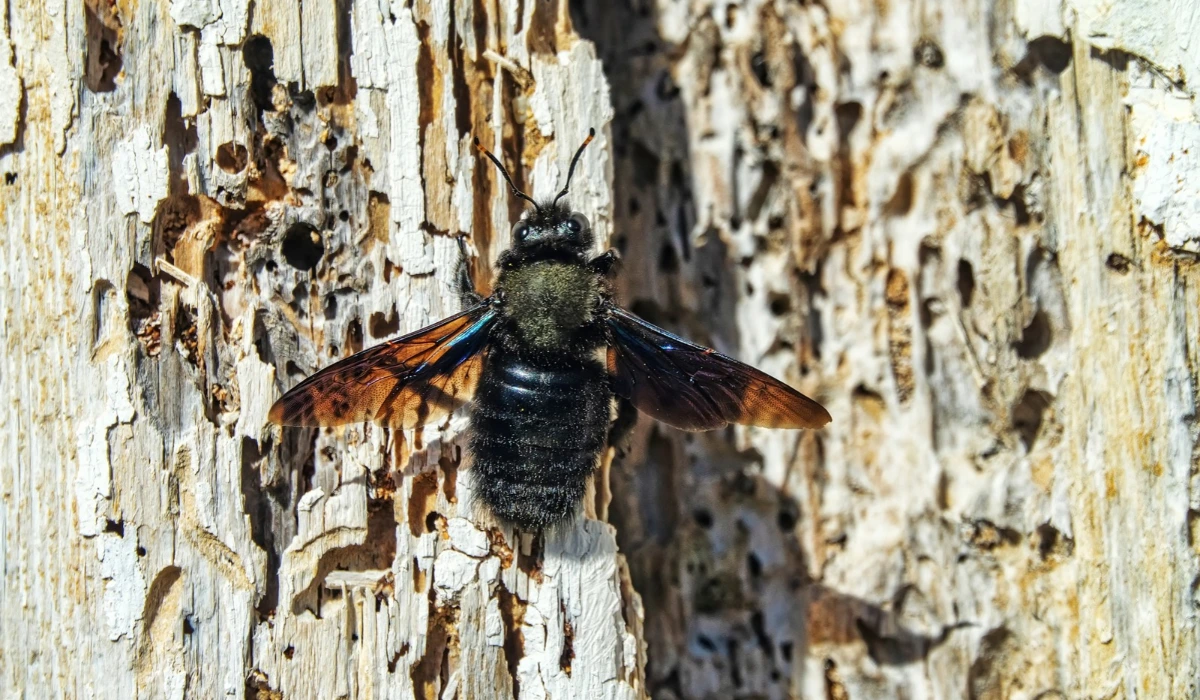
Carpenter bees are large, bumblebee-like insects in the genus Xylocopa. They range from about ½ to 1 inch long and have a shiny, relatively hairless black abdomen. That smooth abdomen is one of the clearest features separating them from the fuzzier appearance people associate with bumblebees.
Carpenter bees are solitary wood-boring bees. Females tunnel into untreated wood to create nesting space for their young rather than living in a large communal colony. Knowing the differences among common types of bees in Michigan can help you avoid mistaking a carpenter bee for another bee around your home.
Carpenter Bee vs. Bumblebee
The most useful visual difference is the abdomen. Carpenter bees have a shiny, mostly hairless black abdomen, while bumblebees have a fuzzier appearance that makes the two easy to confuse from a distance.
Behavior adds another clue. If a large bee repeatedly disappears into a round opening in exposed wood, that behavior is consistent with a carpenter bee. The difference between honey bees and carpenter bees also comes down in part to where and how the insects nest.
Do not rely on size alone. Several bees can look large while flying, so the combination of body appearance and activity around wood gives you a more useful identification.
Do Michigan Carpenter Bees Sting?
The carpenter bee hovering around a deck or railing may look confrontational, but a male carpenter bee cannot sting. Males are territorial and may patrol the area around nesting sites, which is why they sometimes fly toward people who come close.
Female carpenter bees do have stingers, but they rarely use them. You should still avoid grabbing or swatting at a carpenter bee, especially when you have not identified it with confidence.
This behavior is one reason carpenter bees are often mistaken for more defensive stinging insects. The hovering gets attention, but the more useful clue is where the bee goes. Repeated activity around the same section of wood may point to a nesting gallery nearby.
Why Carpenter Bees Drill Holes in Wood
Carpenter bees do not eat wood. Females remove wood as they create nesting galleries, leaving a round entrance at the surface. What looks like a small drilled hole is the opening to a tunnel inside the wood.
Untreated wood is especially relevant because carpenter bees use it for nesting. Around a house, exposed sections of decks, railings, fascia, eaves, porch components, and other wood can become sites of activity.
The hole itself is only part of the problem. Burrowing takes place inside the wood, so surface appearance does not tell you everything about the condition of the board.
Signs of Active Carpenter Bee Activity
Repeated bee traffic around one opening is one of the clearest signs that the hole is active. Several openings in the same wooden component or fresh activity near older holes also deserve attention.
Do not immediately patch a hole while bees are still moving in and out. Active carpenter bee removal in Michigan should address the burrow first, followed by repair of the opening.
If the affected area is high on an eave or fascia board, avoid trying to inspect it from an unstable ladder position. In those cases, professional inspection can help identify the extent of activity without putting you in an unsafe position.
How Carpenter Bee Damage Builds Over Time
One carpenter bee hole does not automatically mean a deck or roof edge has serious structural damage. The concern grows when burrowing continues in the same section of wood or multiple galleries develop close together.
Carpenter bee activity can create cosmetic damage and, over time, contribute to structural damage. The condition of the affected piece matters. Repeated holes in a railing, beam, fascia board, or other wooden component deserve more attention than an isolated blemish in nonessential trim.
Look at the whole section of wood instead of judging the problem by one entrance. Multiple openings, visible deterioration, or activity that keeps returning to the same area are stronger reasons to investigate further.
Woodpecker Damage Can Add to the Problem
Woodpeckers are attracted to soft or damaged wood. If carpenter bee burrowing has already weakened or marked a wooden surface, woodpecker activity can create another layer of visible damage.
That can leave a board with rough holes, chipped areas, or additional surface wear beyond the original carpenter bee entrance. At that point, repairing one clean round hole may not address the full condition of the wood.
If you see carpenter bee holes and woodpecker damage in the same area, inspect the full board or structural component before making cosmetic repairs.
When Carpenter Bees Show Up Around Michigan Homes
Carpenter bee activity becomes especially noticeable in spring, when homeowners start seeing large bees around decks, porches, rooflines, and exposed wood. Other insects also become more active as Michigan moves into warmer weather, so appearance and nesting behavior matter more than season alone.
A male may hover around the same portion of a deck or porch for extended periods. If that happens, look for round holes or repeated bee traffic into nearby wood rather than assuming the bee is simply passing through.
Spring is also a useful time to revisit areas that had carpenter bee activity before. Wood that was left unfinished, weathered, or unrepaired can remain vulnerable as seasonal Michigan spring pest activity increases.
How to Prevent Michigan Carpenter Bees
Prevention starts with the wood. Painting or sealing exposed wood is one of the main preventive steps for carpenter bees, and staining may also make the surface less attractive for boring.
Pay particular attention to wood that has already had carpenter bee activity. An old entrance hole, damaged finish, or exposed section of a railing or fascia board can remain a weak spot if it is never repaired.
Three maintenance habits are especially useful:
- Protect exposed wood. Paint, stain, or seal vulnerable exterior surfaces instead of leaving suitable wood unfinished.
- Inspect previous problem areas. Check old nesting sites for new holes, renewed bee traffic, or deterioration.
- Repair holes after activity is handled. Once an active burrow has been treated or is no longer occupied, plug the opening and restore the surrounding finish.
These steps also fit into broader seasonal pest prevention because exterior maintenance can reduce the conditions that make a home easier for pests to use.
Why Fall Is a Good Time for Repairs
Fall is a practical time for carpenter bee prevention work after active nesting has been addressed. Old holes can be filled, damaged areas repaired, and worn paint, stain, or sealant restored before the next spring season.
Do not treat plugging the hole as the first step when bees are still using it. The burrow needs to be addressed before the opening is closed.
After repair, look beyond the single hole. If the surrounding surface is weathered or unfinished, restoring the protective finish can make the repair part of a broader prevention plan rather than a temporary patch.
When Professional Carpenter Bee Treatment Makes Sense
Professional carpenter bee treatment is a reasonable next step when activity keeps returning, several burrow holes are concentrated in the same area, or the affected wood is difficult to reach safely.
It is also useful when you are not sure whether you are dealing with carpenter bees at all. Correct identification matters because carpenter bees, bumblebees, wasps, and other stinging insects do not all nest or behave the same way.
Pest Pros of Michigan’s process addresses active burrow holes before the openings are plugged. That order deals with the activity first, then closes the entry point to help reduce re-entry and further damage.
Protecting Your Michigan Home From Carpenter Bee Damage
Michigan carpenter bees are easier to manage when you focus on three things: identification, the condition of the wood, and whether the activity is still active. A shiny abdomen, round holes in exposed wood, and territorial males that cannot sting are useful clues. Repeated burrowing is the part that can create lasting damage.
Keeping exposed wood painted, stained, or sealed and repairing old holes after activity is addressed can reduce the chance of another problem in the same area. If carpenter bees keep returning, holes are appearing in hard-to-reach wood, or the affected boards already show damage, Pest Pros of Michigan can assess the activity and recommend an appropriate treatment plan.
To have a technician evaluate recurring carpenter bee activity at your home, contact Pest Pros of Michigan to schedule service.

 Serving Michigan since 2018
 Pest-free guarantee
 Small, local business
 10+ years of pest control experience
 President and CEO of Pest Pros of Michigan
 Resident of Michigan