Kissing bugs get attention because of their connection to Chagas disease, but where you live changes how likely you’re to encounter one. If you’re wondering where kissing bugs are found, most U.S. activity is associated with warmer southern states, especially the Southwest, Texas, and parts of the Southeast. Michigan is well north of the areas most commonly associated with these blood-feeding insects, and several bugs found around Michigan homes can look similar.
That makes identification especially useful for homeowners in Kalamazoo, Grand Rapids, and nearby communities. Below, you’ll learn where kissing bugs live in the United States, what their habitat looks like, whether Michigan residents are likely to encounter them, how to distinguish them from lookalikes, and what their connection to Chagas disease means.
Where Are Kissing Bugs Found?
Kissing bugs occur across parts of North, Central, and South America. Within the United States, they’re associated most strongly with southern climates.
Texas A&M reports that 11 species of kissing bugs occur in the United States. Their ranges differ considerably. A species found regularly in Texas or Arizona may have little relevance to someone living in the Upper Midwest.
Wildlife also shapes kissing bug habitat. These insects feed on blood from animals, so they often live near rodents, raccoons, opossums, birds, and other available hosts rather than simply occupying houses.
| U.S. Region | General Pattern | What It Means for Residents |
| Southwest | Several kissing bug species are well documented | Outdoor encounters are more established |
| Texas and South-Central States | Multiple species occur | Wildlife habitats can support local populations |
| Southeast | Several species have been recorded | Activity varies by location and habitat |
| Upper Midwest | Much less associated with kissing bug activity | Similar-looking insects can cause confusion |
Where Kissing Bugs Spend the Day
Kissing bugs are mainly nocturnal. During daylight hours, they hide in dark, protected spaces and become more active after sunset.
Rodent nests, wildlife dens, stacked wood, animal shelters, and sheltered cracks can provide suitable hiding places in regions where kissing bugs occur. These locations give the insects cover while keeping them close to potential animal hosts.
Adults can fly, and some kissing bugs move toward outdoor lights. That is one reason an insect may suddenly appear on a porch, exterior wall, or window without actually living inside the home.
Are Kissing Bugs Found in Michigan?
Michigan sits outside the parts of the United States most strongly associated with kissing bug activity. Most research and public health attention involving these insects comes from warmer southern regions, where climate, wildlife hosts, and habitat are more favorable.
Late summer and fall can add to the confusion. Many Michigan insects gather on sun-warmed siding, move toward outdoor lights, or slip through small gaps as temperatures change. An unusual insect on a Kalamazoo window or Grand Rapids porch should be identified by several physical features rather than one color pattern.
Geography can help narrow the possibilities, but it shouldn’t replace proper identification. If a suspicious insect appears around your home, look at its body shape, head, markings, and where it was found before deciding what you are dealing with.
Common Reasons for Mistaken Identification
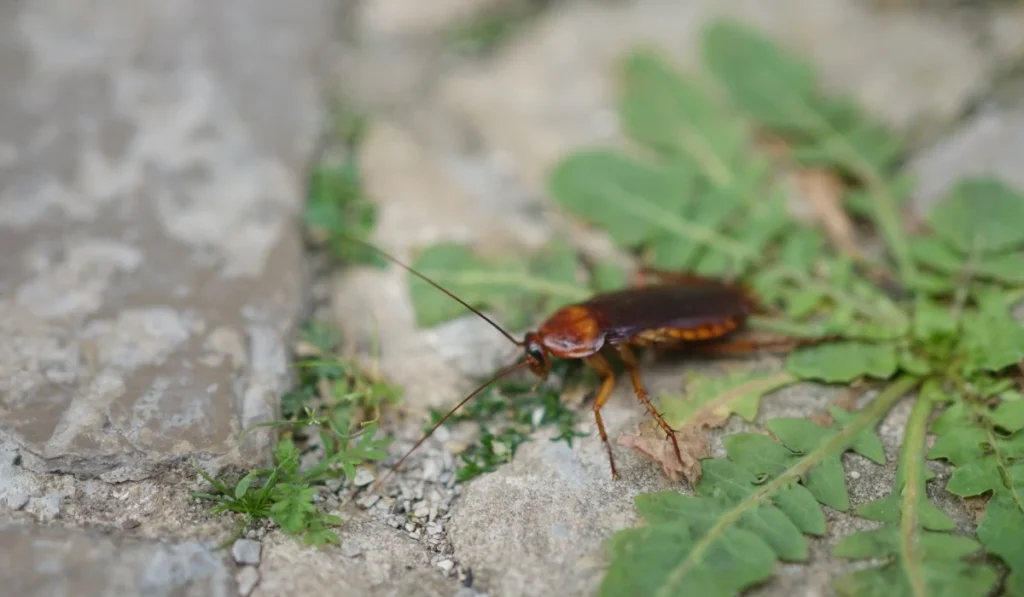
For Michigan homeowners, regional context is more useful when an unfamiliar bug turns up around the house. Mistaken identification is a practical concern in the state. Assassin bugs, leaf-footed bugs, seed bugs, and other true bugs can have long bodies, dark coloring, or orange and reddish markings that make them look suspicious.
Online photos tend to emphasize the most noticeable markings on kissing bugs. When you compare only color, unrelated insects can look much more similar than they really are.
Head shape, body proportions, the location of abdominal markings, and the shape of the mouthpart provide better clues. Even those features can be difficult to judge from a blurry photo or damaged specimen.
If you need help identifying an unknown bug, take clear photographs from above and from the side. Avoid handling an unfamiliar assassin bug with bare fingers because some species can deliver a painful defensive bite.
How Can You Identify a Kissing Bug?
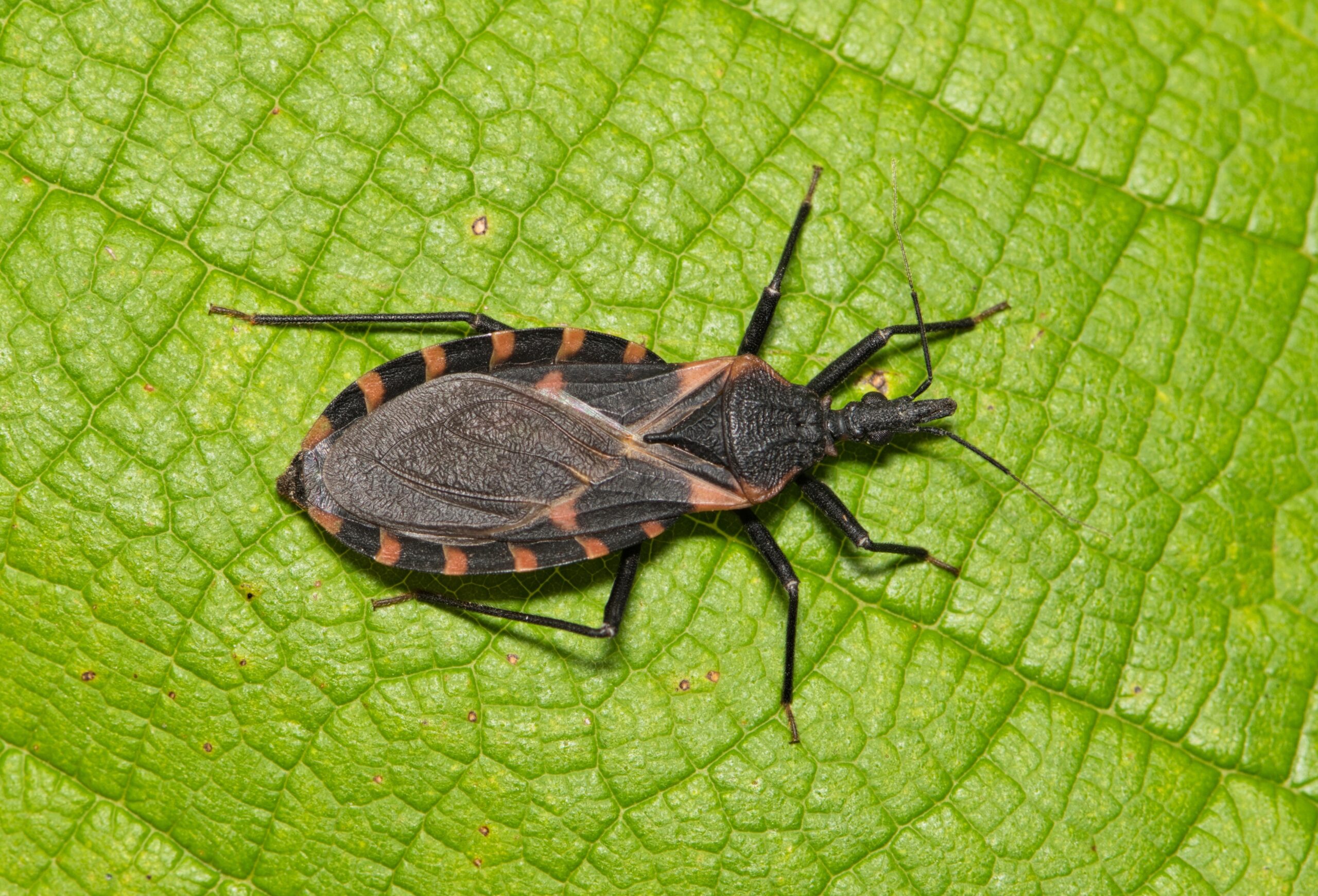
Kissing bugs are one specialized group within the assassin bug family. Adults usually have an elongated, fairly flat body, a narrow head, and a short piercing mouthpart tucked beneath the head.
Many species have orange, reddish, or yellowish markings along the outer edge of the abdomen. Those markings are useful clues, but they shouldn’t be treated as proof by themselves.
| Feature | Kissing Bug | Common Lookalikes |
| Head | Usually long and narrow | May be broader or shorter |
| Body | Elongated and relatively flat | Shape varies by species |
| Abdomen | Colored markings may line the outside edge | Markings may appear on wings or legs |
| Mouthpart | Short piercing beak | May be adapted for plant feeding or insect prey |
| Activity | Mainly nocturnal | Depends on the insect |
| Feeding | Blood from animal hosts | Often plants or other insects |
Kissing Bugs vs. Other Assassin Bugs
Most assassin bugs are predators. They hunt caterpillars, beetles, and other insects instead of seeking blood meals from people or pets.
This distinction matters because the names are sometimes used as though they mean the same thing. Every kissing bug belongs to the assassin bug family, but most assassin bugs aren’t kissing bugs.
Predatory assassin bugs can turn up in gardens, wooded yards, and areas around exterior lighting. Those are all places where Michigan homeowners may notice them.
Where Are Kissing Bugs Found Around Homes?
Understanding where kissing bugs are found around a property means looking at shelter and animal activity. In regions where kissing bugs are established, they tend to stay near places that provide both.
Rodent nests and wildlife dens are especially relevant. Wood piles, dog houses, chicken coops, cracks in exterior walls, and other protected spaces can also provide kissing bug habitat.
A single insect indoors doesn’t prove there is an infestation. An adult may enter through a damaged screen, worn door sweep, or another exterior gap. Repeated sightings in the same room, wall area, attic, or crawl space provide more reason to inspect closely.
| Area to Check | What to Look For | Why It Matters |
| Doors | Worn sweeps and weatherstripping | Small gaps let many insects inside |
| Windows | Torn screens and loose frames | Flying insects can enter during warm weather |
| Foundation | Cracks and utility openings | Protected gaps can lead into the structure |
| Garage | Door gaps and stored materials | Garages offer shelter and exterior access |
| Wood piles | Tight spaces between stacked wood | Can shelter insects and small animals |
| Roofline | Damaged vents, soffits, or screens | Wildlife entry can contribute to pest activity |
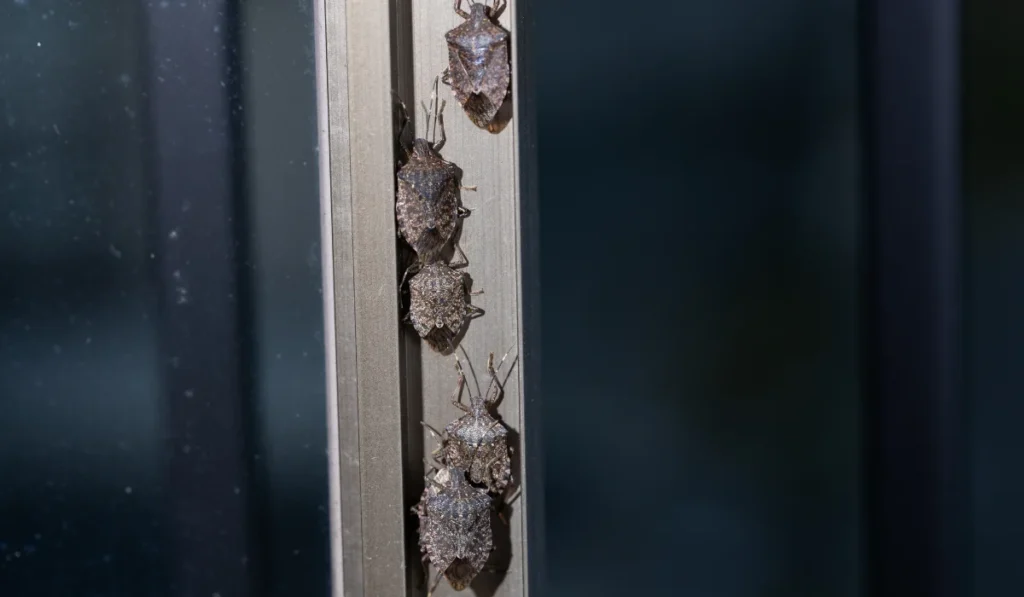
These checks are worthwhile even when the insect turns out to be another species. Stink bugs, boxelder bugs, spiders, and other common Michigan pests often use the same openings.
How Are Kissing Bugs Connected to Chagas Disease?
The main health concern involving kissing bugs is Chagas disease. Some kissing bugs can carry the parasite responsible for the infection, but a kissing bug bite by itself isn’t the usual way the parasite enters the body.
An infected bug may leave fecal material near the skin during or after feeding. Infection can occur when contaminated material gets into the bite site, another break in the skin, the eyes, or the mouth.
The Centers for Disease Control and Prevention (CDC) estimates that about 300,000 people in the United States live with Chagas disease. Most people with Chagas disease in the U.S. became infected in parts of Latin America where transmission is more established.
Why a Bite Mark Cannot Confirm a Kissing Bug
A red bump or itchy patch isn’t enough for kissing bug identification. Mosquitoes, fleas, bed bugs, mites, and other biting pests can cause similar skin reactions.
Finding the actual insect provides much better evidence. If you believe you had meaningful contact with a suspected kissing bug and are concerned about Chagas disease, speak with a healthcare professional.
Pest identification can tell you what insect was present. Medical evaluation answers a different question about potential exposure and health.
What Should You Do if You Find a Suspected Kissing Bug?
Don’t crush or pick up an unfamiliar bug with your bare hands. If you can safely contain it, place it in a sealed container or take several clear photos without touching it.
Next, look at the area where it appeared. Check window screens, door sweeps, foundation cracks, utility openings, garage seals, and roofline gaps. Also look for rodent or wildlife activity close to the structure, since animal nesting sites can support many different pest problems.
Repeated sightings deserve more attention than one insect beside an open door. Correct identification should come before treatment because treating the wrong pest can leave the real source of activity untouched.
Making the Right Call About a Suspicious Bug in Michigan
For Michigan homeowners asking where are kissing bugs found, the practical answer is that these insects are much more closely associated with southern parts of the country than with Michigan. If an unfamiliar bug keeps appearing around your home, accurate identification matters because several common insects can look similar, and the right response depends on what you’re actually seeing.
A professional inspection can help you sort that out. Pest Pros of Michigan provides pest identification, inspections, exclusion work, and ongoing pest control for homes in Kalamazoo, Grand Rapids, and surrounding communities. Our technicians can check likely entry points, identify conditions that attract pests, and determine whether the activity is from an occasional invader, a wildlife-related issue, or another pest problem.
If you’re seeing repeated insect activity around your property, contact Pest Pros of Michigan to schedule an inspection. Getting the pest identified first gives you a clearer path to the right treatment or prevention plan.

 Serving Michigan since 2018
 Pest-free guarantee
 Small, local business