If you are trying to figure out what termites look like, the answer depends on which termite you happen to find. Michigan homeowners mainly deal with subterranean termites. Some are tiny, pale insects that stay hidden in wood and soil, while reproductive termites are dark, winged, and much easier to notice.
That difference causes plenty of confusion. A termite found inside damaged wood may look nothing like the flying insects collecting near a basement window in spring. This guide shows you how to identify termites in Michigan, compare flying ants vs. termites, recognize common signs of termites, and decide when the evidence around your home calls for a closer inspection.
What Do Termites Look Like in Michigan Homes?
Michigan homeowners mainly encounter Eastern subterranean termites. But what termites look like changes, depending on the termite’s role in the colony. A worker hidden inside wood looks very different from a reproductive termite flying toward a window.
Workers, soldiers, and swarmers are the three forms most useful for termite identification around a home. Their size, color, and body shape give you practical clues when you are trying to decide whether an insect is a termite or something else.
| Termite Type | Typical Size | Color and Body | Where You May See It |
| Worker termite | About 1/8 inch | Pale white or cream, soft-bodied, no wings | Inside wood, soil, or termite mud tubes |
| Soldier termite | Slightly larger than a worker | Pale body, enlarged brownish head, strong jaws | Inside active wood or shelter tubes |
| Termite swarmer | About 3/8 inch | Dark brown to black with four long wings | Windows, doors, basement floors, and other bright areas |
Worker Termites
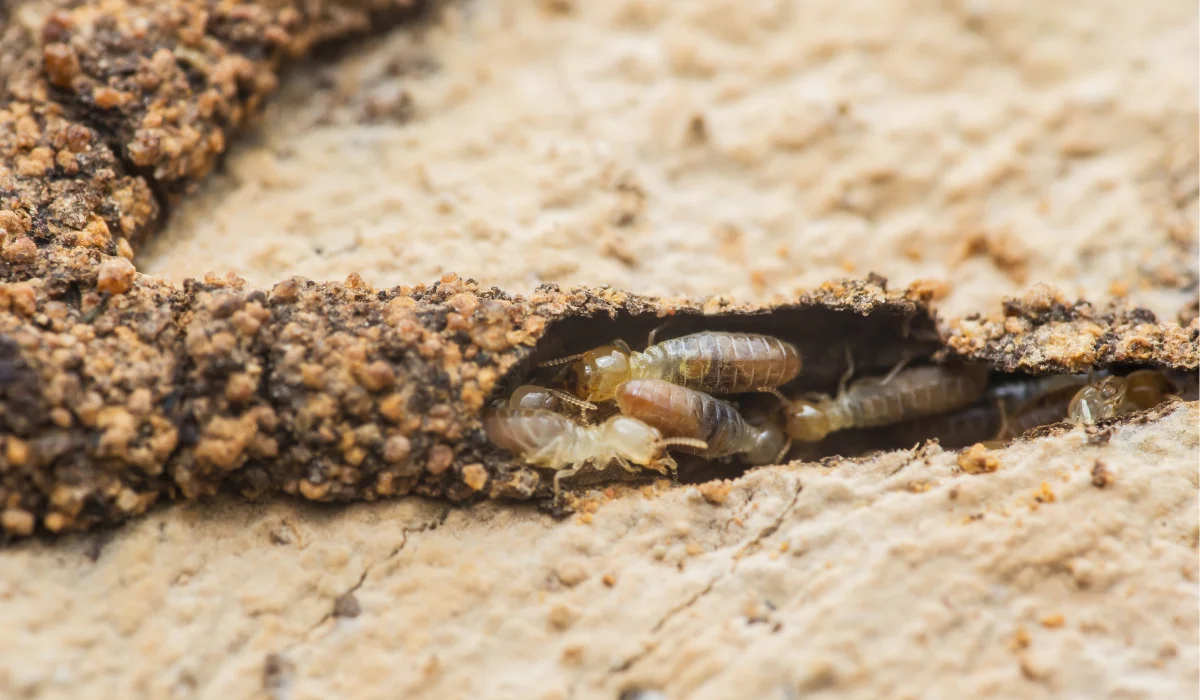
Worker termites are pale, soft-bodied, and wingless. Their light color can make them look almost translucent against dark wood or soil.
You usually find worker termites only after their protected space has been disturbed. If damaged wood breaks open and exposes several cream-colored insects moving through narrow internal channels, workers are a stronger possibility than if you find one pale insect crossing an open floor.
Workers do most of the feeding within the termite colony. Because they stay concealed inside soil, wood, and protected travel routes, you can have termite activity without seeing these insects in everyday living areas.
Soldier Termites
Soldier termites have pale bodies like workers, but their heads are much easier to recognize. The head is enlarged, brownish, and equipped with noticeable jaws.
That oversized head is the quickest visual clue. Soldiers stay close to other members of the colony, so you are more likely to uncover them in damaged wood or inside a shelter tube than to see one moving through a finished room.
Termite Swarmers
Termite swarmers look almost like a different insect. Their bodies are dark brown to black, and four narrow termite wings extend well past the abdomen.
At about 3/8 inch long, swarmers are larger than workers and much easier to notice. A cluster at a basement window or patio door is a more realistic homeowner sighting than a worker sitting out in the open.
What Do Flying Termites Look Like?
Flying termites, or swarmers, leave an established colony and move into the open. Their dark bodies and long wings are why they are frequently mistaken for ants.
A termite swarmer has a fairly broad body without a pinched waist. Its termite antennae are relatively straight, and its two pairs of wings are close to the same length. Those features become especially useful when you can photograph the insect before it loses its wings.
What Do Termite Wings Look Like?
Termite wings are thin, translucent, and longer than the insect’s body. The front and rear pairs are similar in size, which gives a resting swarmer a layered appearance.
Once swarmers land, they can shed their wings. You may find discarded wings on a windowsill, basement floor, or near a door after the insects themselves have disappeared. A small group of similarly sized wings is more useful for identification than one random wing.
When Do Termites Swarm in Michigan?
Termite swarm activity in Michigan is associated mainly with warmer weather. Local service information used for this article places much of that activity from about April through July, although temperature, rainfall, soil conditions, and colony development can shift the timing.
A few flying termites outdoors do not automatically mean you have a termite infestation inside the house. Repeated swarmers around the same basement window, foundation wall, or interior room are more useful evidence because their location raises the question of where they emerged.
Flying Ants vs. Termites: What Should You Compare?
A dark insect with wings near a window can easily be mistaken for a flying ant. Color is not enough to settle the question because both flying ants and termite swarmers can appear brown or black.
Look at three things instead: the waist, the antennae, and the wings.
| Feature | Termite Swarmer | Flying Ant |
| Waist | Broad, with little narrowing | Narrow and pinched |
| Antennae | Relatively straight | Bent or elbowed |
| Front wings | Similar in size to rear wings | Larger than rear wings |
| Rear wings | Similar in size to front wings | Smaller than front wings |
| Overall shape | Thick through the middle | Clearly divided at the waist |
Start with the waist because it is often the easiest feature to see in a clear photo. A flying ant has the familiar narrow middle. A termite looks more evenly built from the chest into the abdomen.
If the wings are still attached, compare their lengths next. Four similarly sized wings point toward a termite. Larger front wings paired with smaller rear wings point toward an ant.
What Do Signs of Termites Look Like Around the House?
You can have subterranean termites without seeing the insects themselves. Workers spend much of their time inside wood, soil, or protected tunnels, so the first signs of termites are often mud tubes, discarded wings, swarmers, or changes inside damaged wood.
The U.S. Environmental Protection Agency identifies mud tubes, damaged wood, and swarming activity among the signs homeowners can watch for when checking for termites.
| Sign | What You See | Where to Look |
| Termite mud tubes | Raised brown or soil-colored tunnels | Foundation walls, crawl spaces, basement walls |
| Discarded wings | Thin translucent wings grouped together | Windowsills, floors, doors |
| Indoor termite swarm | Several dark winged insects appearing together | Windows, basement, lower levels |
| Termite damage | Weakened wood with internal channels | Sill plates, framing, joists |
| Exposed workers | Pale insects moving inside opened wood | Damaged or disturbed structural wood |
Termite Mud Tubes
Termite mud tubes look like narrow brown ridges attached to concrete, masonry, wood, or another hard surface. Subterranean termites use these protected routes to move between soil and a food source.
In a basement, check where the foundation meets framing, along cracks, and around spots where plumbing or utilities pass through the wall. In a crawl space, look closely at support piers and wood close to the soil.
A dirt streak by itself is not proof of termites. A defined raised tunnel that travels across a hard surface is more consistent with the shelter tubes associated with subterranean termites.
Termite Damage and Wood Galleries
Termite damage can stay hidden beneath the outer surface of a board. When damaged wood is opened, you may see channels running through the interior rather than an evenly softened or rotted texture.
Do not use hollow-sounding wood alone as proof of a termite infestation. Moisture and decay can weaken lumber too. Wood damage becomes more suspicious when you also find mud tubes, live worker termites, termite swarmers, or discarded wings in the same area.
Where Should You Look for Termites in a Michigan Home?
Start low. Basements, crawl spaces, foundation walls, sill plates, floor joists, support posts, and utility entry points put you closest to the areas subterranean termites can use to reach structural wood.
Picture checking an unfinished basement. You are not scanning the middle of the room. You are following the perimeter where concrete meets framing, checking behind stored items, and looking for a narrow soil-colored tube running vertically across the foundation.
Check Around the Exterior
Walk the outside of the house and look for wood that stays close to the ground. Deck posts, fence posts, landscape timbers, old stumps, scrap lumber, and firewood can hide termite activity or make signs harder to see.
Pay attention to places that remain damp after surrounding areas dry. Moisture does not confirm termites, but persistent dampness near wood and soil gives you a good reason to check the area more carefully.
Check Windows During Termite Swarm Season
Windows tell you something different. Termite swarmers move toward light, so a basement window can collect both live insects and discarded termite wings.
If you find the same kind of insect at the same window on several occasions, take close photos or save a specimen. A clear view of the wings, termite antennae, and waist is far more useful than trying to remember what the insect looked like later.
What Should You Do if You Find Signs of Termites?
Start by documenting what you found. Photograph the insect, termite wings, mud tube, or damaged wood before you clean or disturb the area. Note the exact location, especially when the activity is near a basement wall, crawl space, sill plate, or foundation.
Then look for supporting evidence nearby. One unidentified winged insect outside may tell you very little. Several indoor swarmers, a defined mud tube, or pale workers exposed inside damaged wood provide a stronger reason to arrange a termite inspection.
If you are still asking, “What do termites look like?” after comparing the insect with the features above, do not guess based on color alone. A proper identification matters because flying ants, other small insects, and moisture-damaged wood can all create false alarms.
Get a Clear Answer About Termites in Your Michigan Home
Michigan termites do not all look alike. Workers are small and pale, soldiers have enlarged brownish heads, and termite swarmers are dark with four long wings. Mud tubes, discarded wings, and hidden termite damage can be easier to find than the insects feeding inside the structure.
You can compare body shape, check accessible foundation areas, and photograph suspicious insects yourself. What you cannot see as easily are concealed routes through soil, wall voids, structural framing, and other protected areas where subterranean termites can remain out of view.
If you find suspicious activity around a Kalamazoo, Grand Rapids, or Southwest Michigan property, Pest Pros of Michigan can inspect the structure, confirm the pest, and determine whether the evidence is connected to the home. Schedule a termite inspection so you can make the next decision based on what is actually there rather than on a guess.

 Serving Michigan since 2018
 Pest-free guarantee
 Small, local business
 10+ years of pest control experience
 President and CEO of Pest Pros of Michigan
 Resident of Michigan