You cleaned the porch a few days ago, yet fresh webs now stretch between the railings, window frames, shrubs, and exterior lights. A sudden increase in spiderwebs around your house usually means spiders have found a productive place to hunt. Your property may be offering more insect prey, better web supports, protected corners, or several of these conditions at once.
This change does not automatically mean you have a serious spider infestation. One spider can build a large, highly visible web, while several spiders may settle near the same porch or garage because insects regularly pass through the area. The number of fresh webs, where they appear, how quickly they return, and whether you see egg sacs or indoor activity provide more useful clues than the web count alone.
For homeowners in Kalamazoo, Grand Rapids, and nearby Michigan communities, spider activity often becomes more noticeable around landscaping, garages, porches, and exterior lighting. Once you understand why spiderwebs around your house have increased, you can decide whether routine cleanup is enough or whether the property needs a closer inspection.
What Spiderwebs Around Your House Usually Mean
Spiderwebs around your house show that at least one spider found the conditions it needs to hunt. A useful web site usually includes firm attachment points, limited disturbance, and regular insect movement. Porch posts, deck rails, eaves, siding corners, door frames, soffits, shrubs, and light fixtures can all support web construction.
The webs also point to the food chain around your property. Spiders feed on insects and other small arthropods, so repeated web activity often follows repeated prey activity. A peer-reviewed study published in The Science of Nature estimated that spiders worldwide consume 400 million to 800 million metric tons of prey each year. That global figure does not measure the activity at your home, but it shows how closely spider populations depend on available food.
One isolated web may simply mean a spider found a convenient corner. Fresh webs that appear in several areas, rebuild soon after removal, or extend indoors deserve more attention because they suggest the property is supporting ongoing activity.
Why a Sudden Increase in Spider Webs Happens
A sudden increase in spider webs usually reflects a change in local conditions rather than a coordinated movement of spiders toward your house. In many cases, spiders were already living in the yard, landscaping, or nearby structures. You notice them when their webs become larger, more numerous, or concentrated in areas you use every day.
Insect Activity Has Increased Near the House
When homeowners ask why there are so many spider webs around the house, the answer often starts with insects. Moths, flies, mosquitoes, beetles, and other small insects may gather near doors, windows, patios, garages, and porch lights. Web-building spiders position themselves where those insects are likely to pass.
Porch lights often contribute to spider webs around exterior fixtures, but spiders are not gathering because they want the light. The insects drawn to the illuminated area provide food, while the nearby trim, railings, siding, and eaves provide anchor points. A light mounted in a sheltered corner can create an especially useful hunting site.
Indoor lighting can have a similar effect. Light shining through windows may draw insects toward screens and frames, which can lead to spider webs around windows and nearby siding gaps.
Your Home Provides Good Web Attachment Points
Spider webs outside a house often appear where several solid surfaces sit close together. A porch railing beside a post, a shrub brushing against the siding, or a light fixture mounted beneath an eave gives a spider multiple places to secure silk. Protected corners also reduce the chance that wind, rain, foot traffic, or cleaning will destroy the web.
This helps explain why spider webs on a porch may return faster than webs in an exposed part of the yard. A covered entry combines shelter, structural support, and regular insect movement. Garages, sheds, decks, patio furniture, and soffits can provide the same advantages.
Landscaping also plays a role. Dense shrubs, climbing plants, and tree branches that touch the house can create bridges between the yard and exterior walls. They can also form protected spaces where insects and spiders remain active.
Seasonal Activity Has Become More Visible
Seasonal spider activity can make an existing population seem as though it appeared overnight. As spiders grow and choose larger hunting areas, their webs become easier to see. Changes in temperature, moisture, and insect activity can also bring web-building spiders closer to doors, windows, lights, and landscaping near the structure.
House spiders in Michigan do not all behave the same way. Some build broad prey-catching webs, while others hunt without sitting in a large web. Jumping spiders, for example, use silk for draglines, resting shelters, and egg protection but usually move around while hunting.
What the Web’s Shape and Location Can Tell You
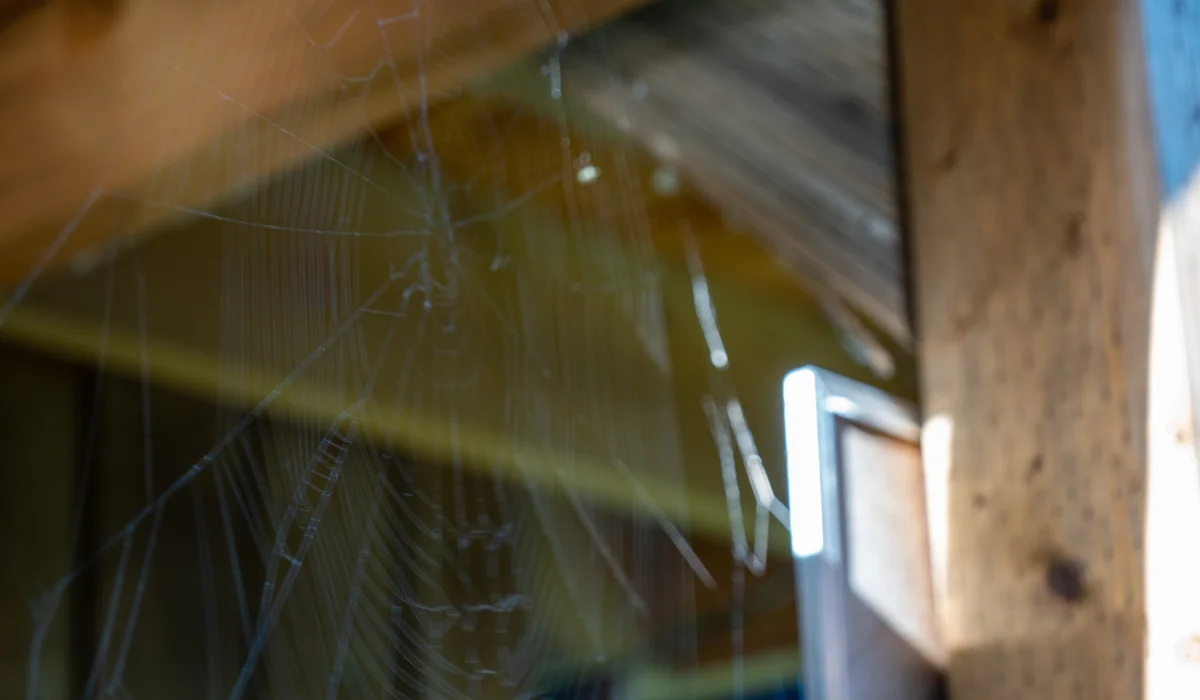
A web can offer useful clues about spider behavior, but it cannot confirm the species by itself. Large, organized, circular webs between shrubs, porch posts, or tree branches are commonly associated with orb-weaving spiders. These spiders place their webs across open spaces where flying insects are likely to travel.
Tangled cobwebs in garage corners, beneath outdoor furniture, or around protected eaves reflect a different hunting strategy. These webs may look irregular and three-dimensional rather than circular. Several kinds of cobweb spiders build this type of structure, so a messy web should never be treated as proof that a medically significant spider is present.
| Web Pattern or Location | What It May Suggest | What to Check |
|---|---|---|
| Large circular web between shrubs or porch posts | An orb-weaving spider using an open flight path | Nearby insect movement and branches touching the structure |
| Tangled web in a garage corner or beneath an eave | A cobweb-building spider in a protected site | Clutter, quiet corners, and insects gathering nearby |
| Webs around windows or exterior lights | Insects are concentrating near light sources | Screens, window gaps, and nighttime lighting |
| Fresh webs in several indoor rooms | Spiders may have steady prey or multiple entry points | Door sweeps, utility gaps, basement moisture, and indoor insects |
| Repeated webs in the same exterior spot | The location remains useful for hunting | Shelter, anchor points, and nearby landscaping |
Pay Attention to Where Webs Keep Returning
Spider webs around windows may indicate that insects are gathering near indoor light shining through the glass or around gaps in the window assembly. Repeated webs near a garage door may point to a worn seal, insect movement, or quiet corners where the silk remains undisturbed.
Indoor location matters as well. One web in an unused basement corner may represent a single spider. Fresh webs appearing in several rooms, especially alongside recurring insect activity, suggest that the home may be providing steady food sources or multiple access points.
When Repeated Webs Suggest a Larger Pest Problem
Spider infestation signs involve more than seeing one web. Fresh webs that return quickly after removal, repeated sightings in several rooms, numerous spider egg sacs, or continued activity in basements, garages, and crawl spaces deserve a closer look. These patterns may indicate that spiders have reliable access to both prey and shelter.
The supporting insect population may be the larger issue. Small flies near drains, ants around windows, crickets in the basement, or insects gathering at exterior lights can keep spiders active. Removing one visible spider without addressing those conditions leaves the same hunting area available for another.
You should also use care when you cannot identify a spider safely. Color alone is not reliable, and web shape is only one clue. Do not handle an unfamiliar spider, reach into a concealed web, or turn the spider over to inspect it. A clear photo taken from a safe distance can help a pest professional assess the situation.
How to Reduce Spiderwebs Around Your House
Learning how to prevent spider webs starts with removing existing silk and identifying why it appeared. Use a vacuum or long-handled brush to remove webs that you can reach safely. Check porch ceilings, railings, eaves, window frames, garage corners, door trim, outdoor furniture, and the areas beneath decks.
Remove visible egg sacs only when you can do so without placing your hands near a concealed spider. Wear gloves, keep children and pets away from the area, and avoid disturbing webs inside utility boxes, crawl spaces, dense woodpiles, or other locations that are difficult to inspect.
Reduce Prey, Shelter, and Access
Review exterior lighting around doors and windows, especially when insects gather there after dark. Correct leaks, clear clogged gutters, and reduce damp conditions that can support insects near the foundation. Trim shrubs and branches away from the siding, and move firewood, stored materials, and yard debris away from exterior walls.
Inspect cracks around windows and doors, damaged screens, worn door sweeps, garage seals, utility openings, vents, and accessible siding gaps. The University of Minnesota’s guidance on spiders supports an approach based on web removal, exclusion, and reducing the insects spiders feed on.
After cleaning, check the same areas over the next several days. A web that returns in one exterior corner may be a small maintenance issue. Webs rebuilding across several locations can reveal a wider pattern involving lighting, landscaping, moisture, insect activity, or structural access.
Making the Right Spider Control Choice for Your Michigan Home
A burst of spiderwebs around your house usually means the property has become a productive hunting area. Insect prey, sheltered corners, stable web supports, landscaping, exterior lighting, and access points can all contribute. Removing visible webs improves the appearance of the home, but lasting reduction depends on correcting the conditions that continue to support spiders.
The Environmental Protection Agency’s Integrated Pest Management principles support this inspection-led approach by combining identification, monitoring, prevention, and targeted control. Professional help makes sense when fresh webs return quickly, activity spreads indoors, egg sacs appear in several locations, or you cannot safely identify the spider.
Pest Pros of Michigan provides spider control as part of its recurring Home Pro service options for homeowners in Kalamazoo, Grand Rapids, and surrounding communities. To schedule an inspection or discuss ongoing spider activity, contact Pest Pros of Michigan for help identifying the conditions around your home and choosing the right next step.

 Serving Michigan since 2018
 Pest-free guarantee
 Small, local business