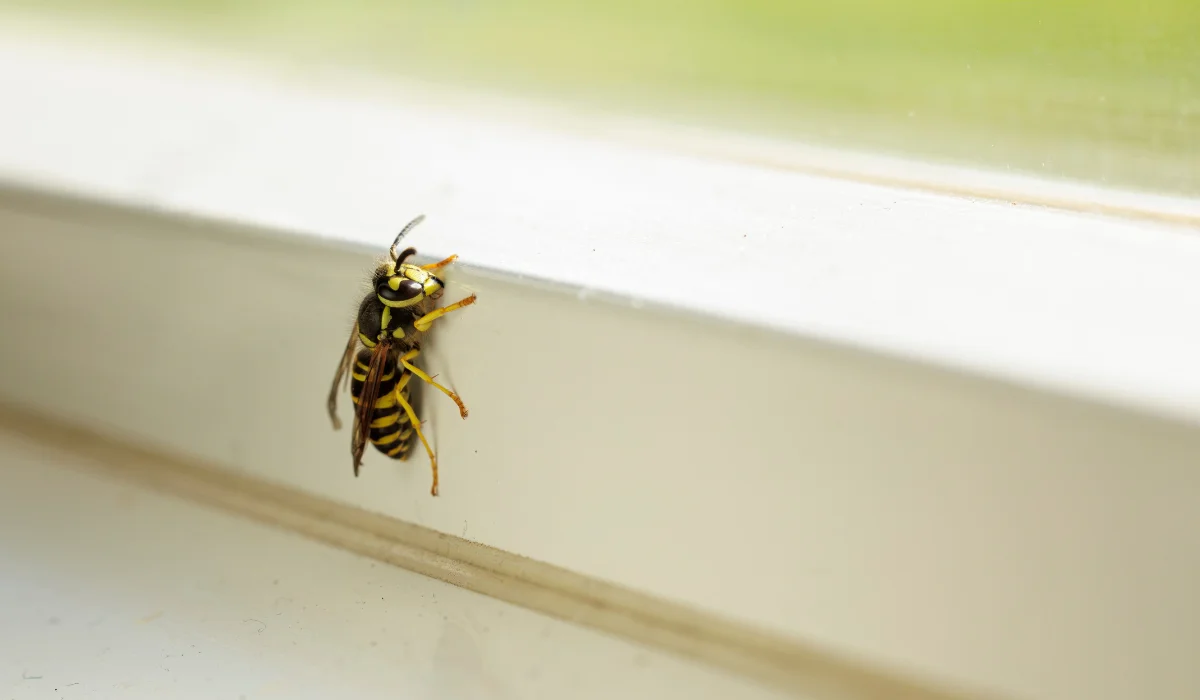
A yellow jacket sting can seem more painful in September, but the venom does not suddenly become stronger when fall arrives. The difference comes from seasonal behavior. By late summer and early fall, yellow jacket colonies are mature, worker activity is high, and food-seeking insects spend more time around patios, garbage containers, fruit trees, and outdoor gatherings.
Those conditions raise the chance of close contact and repeated stings. A yellow jacket can sting more than once, and workers may respond together when someone disturbs a nest. An encounter near a hidden ground nest can therefore be far more painful than a single sting from a worker searching around a picnic table.
This seasonal pattern matters across Michigan. September still brings yard work, football gatherings, school events, apple picking, cookouts, and time outdoors. Knowing why yellow jackets become more noticeable can help homeowners avoid stings, recognize an active nest, and decide when professional removal is the safer choice.
Why a Yellow Jacket Sting Feels Worse in September
A yellow jacket sting often feels worse in September because people are more likely to encounter several active workers at once. Yellow jacket colonies begin small in spring and grow throughout the summer. As the colony matures, more workers leave the nest to gather food and defend the nesting area.
That larger workforce increases activity around homes, businesses, parks, and outdoor dining areas. A person may encounter yellow jackets near an open drink, a garbage can, a fruit tree, or a lawn without realizing a nest is nearby. The greater number of workers does not change the basic sting, but it increases the chance of more than one sting during the same incident.
The setting also affects the severity of an encounter. A worker searching for food may sting if it becomes trapped against skin, clothing, or a beverage container. A worker near a yellow jacket nest may react as part of a colony defense. When several workers respond, the combined pain and swelling can make a September incident feel much worse than a single isolated sting earlier in the season.
What Changes Inside a Yellow Jacket Colony in Late Summer
Yellow jackets are social wasps that live in organized colonies. The queen starts the nest in spring, and the first workers take over food collection, nest construction, and defense as the season progresses. By late summer, the colony has many active workers moving between the nest and nearby food sources.
Guidance from Michigan State University Extension helps explain why stinging insects become more visible around Michigan properties during late summer and early fall. Mature colonies create steady traffic around lawns, landscaping, building openings, and outdoor gathering spaces.
Worker Traffic Becomes Easier to Notice
A yellow jacket nest may remain hidden even when worker activity is obvious. Colonies often occupy ground cavities, abandoned animal burrows, wall voids, or other sheltered spaces. Homeowners may first notice the problem when several yellow jackets repeatedly enter the same hole or structural gap.
That repeated flight pattern is more useful than watching a single insect. One yellow jacket visiting a flower or drink does not prove a nest is close. A steady stream of workers using the same opening throughout the day often points to active nesting.
Routine property maintenance can disturb that activity without warning. Mowing over a ground nest, trimming shrubs near an entrance, moving patio furniture, or digging along a foundation can trigger a defensive response before the nest is visible.
Food-Seeking Behavior Brings Yellow Jackets Closer
Late-season yellow jackets commonly appear around sugary drinks, ripe fruit, meat, pet food, garbage, and recycling. These concentrated food sources draw workers into the same areas where people eat, walk, and gather.
The University of Minnesota Extension’s yellow jacket guidance recommends limiting access to food and waste around homes. Covering food, cleaning spills, closing garbage containers, and removing fallen fruit can reduce activity in frequently used outdoor spaces.
September creates many opportunities for these encounters. Tailgates, school sports, cider gatherings, neighborhood events, and backyard meals often combine open drinks, food scraps, and overflowing trash. Workers may travel from a nest elsewhere on the property, so yellow jacket activity around a table does not always reveal where the colony is located.
Why Yellow Jackets Can Deliver Several Painful Stings
A yellow jacket sting causes immediate pain because venom enters the skin and triggers an inflammatory response. Redness, tenderness, itching, and swelling may develop around the sting site. The reaction can vary depending on the person and the location of the sting.
Yellow jackets can sting repeatedly because they do not normally leave the stinger behind after one attack. A worker may sting, reposition, and sting again if it continues to feel threatened. Several workers may also respond when someone approaches or disturbs the nest.
The type of encounter often determines the level of risk:
| Type of Encounter | What Usually Triggers It | Main Concern |
|---|---|---|
| Food-seeking worker | Swatting, trapping, or pressing the insect against skin | One or more stings from a single yellow jacket |
| Nest-defense response | Mowing, digging, trimming, or walking near the entrance | Multiple workers defending the colony |
| Structural nest activity | Disturbing or sealing an active opening | Workers searching for another exit |
Moving away from the area is safer than standing still and swatting. Once clear of the activity, check the sting site and monitor for symptoms that extend beyond a normal local reaction.
Where September Yellow Jacket Encounters Often Happen
Yellow jackets become a problem when food, shelter, and human activity overlap. In Kalamazoo, Grand Rapids, and nearby communities, late-season encounters often occur during yard maintenance, outdoor dining, property repairs, and fall events.
Ground Nests Near Lawns and Walkways
Ground nests can be difficult to recognize because the entrance may look like a small hole in grass, mulch, soil, or a landscaping bed. Yellow jackets may use an abandoned animal burrow or another protected cavity beneath the surface.
Mowing is a common source of disturbance. The mower’s sound, movement, and vibration can trigger nest defense before the operator sees the entrance. Edging, weeding, digging, and trimming can create the same problem.
A ground nest near a sidewalk, play area, patio, garden, or business entrance needs prompt attention. People cannot easily avoid the flight path in a frequently used space, and children or pets may approach the area without recognizing the risk.
Wall Voids and Structural Openings
Some colonies develop inside wall voids, beneath siding, around soffits, or near utility penetrations. Workers may enter through a narrow exterior gap and build the nest inside a sheltered cavity.
Do not seal an active entrance while workers are still using it. Blocking the exterior route can trap yellow jackets inside the structure or cause them to search for another opening. In some cases, that new route may lead toward an interior room.
A professional inspection can confirm the insect, identify the entrance, and determine how the nest is positioned. Correct identification matters because yellow jackets, paper wasps, hornets, and bees do not all nest or respond in the same way.
Outdoor Food and Waste Areas
Food-related stings often happen away from the nest. Yellow jackets may investigate open soda cans, fruit, condiments, grilled meat, baked goods, pet food, and residue left on tables or pavement.
Garbage and recycling areas can attract steady activity when lids do not close securely or sweet liquids collect around containers. Rinsing beverage cans, wiping spills, and removing food waste can make these locations less appealing.
Check cups and cans before drinking outdoors. A yellow jacket can enter an open container unnoticed, creating a risk of a sting around the mouth or face. Covered cups are a practical choice during picnics, tailgates, and children’s events.
What to Do After a Yellow Jacket Sting
The first step after a yellow jacket sting is to leave the area. If the sting happened near a nest entrance, remaining nearby may expose you to more workers.
Once you are in a safe location, wash the sting site and apply a cold compress to help manage pain and swelling. Avoid scratching the area, which can increase irritation. Watch the reaction closely as it develops.
The American College of Allergy, Asthma & Immunology’s guidance on insect stings describes warning signs that require emergency medical care. Trouble breathing, swelling of the tongue or throat, widespread hives, dizziness, faintness, or symptoms affecting areas beyond the sting site may signal a severe allergic reaction.
Anyone with a known insect-sting allergy should follow the emergency plan provided by a healthcare professional. Multiple stings may also require medical evaluation even when the person has no known allergy.
How to Reduce Yellow Jacket Activity in September
Reducing food access is one of the simplest ways to limit yellow jacket activity around outdoor living areas. Keep food covered, clean spills promptly, close garbage and recycling containers, and bring pet food inside after use. Pick up fallen fruit before it begins drawing repeated insect activity.
Avoid swatting at yellow jackets that approach a table or drink. Slow, controlled movement is less likely to trap the insect against clothing or skin. Cover the food and step away when practical.
Pay attention to repeated flight near one ground hole or structural opening. Mark the general area from a safe distance and keep children, guests, employees, and pets away. Do not place an object over the entrance, dig around the nest, or seal an active gap.
Before mowing or trimming, scan lawn edges, landscaping beds, sheds, decks, and retaining walls. A brief check can reveal concentrated worker traffic before equipment reaches the nesting area.
When Professional Yellow Jacket Removal Is the Safer Choice
Professional yellow jacket removal is appropriate when a nest sits near a doorway, walkway, patio, play area, lawn, loading zone, or business entrance. It is also the safer choice when workers are entering siding, a wall void, or another difficult-to-reach space.
An inspection helps identify the nest location, entrance, insect, and surrounding conditions. The removal plan can then account for whether the colony is underground, inside a structure, or close to heavy foot traffic.
Trying to disturb an active yellow jacket nest without protective equipment can result in several stings. That risk is greater in September because mature colonies have many workers available to defend the nesting area.
Protect Your Property From September Yellow Jackets
A yellow jacket sting can feel worse in September because mature colonies create more contact, more defensive encounters, and a greater chance of repeated stings. The venom does not need to become stronger for the experience to become more painful.
Watch for repeated flight patterns, secure outdoor food and waste, and keep people away from suspected nest entrances. Pest Pros of Michigan helps homeowners and businesses in Kalamazoo, Grand Rapids, and surrounding communities identify yellow jacket nests and select a practical removal approach. When activity is concentrated near your home or business, contact Pest Pros of Michigan before someone gets stung.

 Serving Michigan since 2018
 Pest-free guarantee
 Small, local business