Woodchuck burrows under a shed in South Haven are a structural problem. A single woodchuck can dig a burrow system 5 feet deep with tunnels extending up to 45 feet, and when that runs under a concrete pad or shed footer, it removes the soil those structures depend on. The burrow is also a den site the woodchuck returns to every season unless it’s removed and the entry points are sealed.
Key Takeaways
- A woodchuck burrow has a main entrance, 10 to 12 inches across with a soil mound outside, and concealed secondary entrances called plunge holes with no mound. Finding the plunge holes matters as much as the main entrance.
- Burrow systems beneath a shed remove the compacted soil bearing the structure’s weight. On older shallow-pad sheds, that can cause corner settlement, sticking doors, and cracked slabs within a few active seasons.
- Woodchucks are diurnal, active from roughly 6 to 9 AM and again from 4 to 7 PM. Movement outside those windows points to a different animal.
What the Structural Damage Actually Looks Like Over Time
The progression from new burrow to visible structural damage is gradual enough that many homeowners miss it until the consequences are already expensive to address.
Season One: Surface Signs Only
The main visible sign in the first season is the entrance mound and any feeding damage in the garden. The shed itself may show nothing obvious, which is why many homeowners underestimate the problem at this stage.
Season Two: The Shed Starts Showing It
By the second active season, if the burrow has extended under the slab or skid, subtle signs start appearing: a corner of the shed floor that feels less stable underfoot, a door that begins to stick or swing unevenly, or a small gap opening between the slab edge and the shed wall.
Season Three and Beyond: Visible Structural Damage
By the third season, if the den is still active or the void from a previous removal was never filled, cracking in a concrete pad, visible corner settlement, and water pooling in new locations under the structure become more common. Older sheds built on shallow poured pads, common throughout South Haven’s mix of older residential and cottage properties, reach this point faster because there is less concrete depth buffering the tunnel’s effect on the bearing layer.
What Is Actually Happening Underground
The burrow system under the shed is substantially larger than the entrance hole suggests. Understanding the geometry matters because it explains why simply blocking the entrance fails and why the structural risk continues after an animal is removed.
The Tunnel Layout
A woodchuck burrow begins with a steep drop from the entrance that levels off into a horizontal main tunnel. That main run can extend 20 to 45 feet from the entrance, at depths of 4 to 5 feet below grade, before terminating in a nesting chamber roughly 15 inches across and lined with dry leaves or grass. Multiple side tunnels branch from the main run and exit as the plunge holes visible above ground. When the main entrance is at the shed edge, the tunnel run is almost certainly running directly under the shed floor, not just along its perimeter.
What the Depth Means for Your Shed
At 4 to 5 feet deep, a woodchuck burrow is operating at or below the frost line in West Michigan, which is also the zone where footers on older, shallow-foundation sheds are typically set. Well-drained deep soil at that depth stays stable through winter even when the ground freezes above, which is exactly why woodchucks select it. From the shed’s perspective, the same depth means the tunnel is running through the bearing layer the foundation depends on.
The Void Problem After Removal
Removing the woodchuck eliminates the active digging but does not eliminate the void. An empty tunnel system at 4 to 5 feet below a concrete slab or skid foundation is a settlement risk that continues after the animal is gone. Depending on soil type, a tunnel can remain stable for months before partial collapse begins, or it can fill gradually through frost heave and moisture infiltration. Either way, the void should be addressed as a follow-up step to removal, particularly when the tunnel runs under a concrete surface that cannot flex with gradual settlement.
How to Confirm a Woodchuck Before Doing Anything Else
Misidentifying the animal leads to the wrong response, and the wrong response usually makes the problem harder to fix. Woodchuck removal is straightforward when the animal is correctly identified and all entry points are located, and considerably less so when it isn’t.
Read the Burrow Opening
The main entrance of a woodchuck burrow is 10 to 12 inches across with a visible mound of fresh, loose soil pushed out to one side. That mound is the displaced material from the initial dig and is one of the clearest diagnostic signs in wildlife removal work. Plunge holes, the secondary exits the woodchuck uses to escape quickly, are narrower and have no soil mound. They’re often concealed by low vegetation or debris near the shed perimeter and are easy to miss on a quick walkthrough. A woodchuck threatened at the main entrance will retreat through a plunge hole and re-enter from there, which is why blocking the main entrance without locating the secondary ones rarely solves the problem.
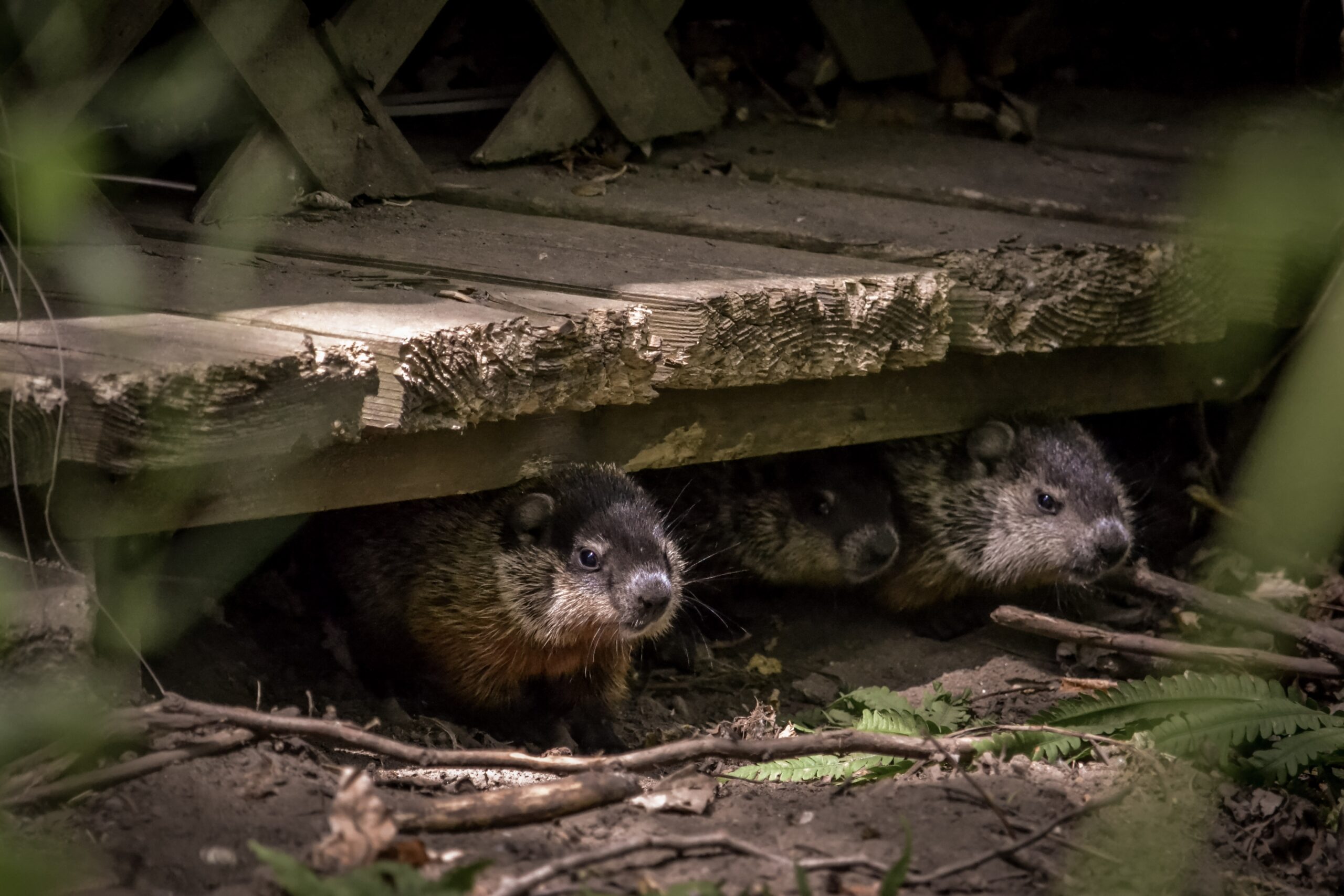
Watch the Shed at the Right Hours
Woodchucks are active above ground from roughly 6 to 9 AM and again from 4 to 7 PM. A heavy-bodied, short-legged animal with a grizzled brownish coat moving near the shed at those times is almost certainly a woodchuck. If the movement is happening at night, you are likely dealing with a raccoon, opossum, or skunk instead. In South Haven’s mix of residential yards, orchards, and agricultural edges west of the city, woodchucks are consistent spring-through-fall residents. They enter true hibernation in October or November and re-emerge in March or April, which is often when fresh digging at an established den site is first noticed.
Look for Feeding Damage Nearby
Woodchucks are heavy vegetarians that consume large amounts of vegetation daily. Ragged, low cuts on garden plants, gnawed vegetable stems, missing leafy growth at ground level, and stripped low-hanging fruit are all signs of active woodchuck foraging. If the feeding damage is within a few hundred feet of the shed, the shed den is almost certainly the source. A woodchuck that is both denning and foraging on the same property is a confirmed resident, which means trapping must account for foraging routes and secondary den activity, not just the burrow entrance you can see.
Why South Haven Properties See Recurring Woodchuck Problems
Woodchucks select den sites based on specific criteria, and South Haven properties consistently meet them. Understanding why helps explain why the same property can see a new woodchuck move in within a season of the previous one being removed.
What Woodchucks Are Looking For
A woodchuck needs a den site that drains well, stays dry through winter, provides overhead cover from aerial predators, offers clear sightlines in multiple directions from above-ground resting spots, and sits within foraging distance of reliable food. A shed with a gap between the base and grade checks every item on that list. The space under the shed drains better than open soil, provides shade and cover, and positions the woodchuck slightly above the surrounding yard surface. The shed wall provides sightline cover from one direction, and the open yard beyond provides the visibility the animal needs to watch for threats.
Why It Keeps Coming Back
Established woodchuck den sites are used and re-used across multiple seasons and sometimes across multiple generations. A woodchuck removed from a den it has occupied for two seasons leaves behind a burrow system the next dispersing woodchuck in the area can identify and expand. South Haven properties near orchards, gardens, and the agricultural edges west of M-43 are in areas with consistent woodchuck pressure throughout the active season. Removing the animal without sealing the entry points gives the next woodchuck a ready-made den.
When to Call Pest Pros of Michigan
Call us when you find fresh excavation near the shed foundation, or when a woodchuck has been active on the property for more than a few days and shows no sign of moving on. Woodchucks do not abandon established dens voluntarily, and each additional week of active digging extends the tunnel system further beneath the structure.
Professional service makes sense when:
- You have found a burrow entrance at or near the shed foundation or concrete pad.
- There is fresh soil excavation and active feeding damage in the yard.
- You have blocked the entrance but the animal found another way in.
- The shed door is sticking, a corner feels soft, or you are seeing new gaps at the slab edge.
- You want all plunge holes located before any sealing is done.
- You need the burrow void assessed for structural follow-up after removal.
- You want exclusion installed to prevent re-entry after the woodchuck is out.
Pest Pros of Michigan provides wildlife removal services in South Haven for homes and businesses, including woodchuck trapping, removal, and exclusion work to prevent the den from being re-occupied after the animal is gone.
Schedule Woodchuck Removal in South Haven
If a woodchuck has burrowed under your shed, we can inspect the property, locate all entry points including secondary plunge holes, remove the animal, and advise on exclusion and void remediation so the problem does not come back next season.
Contact Pest Pros of Michigan to request woodchuck removal in South Haven.
Frequently Asked Questions
How deep do woodchuck burrows actually go?
Woodchuck burrow systems typically reach 4 to 5 feet below grade with horizontal tunnel runs extending 20 to 45 feet from the entrance. When a den is established at the edge of a shed, the tunnel almost always runs under the shed floor rather than just along its perimeter, often reaching the nesting chamber well beneath the structure’s center.
Will a woodchuck leave on its own if I block the main entrance?
Blocking the main entrance without trapping the woodchuck first pushes the animal to expand or reopen a plunge hole rather than abandon the den. Woodchucks are strongly attached to established burrow sites and will re-enter rather than relocate. The correct sequence is trapping first, then sealing all identified entry points including plunge holes after the animal is confirmed out.
How long before a woodchuck burrow causes visible damage to a shed?
On older sheds built on shallow concrete pads, visible consequences like corner settlement, sticking doors, or slab cracking can appear within two to three active seasons. The timeline depends on soil type, how far the tunnel extends under the structure, and whether the shed footer depth is close to the tunnel run depth. The void left after removal continues to pose a risk until it is filled.
Can I fill the burrow myself after the woodchuck is removed?
You can fill the entrance and visible portions of the tunnel, but the underground void at depth requires compacted fill to prevent future settlement. Simply packing loose soil into the opening will not reach or stabilize the tunnel walls at 4 to 5 feet below grade. For burrows under concrete surfaces, a professional assessment of the void is worth doing before sealing the exterior.

 Serving Michigan since 2018
 Pest-free guarantee
 Small, local business
 10+ years of pest control experience
 President and CEO of Pest Pros of Michigan
 Resident of Michigan