If you have a raccoon in the attic, the most important thing to understand before doing anything is whether young are present. In Grand Rapids, raccoons typically give birth between late March and May, and a female in the attic almost always has a litter nearby. Sealing the entry point or setting a trap without accounting for the babies leads to a worse outcome than the original problem. Here is what to confirm, what to avoid, and what the removal process actually involves.
Key Takeaways
- Do not seal the entry point until you have confirmed the raccoon and any young are out. Trapping a raccoon inside creates a containment problem that is harder and more expensive to resolve than the original entry.
- Raccoons in Grand Rapids attics cause damage to insulation, wood framing, HVAC ducts, and roofing material that goes beyond what’s visible at the entry point. The full extent of the damage usually isn’t apparent until a professional inspects the attic directly.
- Michigan law governs how raccoons can be trapped and relocated. Licensed removal is required for legal and humane handling, and attempting DIY removal without a license can result in violations.
What to Do First When You Suspect a Raccoon in the Attic
Confirming the species before taking any action matters because raccoons require a different response than squirrels or bats, and the presence of young changes the removal approach entirely.
Listen for the Pattern of Activity
Raccoons are primarily nocturnal. Heavy, rolling sounds in the attic in the evening and overnight, distinct from the lighter daytime scratching of squirrels, point to raccoons. You may also hear vocalizations, particularly the distinctive chattering or crying sounds of young raccoons, which carry through attic framing even into the living space below. If the sounds are most active from dusk through midnight and resume before dawn, raccoons are the likely explanation.
Look for Entry Points From the Ground
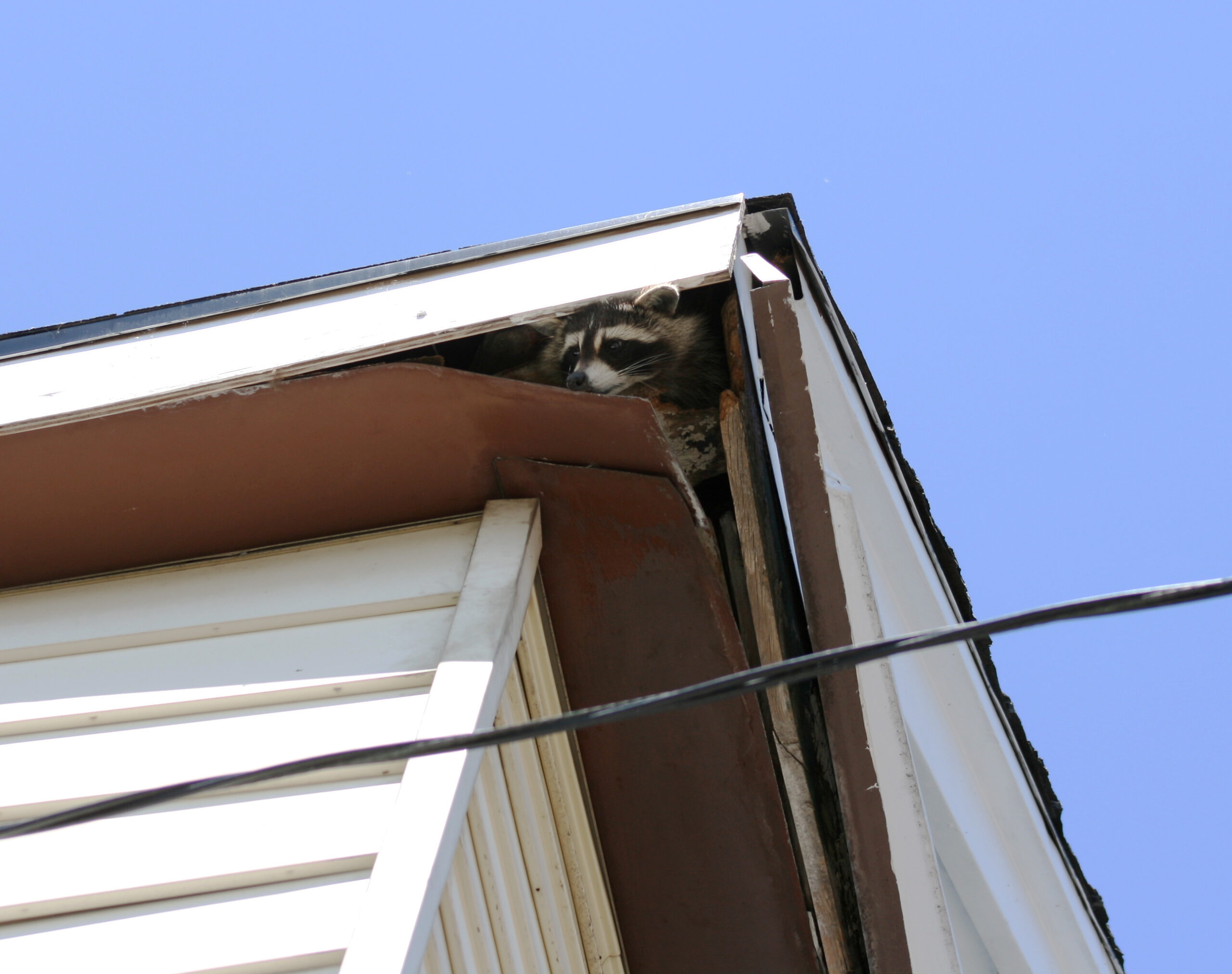
Walk the exterior of the house and look for damaged soffits, pulled-back fascia, torn roof vents, or areas where shingles have been displaced. Raccoons are strong enough to tear through standard vent covers and can create openings substantially larger than the gaps squirrels or bats typically use. In Grand Rapids, older homes with wood soffits and aging rooflines are particularly vulnerable, but raccoons will force entry through any weak point in a roofline they identify as a den site.
Do Not Seal Anything Yet
Sealing an entry point while a raccoon or her young are still inside traps the animals. This is the most common mistake homeowners make, and it reliably makes the situation worse. A trapped adult raccoon causes dramatically more damage trying to get out than she did getting in, and young raccoons that cannot be reached die inside the attic, creating an odor and sanitation problem that outlasts the raccoon itself. Confirm the animal is out before any sealing is done.
What a Raccoon Does to a Grand Rapids Attic
The damage raccoons cause extends well beyond the entry point and accumulates quickly. By the time most homeowners call for help, the visible entry damage is rarely the most expensive problem.
They Turn Part of the Attic Into a Latrine
Raccoons return to the same area of the attic to defecate repeatedly, saturating insulation with feces and urine that cannot be remediated by adding new insulation on top. Raccoon droppings carry Baylisascaris procyonis, a roundworm parasite that poses a genuine health risk to humans when dried fecal matter is disturbed. Attic cleanup after raccoon removal requires proper protective equipment and is more involved than it appears from the outside.
They Damage Insulation, Ducts, and Framing
Raccoons pull insulation apart for nesting material, damage HVAC flex ducts running through the attic, and can dislodge or break attic ventilation components. In homes with older insulation or flex duct systems, raccoon activity degrades heating and cooling performance noticeably before the homeowner realizes why. They also gnaw on wood framing around the entry point and may widen access gaps as the season progresses.
The Entry Point Is Usually the Worst Spot Structurally
Torn shingles, compromised flashing, and damaged decking at a forced entry point allow water intrusion at every rain event until the area is properly repaired. Entry point repair is a separate step from removal and exclusion, and both have to happen before the job is complete.
How Professional Raccoon Removal Works in Grand Rapids
Michigan law regulates the trapping and handling of raccoons, and trapping without a license, using prohibited trap types, or relocating raccoons improperly can result in legal violations regardless of whether the animal is causing property damage. This is why DIY removal attempts consistently fall short — not just for legal reasons, but because when young are present, the litter has to be located and removed by hand before the mother can be excluded. A mother raccoon excluded from a den with her young still inside will attempt to breach the structure again, often creating a new entry point in the process.
A thorough removal follows a specific sequence, and skipping any step typically means the problem returns. We begin with a full inspection of the attic and the exterior roofline to locate all entry points, identify the den site, and confirm whether young are present. We set trapping in relation to the confirmed entry point. If young are present, we remove them by hand first. Once the adult is trapped and the young are out, we seal all identified entry points with materials the raccoon cannot breach again. Where there is structural damage at the breach site, we repair the entry point rather than just cover it. When fecal contamination is significant, attic cleanup follows with proper protective equipment and disposal.
When to Call Pest Pros of Michigan
Call us when you are hearing heavy overhead sounds at night, finding displaced or torn material at the roofline, or have already attempted to address a raccoon problem without fully resolving it. A raccoon that returns after an initial removal attempt usually means an entry point was missed or the exclusion work was incomplete.
Professional service makes sense when:
- You are hearing heavy rolling or thumping sounds in the attic overnight.
- You have found a torn vent, pulled soffit, or open gap on the roofline.
- You suspect young may be present based on vocalizations.
- You have already sealed one entry point and the raccoon has found another way in.
- There is visible staining or odor coming from the attic space.
- You need the entry point repaired, not just patched.
- You want all entry points identified and sealed in a single visit.
Pest Pros of Michigan provides wildlife removal services in Grand Rapids for homes and businesses, including raccoon removal, exclusion, and attic inspection backed by over 40 years of combined experience.
Schedule Raccoon Removal in Grand Rapids
If a raccoon is in your attic, we can inspect the property, locate all entry points, remove the animals humanely including any young, and seal the access so the problem does not return.
Contact Pest Pros of Michigan to request raccoon removal in Grand Rapids.
Frequently Asked Questions
How do I know if there are baby raccoons in my attic?
Listen for high-pitched crying, chattering, or mewing sounds in the attic, particularly from late March through June. These are distinct from adult raccoon sounds and carry through attic framing clearly. If you hear a female raccoon returning at night and those sounds follow, a litter is almost certainly present.
Is it legal to trap a raccoon myself in Michigan?
Michigan law requires a license to trap raccoons, with regulations governing trap types, relocation distances, and handling. Attempting to trap and relocate a raccoon without following DNR guidelines can result in violations even when the animal is causing property damage. Licensed professional removal is the safest legal approach.
How long does raccoon removal typically take?
A removal where no young are present can often be completed in one to two visits. When young are involved, the litter must be removed before the mother is excluded, which may require additional visits. Attic cleanup, when contamination is significant, adds time as a separate step.
Do raccoons cause health risks in the attic?
Yes. Raccoon droppings can contain Baylisascaris procyonis, a roundworm parasite hazardous to humans when dried fecal matter is disturbed. Cleanup requires proper protective equipment and should not be treated as a routine cleaning task.

 Serving Michigan since 2018
 Pest-free guarantee
 Small, local business
 10+ years of pest control experience
 President and CEO of Pest Pros of Michigan
 Resident of Michigan