Termite activity is easy to miss because subterranean termites often move through soil, shelter tubes, cracks, and hidden wood before homeowners notice damage. In Southwest Michigan homes, the most important warning signs include mud tubes, winged termites indoors, shed wings, soft wood, and damage near basements, crawl spaces, porches, decks, or foundation areas.
If you find possible termite evidence, do not remove it right away. Photos are helpful, but the location of the sign can tell us where activity may be coming from and whether the problem appears active.
Key Takeaways
- Subterranean termites are the main termite concern in Michigan.
- Mud tubes, winged termites, and soft wood should be inspected.
- Basements, crawl spaces, porches, and garages are common areas to check.
- Do not scrape away tubes or remove damaged wood before service.
- Professional inspection helps confirm active activity versus old evidence.
Why Southwest Michigan Homes Need Termite Awareness
Michigan homes are most likely to deal with Eastern subterranean termites. These termites live in soil and need moisture, so they often move into structures through protected routes near foundations, basements, crawl spaces, and wood that touches the ground.
Michigan State University Extension identifies Eastern subterranean termites as Michigan’s most serious wood-destroying pest. That does not mean every home has termites, but it does mean visible signs should be taken seriously.
Southwest Michigan homes may have several termite-friendly areas, including basement framing, crawl spaces, porch supports, older wood features, damp soil, mulch near the foundation, and stored wood near the house.
Mud Shelter Tubes
Mud shelter tubes are one of the clearest signs of subterranean termite movement. These narrow, dirt-colored tubes help termites travel between soil and wood while staying protected from dry air and light.
You may find them on:
- Basement walls
- Foundation walls
- Crawl space supports
- Garage slab edges
- Porch posts
- Deck connections
- Utility openings
- Cracks near the foundation
Do not scrape them off before an inspection. Their location can help us understand where termites may be entering and whether nearby wood needs closer evaluation.
Winged Termites Indoors
Winged termites are reproductive termites that leave a colony to start new colonies. They may appear near windows, lights, basement areas, sliding doors, or other bright spots.
A few flying insects outside may come from nearby outdoor activity. Winged termites indoors are more concerning, especially if they appear more than once or are found near damaged wood, foundation areas, or basement windows.
Termite swarmers usually have:
- Straight antennae
- A broad waist
- Wings of similar length
- Wings that may fall off easily
Flying ants can look similar, so save a few insects in a small bag or container if you can do so safely.
Shed Wings Near Windows Or Floors
Sometimes homeowners never see the flying insects. They only find small piles of wings on window sills, floors, basement surfaces, or near lights.
Shed wings matter because reproductive termites drop their wings after swarming. If the wings are inside the home, there may be a colony nearby or activity entering from a hidden area.
Before cleaning up, take photos and note the exact location. If possible, save a few wings for identification during the inspection.
Soft Or Hollow-Sounding Wood
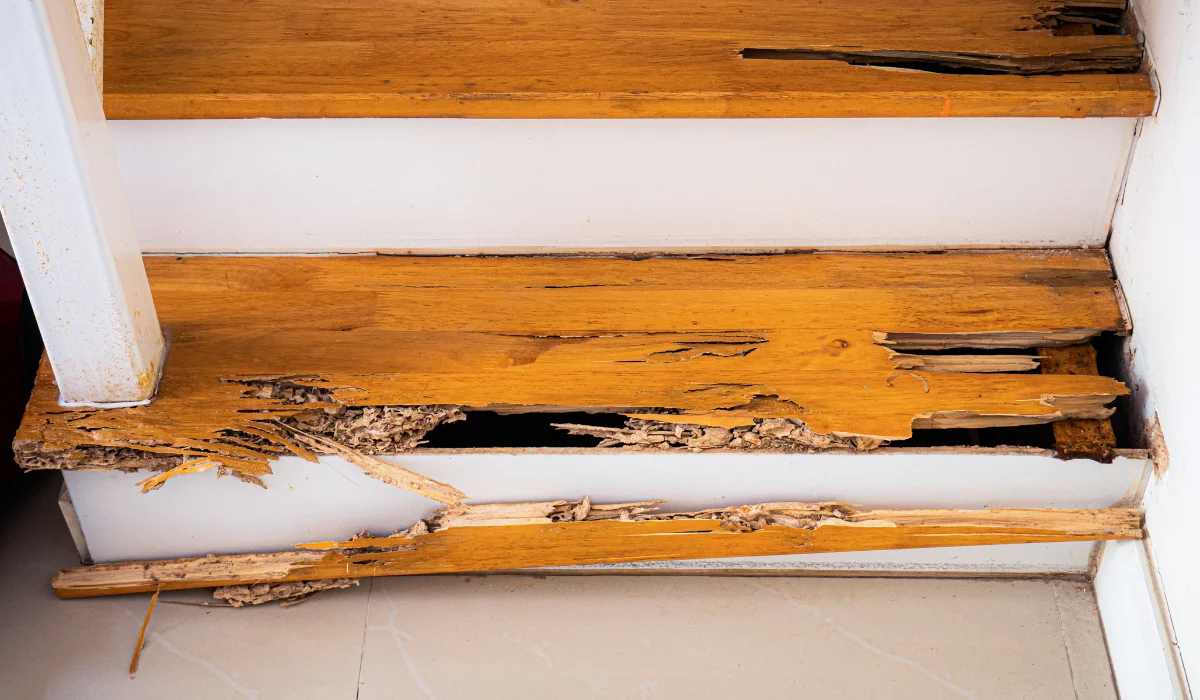
Termites can feed inside wood while the surface still looks mostly normal. That can make damage difficult to spot until the wood feels soft, sounds hollow, or begins to blister.
Check visible and accessible wood near:
- Basement framing
- Sill plates and rim joists
- Porch supports
- Deck posts
- Garage walls
- Door frames
- Window frames
- Areas near plumbing leaks
- Wood close to soil or moisture
Soft wood can also come from moisture, rot, or other wood-damaging pests. A termite inspection helps separate those issues before repairs begin.
Dirt-Like Material Inside Damaged Wood
Subterranean termites may bring soil into damaged wood or leave dirt-like material inside galleries. This can be a clue that the damage is connected to soil-based termite activity rather than dry, surface-level wear.
You may notice packed dirt or mud in cracks, damaged boards, or hidden seams. If you see this, avoid digging it out before service. The pattern and location can help us evaluate the activity.
Sticking Doors Or Windows
Doors and windows can stick for many reasons, including humidity and normal settling. Still, if sticking happens near damaged wood, moisture, wings, mud tubes, or soft framing, termites should be considered.
Pay closer attention when sticking appears near:
- Basement doors
- Garage entry doors
- Exterior door frames
- Window frames close to soil or moisture
- Areas with visible wood damage
One sticking door is not proof of termite activity. Several signs together make inspection more important.
Basement And Crawl Space Clues
Basements and crawl spaces are important inspection areas in Southwest Michigan homes because they often combine foundation access, moisture, stored items, and visible structural wood.
Look for:
- Mud tubes on basement walls
- Damaged sill plates or rim joists
- Wood debris in crawl spaces
- Moisture near framing
- Wings near basement windows
- Soft wood near plumbing or drainage issues
- Wood supports touching soil
If the space is tight, damp, or difficult to enter safely, leave it to a professional. You can still note where you saw possible evidence.
What Not To Do If You Find Signs
It is natural to want to clean or repair the area right away, but disturbing termite evidence too soon can make inspection harder.
Avoid these steps before service:
- Do not scrape away mud tubes.
- Do not spray random products into walls or cracks.
- Do not remove damaged wood unless there is a safety concern.
- Do not paint, caulk, or seal suspicious areas before inspection.
- Do not assume old-looking evidence means the activity is gone.
- Do not rely on online photos for a final identification.
Take photos, keep the area accessible, and schedule an inspection.
How We Inspect For Termite Activity
Our termite control service starts with inspection and detection. We look for mud tubes, damaged wood, swarm evidence, moisture conditions, and visible entry points around the structure.
If we find evidence of termite activity, we explain what we see and recommend a treatment plan based on the home, the location of the signs, and the level of activity. The goal is to address the source of the problem, not only the visible damage.
We also point out conditions that may make future termite activity easier, such as wood-to-soil contact, moisture, drainage issues, or stored wood near the foundation.
How To Reduce Termite Risk Around The Home
Prevention starts with reducing access, moisture, and easy food sources near the structure.
Helpful steps include:
- Keep firewood away from the house.
- Avoid wood-to-soil contact around decks and porches.
- Repair plumbing leaks quickly.
- Keep gutters and downspouts working.
- Improve drainage near the foundation.
- Avoid piling mulch against siding or trim.
- Remove wood scraps and cardboard from damp areas.
- Keep crawl spaces and basement areas as dry as possible.
- Watch for mud tubes, wings, and soft wood.
These steps can reduce risk, but they do not replace treatment if termites are already active.
Schedule Termite Service In Southwest Michigan
If you found mud tubes, winged termites, shed wings, soft wood, or damage near a basement, crawl space, foundation, porch, deck, or garage, we can inspect the area and explain what the signs mean.
Contact Pest Pros of Michigan to request termite service in Southwest Michigan.
Frequently Asked Questions
What Is The Most Common Sign Of Termites In A House?
Mud shelter tubes, winged termites indoors, shed wings, and soft or damaged wood are some of the most common signs. In Michigan homes, signs near basements, foundations, and crawl spaces deserve attention.
Do Termites Leave Mud Tubes?
Yes. Subterranean termites often build mud shelter tubes to move between soil and wood. These tubes may appear on foundation walls, basement walls, crawl space supports, porch posts, or garage edges.
Are Winged Termites Indoors A Bad Sign?
Yes, indoor winged termites are more concerning than outdoor sightings. They may point to a colony inside or very close to the structure.
Can Termite Damage Look Like Water Damage?
Yes. Soft wood, blistering, and surface damage can look similar to moisture damage. An inspection helps determine whether termites, moisture, rot, or another issue is involved.
When Should I Call Pest Pros Of Michigan?
Call when you find mud tubes, winged termites, shed wings, soft wood, or damage near basements, crawl spaces, foundations, porches, decks, garages, or other wood connected to soil or moisture.

 Serving Michigan since 2018
 Pest-free guarantee
 Small, local business