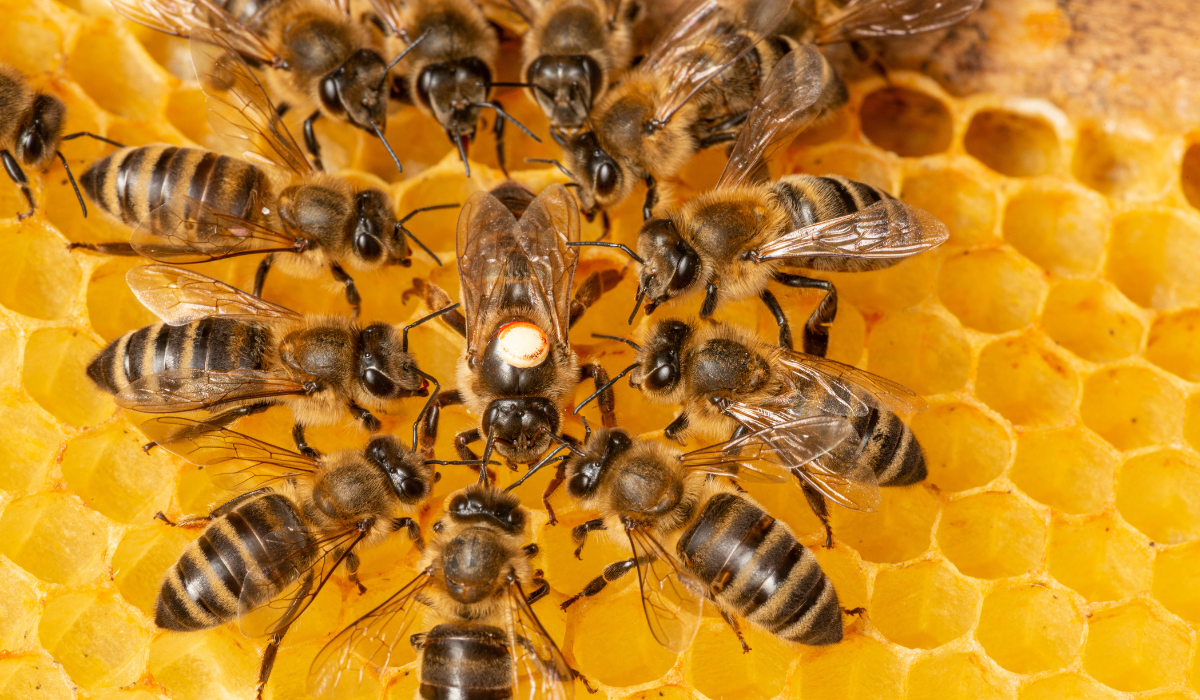
Queen bees can sting, but they are not the stinging insect most Plainwell homeowners are likely to encounter. A queen honey bee usually stays inside the colony and uses her stinger in queen-to-queen conflict, not to chase people around a yard.
If someone is getting stung near a porch, deck, shed, wall void, or tree, the more likely concern is worker bees, yellow jackets, hornets, or wasps defending a nest. The safest next step is to keep distance, identify the nest location if possible, and avoid disturbing it.
Key Takeaways
- Queen bees can sting, but homeowner stings usually come from workers or wasps.
- Male bees, called drones, do not sting.
- Honey bees, wasps, yellow jackets, and hornets are often confused.
- Nest location matters more than the queen herself.
- Call for help when stinging insects are nesting near people, pets, or entry points.
Can A Queen Bee Sting?
Yes, a queen bee has a stinger. In honey bees, the stinger is part of the female anatomy. Workers and queens are female, so they can sting. Drones are male, so they cannot.
The important difference is behavior. A queen honey bee is not usually outside defending the yard, flying around the patio, or foraging on flowers. She normally stays inside the colony and lays eggs. Her stinger is mostly used against rival queens.
For homeowners, that means the question is usually less about the queen and more about the nest. If stinging insects are active near the home, workers are the ones most likely to defend the colony.
Why Most Homeowner Stings Do Not Come From Queens
A homeowner rarely encounters a queen bee directly. Queens stay protected because the colony depends on them. Worker bees handle foraging, nest defense, and most of the activity people notice.
Stings around Plainwell homes are more often connected to:
- Worker honey bees defending a colony
- Yellow jackets nesting underground or in wall voids
- Paper wasps under eaves or porch ceilings
- Hornets nesting in trees, shrubs, or on structures
- Stinging insects disturbed during yardwork
- Nests close to doors, decks, sheds, or play areas
Our Plainwell pest control team handles wasp and bee control for homeowners, including inspections and safe nest removal when stinging insects create a risk around the property.
Bee, Wasp, Hornet, Or Yellow Jacket?
Many homeowners call every striped stinging insect a bee, but identification matters. Michigan State University Extension explains that bees are different from hornets and wasps, and many nest descriptions that come in as “bee” calls turn out to be wasps.
Common differences include:
- Honey bees are often fuzzy and may live in larger colonies.
- Bumble bees are larger, fuzzy, and may nest in the ground or cavities.
- Paper wasps have narrow bodies and open, umbrella-like nests.
- Yellow jackets are compact, fast, and often aggressive near nests.
- Hornets may build larger covered paper nests in trees, shrubs, or structures.
Do not get close to confirm the species. Watch from a safe distance and note where insects are entering and exiting.
Why Nest Location Matters
A nest far from daily activity may not be urgent. A nest near a door, deck, mailbox, shed, grill, play area, or pet space is different. Stinging insects are more likely to become a problem when people or pets regularly pass near the nest entrance.
Risk increases when nests are located:
- Under eaves
- Inside wall voids
- In attic spaces
- Under decks
- Near porch ceilings
- In shrubs or trees close to walkways
- In the ground near lawns or gardens
- Around sheds or garages
Pest Pros of Michigan’s wasp, bee, and stinging insect control service focuses on visible nests, increased insect activity, and risky nesting areas around homes.
What To Do If You Find A Nest
Do not hit, spray, block, or knock down a nest without knowing what you are dealing with. Disturbing the nest can trigger defensive behavior and increase the chance of stings.
Use these steps instead:
- Keep children and pets away.
- Avoid mowing or trimming near the nest.
- Watch the flight path from a safe distance.
- Do not shine lights into the nest at night.
- Do not block the entrance to a wall void nest.
- Avoid DIY removal if the nest is large or hidden.
- Call for help if the nest is close to people or entry points.
If someone has symptoms of a serious allergic reaction after a sting, seek emergency medical help right away.
When Honey Bees Need A Different Approach
Honey bees are important pollinators, so the response may differ from wasp or hornet control. If honey bees are nesting in a structure, the issue still needs attention because wax, honey, and colony material can create problems inside walls or voids.
A honey bee colony inside a wall, soffit, or other structural space should not be ignored. It should also not be sealed inside without a plan. Trapping bees or blocking the entrance can push activity deeper into the structure.
If you are not sure whether you have bees, wasps, or hornets, identification should come first.
What Not To Do
Stinging insect problems can feel urgent, but quick DIY reactions can make the situation more dangerous.
Avoid these mistakes:
- Do not swat at insects near a nest.
- Do not throw objects at the nest.
- Do not use a ladder near active stinging insects.
- Do not block a nest entrance in a wall.
- Do not assume a ground nest is harmless.
- Do not let pets investigate the area.
- Do not treat a hidden nest without knowing where it extends.
If the activity is close to your home, a professional inspection is the safer option.
How To Reduce Stinging Insect Activity Around The Home
Prevention starts with making the property less inviting and easier to inspect. You may not prevent every nest, but you can reduce common attractants and catch activity earlier.
Helpful steps include:
- Keep trash lids tight.
- Clean food spills on patios and decks.
- Store sweet drinks and food indoors after use.
- Seal gaps around siding, soffits, and trim.
- Repair damaged screens.
- Check eaves, sheds, and porch ceilings in spring and summer.
- Keep shrubs trimmed away from walkways.
- Watch for repeated flight paths into the same opening.
Early activity is easier to address than a mature nest later in the season.
When To Call Pest Pros Of Michigan
Call us when stinging insects are nesting near doors, decks, play areas, sheds, garages, mailboxes, or other spaces your household uses often. You should also call if the nest is hidden in a wall, attic, soffit, or ground opening.
Professional service makes sense when:
- Insects are entering and exiting the same spot.
- You can see a nest under an eave or in a shrub.
- Activity increases near outdoor living areas.
- Someone in the home is allergic to stings.
- Pets or children use the affected area.
- The nest is in a wall void, attic, or ground opening.
- You are unsure whether the insects are bees, wasps, or hornets.
We inspect the activity, identify the likely insect, and recommend a treatment or removal approach based on nest location and risk.
Schedule Stinging Insect Control In Plainwell
If bees, wasps, hornets, or yellow jackets are active around your Plainwell home, we can inspect the nest area and recommend the safest next step.
Contact Pest Pros of Michigan to request stinging insect control in Plainwell.
Frequently Asked Questions
Can Queen Bees Sting People?
Yes, queen bees can sting, but they rarely interact with homeowners. Most stings around homes come from worker bees, wasps, hornets, or yellow jackets defending a nest.
Do Male Bees Sting?
No. Male bees, called drones, do not have stingers.
Why Are Bees Or Wasps Stinging Near My House?
They may be defending a nest close to a door, deck, shed, wall void, attic, shrub, or ground opening. Activity usually increases when people or pets get too close to the nest.
Should I Remove A Bee Nest Myself?
Avoid DIY removal if the nest is active, large, hidden, or close to people. Stinging insects may defend the nest, and hidden nests can be difficult to treat correctly.
When Should Plainwell Homeowners Call Pest Pros Of Michigan?
Call when stinging insects are nesting near daily activity, entering a structure, building in a wall void, or creating a sting risk for children, pets, or anyone with allergies.

 Serving Michigan since 2018
 Pest-free guarantee
 Small, local business