Seeing bees around a Kalamazoo home does not always mean there is a dangerous nest. Some bees are pollinators passing through flowers. Others may be nesting in wood, soil, wall voids, eaves, or sheltered areas close to daily activity.
The first step is identification. Honey bees, bumble bees, carpenter bees, yellow jackets, paper wasps, and hornets can look similar from a distance, but they behave differently. If activity is close to doors, decks, patios, play areas, or pets, keep distance and let a professional inspect the source.
Key Takeaways
- Not every striped flying insect is a bee.
- Honey bees, bumble bees, and carpenter bees behave differently.
- Yellow jackets, paper wasps, and hornets are often mistaken for bees.
- Nest location matters more than the insect name alone.
- Call for help when activity is close to people, pets, or entry points.
Honey Bees
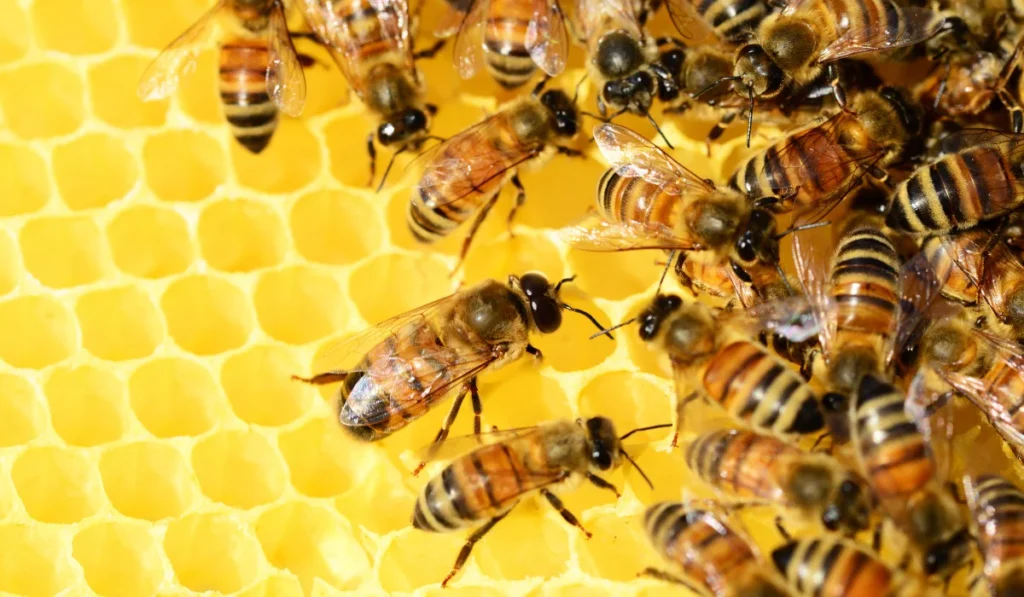
Honey bees are important pollinators and usually have fuzzy bodies with golden-brown coloring. They live in colonies and may be seen moving in and out of the same opening if they are nesting in a wall void, tree cavity, or other protected space.
A swarm of honey bees may gather temporarily on a branch, fence, or structure. A swarm is different from an established nest inside a wall or soffit.
Honey bees may be involved if you notice:
- A steady flight path in and out of one opening
- Bees clustering on a branch or structure
- Activity around flowering plants
- A larger group than a few isolated bees
- Bees entering a wall, soffit, or tree cavity
Because honey bees are beneficial, identification matters before any action is taken.
Bumble Bees
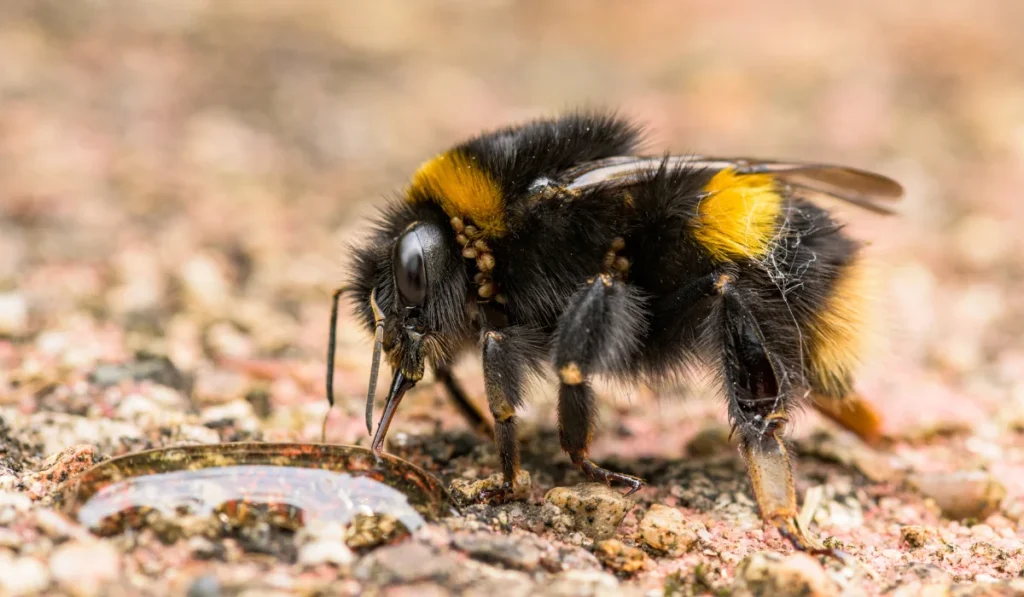
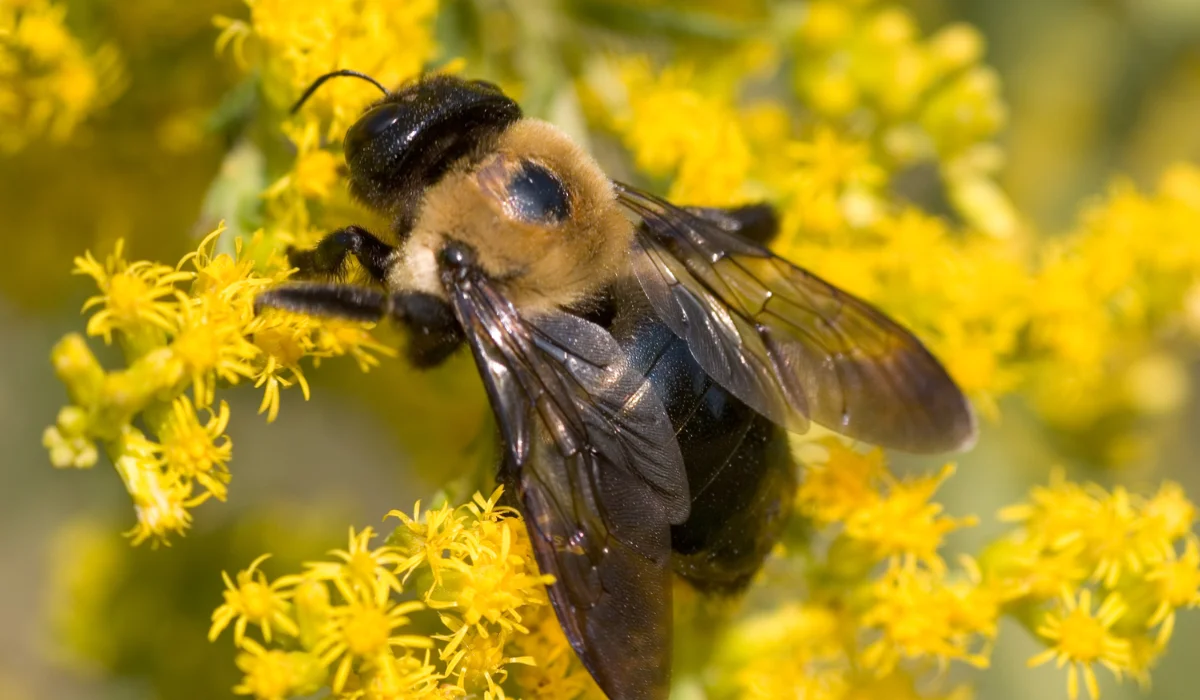
Bumble bees are larger, rounder, and fuzzier than honey bees. They are strong pollinators and often move from flower to flower in gardens, clover, and landscape beds.
Bumble bees may nest in the ground, under debris, or in other sheltered cavities. They are not usually aggressive while foraging, but they can defend a nest if it is disturbed.
You may see bumble bees around:
- Flower beds
- Clover patches
- Vegetable gardens
- Ground openings
- Brushy edges
- Old rodent burrows
- Landscape beds
If a bumble bee nest is far from daily activity, it may not need immediate removal. If it is near a door, walkway, play area, or pet space, the risk is higher.
Carpenter Bees
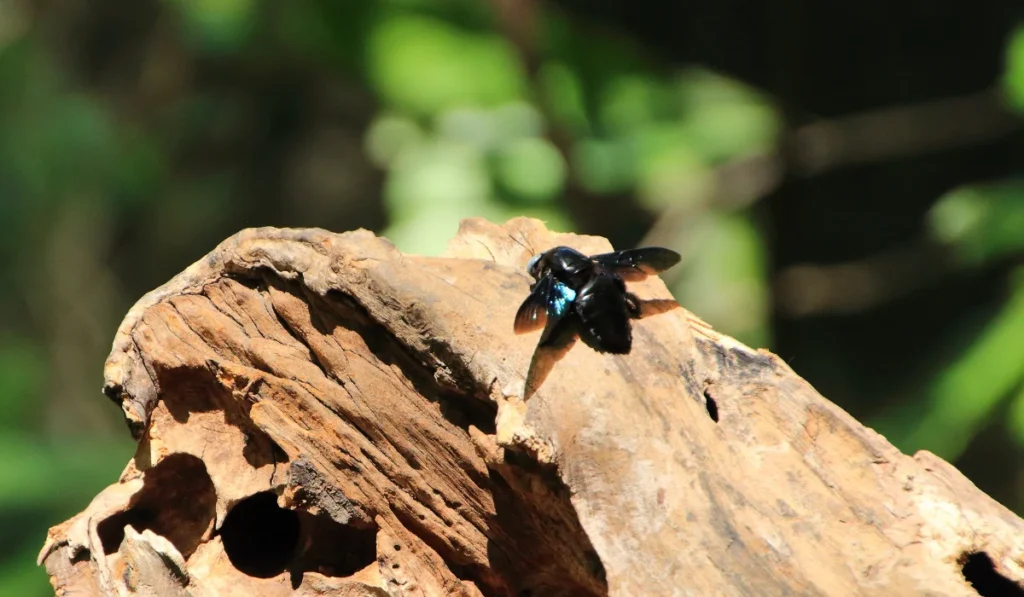
Carpenter bees are often mistaken for bumble bees, but their abdomens are usually shiny and black instead of fuzzy. They are solitary bees, and females bore into wood to create nesting tunnels.
Carpenter bee activity may appear around:
- Deck railings
- Porch ceilings
- Fascia boards
- Eaves
- Sheds
- Fence posts
- Wooden trim
- Pergolas
Michigan State University Extension notes that carpenter bees can damage wood when they choose homes for nesting galleries. They do not eat wood like termites. They tunnel into it to raise their young.
Yellow Jackets

Yellow jackets are not bees, but homeowners often describe them that way. They are compact, fast-moving wasps with black and yellow markings. They can be defensive around nests, especially later in the season.
Yellow jackets may nest:
- Underground
- Inside wall voids
- Near landscape edges
- Around sheds
- Under steps
- In protected structural gaps
A yellow jacket nest near a lawn, garden, door, or patio can become a sting risk quickly. Do not try to block the entrance, because that may push activity into another area or make the nest more defensive.
Paper Wasps
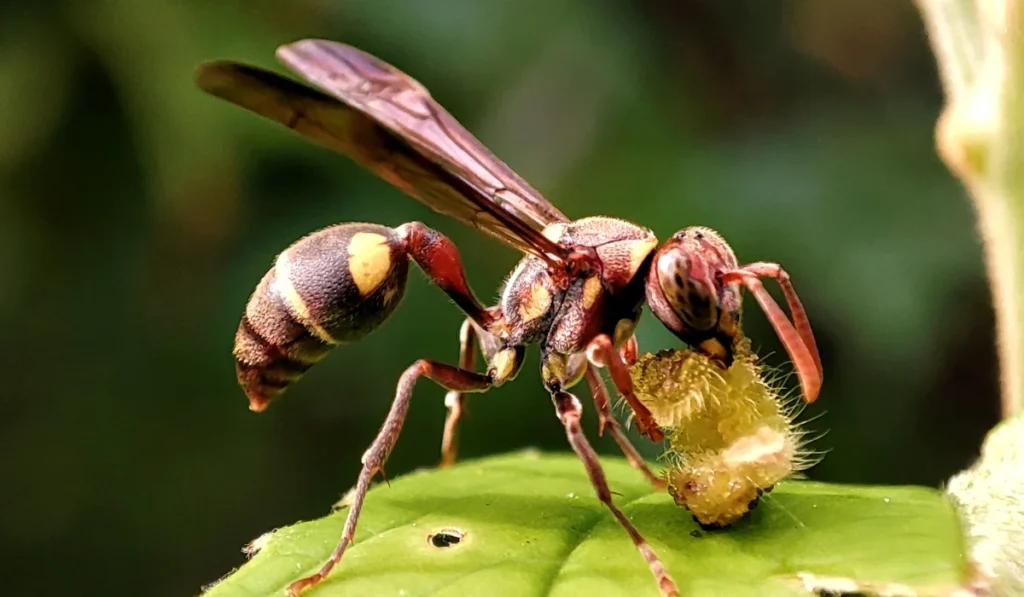
Paper wasps have longer bodies and narrower waists than bees. They often build open, umbrella-shaped nests under eaves, deck rails, porch ceilings, sheds, and outdoor fixtures.
Paper wasps may be less aggressive than yellow jackets when they are not disturbed, but they can sting if someone gets too close to the nest.
Check carefully around:
- Porch ceilings
- Eaves
- Deck undersides
- Railings
- Play equipment
- Sheds
- Outdoor light fixtures
Early nests are easier to address than mature nests later in the season.
Hornets
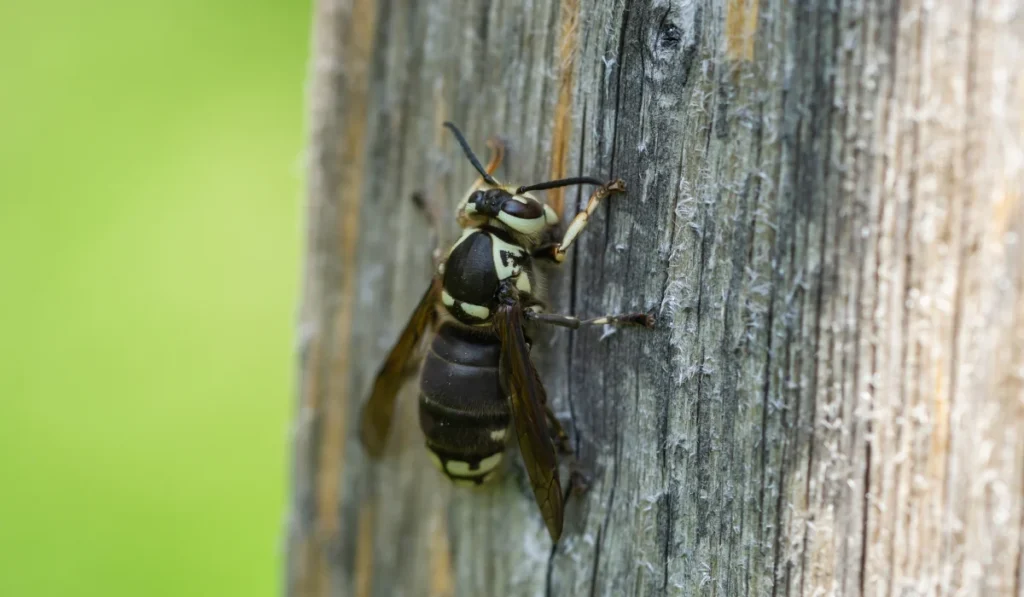
Hornets are also wasps, not bees. They may build larger enclosed paper nests in trees, shrubs, or on structures. Some hornet nests are easy to spot, while others stay hidden until activity increases.
Hornet activity can be concerning when nests are near:
- Walkways
- Doors
- Decks
- Patios
- Play areas
- Shrubs close to the house
- Trees near outdoor living spaces
Michigan State University Extension’s guide to bee, wasp, and hornet nest identification is useful because nest shape and location often help homeowners understand what they may be seeing.
How To Tell What You Are Seeing
You do not need to get close to identify the insect. Watch from a safe distance and focus on behavior, nest location, and where insects are entering or exiting.
Helpful clues include:
- Fuzzy body: more likely a bee
- Shiny black abdomen near wood: possible carpenter bee
- Open paper nest: often paper wasps
- Ground entrance with fast activity: possible yellow jackets
- Large covered paper nest: possible hornets
- Steady movement into a wall or soffit: possible colony or hidden nest
- Activity only on flowers: may be normal pollinator behavior
A photo or short video from a safe distance can help with identification, but do not stand near an active nest to get one.
What Not To Do
Stinging insect problems can become more dangerous when nests are disturbed. The wrong DIY response may increase activity or lead to stings.
Avoid these mistakes:
- Do not swat near the nest.
- Do not block a nest entrance.
- Do not spray randomly into a wall void.
- Do not use a ladder near active insects.
- Do not let pets investigate the area.
- Do not assume every nest is a honey bee nest.
- Do not treat without knowing whether the insects are bees, wasps, or hornets.
If someone has signs of a serious allergic reaction after a sting, seek emergency medical help right away.
When To Call Pest Pros Of Michigan
Call us when bees, wasps, hornets, or yellow jackets are active near areas your household uses often. You should also call if insects are entering a structure, nesting in a wall void, or building in a hard-to-reach area.
Professional service makes sense when:
- Insects are entering and exiting the same spot.
- A nest is near a door, deck, patio, or walkway.
- Activity is close to children or pets.
- You are unsure whether the insect is a bee, wasp, or hornet.
- The nest is in a wall, attic, soffit, or ground opening.
- Someone in the home is allergic to stings.
- Activity is increasing as the season goes on.
Our Kalamazoo wasp and bee control team inspects stinging insect activity and recommends the right approach based on the insect, nest location, and risk around the home.
How We Help With Stinging Insects
Pest Pros of Michigan provides wasp, bee, and stinging insect control for homeowners dealing with nests around eaves, trees, attics, and other problem areas.
Our process focuses on:
- Identifying the insect
- Locating the nest or entry point
- Assessing the risk to people and pets
- Treating or removing the nest when appropriate
- Explaining prevention steps for future activity
We do not treat every bee sighting the same way. Identification comes first.
How To Reduce Nesting Around The Home
You may not prevent every bee or wasp from visiting flowers, but you can reduce common nesting and food sources near the structure.
Helpful steps include:
- Keep trash lids tight.
- Clean food and drink spills outside.
- Store sweet drinks indoors after use.
- Seal gaps around siding, soffits, and trim.
- Repair torn screens.
- Check eaves and porch ceilings in spring.
- Keep shrubs trimmed away from walkways.
- Watch for repeated flight paths into one opening.
Early inspection can prevent a small nest from becoming a larger problem near daily activity.
Schedule Bee And Wasp Control In Kalamazoo
If bees, wasps, hornets, or yellow jackets are active near your Kalamazoo home, we can inspect the area, identify what you are seeing, and recommend the safest next step.
Contact Pest Pros of Michigan to request stinging insect control in Kalamazoo.
Frequently Asked Questions
What Bees Are Common Around Kalamazoo Homes?
Homeowners may notice honey bees, bumble bees, and carpenter bees. They may also mistake yellow jackets, paper wasps, or hornets for bees.
How Can I Tell A Carpenter Bee From A Bumble Bee?
Carpenter bees often have a shiny black abdomen and may hover around wood. Bumble bees are usually fuzzier and are often seen foraging on flowers.
Are Yellow Jackets Bees?
No. Yellow jackets are wasps. They are often more defensive around nests and may nest underground or inside wall voids.
Should I Remove A Bee Nest Myself?
Avoid DIY removal if the nest is active, hidden, large, hard to reach, or close to people and pets. Identification and nest location matter.
When Should Kalamazoo Homeowners Call Pest Pros Of Michigan?
Call when stinging insects are nesting near daily activity, entering the home, building in a wall void, or creating a sting risk around children, pets, or guests.

 Serving Michigan since 2018
 Pest-free guarantee
 Small, local business
 10+ years of pest control experience
 President and CEO of Pest Pros of Michigan
 Resident of Michigan