If you’ve spotted a large gray wasp nest hanging from a tree or under your eaves, you may be dealing with a bald-faced hornet. In Michigan, these aggressive stinging insects are common in summer and early fall.
A bald-faced hornet is not a true hornet. It is a type of yellow jacket. Still, it builds large paper nests and will defend them aggressively. Bald-faced hornet stings can be painful, and in some cases, lead to allergic reactions.
If you want to safely get rid of bald-faced hornets, you need the right approach. Here’s how to identify them, what to avoid, and when to call a professional pest control service.
Key Takeaways
- A bald-faced hornet is a type of yellow jacket that builds aerial paper nests.
- Bald-faced hornets are more aggressive than paper wasps and honey bees.
- DIY nest removal can be dangerous, especially in late summer.
- Professional hornet removal lowers the risk of painful stings.
- Preventive hornet control helps reduce the number of new nests next year.
How to Confirm Bald-Faced Hornets
Bald-faced hornets get mistaken for other stinging insects all the time. A quick ID check helps you judge the risk and choose the safest next step.
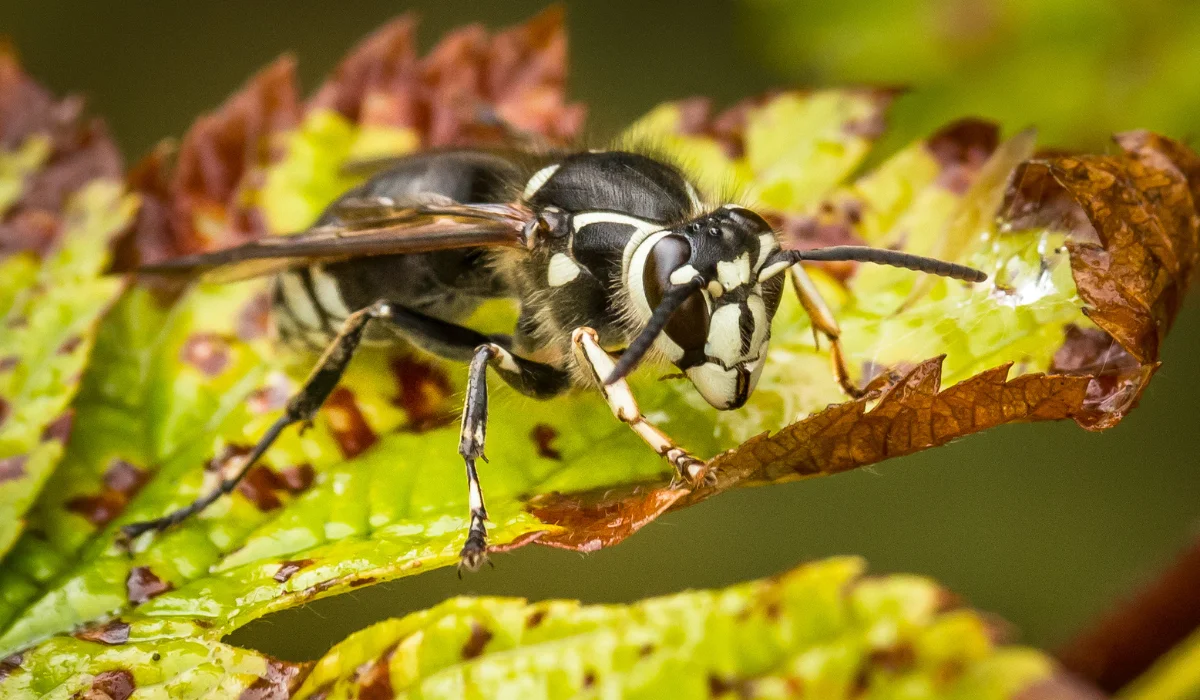
Black Body With White Markings
The bald-faced hornet is easy to spot. It has a black body with distinct white markings on its face and thorax. These white markings give it a “bald” look.
Unlike fuzzy, golden honey bees, bald-faced hornets are smooth and shiny. They are larger than most paper wasps and carpenter bees.
Large Gray Paper Nests
A bald-faced hornet nest is usually round or football-shaped. These paper nests hang from trees, overhangs, soffits, and eaves. They are often called aerial nests because they are built above ground.
This is different from a yellow jacket nest, which is often found underground. If you see a large gray wasp nest attached to a branch or building, it is likely a bald-faced hornet nest.
Aggressive Behavior Near the Nest
Bald-faced hornets are protective of their nest. If you get too close, they may swarm and sting. Their stinger does not get stuck like a honey bee’s, so they can sting multiple times.
In late summer, colonies are larger and more defensive. An infestation at this stage can include hundreds of adults and developing larvae inside the nest.
Safe Ways to Deal With Nests
When bald-faced hornets are involved, safety comes first. The wrong move can trigger a fast defensive response, especially when the colony is large.
Keep Your Distance
The safest way to deal with a bald-faced hornet nest is to avoid it. Do not shake the tree, spray water, or throw objects at the wasp nest. This will trigger a defensive response.
If the nest is far from doors and walkways, it may be safer to leave it alone until cold weather arrives.
Understand Their Life Cycle
The life cycle of a bald-faced hornet starts in spring. A single queen builds a small nest and lays eggs. Workers hatch and expand the nest through summer.
By late summer, the colony is at its largest. In the fall, new queens leave the nest to overwinter. The rest of the colony dies after the cold weather. The old nest is not reused next year.
Understanding this life cycle helps you decide if nest removal is urgent.
Use Caution With Store-Bought Sprays
Some homeowners try DIY methods using store-bought wasp sprays. Even when products are labeled for nests, this approach carries real risk.
Spraying a bald-faced hornet nest without proper protection can lead to painful stings. In some cases, disturbed hornets may enter wall voids or soffits, worsening the situation.
For nests near doors, windows, or in areas with heavy foot traffic, a licensed exterminator is the safer choice.
When DIY Isn’t Worth the Risk
Some situations should be treated as “call a pro now” scenarios, especially in Michigan when nests peak in late summer.
The Nest is Near the Entry Points
If a bald-faced hornet nest is under eaves, near soffits, or close to doors, the risk increases. People passing by may trigger an attack.
Commercial properties and apartment buildings should not rely on DIY solutions. Professional hornet control protects tenants, employees, and customers.
Someone Has Allergic Reactions
If anyone in your home has a history of allergic reactions to stinging insects, do not attempt nest removal yourself. Bald-faced hornet stings can cause swelling, breathing problems, or worse.
A trained pest control company has the tools and safety gear to reduce the risk.
The Infestation is Large
Large aerial nests in late summer can house hundreds of hornets. At this stage, DIY treatment is especially dangerous.
A professional pest control service can assess the infestation and apply targeted products safely.
Preventing Repeat Nesting Near Home
Once the immediate nest issue is handled, prevention helps reduce future problems with hornets, wasps, and other stinging insects.
Seal Gaps and Cracks
After hornet removal, seal gaps around soffits, eaves, and overhangs. This helps prevent other stinging insects from nesting in protected areas.
Also, check wall voids for openings that could attract other pests, such as termites.
Remove Attractants
Keep trash sealed and outdoor eating areas clean. While bald-faced hornets are predators, they may still be drawn to food sources.
Regular pest control services can help keep your property pest-free year-round.
Schedule Seasonal Inspections
Spring inspections can catch small new nests before they grow. Early action makes hornet control easier and safer.
In Michigan, it is also wise to inspect for other stinging insects such as yellow jackets, paper wasps, and even carpenter bees.
Book Bald-Faced Hornet Removal in Michigan
If you need to get rid of bald-faced hornets safely, do not take chances. Bald-faced hornet nest removal can quickly turn dangerous without proper equipment and experience.
Pest Pros of Michigan provides professional hornet removal and hornet control services for homeowners and commercial properties. Our exterminator team handles bald-faced hornet infestations, yellow jackets, and other stinging insects with care.
We offer a free quote and can walk you through the safest solution for your property. Contact us to schedule your service and keep your home pest-free.
FAQs
Are bald-faced hornets the same as yellow jackets?
They are closely related. A bald-faced hornet is actually a type of yellow jacket. However, it builds aerial paper nests instead of underground nests.
Do bald-faced hornets reuse their nest next year?
No. After cold weather, the colony dies. Only new queens survive to overwinter in protected spots. They build new nests next year.
Is it safe to spray a wasp nest at night?
While hornets are less active at night, DIY spraying still carries risk. A professional exterminator is the safest option for large or hard-to-reach nests.

 Serving Michigan since 2018
 Pest-free guarantee
 Small, local business
 10+ years of pest control experience
 President and CEO of Pest Pros of Michigan
 Resident of Michigan