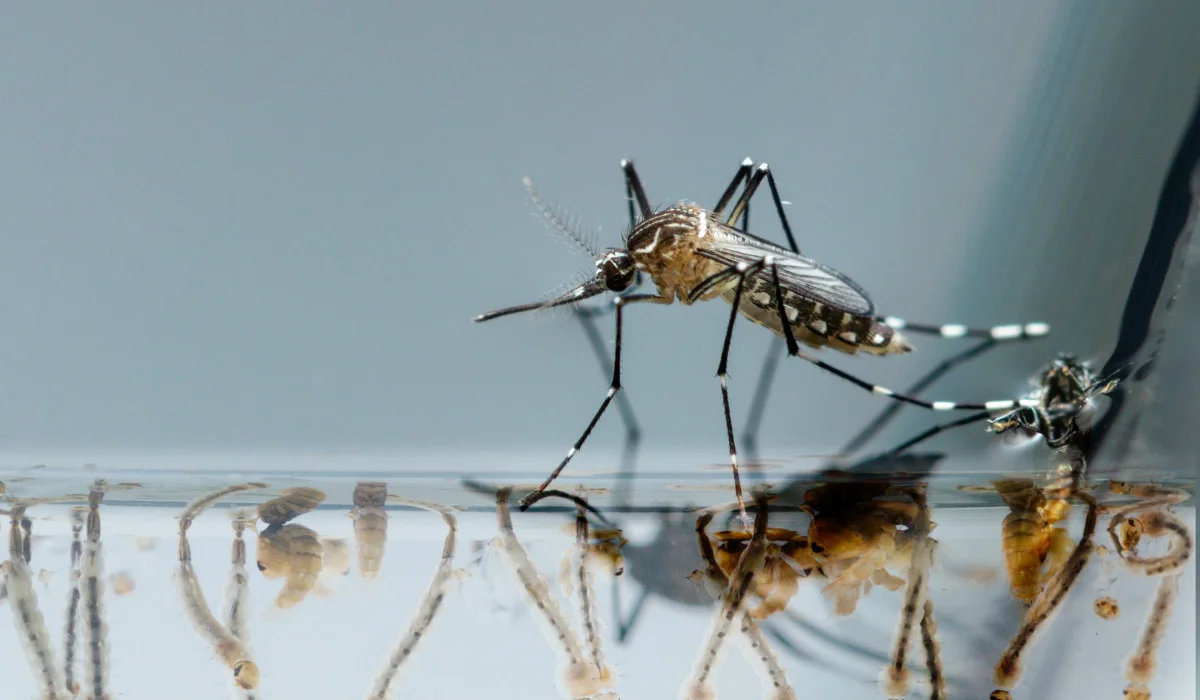
Mosquitoes around Southwest Michigan homes usually come from standing water, shaded resting areas, dense vegetation, clogged gutters, containers, low spots, or nearby wooded and wet areas. Some are most active around dusk. Others can bite during the day and breed in small amounts of water close to the house.
The right control plan starts with where mosquitoes are developing. Emptying a birdbath may help one problem, while yard treatments, drainage fixes, or seasonal service may be needed when activity keeps returning across patios, decks, and lawn areas.
Key Takeaways
- Mosquitoes need water for their immature stages.
- Containers, low spots, ditches, ponds, and wooded areas can support activity.
- Different mosquito groups behave differently around homes.
- Standing-water removal is one of the most useful prevention steps.
- Professional service helps when bites continue after basic cleanup.
Why Mosquito Identification Matters
Most homeowners do not need to identify mosquitoes down to the species. What matters more is the habitat. Mosquitoes develop in water, but not all mosquitoes use the same kind of water source.
Michigan State University Extension explains that Michigan pest mosquitoes can be grouped by larval habitat. That means the water source often tells us more than the adult mosquito itself.
Around a Southwest Michigan home, mosquito activity may come from:
- Buckets, flowerpot saucers, tires, or toys
- Birdbaths and pet bowls
- Low areas that hold water after rain
- Clogged gutters
- Drainage ditches
- Ponds or marshy edges
- Tree holes and shaded wooded spots
- Thick vegetation where adults rest
A good mosquito plan looks at the yard, not only the insects flying around it.
Container-Breeding Mosquitoes
Container-breeding mosquitoes develop in small water-holding items around homes. These are some of the most preventable mosquito problems because the source is often on the property.
Check for water in:
- Buckets
- Flowerpot saucers
- Tarps
- Toys
- Wheelbarrows
- Birdbaths
- Pet bowls
- Old tires
- Clogged gutters
- Trash can lids
- Outdoor furniture covers
Even a small amount of standing water can support mosquito development if it sits long enough. Walk the yard after rain and dump anything holding water. Scrub containers when needed, because mosquito eggs can remain attached to surfaces.
Floodwater Mosquitoes
Floodwater mosquitoes develop after water temporarily collects in low areas. In Southwest Michigan, these can become noticeable after heavy rain, seasonal wet periods, or drainage problems around the yard.
Possible sources include:
- Low lawn areas
- Ditches
- Ruts
- Poorly draining soil
- Water along fence lines
- Temporary pools near sheds or outbuildings
- Depressions near driveways or patios
These mosquitoes can be frustrating because the source may dry out, then return after the next rain. If the same area keeps holding water, grading, drainage, or landscape changes may help reduce recurring activity.
Permanent-Water Mosquitoes
Some mosquitoes develop in water sources that stay wet for longer periods. These areas can be harder for homeowners to eliminate, especially when they are connected to ponds, marshy edges, drainage areas, or nearby habitat.
Common places include:
- Ponds
- Drainage ditches
- Retention areas
- Wetland edges
- Slow-moving water
- Long-standing puddles
- Water features without movement
Michigan’s West Nile virus guidance recommends preventing mosquito bites and reducing mosquito breeding areas around the home. For permanent water that cannot be dumped or drained, the right approach may involve maintenance, water movement, or professional guidance.
Woodland And Tree-Hole Mosquitoes
Wooded lots and shaded yards can support mosquitoes in less obvious places. Tree holes, damp leaf litter, shaded containers, and natural depressions can hold water and provide resting areas.
These mosquitoes may be more noticeable when a yard backs up to woods, has dense shrubs, or has shaded areas that stay damp after rain.
Look for:
- Tree holes that collect water
- Dense shrubs near patios
- Leaf piles
- Shaded containers
- Damp woodpiles
- Overgrown edges
- Low spots under trees
- Yard clutter that traps water
You may not be able to remove every natural source, but trimming vegetation, removing debris, and reducing water-holding items near the home can help.
What To Do First Around Your Home
Start with a simple yard check. Mosquito prevention works best when small sources are removed before adult numbers build up.
Use this checklist:
- Empty standing water at least once a week.
- Clean birdbaths and refill them with fresh water.
- Clear clogged gutters.
- Store buckets, toys, and containers upside down.
- Repair leaky outdoor faucets.
- Keep grass and vegetation trimmed near patios.
- Remove leaf piles and yard debris.
- Check tarps, covers, and outdoor furniture after rain.
- Keep screens in good repair.
These steps reduce breeding sites and make the yard easier to inspect.
How To Reduce Bites During Mosquito Season
Source reduction helps, but adults may still fly in from nearby areas. Personal protection matters when mosquito activity is heavy, especially in the evening or around shaded, damp spaces.
Helpful steps include:
- Wear long sleeves and pants when mosquitoes are active.
- Use an EPA-registered repellent and follow the label.
- Keep window and door screens repaired.
- Use fans around patios when practical.
- Avoid leaving doors open during peak activity.
- Keep outdoor gatherings away from dense vegetation.
- Empty water before hosting outdoor events.
The Michigan Department of Health and Human Services recommends preventing mosquito bites to reduce West Nile virus risk, including repellents and reducing exposure when mosquitoes are active.
Why Traps And Sprays May Not Be Enough
A trap may catch some mosquitoes, and a spray may reduce adult activity for a time, but neither solves every breeding source on its own. If standing water stays in the yard, new mosquitoes can keep developing.
Common reasons mosquito activity returns include:
- Containers were missed.
- Gutters still hold water.
- Low spots refill after rain.
- Nearby properties or wooded areas contribute activity.
- Dense vegetation gives adults resting places.
- Water features are not maintained.
- Treatments are not timed to the season.
The most reliable plan combines inspection, source reduction, treatment, and follow-up.
How We Help With Mosquito Control
Our mosquito, flea, and tick control service starts with a property inspection to identify breeding grounds and high-risk areas. From there, we recommend a treatment plan based on the yard conditions and the level of activity.
For Southwest Michigan homes, that may include treating adult resting areas, addressing developing mosquito populations where appropriate, and pointing out water sources that should be removed or corrected.
We focus on the areas where mosquitoes are most likely to affect how you use the yard, including patios, decks, shaded edges, play areas, and outdoor gathering spaces.
When To Call Pest Pros Of Michigan
Call us when mosquitoes keep biting after you have emptied containers, cleaned gutters, trimmed vegetation, and checked obvious water sources. Recurring activity often means there are breeding or resting areas that are easy to miss.
Professional service makes sense when:
- Mosquitoes are active across the yard.
- Bites continue around patios or decks.
- You have nearby wooded or wet areas.
- Standing water keeps returning after rain.
- You are planning outdoor gatherings.
- You want help identifying breeding hotspots.
- You need a seasonal mosquito plan.
Pest Pros of Michigan also lists mosquito, flea, and tick control as an additional service for homeowners, with service options that can be bundled with broader pest control plans.
Schedule Mosquito Control In Southwest Michigan
If mosquitoes are keeping you from using your yard, we can inspect the property, identify problem areas, and recommend a control plan that fits your home.
Contact Pest Pros of Michigan to request mosquito service in Southwest Michigan.
Frequently Asked Questions
What Mosquitoes Are Most Common Around Southwest Michigan Homes?
Homeowners are most likely to notice mosquitoes tied to containers, temporary rainwater, permanent water, and wooded or shaded areas. The water source is often the best clue.
Why Are Mosquitoes So Bad After Rain?
Rain can fill low spots, buckets, gutters, toys, tarps, and other containers. If that water sits, mosquitoes can use it for development.
Can Mosquitoes Breed In Small Amounts Of Water?
Yes. Small containers can support mosquito development if water remains long enough. Check flowerpot saucers, lids, toys, buckets, and clogged gutters.
Do Mosquito Treatments Replace Yard Cleanup?
No. Treatments work better when standing water and resting areas are also addressed. Cleanup helps reduce the source of future activity.
When Should I Call Pest Pros Of Michigan?
Call when mosquitoes keep returning after basic cleanup, bites are heavy around patios or decks, or you need help finding breeding and resting areas around the property.

 Serving Michigan since 2018
 Pest-free guarantee
 Small, local business