Flies in Michigan homes often come down to four common situations: house flies developing around waste, fruit flies using fermenting food or drink residue, drain flies breeding in organic buildup inside plumbing, or cluster flies entering the structure for winter. Each requires a different response. If flies keep showing up in a Kalamazoo, Grand Rapids, or other West Michigan home, identify the fly first, then inspect the places that species is most likely to use.
Common Flies in Michigan and Where to Look First
Appearance alone does not always tell you what is happening. Where the flies gather and when they appear can be just as useful. Tiny flies around recycling suggest a different problem from fuzzy flies near a basement drain or sluggish flies collecting on an upstairs window in October.
| Type of Fly | Quick ID | Where You Often See It | Where to Inspect |
| House fly | Familiar medium-sized fly | Kitchens, windows, trash areas | Garbage, food waste, manure, and other decaying organic material |
| Fruit fly | Very small, usually tan or brown | Produce, recycling, sinks, and beverage areas | Fermenting food, drink residue, recycling, and hidden spills |
| Drain fly | Tiny, fuzzy, moth-like fly with weak flight | Sinks, showers, floor drains, and utility areas | Organic sludge inside drains and other wet plumbing areas |
| Cluster fly | Larger, slow-moving fly | Sunny windows, attics, and upper floors | Exterior gaps leading to attics and wall voids |
Use the table as a starting point rather than assuming every fly near a sink is a drain fly or every fly at a window is a house fly. The location should lead to an inspection of the material or opening most closely associated with that type.
House Flies in Michigan: Check Waste and Decaying Material
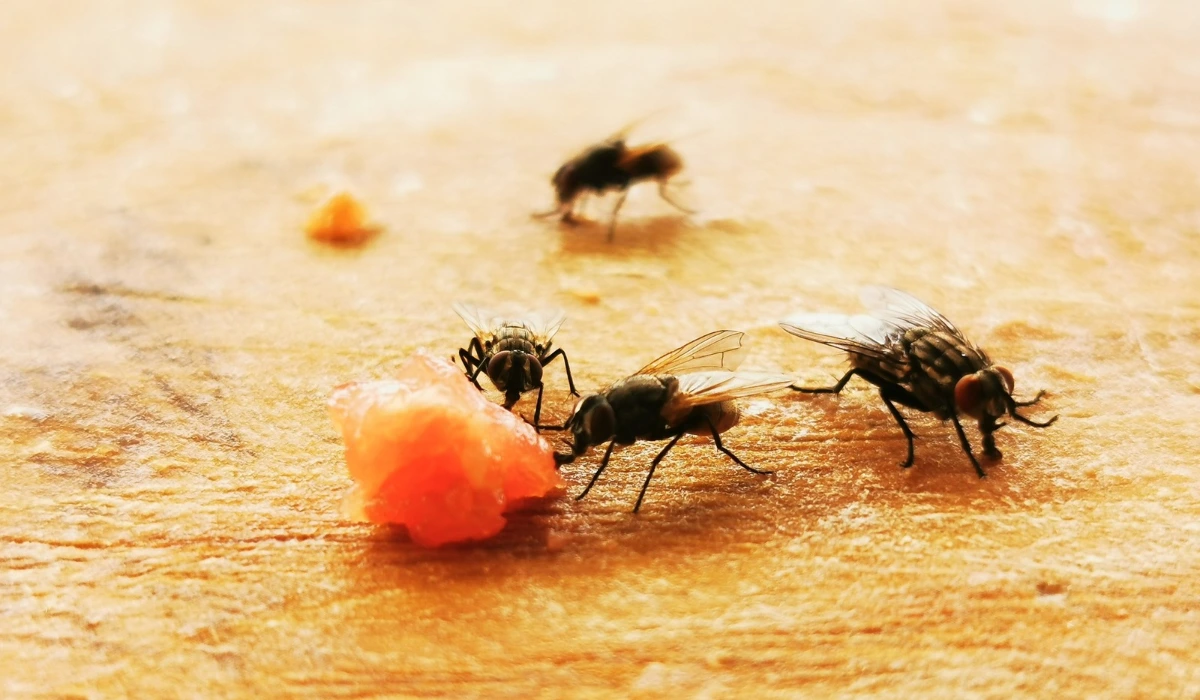
House flies are the familiar flies that move quickly through kitchens, windows, garages, and trash areas. When they continue to appear, inspect places where garbage, food scraps, pet waste, manure, or other decaying organic material may be available.
Outdoor trash cans deserve attention because residue can collect even when bags are removed regularly. The same applies to compost, pet cleanup areas, and places where food waste sits before disposal. Indoors, keeping food covered and cleaning spills helps, but sanitation should extend beyond the countertop.
Why Removing Adult Flies Is Not Enough
A fly swatter, trap, or other adult-control method may reduce the number moving through the room. It does not remove waste where more flies can develop. Cleaning containers, managing food scraps, and removing pet waste address the material supporting the infestation.
House flies also matter around food preparation areas. A peer-reviewed BMC Public Health systematic review of human pathogens carried by house flies examined microorganisms carried by house flies and their potential role in moving them between contaminated materials and human environments. Keep flies away from uncovered food, dishes, and preparation surfaces while correcting the sanitation issue that is drawing them in.
When Cleaning the Kitchen Does Not Fix It
Repeated house flies do not automatically mean the breeding material is in the kitchen. Trash storage, pet waste, compost, or other organic material outside the living area may be involved.
If routine cleaning changes nothing, follow where the flies appear most often. A concentration near a door, garage, or trash area may lead you to a different part of the property than flies repeatedly appearing around food preparation spaces.
Fruit Flies in Michigan: Find the Fermenting Material
Fruit flies are much smaller than house flies and frequently show up around produce, recycling, sinks, trash cans, and beverage areas. Overripe fruit and vegetables are familiar sources, but they are only part of the picture.
Fruit flies can also develop around residue from juice, soda, beer, wine, and other foods or drinks. Dirty dish rags, sticky recycling containers, mop buckets, drain residue, and spills beneath appliances can support them even when the kitchen looks clean.
Check the Places Routine Cleaning Misses
If fruit flies return after you wipe down the counters and remove old produce, inspect less obvious areas. Look beneath and beside appliances, rinse cans and bottles before they sit in recycling, clean the inside and underside of trash lids, and check for sticky residue around sinks or beverage storage.
University of Kentucky Entomology includes small household flies among its extension pest resources. With fruit flies, the practical lesson is to find the material where they are developing, which may be small enough to overlook during everyday cleaning.
Traps Catch Adults, Not the Cause
Vinegar traps may capture adult fruit flies, but they do not remove fermenting residue. If flies continue appearing, keep looking for the breeding material rather than adding more traps.
Pay particular attention to produce storage, recycling, trash, dish rags, drink residue, and food buildup around drains. Once the material is removed and the area is cleaned, there is less available for the next generation of flies to use.
Drain Flies in Michigan: Clean More Than the Drain Opening
Drain flies are small, fuzzy flies with hairy wings that give them a moth-like appearance. They are weak fliers and are often found resting on walls near sinks, showers, floor drains, basement plumbing, and utility areas.
Their breeding material is usually not sitting on the visible surface of the sink. Drain flies develop in sludge and organic buildup inside pipes and other wet areas associated with plumbing. Slow drains, seldom-used fixtures, drain pans, leaks, and standing water are all worth checking.
Hot Water Does Not Remove Every Drain-Fly Source
Running hot water down a drain can move loose debris, but it may leave attached organic buildup behind. If that material remains inside the pipe, the conditions supporting drain flies remain as well.
Cleaning should remove the organic material rather than simply flush the opening. Leaks and slow drainage also need attention because they can keep damp areas available after the visible drain has been cleaned.
Recurring Drain Flies Can Narrow the Search
If drain flies continue appearing in the same room, inspect more than the most obvious sink. Floor drains, unused fixtures, drain pans, and nearby plumbing can hold buildup or moisture that goes unnoticed.
Repeated flies in one area give you a useful boundary for the inspection. Trace the problem through the nearby plumbing and moisture sources instead of treating each adult on the wall as a separate event.
Cluster Flies in Michigan: Fall Activity Has a Different Cause
Cluster flies are different from the other flies covered here because indoor sanitation is not their main issue. Their immature stages are associated with earthworms outdoors. As cooler weather arrives, the adults seek protected places where they can spend the winter.
That behavior brings them into attics, wall voids, and other sheltered parts of homes. Cluster flies in Michigan often become noticeable only after slow-moving adults reach windows or finished rooms.
Watch Upper Windows and Sunny Areas
Cluster flies move more slowly than house flies and commonly gather around windows, including sunny windows on upper floors. That combination of season, location, and movement helps separate them from flies developing around kitchen waste.
Regional guidance from University of Minnesota Extension also describes cluster flies as insects associated with earthworms outdoors that use buildings as overwintering sites. That biology explains why cleaning drains or removing produce does not solve a cluster-fly problem.
Fall Is the Time to Focus on Entry Points
As temperatures cool, gaps around siding, rooflines, windows, vents, and utility penetrations can provide access to protected areas of the structure. This is why fall cluster-fly activity calls for more attention to exclusion than indoor sanitation.
Once adults have settled inside an attic or wall void, removing the flies that reach a window does not close the route they used. Inspecting and sealing likely openings before the next fall migration addresses the part of the problem homeowners can prevent.
Winter Sightings Do Not Always Mean Indoor Breeding
Cluster flies can remain inside walls and attics through cold weather. When indoor temperatures rise, some may become active and move toward windows.
Slow-moving flies appearing at an upstairs window in winter may be adults that entered months earlier. The seasonal pattern matters because it changes where you should spend your time looking.
How to Prevent Common Flies Around the Home
Prevention works best when it matches the fly. House flies and fruit flies call for better control of food waste and organic residue. Drain flies require attention inside plumbing. Cluster flies make exterior maintenance more relevant.
Good housekeeping helps across all four, but each type has one area that deserves extra attention.
Manage Food, Trash, and Pet Waste
Keep indoor and outdoor trash containers closed, and wash them when residue accumulates. Remove pet waste regularly, discard spoiled produce, rinse food and drink residue from recycling, and clean sticky spills rather than allowing them to dry unnoticed.
Check beneath appliances and around trash or recycling containers during deeper cleaning. These are easy places for residue to remain after the visible surfaces have been wiped down.
Maintain Drains and Fix Moisture Problems
Slow drains, leaks, standing water, and seldom-used fixtures should not be ignored when small flies are present. Clean organic buildup from drains and correct the moisture issue that allowed it to persist.
If flies continue after one drain has been cleaned, expand the inspection to nearby plumbing rather than repeatedly treating the same opening.
Repair Screens and Seal Exterior Gaps
Torn screens, gaps around pipes and vents, and openings around windows or doors can allow flies inside from outdoors. Repairing these areas helps reduce general fly entry and is especially useful before cluster flies begin seeking winter shelter.
For homeowners who have dealt with cluster flies before, late-season exclusion work is more relevant than extra kitchen cleaning. The insects are looking for a protected place to spend winter, not a food source inside the home.
Sanitation and Exclusion Solve Different Parts of the Problem
Sanitation removes material that indoor-breeding flies use. Exclusion limits access for flies entering from outside. Some homes need both.
| Approach | Most Relevant For | What It Addresses |
| Sanitation and breeding-source removal | House flies, fruit flies, and drain flies | Food waste, fermenting residue, drain buildup, pet waste, and other organic material |
| Screening and structural exclusion | Cluster flies and other flies entering from outdoors | Gaps around doors, windows, vents, siding, rooflines, and utility openings |
The distinction keeps the response practical. A drain-fly problem needs plumbing attention. Cluster flies in an attic call for exterior inspection. Fruit flies around recycling call for sanitation where fermenting residue remains.
When Recurring Flies Suggest a Hidden Source
Flies that continue appearing after routine cleaning deserve a closer look, especially when they keep showing up in the same room. Hidden breeding areas can include drains, wall voids, spaces beneath appliances, and waste areas that are easy to miss.
Use the fly itself to narrow the inspection. Fruit flies keep the focus on fermenting residue. Drain flies shift it toward plumbing and moisture. House flies warrant a closer look at waste and decaying material. Cluster flies appearing in fall or winter make attics, wall voids, and exterior gaps more relevant.
If the visible areas are clean and the flies still return, continuing to remove adults is unlikely to answer where they are coming from. At that point, accurate identification and a more detailed inspection can save time by ruling out the wrong areas.
Managing Flies in Michigan Starts With Identifying the Cause
House flies, fruit flies, drain flies, and cluster flies can all end up inside a Michigan home, but they do not get there or reproduce in the same way. The fastest route to control is to match the fly with the place it is most likely using, then remove the breeding material or close the entry point.
For homeowners in Kalamazoo, Grand Rapids, and surrounding West Michigan communities, Pest Pros of Michigan can help identify recurring fly problems and track down breeding or entry areas that are difficult to locate. If flies keep returning after you have cleaned, checked drains, and inspected likely entry points, contact Pest Pros of Michigan to request help with your property.

 Serving Michigan since 2018
 Pest-free guarantee
 Small, local business