
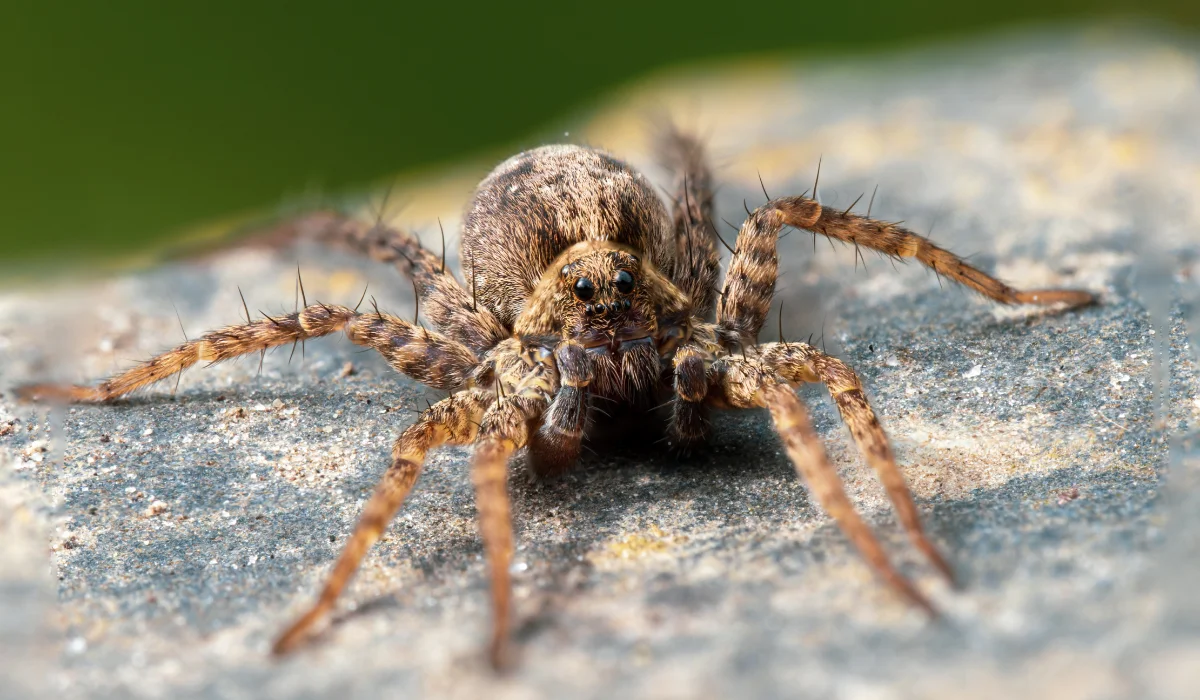
Finding a spider in the basement can stop you in your tracks, especially when it is large, fast, or unfamiliar. You may want to know what kind of spider it is, whether it can hurt someone, and why it keeps showing up around the house.
Spiders in Michigan have plenty of places where they can thrive, from wooded yards and gardens to garages, crawl spaces, and unfinished basements. Some species build webs and stay close to one location. Others hunt on foot and may wander inside while following insects or looking for shelter.
It is not necessary to identify every spider on sight. What matters is where you found it, how it behaves, and whether the activity keeps coming back. This guide covers the common spiders Michigan homeowners notice, the species that deserve more caution, why spiders move indoors, and what you can do when they become a regular problem.
What Are the Most Common Spiders in Michigan?
The common spiders in Michigan do not all look or behave alike. Some wait in webs for insects to pass by. Others hunt on foot, which is why you may suddenly see one running across a garage floor instead of sitting quietly in a corner.
When you are trying to narrow down the types of spiders in Michigan around your home, start with behavior and location. Color alone can be misleading. Several unrelated spiders are brown, gray, or dark enough to look similar from a few feet away.
| Spider Group | What You May Notice | Where You May Find It |
| Wolf spiders | Stocky brown or gray body, fast movement, no prey-catching web | Basements, garages, patios, ground-level rooms |
| Jumping spiders | Compact body, quick short movements, active during daylight | Windows, siding, decks, exterior walls |
| Orb-weavers | Large circular web with an organized pattern | Porches, shrubs, gardens, exterior lights |
| Cellar spiders | Small body with very long, thin legs | Basement ceilings, crawl spaces, utility areas |
| Funnel weavers | Flat web leading into a funnel-shaped hiding spot | Window wells, lawns, landscaping, foundation edges |
| Cobweb spiders | Loose, irregular web in a protected location | Garages, sheds, basement corners, storage rooms |
The University of Minnesota Extension explains that spiders feed on insects and other small arthropods. For you as a homeowner, that helps explain why spider activity often shows up around porch lights, basement windows, or garage doors where prey is already present.
Why Wolf Spiders Get Noticed
Wolf spiders stand out because they move. They hunt instead of relying on a large web to catch food, so you may see one cross a basement floor, patio, or garage while you are using the space.
Their speed and size can make them look more threatening than they are. A large brown spider is not automatically a dangerous species, and size by itself tells you very little about risk.
Why Web-Building Spiders Return to the Same Spot
If a web keeps appearing beside the same window or light fixture, look at what is happening there after dark. Moths, flies, and other insects may be gathering nearby, giving a spider an easy place to feed.
Taking down a web clears the immediate problem. If the same corner still offers shelter and regular prey, another spider can take over the site.
Which Spiders in Michigan Deserve More Caution?
Most Michigan spiders you encounter around the house are more of a nuisance than a medical concern. Still, you should avoid handling an unfamiliar spider with bare hands, especially when you cannot identify it.
People often search for poisonous spiders in Michigan, but venomous is the more accurate term. Spiders use venom through their fangs to subdue prey. The more useful question is which venomous spiders in Michigan can cause symptoms that require medical attention.
| Situation | What You Should Know |
| Small spider in a corner web | Usually a nuisance or identification issue |
| Large brown spider on the floor | Color and size do not establish danger |
| Widow-like spider in a sheltered area | Avoid handling and seek identification |
| Unfamiliar spider in boxes or firewood | Wear gloves and avoid reaching into hidden spaces |
| Painful bite with worsening symptoms | Get medical guidance instead of identifying the spider from the skin mark |
Black Widow Spiders
The black widow is one of the dangerous spiders in Michigan that homeowners should recognize. Adult females are commonly identified by a glossy dark body and a red hourglass-shaped marking on the underside of the abdomen.
You are more likely to encounter a black widow spider in a Michigan outbuilding, woodpile, utility area, or other sheltered location than in the middle of a busy room. Stored materials deserve extra care because your hands may enter a hidden space before you can see what is inside.
The Centers for Disease Control and Prevention (CDC)’s guidance on venomous spiders notes that black widow bites can cause pain, muscle cramping, sweating, nausea, and weakness. If you think someone was bitten, medical guidance is more useful than trying to judge the bite from its appearance.
What About Brown Recluse Spiders?
Questions about a brown recluse in Michigan usually start with the same observation: “I found a brown spider.” Unfortunately, brown coloring is not enough for a reliable identification.
Wolf spiders, funnel weavers, and other spiders found around homes can look similar in poor lighting or blurry phone photos. A proper identification depends on physical features, not simply size or color.
If you find a spider that concerns you, photograph it from a safe distance. Do not handle it just to get a closer picture.
Why Do Spiders in Michigan Get Inside Homes?
When spiders in Michigan keep turning up indoors, check three things around the house: access, prey, and shelter. A worn garage seal can provide access. Crickets or flies provide food. Boxes, shelving, and quiet basement corners provide cover.
That combination is common in garages, unfinished basements, crawl spaces, and storage rooms. These places stay relatively quiet and often sit close to exterior entry points.
| What You Notice | What May Be Happening | What to Check |
| Spiders near basement windows | Insects or spiders may be entering around the frame | Screens, frame gaps, window wells |
| Webs around porch lights | Flying insects are gathering there at night | Light placement and nearby doors |
| Spiders along garage walls | Ground-level access and storage provide cover | Bottom seal, wall edges, stored boxes |
| Activity near pipes or cables | Openings may provide entry | Exterior utility penetrations |
| Spiders plus crickets or flies | Prey is available indoors | Moisture, entry points, insect activity |
| Repeated activity in storage | Spiders have long periods without disturbance | Cardboard, shelving, clutter |
House spiders in Michigan can become more noticeable as the seasons change. By late summer and fall, some spiders have grown large enough to catch your attention, and males of certain species spend more time roaming in search of mates.
A wooded lot or heavily landscaped yard can also support plenty of insects outside. If those insects collect around your foundation, windows, or exterior lighting, spiders have good hunting opportunities close to the house.
Does One Spider Mean You Have a Spider Infestation?
One spider on the basement wall is not enough to call the situation a spider infestation. It could have wandered through an open door, entered with something stored in the garage, or followed prey through a gap.
Patterns are more useful. Watch for new webs appearing soon after old ones are removed, several egg sacs, sightings across multiple rooms, or spiders showing up every few days. Those signs suggest your home is providing conditions that support continued activity.
You may also see many tiny spiders in one concentrated area. That can happen when an egg sac hatches nearby. Instead of assuming dozens of spiders entered from outdoors at once, check the surrounding corner, shelving, or storage for additional webbing or egg sacs.
Other pests give you another clue. Regular sightings of crickets, flies, moths, ants, or small beetles mean spiders have food nearby. If you are wondering why spiders are in your house, the insects they are hunting can be part of the answer.
How Can You Keep Spiders Out of Your House?
If you want to know how to keep spiders out of your house, start at the exterior instead of chasing individual spiders indoors. Look at garage seals, screens, foundation gaps, window wells, door sweeps, and openings around utility lines.
Check the garage door after dark. If you can see daylight or an obvious gap along the bottom or sides, spiders and insects may have a direct path inside.
Reduce the Insects Spiders Hunt
Exterior lighting is worth checking because flying insects often gather around fixtures after sunset. A light mounted beside a door can put insects and spiders close to the same entry point.
You do not need to remove every exterior light. Turn off unnecessary fixtures when they are not needed, and pay attention to locations where insects consistently gather.
Clear Indoor Hiding Areas
If you are researching how to get rid of spiders, vacuuming accessible spiders, webs, and egg sacs is a useful starting point. Check ceiling corners, basement windows, shelving, utility rooms, and the edges of garage walls.
Storage matters too. A stack of cardboard boxes that has not moved in a year gives spiders plenty of sheltered edges. Organizing those spaces makes it easier for you to spot new activity before it builds up.
Check the Area Outside the Foundation
Branches touching siding, thick shrubs along the foundation, firewood against the house, and stored materials beside the garage give spiders protected places close to the structure.
You do not need to remove your landscaping. Leave enough space to inspect the foundation and siding, and clear out webbing when you find it.
When Does Spider Control in Michigan Make Sense?
Professional spider control in Michigan makes more sense when the same webs keep returning, you find several egg sacs, spiders appear throughout the house, or another insect problem is giving them a steady food supply. At that point, dealing with each visible spider separately may not change the conditions behind the activity.
A pest professional can inspect the places you may overlook during normal cleaning, including garage seals, utility penetrations, basement windows, storage areas, exterior web sites, and locations where prey insects are active. That gives you a better chance of finding out why spiders keep returning instead of simply removing the one you saw.
If you think someone has been bitten, handle the medical question separately. Poison Control’s spider bite guidance recommends seeking expert medical advice when symptoms are concerning instead of relying on a skin mark to identify the cause.
If repeated spiders in Michigan are becoming a problem around your Kalamazoo or Grand Rapids area home, Pest Pros of Michigan can inspect the property and recommend a control plan based on what is actually happening there. Contact Pest Pros of Michigan when recurring webs, egg sacs, or indoor sightings show that the problem is no longer limited to one wandering spider.

 Serving Michigan since 2018
 Pest-free guarantee
 Small, local business
 10+ years of pest control experience
 President and CEO of Pest Pros of Michigan
 Resident of Michigan