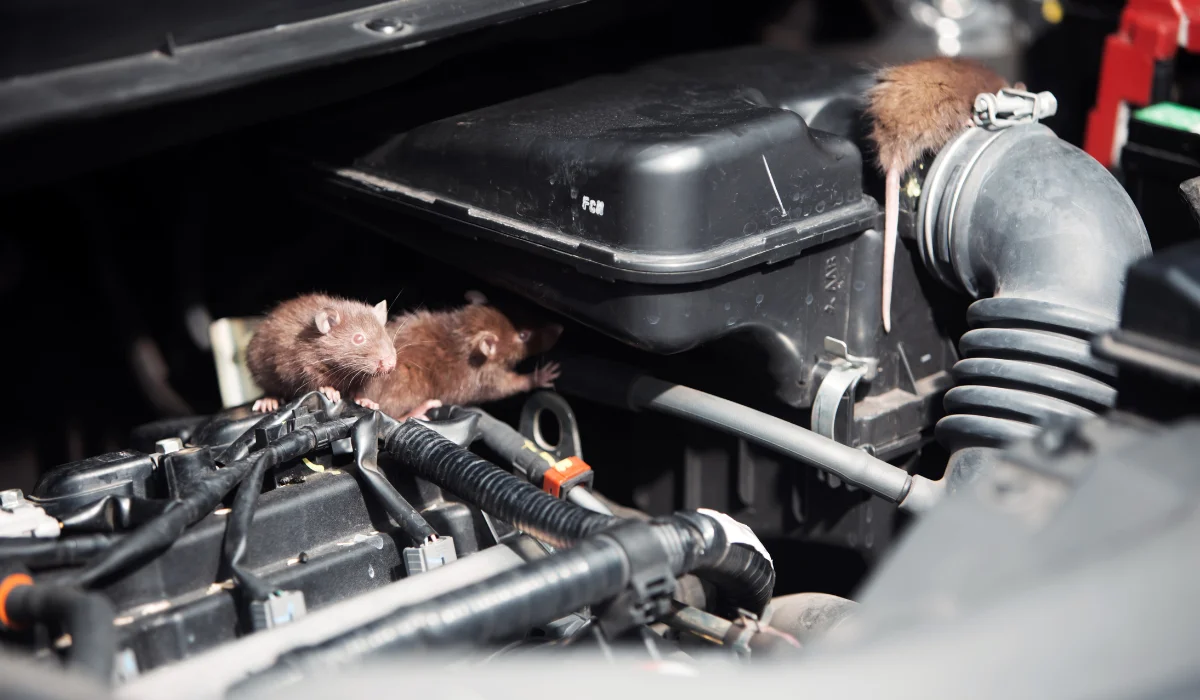
Finding mouse droppings under the hood or shredded material near your air filter is an unpleasant surprise. In some cases, the first clue is more expensive: a warning light appears, the car will not start, or a mechanic finds gnawed wiring. If you are trying to figure out how to keep rodents out of your car, the answer starts with understanding why they are there in the first place.
Michigan vehicles can be especially vulnerable when they sit for long periods in garages, barns, sheds, or driveways. A second vehicle, classic car, work truck, or seasonal vehicle may stay quiet for days or weeks at a time. To a mouse looking for shelter, that undisturbed space can be useful.
The most effective prevention does not focus on the vehicle alone. You also need to look at the garage, nearby food sources, clutter, and the openings rodents use to reach the parking area. This broader approach gives you a much better chance of stopping the problem instead of cleaning up one nest after another.
How to Keep Rodents Out of Your Car
Learning how to keep rodents out of your car is less about finding one perfect repellent and more about removing the conditions that keep rodents nearby. A clean vehicle helps, but it will not solve a garage-level mouse problem on its own.
Start with food because it is one of the easiest conditions to correct. Take snack wrappers, pet treats, fast-food bags, and forgotten groceries out of the cabin. Vacuum under seats and around the center console, where crumbs collect even when the visible floor looks clean. If children or pets regularly ride in the vehicle, check those areas more closely.
Make the Garage Less Useful to Rodents
Store bird seed, pet food, grass seed, and similar products in sturdy containers with secure lids. Move cardboard, paper, fabric, and soft clutter away from the parking area, especially items that have been sitting untouched for months.
Then close the garage door and look at it from inside. Daylight at the bottom corners or along a worn seal can point to a gap that needs attention. Check around utility lines, vents, pipes, and other places where the exterior wall has openings.
The U.S. Environmental Protection Agency recommends reducing access to food, water, and shelter while closing places rodents can use to enter structures. Catching a mouse helps with the animal already there. It does not stop another mouse from following the same route.
| Prevention Step | Why It Helps | When to Check |
| Remove food and wrappers from the car | Gives mice fewer reasons to investigate the cabin | After trips involving food |
| Store birdseed and pet food securely | Reduces food around the parking area | Ongoing |
| Reduce cardboard and soft clutter | Removes hiding places and nesting material | During garage cleanup |
| Inspect garage door seals and openings | Helps prevent new rodents from entering | Seasonally and after repairs |
| Check vehicles that sit for long periods | Catches nests and droppings earlier | During storage periods |
| Watch the floor for fresh droppings | Shows whether activity is continuing | Whenever you use the garage |
Why Rodents Get Into Cars in Michigan
Rodents in cars are usually looking for the same things they seek around a home: shelter, food, nesting material, and a place where they will not be disturbed. A parked vehicle can provide several of those conditions, especially when it sits inside a garage, barn, shed, or carport.
The problem is not limited to winter, but Michigan weather can change where mice spend their time. A vehicle that stays parked through long stretches of cold weather gives rodents a quiet space to investigate. The engine compartment, air filter housing, trunk, and interior cavities all provide cover that you may not inspect during normal driving.
What Around Your Garage Can Attract Mice
The food source may be a few feet away from the car. Birdseed in an open bag, dog food stored in cardboard, spilled grass seed, garbage, and feed can keep mice active inside a garage even when the vehicle itself is spotless.
Clutter makes the area more useful to them too. Cardboard boxes, paper bags, old towels, and rarely moved storage provide cover and nesting material. If you want to keep mice out of your car, the condition of the parking area matters almost as much as the condition of the vehicle.
Pest Pros’ documented rodent guidance notes that mice can use an opening about 1/4 inch wide, roughly the size of a dime. That makes small gaps around garage doors, vents, utility lines, and foundations worth checking when mouse activity keeps returning.
Signs Rodents Have Been in Your Car
When mice get into a car, you may never see the animal itself. Most homeowners notice what it leaves behind first, such as rodent droppings in the car, shredded material, gnaw marks, stored food, or an unusual odor.
A mouse nest in a car can appear under the hood, near a filter housing, in the trunk, or inside another protected cavity. Rodents may also chew insulation, plastic, or wiring. If a warning light appears, the car will not start, or you can see damaged wires, have the vehicle checked rather than assuming the damage is superficial.
| Sign | Where You May Find It | What It Can Mean |
| Rodent droppings | Engine bay, trunk, cabin, or garage floor | Activity is recent or ongoing |
| Shredded material | Under the hood, filter housing, trunk, or storage areas | A mouse may be building a nest |
| Seeds or stored food | Engine compartment, air box, or trunk | Rodents are carrying food into the vehicle |
| Gnaw marks | Wiring, insulation, plastic, or stored items | The area has been used repeatedly |
| Strong odor | Vents, cabin, trunk, or engine area | Urine, nesting material, or a dead rodent may be present |
| Electrical problems | Starting system, dashboard, lights, or accessories | Rodent damage to car wiring may need professional repair |
Check the Garage Floor Too
Signs around the vehicle can tell you whether you are dealing with more than one mouse visit. Look along walls, beside stored food, behind bins, and near the bottom corners of the garage door.
Fresh droppings outside the vehicle, shredded material, or gnawed packages suggest that mice are already using the building. Cleaning the car may remove the immediate mess, but the rodents still have access to the place where you park.
Where to Check for Mouse Activity in Your Car
If you are trying to prevent mice in your car, do not limit your inspection to the seats and floor mats. Rodents often use parts of a vehicle that you rarely see during normal driving.
A mouse in a car engine area may stay hidden behind covers or in protected corners. Open the hood when the engine is off and cool. Look around the battery, firewall, air intake areas, engine covers, and other sheltered spaces for droppings, seed shells, shredded material, or gnaw marks.
Check the Filters
Mice in a car engine compartment may also carry nesting material toward an air filter housing. If the housing is easy and safe to access, look for packed grass, paper, insulation, food, or debris that does not belong there.
The cabin air filter deserves attention if you notice a new smell or a change in airflow. If material appears deeper in the ventilation system, let an automotive technician inspect it rather than pulling apart trim or ductwork yourself.
Look Inside the Trunk and Cabin
Check beneath the seats, inside the glove compartment, and around blankets, bags, emergency supplies, or other items that stay in the vehicle. Food crumbs can remain hidden under a seat long after you have forgotten the snack that caused them.
Lift the trunk floor and inspect the spare tire compartment too. That enclosed area can remain untouched for months, especially in a stored vehicle.
What to Do if You Find Droppings, a Nest, or Damage
Finding a rodent infestation in a car calls for two different responses. First, handle droppings and nesting material carefully. Second, determine whether the rodents damaged any part of the vehicle that affects safe operation.
Do not immediately sweep or vacuum dry droppings. The Centers for Disease Control and Prevention advises wetting rodent urine, droppings, and nesting material with an appropriate disinfecting solution before cleanup. CDC instructions call for allowing the material to remain wet for 5 minutes, or following the contact time on the disinfectant label, before wiping it up.
Wear disposable gloves and avoid touching contaminated material with bare hands. Clean the surrounding surface according to the product directions once the visible material has been removed.
Treat Vehicle Damage as a Separate Problem
A small mouse nest in a car may be accessible without disturbing vehicle systems. Gnawed wiring, damaged hoses, warning lights, or a no-start condition require a different response.
Do not assume chewed wiring is harmless because the car still runs. Automotive wiring connects sensors, lights, starting systems, and other components. If you see damage near wires, connectors, belts, hoses, or moving parts, have a qualified technician inspect the vehicle.
| What You Find | Best Next Step |
| A few droppings in an accessible area | Follow CDC cleanup guidance and inspect nearby spaces |
| Nesting material away from vehicle systems | Remove it carefully and check for more activity |
| Nesting material near belts, fans, or wiring | Have the area inspected before driving |
| Chewed wires or connectors | Schedule an automotive inspection |
| Fresh droppings after cleanup | Check the garage for ongoing rodent activity |
| Another nest in the same vehicle | Address the parking area and building access, not just the car |
Keeping Rodents Out of Your Car for the Long Term
Long-term car rodent prevention becomes much easier when you watch for fresh evidence instead of waiting for another full nest. Keep food out of the cabin, store garage food properly, reduce clutter, inspect entry points, and check vehicles that sit for long stretches. Those habits help you find mouse activity before it turns into repeated nesting or rodent damage to car components.
If you clean the vehicle and new droppings or nesting material appear, the source is likely still active around the garage or property. At that point, keeping rodents out of your car becomes a property-level question. You need to find where rodents are entering, where they are hiding, and what is keeping them nearby.
If repeat mouse activity is showing up around your vehicle or garage, Pest Pros of Michigan can inspect your Michigan property and recommend a plan based on the signs found there. The goal is simple: stop treating the same nest over and over by addressing the conditions that allow rodents to keep returning.

 Serving Michigan since 2018
 Pest-free guarantee
 Small, local business