
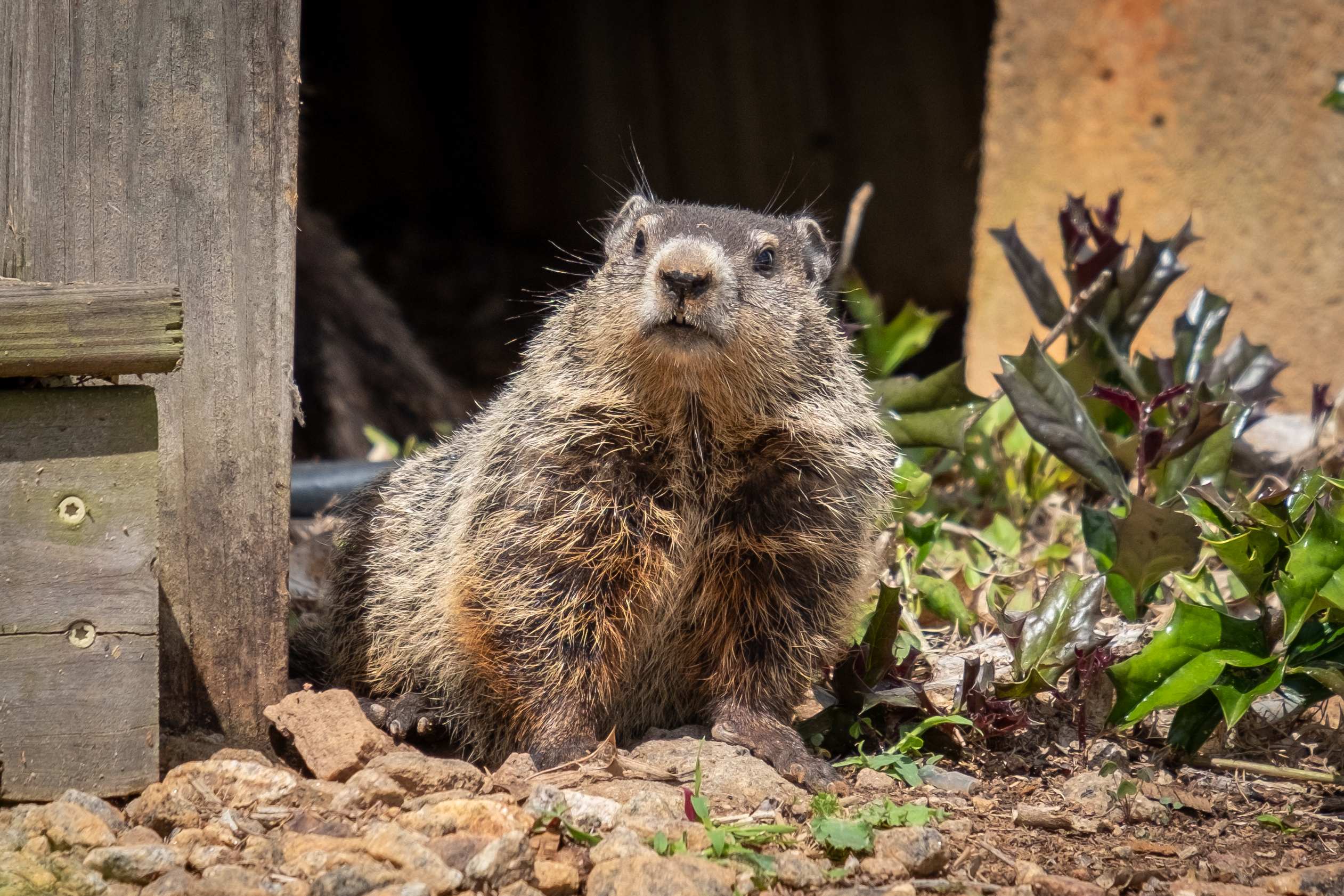
A groundhog in Michigan is active from roughly March through October, digging burrows that can run under sheds, decks, foundations, and garden edges. The damage shows up in two ways: feeding on vegetables, clover, and tender plants above ground, and undermining structures below. Michigan sits squarely in the groundhog’s core range, and the species has become more common as cleared land replaced Michigan’s original forest cover.
Key Takeaways
- Groundhogs are diurnal, most active in the morning and late afternoon from spring through fall. They hibernate from roughly October through March.
- Burrow entrances are 8 to 12 inches wide with a mound of loose soil at the main entrance. Plunge holes, the secondary exits, have no mound and are harder to spot.
- Michigan DNR rules are specific: groundhogs can be live-trapped but cannot be relocated to another property. They must be released on the same property or humanely euthanized.
What Groundhog Damage Actually Looks Like
Active groundhog damage in Michigan follows two distinct patterns, and both need to be addressed to actually resolve the problem. Treating only the feeding damage while ignoring the burrow underneath leaves the root cause in place.
Garden and Yard Feeding Damage
MSU Extension describes groundhog feeding as working like a “furry mowing machine” across bean rows and salad greens. The damage is clipped and low to the ground, with stems cut cleanly rather than chewed irregularly the way insects feed. Lettuce, beans, peas, squash plants, clover, herbs, and tender young shoots are all targets. Fallen fruit near trees is also a consistent draw, particularly in Michigan’s orchard-heavy western counties.
Burrow Damage Under Structures
Burrow entrances are large, 8 to 12 inches wide, with a mound of freshly excavated soil piled outside the main opening. Secondary plunge holes, used as emergency exits, are narrower and have no soil mound, making them easy to overlook. A burrow under a shed, deck, or porch foundation removes the compacted soil supporting those structures, and the tunnels can direct water into areas where drainage wasn’t a problem before. Uneven floors, settled slab edges, and cracked foundations are the downstream consequence of a burrow that goes unaddressed over multiple seasons.
Where Groundhogs Den in Michigan
Groundhogs select den sites based on three consistent criteria: overhead protection from aerial predators, proximity to food, and well-drained soil that holds its shape. Two specific property features match all three at once, which is why the same types of locations show up on Michigan nuisance calls year after year.
Under Structures at the Garden Edge
Sheds, decks, porches, and outbuildings at the edge of a garden or lawn are consistently the most common den sites. The structure provides overhead protection, the soil underneath is often undisturbed, and the garden nearby provides a reliable food source within easy range. Michigan DNR specifically recommends not blocking a burrow entrance under a structure until the animal is confirmed to be out, because a trapped groundhog causes significantly more damage trying to exit than it would have caused living there.
Along Fence Lines and Foundation Perimeters
Fence lines and the perimeter along building foundations are secondary favorites, particularly where vegetation grows thickly and provides cover. Groundhogs use these linear features as travel corridors and often position plunge holes along them, making the full extent of a burrow system harder to trace from above ground.
What Michigan Law Allows for Removal
Michigan DNR rules for groundhog removal differ from the rules for many other nuisance wildlife species, and the relocation restriction is the one most homeowners don’t know about before they trap. Knowing it before setting a trap changes the entire approach.
Groundhogs may be live-trapped without a license on private property when they are doing or about to do damage. However, Michigan DNR does not authorize relocating a trapped groundhog to another property. The animal must be released on the same property where it was trapped or humanely euthanized. In practice, live trapping without a removal plan simply puts the same animal back in the same location. For hunters with a valid Michigan base license, groundhogs may be taken year-round statewide.
Various deterrents, including motion-activated lights and chemical repellents, are available, but Michigan DNR notes their effectiveness is often brief, and they typically need to be combined with other methods to produce lasting results.
Michigan’s Groundhog Season and Why Timing Matters
Groundhogs in Michigan follow a consistent annual pattern that directly affects when damage is most likely and when removal is most effective. Acting at the right point in the cycle matters because the presence of young, the severity of feeding, and the availability of the burrow site all shift across the season.
Spring Emergence and Peak Burrowing
Groundhogs emerge from hibernation in late February or March, often before Michigan’s snow has fully cleared. Spring is when burrow digging is most active, because animals are establishing or re-establishing dens after winter. Garden damage begins shortly after emergence and intensifies through June as vegetation peaks. This is also the period when females are raising young, which affects removal timing.
Summer Hyperphagia and Peak Feeding
Through July and August, groundhogs enter hyperphagia, a period of intensive feeding as they build fat reserves before hibernation. This is when garden damage is most severe and escalates most quickly. Damage that seemed manageable in June can accelerate rapidly in midsummer.
Fall Denning and Secondary Wildlife Risk
Activity tapers through September and October as groundhogs return to their burrows for hibernation. They are typically dormant from late October through March. Fall is also when abandoned burrows become attractive shelter for skunks, foxes, and rabbits, so a burrow left open after a groundhog is removed can attract a secondary tenant quickly.
When to Call Pest Pros of Michigan
Call us when a groundhog has established a burrow under or near a structure, when you have tried to address the problem and the animal has returned, or when you want removal handled correctly under Michigan’s relocation rules from the start. A groundhog that is live-trapped and released back on the same property without exclusion work will return to the same den site.
Professional service makes sense when:
- A burrow entrance is within a few feet of a shed, deck, porch, or foundation.
- You have noticed soil settlement, uneven surfaces, or new water drainage issues near a structure.
- The animal has returned after a previous removal attempt.
- You want plunge holes and secondary entrances identified before any blocking is done.
- You want exclusion installed after removal to prevent the burrow from being re-occupied.
- Young may be present and you need the timing of removal handled correctly.
Pest Pros of Michigan provides wildlife removal services for homes and businesses across Michigan, including groundhog trapping, removal, and exclusion work to prevent re-entry after the animal is gone.
Schedule Groundhog Removal in Michigan
If a groundhog has burrowed under a structure or is causing repeated damage to your property, we can inspect the site, locate all entry points including plunge holes, remove the animal, and seal the access.
Contact Pest Pros of Michigan to request groundhog removal in Michigan.
Frequently Asked Questions
When are groundhogs most active in Michigan?
Groundhogs are active from March through October, with peak feeding in midsummer and peak burrowing in spring. They are diurnal, most visible in early morning and late afternoon. By late October most have entered hibernation, and they typically remain dormant until late February or March.
Can I relocate a groundhog I trap in Michigan?
No. Michigan DNR rules prohibit relocating a trapped groundhog to another property. A live-trapped groundhog must be released on the same property where it was caught or humanely euthanized. Releasing it elsewhere is a violation of state wildlife regulations.
How do I know if a burrow goes under my shed or foundation?
The main entrance will have a large mound of excavated soil piled outside it. If that entrance is within a few feet of a structure, the tunnel almost certainly extends underneath. Plunge holes, which are secondary exits without a soil mound, are often located nearby and are harder to find without a walkthrough inspection.
Will the burrow attract other animals after the groundhog is gone?
Yes. Abandoned groundhog burrows are regularly used by skunks, foxes, rabbits, and other wildlife as shelter. Sealing the burrow after removal and filling it with compacted material reduces the chance of a secondary tenant moving in before the next season.

 Serving Michigan since 2018
 Pest-free guarantee
 Small, local business
 10+ years of pest control experience
 President and CEO of Pest Pros of Michigan
 Resident of Michigan