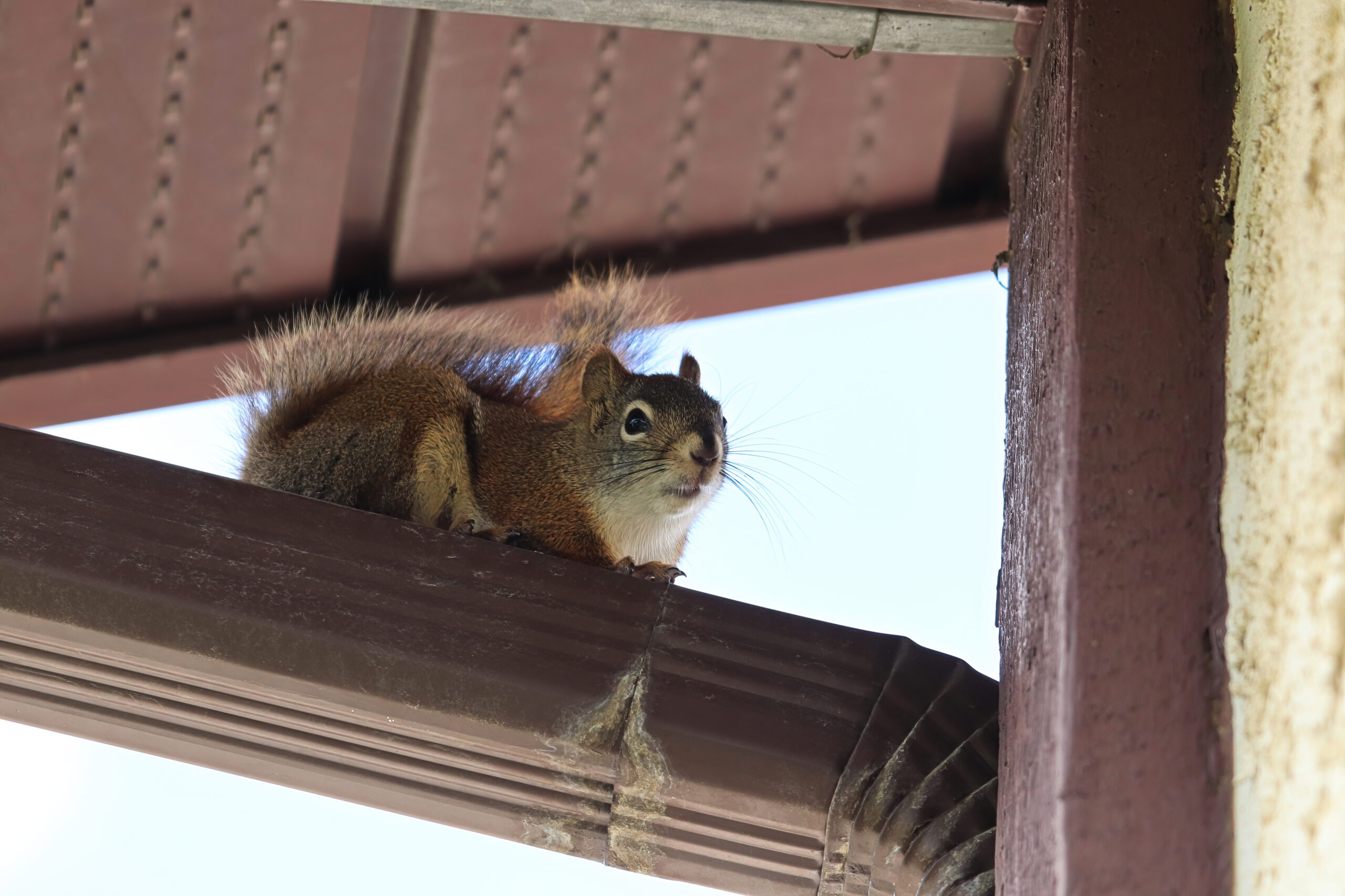
Gray squirrels get into attics in Kalamazoo because a well-sealed attic is one of the safest, warmest nesting sites available in a Michigan winter, and because most rooflines have at least one gap a squirrel can use or widen. The access points are usually smaller than homeowners expect, and the damage happens faster than most people realize. If you are hearing something above the ceiling, here is how to confirm what it is, how it got in, and what happens if it stays.
Key Takeaways
- Squirrels enter attics through gaps at soffits, fascia boards, vents, and areas where roofing material has deteriorated. A hole the size of a golf ball is large enough for a gray squirrel to pass through.
- In Kalamazoo, attic entry activity peaks twice a year: late fall as squirrels seek winter shelter, and late winter through early spring when females are establishing nesting sites before giving birth.
- Once inside, squirrels shred insulation for nesting, gnaw on wood framing, and chew electrical wiring. The wiring damage is the most serious concern because it creates a fire risk that isn’t visible from inside the living space.
Signs You Have a Squirrel in the Attic Right Now
Recognizing the pattern early is the difference between a straightforward removal and a remediation project. The signs are specific enough that most homeowners can make a reasonable assessment before calling anyone, which helps set the right expectations about what kind of job it actually is.
Listen for the Timing of the Sounds
Daytime scratching or rolling sounds above the ceiling, especially in the morning and late afternoon, point to squirrels rather than mice or raccoons. Squirrels are diurnal and return to their nest at dusk. If the sounds in your attic stop consistently at nightfall and resume at daybreak, that behavioral pattern is diagnostic. Raccoon sounds tend to be heavier and later in the evening. Mouse sounds are lighter and continuous throughout the night.
Look for These Visual Indicators
A walk around the exterior of the house, ideally with binoculars for the roofline, can confirm what the sounds suggest:
- Chew marks or fresh wood shavings around soffit joints, fascia edges, or vent covers
- Displaced or sagging soffit panels
- Debris or nesting material visible in gutters directly below a potential entry point
- Worn or dark staining around a roofline gap where a squirrel enters and exits repeatedly
- Small pawprints in snow on the roof or near the foundation after a fresh accumulation
The Entry Points Squirrels Actually Use
Most homeowners don’t know their roofline has an access problem until an animal is already inside. The gaps squirrels use are often too small to notice from the ground and in locations that rarely get inspected.
Soffit and Fascia Deterioration
The soffit panels running along the underside of roof overhangs and the fascia boards that cap the roofline are common first targets. Michigan’s freeze-thaw cycles accelerate wood rot and crack caulking, and squirrels will probe any gap they find along these surfaces. A small area of rot at a corner joint or where a gutter pulls away from the fascia can open enough space for a determined squirrel to widen with its teeth within a day.
Roof Vents and Pipe Penetrations
Attic vents, gable vents, and any pipe or cable penetration through the roof deck are entry points when the surrounding flashing or cover has deteriorated. Plastic vent covers crack over time. Metal covers corrode. Squirrels find these openings during regular rooftop exploration and will chew through compromised covers to access the attic behind them. Ridge vents, which run the full length of the roof peak, deserve particular attention on older Kalamazoo homes because they’re continuous, difficult to inspect without a ladder, and often the last thing a homeowner checks.
Overhanging Branches as Access Routes
Squirrels rarely need to climb an exterior wall to reach a roofline. Tree branches that hang over or touch the roof serve as direct runways. A branch within a few feet of the fascia is close enough for a squirrel to leap from. In established Kalamazoo neighborhoods where mature oaks and maples grow close to homes, this is often the starting point for every rooftop entry attempt. Trimming branches back at least six to eight feet from the roofline eliminates the most direct access, though squirrels that have previously used a roofline will often climb the siding directly when their usual route is gone.
What Squirrels Actually Do Inside an Attic
The noise is usually what homeowners notice first. By the time the scratching becomes obvious, squirrels have typically already started working on the insulation, framing, and wiring around them, none of which makes a sound until something fails.
They Shred Insulation to Build Nests
Squirrels shred attic insulation to build nests, compressing and displacing material in the process. Blown-in insulation gets tunneled through and redistributed. Batt insulation gets pulled apart and piled. Beyond the nest itself, urine and feces accumulate in the same area over time. Contaminated insulation loses its thermal performance, has to be removed rather than simply added to, and creates an odor problem that can move through ceiling gaps into living spaces below.
They Gnaw on Framing and Roof Decking
Squirrels gnaw on wood framing, roof decking, and any plastic or softer material in the attic. Their teeth grow continuously and require constant wear, so the chewing is both behavioral and practical: they shape nesting material and widen access routes at the same time. Roof decking damage that goes unaddressed can allow water intrusion at the next significant rain.
They Chew Through Wiring, Which Creates a Fire Risk
Chewed wiring is the most serious consequence of a squirrel in the attic. Squirrels strip the insulation from wire runs through the attic, exposing conductors that can arc against each other or against wood framing. Rodent damage to wiring is a recognized contributor to residential fires, and the damage inside an attic cavity is usually not detectable from inside the home without a physical inspection. Homeowners who eventually sell a property often discover squirrel-related wiring damage during the home inspection process, at which point repairs are required before closing.
Why a Kalamazoo Attic Is More Attractive Than a Tree
Squirrels are opportunists, and an attic solves every problem a tree hollow or leaf nest cannot. It’s protected from wind and rain, holds heat through Michigan winters, sits above ground predators, and in older Kalamazoo neighborhoods it’s almost always within easy reach of the food sources squirrels are already using.
Sustained Warmth Through a Michigan Winter
A gray squirrel doesn’t hibernate. It remains active through winter in Kalamazoo, relying on cached food and whatever shelter it can find to survive sustained cold. A leaf nest in a tree provides minimal insulation, and tree hollows are competitive and scarce. An attic that holds heat even when temperatures drop below zero is a clear upgrade, and once a squirrel identifies a reliable entry point, it will use that route repeatedly across multiple seasons unless the gap is permanently sealed.
A Secure Nesting Site for Raising Young
Female gray squirrels in southwest Michigan have two litters per year, typically in late winter and again in midsummer. The attic is appealing as a birthing site because it’s dark, enclosed, elevated above ground predators, and full of material that can be shredded into nest bedding. If scratching sounds above the ceiling start in February or March and increase in intensity over a week or two, a female building a nest before birthing is a likely cause. At that point, the situation has moved beyond a single animal exploring to an established nesting event that requires a different removal approach.
Kalamazoo’s Hardwood Neighborhoods Keep Food Close
Kalamazoo’s mature hardwood neighborhoods provide consistent food within a squirrel’s territory year-round. Oak, walnut, and hickory trees within a few hundred feet of a home mean a squirrel doesn’t have to range far to eat, making a nearby attic a convenient permanent base rather than a last-resort shelter. Neighborhoods in older parts of Kalamazoo with dense, established tree canopy typically see heavier squirrel pressure on rooflines than newer subdivisions where trees are still developing.
When to Call Pest Pros of Michigan
Call us when you are hearing sounds in the attic, finding damage around the roofline, or have already tried sealing an entry point without resolving the problem. A recurring squirrel issue usually means there are additional entry points you have not found, or an animal is still inside.
Professional service makes sense when:
- Scratching or movement in the attic continues despite your efforts.
- You find a nest or suspect young squirrels are present.
- You cannot safely inspect the roofline from the ground.
- A soffit, vent, or fascia board has visible damage or displacement.
- You have sealed one entry point but the activity has not stopped.
- The property has mature trees close to the roofline.
- You want to avoid repeat visits or recurring activity after a previous removal.
Pest Pros of Michigan provides wildlife removal services in Kalamazoo for homes and businesses, including squirrel removal, exclusion, and entry point sealing backed by a service warranty.
Schedule Squirrel Removal in Kalamazoo
If squirrels are getting into your attic, we can inspect the property, locate all entry points, remove the animals humanely, and seal the access so the problem does not return.
Contact Pest Pros of Michigan to request squirrel removal in Kalamazoo.
Frequently Asked Questions
What time of year are squirrels most likely to get into an attic in Kalamazoo?
Activity peaks twice: late fall when squirrels are seeking winter shelter, and late winter through early spring when females are establishing nesting sites before their first litter. Entry attempts happen year-round whenever a roofline gap is accessible and conditions inside are better than outside.
How do I know if it’s squirrels and not mice or raccoons?
The timing of the sounds is the clearest indicator. Squirrels are active during daylight hours, with peaks in the morning and late afternoon, and quiet from dusk to sunrise. Mice are active throughout the night. Raccoon sounds tend to be heavier and come later in the evening. If the movement above you stops at nightfall and starts again at dawn, that pattern points to squirrels.
Can I seal the entry hole myself after the squirrel leaves?
The challenge is confirming the animal has actually left and locating every entry point, not just the one you found first. Squirrels frequently use more than one gap. Sealing one while others remain open moves the problem rather than solving it. Sealing while an animal is still inside traps it, which creates structural damage and an odor issue. Professional exclusion starts with a full inspection before any sealing is done.
Do squirrels in the attic cause fire risk?
Yes. Squirrels gnaw on electrical wiring because their teeth require constant wear, and the resulting exposed conductors can arc against wood framing inside the attic cavity. This damage typically isn’t visible from inside the living space and is often discovered during home inspections. Addressing a squirrel problem early reduces the chance that wiring damage has already occurred.

 Serving Michigan since 2018
 Pest-free guarantee
 Small, local business
 10+ years of pest control experience
 President and CEO of Pest Pros of Michigan
 Resident of Michigan