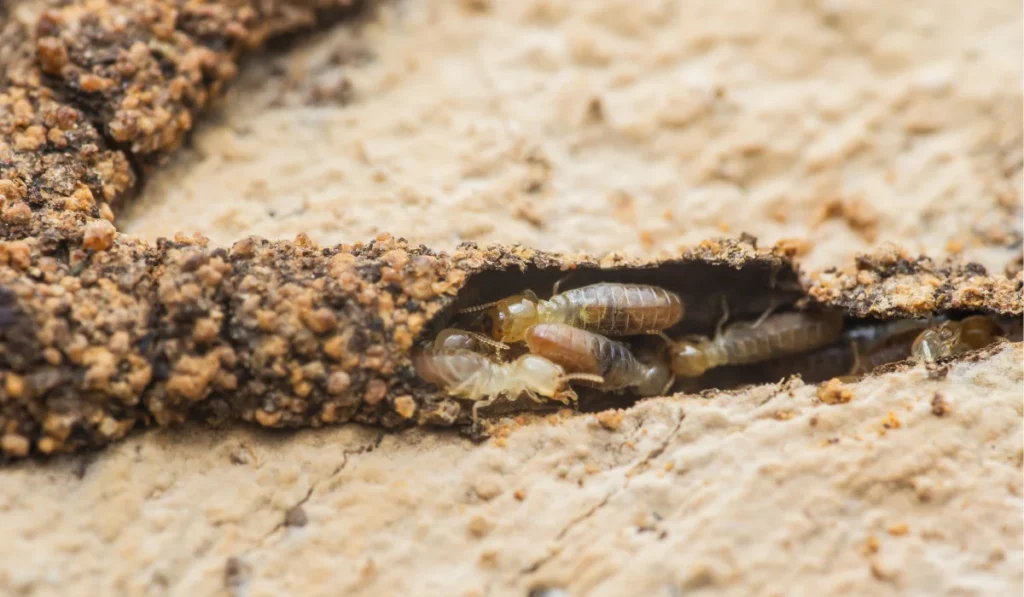
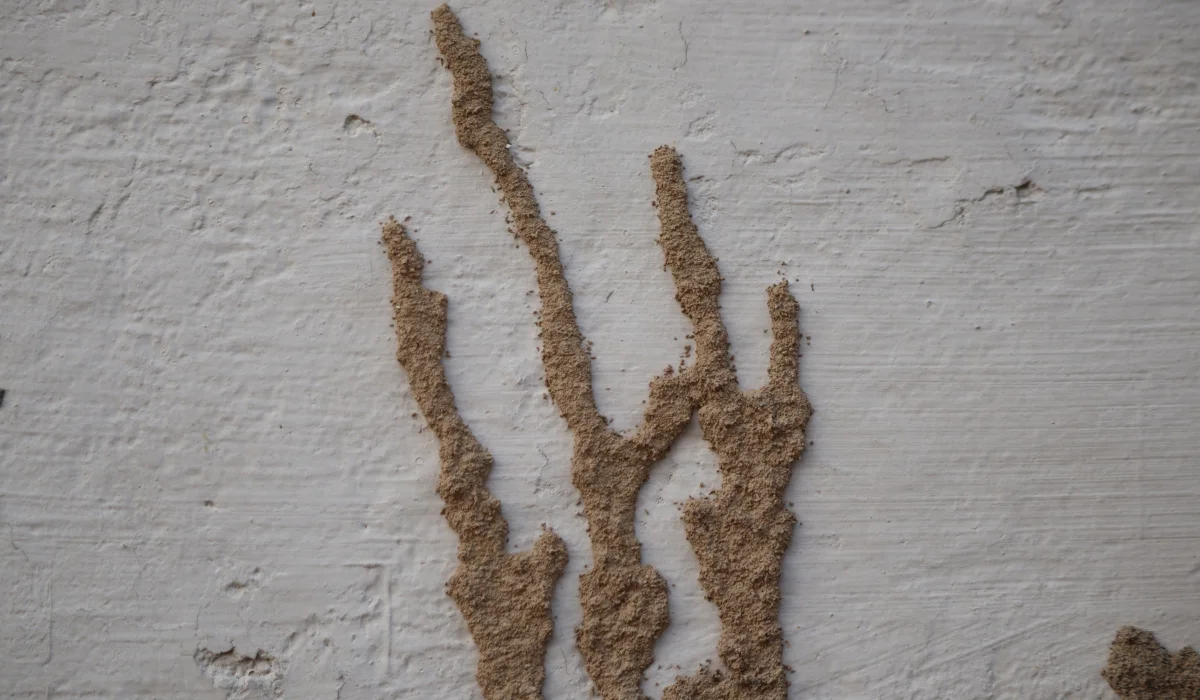
Mud shelter tubes are one of the clearest signs that subterranean termites may be moving between soil and wood. Around Kalamazoo homes, these narrow dirt-colored trails may appear on foundation walls, basement areas, crawl spaces, garage edges, porch supports, or other places where termites can travel from the ground into structural wood.
If you find a tube, do not scrape it away before an inspection. Its location can help us understand where termites may be entering, how active the area may be, and what kind of treatment plan makes sense for the home.
Key Takeaways
- Mud shelter tubes are a common sign of subterranean termite activity.
- They help termites travel while staying moist and protected.
- Tubes often appear near foundations, basements, crawl spaces, and wood-to-soil contact.
- Do not destroy the evidence before an inspection.
- A professional inspection helps confirm whether activity is active, old, or part of a larger issue.
What Mud Shelter Tubes Are
Subterranean termites live in moist soil and need protection when they move above ground. Mud shelter tubes help them travel between the soil and wood while reducing exposure to dry air, light, and predators.
These tubes are usually made from soil, saliva, and termite material. They may look like thin brown lines, pencil-width trails, or flattened dirt streaks on a wall, foundation, pier, slab edge, or wood surface.
Michigan State University Extension explains that Eastern subterranean termites must return to soil to replenish body moisture after feeding above ground. That soil connection is why tubes are such an important clue in Michigan homes.
Why They Matter In Kalamazoo Homes
Kalamazoo homes can have basements, crawl spaces, attached porches, decks, garages, and older wood features that create places for subterranean termites to hide. Moisture, soil contact, and small structural gaps can make it easier for termites to reach wood without being noticed right away.
Our termite control service focuses on subterranean termite activity in Kalamazoo, including inspection, detection, treatment, and remediation when evidence is found.
A tube does not tell the full story by itself, but it is a strong reason to schedule an inspection. It may point to active termites, old activity, or a route that needs closer evaluation.
Where To Look Around The House
You do not need to tear into walls to do a basic visual check. Start with visible, accessible areas where soil, moisture, and wood come together.
Check these areas:
- Basement walls and corners
- Crawl space supports
- Foundation walls
- Garage slab edges
- Porch and deck posts
- Utility penetrations
- Sill plates and rim joists where visible
- Areas near plumbing leaks
- Wood that touches soil
- Exterior walls near mulch or grade issues
Use a flashlight and look for narrow dirt-colored trails. If an area is unsafe, tight, damp, or difficult to access, leave it to a professional.
What They Look Like
Mud shelter tubes can vary in size and shape. Some are easy to see. Others blend into concrete, block, stone, or dirty corners.
They may look like:
- Pencil-width mud lines
- Raised dirt trails on concrete or block
- Thin tubes running from soil to wood
- Brown streaks along cracks or seams
- Mud packed into small gaps
- Branching trails in crawl spaces or basement areas
Fresh tubes may appear darker or slightly damp. Older tubes may look dry, brittle, or broken. Either way, the safest next step is to leave them in place until they are inspected.
What Not To Do If You Find One
Finding a tube can be unsettling, but disturbing it too soon can remove useful evidence. The goal is to preserve the clue until a trained inspector can evaluate it.
Avoid these mistakes:
- Do not scrape away the tube before an inspection.
- Do not spray random products into cracks or walls.
- Do not remove damaged wood immediately.
- Do not assume the activity is gone because the tube looks dry.
- Do not ignore tubes near structural wood.
- Do not cover the area with paint, caulk, or repairs before service.
If possible, take a clear photo, note the exact location, and keep the area accessible.
Active Or Old Evidence?
A mud tube may be active, abandoned, or connected to activity in another area of the structure. That is why inspection matters. Breaking the tube open may show insects, but it can also scatter activity or make the evidence harder to interpret.
During an inspection, we look at the tube’s location, condition, nearby wood, moisture conditions, and other signs of termites. We also check whether there are multiple tubes, damaged wood, swarm evidence, or conditions that support termite movement.
Signs that deserve attention include:
- Multiple tubes in one area
- Tubes reaching wood framing
- Soft or hollow-sounding wood nearby
- Moisture around the foundation or basement
- Winged termites indoors
- Damage near porch, deck, or garage connections
One sign may lead us to a larger activity pattern.
Other Signs To Check For
Mud shelter tubes are important, but they are not the only warning sign. Subterranean termites can stay hidden inside wood, so nearby evidence matters too.
Look for:
- Wood that sounds hollow when tapped
- Soft or blistered wood surfaces
- Dirt-like material inside damaged wood
- Sticking doors or windows
- Shed wings near windows or basement areas
- Live winged termites indoors
- Damaged wood near moisture or soil contact
MSU Extension notes that winged termites inside a home strongly indicate an active infestation. If you see swarmers indoors, schedule service soon.
Why Moisture And Soil Contact Matter
Subterranean termites are closely tied to moisture. MSU Extension notes that severe termite damage is often concentrated where excessive moisture persists, including areas affected by building design, ventilation problems, wood in direct soil contact, flashing issues, or poor grade slope near the home.
Around Kalamazoo homes, that means prevention often starts with maintenance:
- Repair plumbing leaks.
- Keep wood from touching soil.
- Improve drainage near the foundation.
- Keep gutters and downspouts working.
- Avoid piling mulch against wood.
- Ventilate enclosed spaces when applicable.
- Remove wood debris from crawl spaces or foundation areas.
These steps do not replace treatment when termites are active, but they can reduce conditions that make termite problems easier to establish.
How We Inspect And Treat The Problem
Our Kalamazoo team inspects visible and accessible areas for tubes, damaged wood, moisture concerns, swarm evidence, and termite entry points. We also look at the conditions around the home that may be allowing termites to move from soil into wood.
Pest Pros provides pest control services in Kalamazoo for homes and businesses, including termite inspection, detection, and removal for active infestations. If we find termite evidence, we explain what we see and recommend a treatment plan based on the structure and level of activity.
The goal is to address the source, not only the visible tube.
Schedule A Termite Inspection In Kalamazoo
If you found mud shelter tubes, damaged wood, or winged termites in your Kalamazoo home, we can inspect the area and explain the right next step.
Contact Pest Pros of Michigan to request termite service in Kalamazoo.
Frequently Asked Questions
Are Mud Shelter Tubes Always A Sign Of Active Termites?
Not always. They can be active or old, but they should be inspected. Their location and condition can help determine whether termites are currently using them.
Should I Break Open A Mud Shelter Tube?
No. Leave it in place if possible. Breaking it open can disturb evidence and make the inspection less clear. Take photos and show the inspector where you found it.
Where Are Mud Shelter Tubes Most Common?
They are often found on foundation walls, basement walls, crawl space supports, garage slab edges, porch supports, and areas where wood or structural gaps connect to soil.
Can Subterranean Termites Damage A Kalamazoo Home Without Visible Tubes?
Yes. Tubes may be hidden behind walls, insulation, stored items, or crawl space areas. Other signs, such as soft wood, shed wings, or indoor swarmers, may appear first.
When Should I Call Pest Pros Of Michigan?
Call when you find mud shelter tubes, winged termites indoors, damaged wood, or signs near basements, foundations, crawl spaces, garages, porches, or decks.

 Serving Michigan since 2018
 Pest-free guarantee
 Small, local business
 10+ years of pest control experience
 President and CEO of Pest Pros of Michigan
 Resident of Michigan