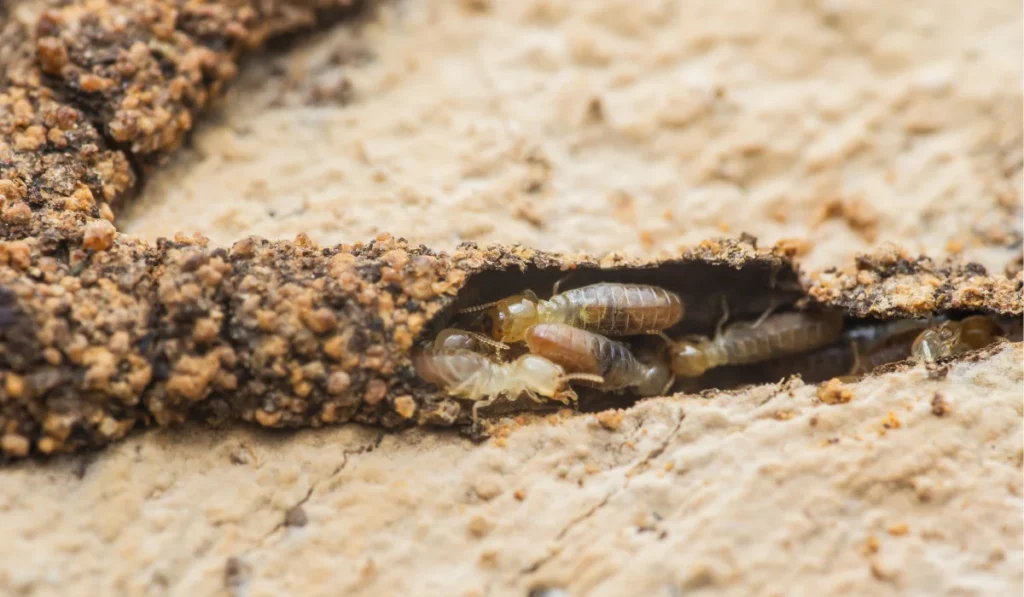
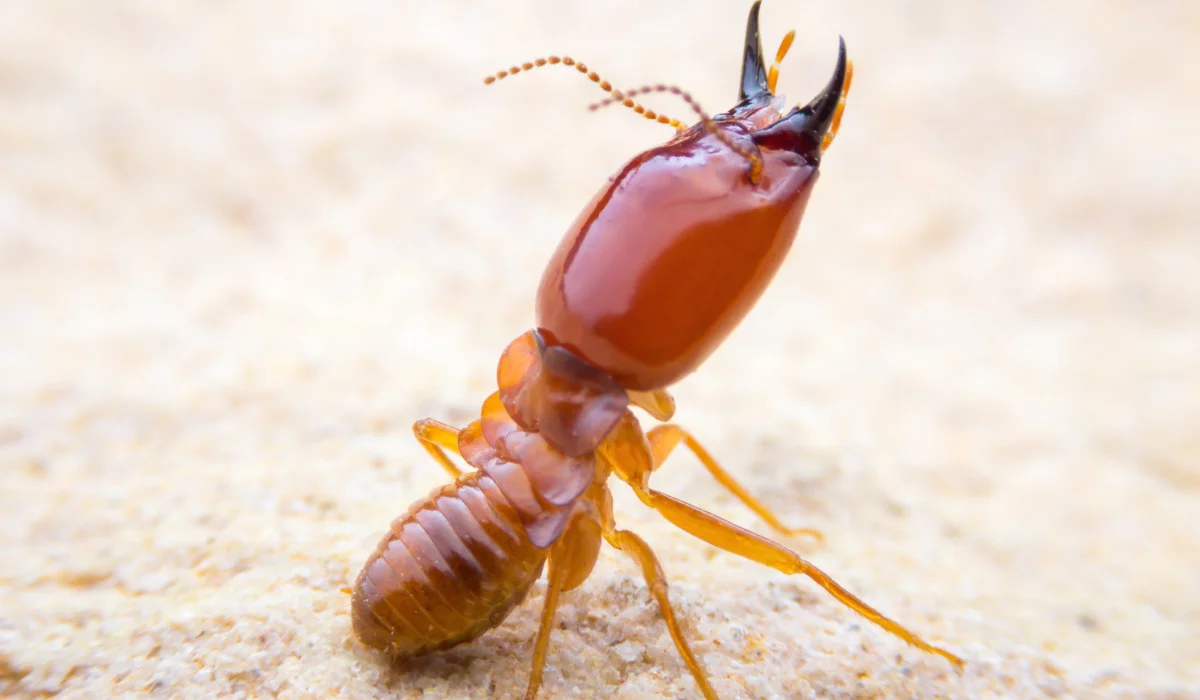
Termites are not a household biting pest like fleas, mosquitoes, or bed bugs. They are built to feed on cellulose materials, which means wood, paper, cardboard, and similar plant-based materials are the real concern. A termite may be able to pinch skin if handled, but termites do not seek out people for blood meals.
For Plainwell homeowners, the bigger issue is property damage. Michigan’s main structural termite concern is the Eastern subterranean termite, which lives in soil, travels through shelter tubes, and can damage wood before the signs are obvious.
Key Takeaways
- Termites are mainly a wood-damaging pest, not a biting pest.
- They do not feed on people or pets.
- Eastern subterranean termites are the main structural concern in Michigan.
- Mud tubes, swarmers, and soft wood should not be ignored.
- A termite inspection is the safest way to confirm activity.
Are Termites Dangerous To People?
Termites are not considered dangerous to people in the same way stinging or biting pests can be. They do not hunt people, feed on blood, or spread through a home looking for skin contact.
The more realistic concern is contact with damaged materials, dust, moisture issues, or structural wood damage after activity has been present for a while. If you find termites in your home, avoid handling them and focus on preserving the evidence for inspection.
Termites matter because they can damage:
- Floor joists
- Sill plates
- Rim joists
- Basement wood
- Porch supports
- Window and door framing
- Wood near moisture or soil contact
That damage can stay hidden until mud tubes, swarmers, or soft wood appear.
Why Plainwell Homeowners Should Still Take Termites Seriously
Plainwell homes can have basements, crawl spaces, garages, porches, decks, and older wood components that create places for subterranean termites to move from soil into wood.
Michigan State University Extension explains that Eastern subterranean termites live underground and must return to soil to replenish moisture after feeding above ground. That is why shelter tubes and soil contact matter so much in Michigan homes.
Around Plainwell properties, termite activity may be more likely near:
- Basement walls
- Crawl spaces
- Foundation cracks
- Porch and deck posts
- Garage slab edges
- Wood touching soil
- Areas with plumbing leaks
- Mulch or soil piled too high against the structure
A termite issue is rarely solved by cleaning up the insects you can see. The colony and entry route need to be inspected.
Signs That Point To Termite Activity
Many homeowners do not see live termites first. They notice evidence around wood, walls, basement areas, or windows.
Watch for:
- Mud shelter tubes on foundation or basement walls
- Winged termites indoors
- Shed wings near windows or lights
- Soft or hollow-sounding wood
- Dirt-like material inside damaged wood
- Blistered or uneven wood surfaces
- Damage near moisture or soil contact
- Sticking doors or windows near damaged framing
MSU Extension notes that, in homes with basements, rim joists and sill plates are often among the first areas where termite mud and shelter tubes may be detected. If you see those signs, leave them in place until they can be inspected.
Termite Swarmers Can Be Confusing
Swarmers are winged termites that leave a colony to start a new one. They are often mistaken for flying ants, especially when they appear near windows, lights, or basement areas.
Termite swarmers usually have:
- Straight antennae
- A thicker waist
- Wings that are similar in length
- A softer-looking body than a flying ant
Finding swarmers outdoors does not always mean your home is infested. Finding them indoors is more concerning and should be checked by a professional.
What To Do If You Find Termites Indoors
If you find termites, wings, mud tubes, or damaged wood, avoid disturbing the area too much. The location and condition of the evidence can help us understand what is happening.
A safer next step is to:
- Take photos of the insects or damage.
- Leave mud tubes in place.
- Save dead swarmers or wings in a small bag if possible.
- Note where and when you found the signs.
- Avoid spraying random products into walls or damaged wood.
- Schedule a termite inspection.
Do not remove damaged wood before inspection unless there is an immediate safety concern. The evidence helps guide the treatment recommendation.
Why DIY Treatment Can Miss The Real Problem
Subterranean termites are tied to soil and moisture. If you only treat the visible area, the colony may still be active underground or in another part of the structure.
DIY efforts often miss:
- Hidden entry points
- Activity behind finished walls
- Shelter tubes in basement or crawl space areas
- Moisture problems supporting termite movement
- Damage in sill plates, joists, or porch supports
- Signs that help separate old activity from active infestation
Professional inspection helps confirm whether the evidence is active, where termites may be entering, and what treatment plan fits the structure.
How We Inspect For Termites In Plainwell
Our termite control service starts with inspection and detection. We look for mud tubes, damaged wood, swarm evidence, moisture concerns, and visible entry points around the home.
For Plainwell homes, that may include checking accessible areas such as:
- Basements
- Crawl spaces
- Foundation walls
- Garage edges
- Porch and deck supports
- Exterior wood near soil
- Areas near leaks or drainage concerns
We explain what we find and recommend treatment only when the evidence supports it.
When To Schedule A Termite Inspection
Schedule an inspection if you see winged termites indoors, mud tubes, damaged wood, or signs near the foundation, basement, crawl space, porch, or garage.
You should also schedule service if:
- You are buying or selling a home.
- A neighbor has confirmed termite activity.
- You found swarmers more than once.
- Wood near the foundation feels soft.
- You have past termite history.
- You are unsure whether the evidence is active or old.
Our Plainwell pest control team serves local homeowners with pest, termite, and rodent control support throughout the area.
Schedule Termite Service In Plainwell
If you have found mud tubes, swarmers, wings, or damaged wood, we can inspect the area and explain the next step clearly.
Contact Pest Pros of Michigan to request termite service in Plainwell.
Frequently Asked Questions
Can Termites Hurt People?
Termites are not known for attacking people. Their main risk is wood damage, especially when activity stays hidden in structural areas.
Are Termites Like Bed Bugs Or Fleas?
No. Bed bugs and fleas feed on blood. Termites feed on cellulose materials, including wood, paper, cardboard, and similar plant-based materials.
What Should I Do If I Find Termites In My House?
Take photos, leave mud tubes or damaged wood in place, and schedule an inspection. Avoid spraying random products or removing evidence before the area is checked.
Are Termites Common In Michigan?
Eastern subterranean termites are present in Michigan and are the main termite species associated with structural wood damage in the state.
When Should Plainwell Homeowners Call Pest Pros Of Michigan?
Call when you see mud tubes, winged termites indoors, shed wings, soft wood, or damage near basements, crawl spaces, foundations, porches, decks, or garages.

 Serving Michigan since 2018
 Pest-free guarantee
 Small, local business
 10+ years of pest control experience
 President and CEO of Pest Pros of Michigan
 Resident of Michigan