Know the difference between honey bees and carpenter bees. Learn the signs, risks, and when to call Pest Pros.
Key Takeaways
- Honey bees are social bees that live in large colonies, while carpenter bees are solitary bees that bore into wood to create nesting tunnels rather than building shared hives.
- Carpenter bees can cause structural and cosmetic damage to unpainted or weathered wood on your home, deck, or outdoor furniture. Honey bees do not damage wood.
- Telling these bee species apart matters because each calls for a different response. Carpenter bee activity around wood surfaces often warrants treatment and repairs, while honey bee colonies may need specialized removal.
- Painting or sealing exposed wood is one of the best preventive steps you can take against carpenter bee damage.
Difference Between Honey Bees vs. Carpenter Bees
The quickest way to separate these two bees is by their lifestyle. Honey bees are social insects that live together in large hive colonies. Carpenter bees are solitary bees that bore holes into wooden structures for their nest galleries, according to Mississippi State University Extension. Understanding this core difference helps you figure out what you are seeing around your home and what kind of response makes sense.
How to Tell the Honey Bees And Carpenter Bees Apart
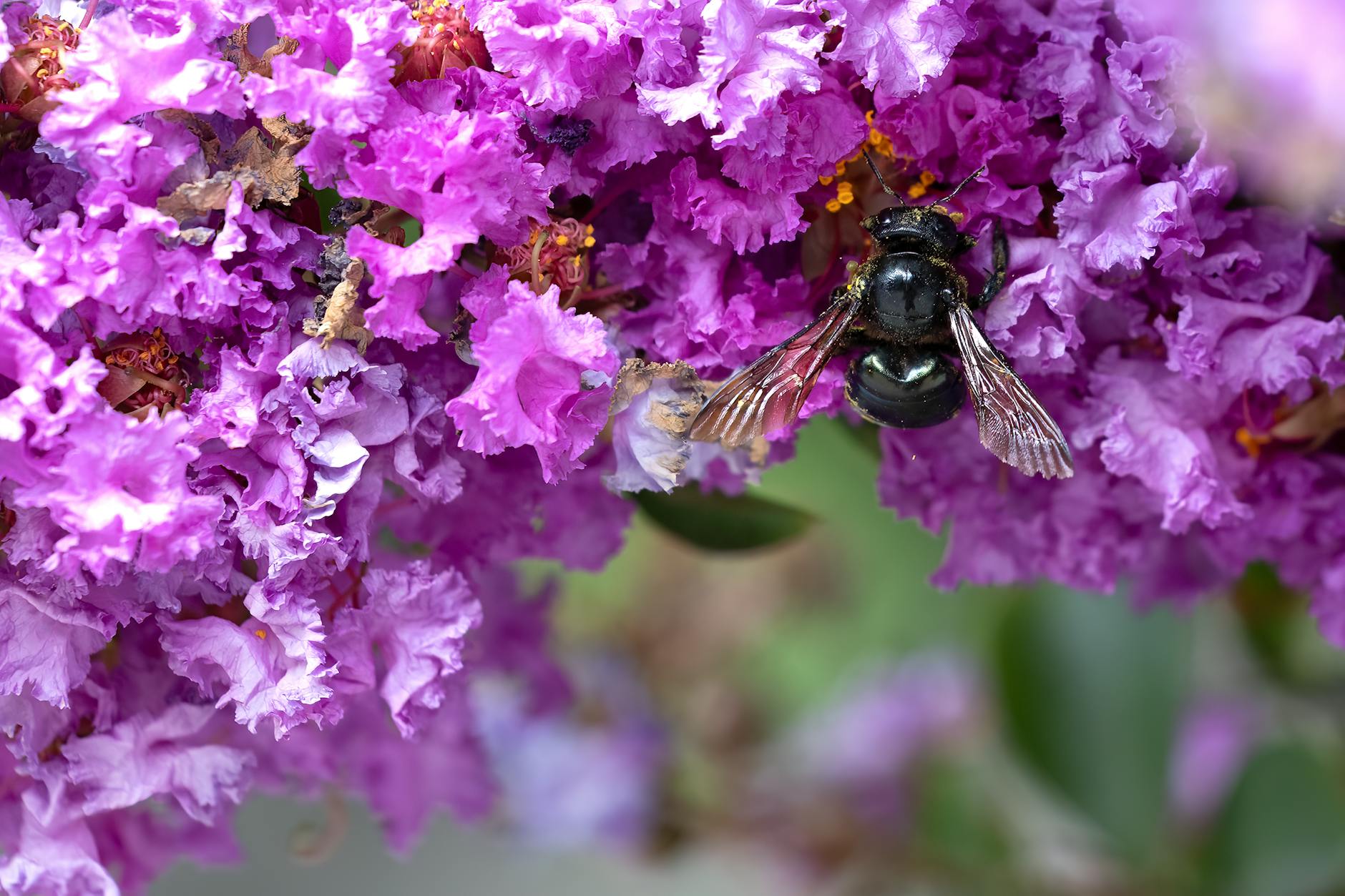
Honey bees have hairy bodies that help collect pollen, and they live in organized colonies with a queen. Carpenter bees are large, bumblebee-like insects with a shiny, hairless black abdomen, ranging from 1/2 to 1 inch long. Because carpenter bees are solitary, you will typically see individual bees hovering near wood rather than swarms traveling together.
Unlike honey bees, solitary carpenter bees do not aggressively defend their nest. Males may hover nearby and act territorial, but they do not sting. Females have a stinger but rarely use it.
How to Spot Honey Bees and Carpenter Bee Activity
Honey bee activity indoors usually means a colony has moved into a wall void or similar cavity, and you will notice many bees coming and going from a single opening. Carpenter bee activity looks different. Female carpenter bees bore into sound wood, and sometimes decaying wood, to make nest tunnels. You may notice individual bees entering and exiting a single round hole rather than a busy stream of insects.
Sawdust-like frass below a hole in exposed wood is a strong indicator of carpenter bee nest construction rather than a honey bee colony.
Where Honey Bees and Carpenter Bees Show Up
Honey bees tend to nest in protected cavities, so you may find them in tree hollows, wall voids, or other enclosed spaces. Carpenter bees target the wood itself. They cause damage to wooden structures by boring into timbers and siding to construct nests, as UC IPM notes. Untreated or unpainted wood surfaces on your home are the most likely spots.
Painting or sealing exposed wood is the best preventive measure against carpenter bee nest activity on your property.
Exterior Entry Points Honey Bees and Carpenter Bees Use
Honey bees enter through existing gaps, cracks, or openings in a structure to reach a cavity where the colony can build comb. Carpenter bees create their own entry points by boring directly into wood. Each nest hole is the work of a single female, so you may find several separate holes along the same board or timber.
If you spot perfectly round holes in exterior wood with no other visible damage nearby, carpenter bees are the likely source. Sealing and plugging those holes after the bees are addressed helps prevent re-entry and further wood damage.
Why Honey Bee and Carpenter Bee Problems Develop
The core reason these two bees create different problems comes down to social structure. Honey bees live in large colonies with an elaborate nest and many individuals active at once. According to Purdue Extension, only one individual normally occupies each solitary bee nest or burrow. That distinction shapes where each bee shows up and what kind of trouble it causes.
Outdoor Nesting Areas
Honey bees build colonies inside enclosed cavities, identifiable by steady traffic at a single nest site. Carpenter bees take a completely different approach. The female selects a site in wood and chews tunnel entrances approximately ½ inch in diameter. You may notice individual holes scattered across exposed wood rather than one busy colony hub.
Food and Shelter
Both species are pollinators that forage on pollen and nectar. Honey bees return to their large colonies, where dedicated individuals defend the nest. Carpenter bees seek out untreated wood to tunnel into and lay eggs. They do not eat the wood; the shelter it provides is what draws them to your property. Keeping wood surfaces painted or sealed reduces this attraction.
How Bees Move Around Homes
Honey bee colonies produce visible traffic around their nest site, making them relatively easy to locate. A hive near your home can pose a sting risk when disturbed. Carpenter bee males are territorial around nesting holes but cannot sting. Females can sting but rarely do.
Trails and Entry Points Bees Use
Honey bees funnel through a single entry point into their colony, so you will see concentrated flight paths near eaves, wall voids, or other cavities. Carpenter bees create their own entry points by chewing into wood. Left unaddressed over time, repeated tunneling in the same wood can lead to cosmetic and structural damage.
Risks From Honey Bees And Carpenter Bees
The risks honey bees and carpenter bees pose to homeowners are quite different. Honey bees generally nest away from your home’s structure, while carpenter bees bore directly into wooden timbers and siding. Understanding which bee you are dealing with changes how you assess the threat to both your property and your household.
Health Risks Linked to Bees
A honey bee can sting once and dies afterward. Carpenter bees present a lower sting risk. According to UC IPM, the presence of carpenter bees around buildings can be annoying or frightening; however, males cannot sting and females sting only when provoked or handled roughly. Most homeowners who encounter carpenter bees are interacting with the territorial but stingless males hovering near wood surfaces.
Property Damage From Bees
Honey bees do not target your home’s wood. Carpenter bees do. Over time their tunnels can weaken structural wood and leave unsightly holes and stains on building surfaces.
Certain wood types face greater risk. According to the University of Georgia pest guide, cedar boards are particularly susceptible to extensive damage from carpenter bees. They also frequently attack dead wood or lumber from southern yellow pine, white pine, California redwood, Douglas fir, cypress, mimosa, mulberry, ash, and pecan trees.
Food Areas and Bee Activity
Neither honey bees nor carpenter bees are drawn to your kitchen or food storage areas the way other pests might be. Both species focus on pollen and nectar. However, carpenter bees nesting in wood near outdoor living spaces can create a nuisance, especially when their hovering behavior startles people during meals or gatherings outside.
When to Look Closer at Bee Activity
If you notice round holes in exposed wood, sawdust-like frass below wooden surfaces, or dark stains on siding, those are signs of carpenter bee nesting. Because their nests weaken structural wood, it is worth inspecting untreated or unpainted wood on your home regularly.
Professional Pest Control for Honey Bees And Carpenter Bees
Understanding the difference between honey bees and carpenter bees shapes how you approach prevention and treatment. Pest Pros of Michigan does not typically treat honey bees unless they pose a threat to human safety. Carpenter bees tunnel into untreated wood to lay eggs, and their biology calls for a targeted approach.
How to Reduce Attractants for Bees
For carpenter bees, the most reliable long-term prevention is painting or sealing exposed wood. According to the Mississippi State University Extension, painted or sealed wood is seldom attacked by carpenter bees. If your home has bare, untreated wood on fascia boards, decks, or other surfaces, addressing those areas can make your property far less appealing.
Carpenter bees do not eat wood; they use it only for their nest galleries. Keeping wood surfaces well-maintained is the single most practical step you can take.
Why Bee Control Starts With Inspection
Correct identification is the first step. Pest Pros of Michigan begins with a free site evaluation and consultation to identify the pest. Carpenter bees and bumble bees look alike, but one of the most observable differences is the abdomen: carpenter bees have a slick, shiny top surface, while bumble bees are densely covered with colored hairs. Bumble bees are social and nest in the ground, while carpenter bees are solitary wood-boring insects.
Getting the identification right matters because the treatment approach is completely different. A honey bee colony may call for coordination with a beekeeper, while carpenter bee activity points toward wood treatment and hole plugging. A thorough inspection also reveals the extent of any burrowing and whether damaged wood needs repair.
What to Expect During Professional Bee Treatment
When Pest Pros of Michigan confirms carpenter bee activity, a technician applies Tempo Dust or a residual treatment directly into burrow holes. After treatment, holes are plugged to prevent re-entry. Our technicians wear bee suits for protection during service.
Female carpenter bees can sting but are not aggressive and will not sting unless forced to do so. Males are territorial but cannot sting at all. Professional handling keeps you out of close contact with active burrows during the treatment process.
What to Expect From a Bee Control Plan
A carpenter bee control plan from Pest Pros of Michigan includes a one-time treatment with a three-month warranty for the treated areas. Beyond the initial service, you can reduce the chance of future activity by painting or sealing any remaining exposed wood around your property.
For honey bees, Pest Pros of Michigan has a protocol for nest removal if necessary, but treatment is reserved for situations where bees threaten human safety. Recognizing the difference between these two bees helps you and your service professional choose the right response for each situation.
Difference Between Honey Bees and Carpenter Bees: Bottom Line
Honey bees are social pollinators that live in large colonies and produce honey, while carpenter bees are solitary wood-boring insects that tunnel into untreated wood to lay eggs. For homeowners, the practical distinction comes down to property risk: honey bees rarely threaten your home’s structure, but carpenter bees can cause cosmetic and structural damage over time if left unaddressed.
If you spot round bore holes in wood around your home, contact Pest Pros of Michigan for a free site evaluation.
Frequently Asked Questions
Do Carpenter Bees Sting?
Female carpenter bees have a stinger but are not aggressive and rarely sting unless directly handled. Males are territorial and may hover near people, but they do not have a stinger. Honey bees, by contrast, sting once and die.
How Can I Tell a Carpenter Bee Apart From a Bumble Bee?
The most easily observed difference is the top of the abdomen. Carpenter bees have a slick, shiny surface, while bumble bees are densely fuzzy. Despite their similar size, bumble bees do not bore into wood.
What Kind of Wood Do Carpenter Bees Target?
Carpenter bees tend to target bare, untreated wood. Cedar boards can be particularly susceptible to extensive damage. Painted or sealed wood is seldom attacked, making surface treatment one of the most reliable ways to protect your home.
Does Pest Pros of Michigan Treat Both Honey Bees and Carpenter Bees?
Pest Pros of Michigan reserves honey bee treatment for situations where bees threaten human safety. For carpenter bees, a technician applies a residual product directly into burrow holes, then plugs the openings to prevent re-entry. A one-time treatment includes a three-month warranty for treated areas.

 Serving Michigan since 2018
 Pest-free guarantee
 Small, local business
 10+ years of pest control experience
 President and CEO of Pest Pros of Michigan
 Resident of Michigan