You notice a small cluster of wasps flying under your roofline in early summer. A few weeks later, that golf ball-sized nest has grown into a paper structure the size of a basketball, with dozens of wasps coming and going throughout the day. It doesn’t take long for homeowners to wonder, how big can a wasp nest get before it becomes a serious problem?
In Michigan, some wasp nests can grow surprisingly large by late summer and early fall, depending on the species, weather conditions, and available food sources. In this guide, you’ll learn how large different types of wasp nests can become, what causes colonies to expand, and the signs that indicate it’s time to address a growing nest around your property.
Key Takeaways About Wasp Nest Size
- Wasp nest size varies by species. Paper wasp nests tend to stay relatively small, while other types of wasp and hornet nests can grow considerably larger over the course of a single season.
- Paper wasp nests tend to stay small
- Proactive exclusion, such as sealing gaps in walls, eaves, and attics, is one of the most effective ways to keep wasps from nesting in or around your home, according to Mississippi State University Extension’s recommendation for proactive exclusion.
- Wasp nests last only one season. New queens may build fresh nests near previous nesting sites the following year, so regular inspections help you catch new activity early.
How to Identify a Growing Wasp Nest
Wasp nest size depends entirely on the species building it. Some nests stay small enough to fit in your palm, while others can grow into large, pear-shaped structures attached to trees or the sides of buildings. Knowing what to look for helps you gauge the scale of activity around your home before a nest reaches its full seasonal size.
How to Tell Different Wasp Nest Types Apart
Nest material and shape are the fastest ways to tell species apart. If the nest is constructed of mud, it belongs to one of several species of mud dauber. According to Purdue Extension, mud daubers are solitary wasps that build small nests of mud on the sides of buildings, rafters of open structures, bridges, and similar sites. These nests stay compact because mud daubers work alone.
Baldfaced hornets build some of the most conspicuous above-ground nests. This large black and white species builds a grayish, pear-shaped nest that is typically suspended in trees or on sides of buildings. A thick paper envelope encloses two or four horizontally arranged combs inside.
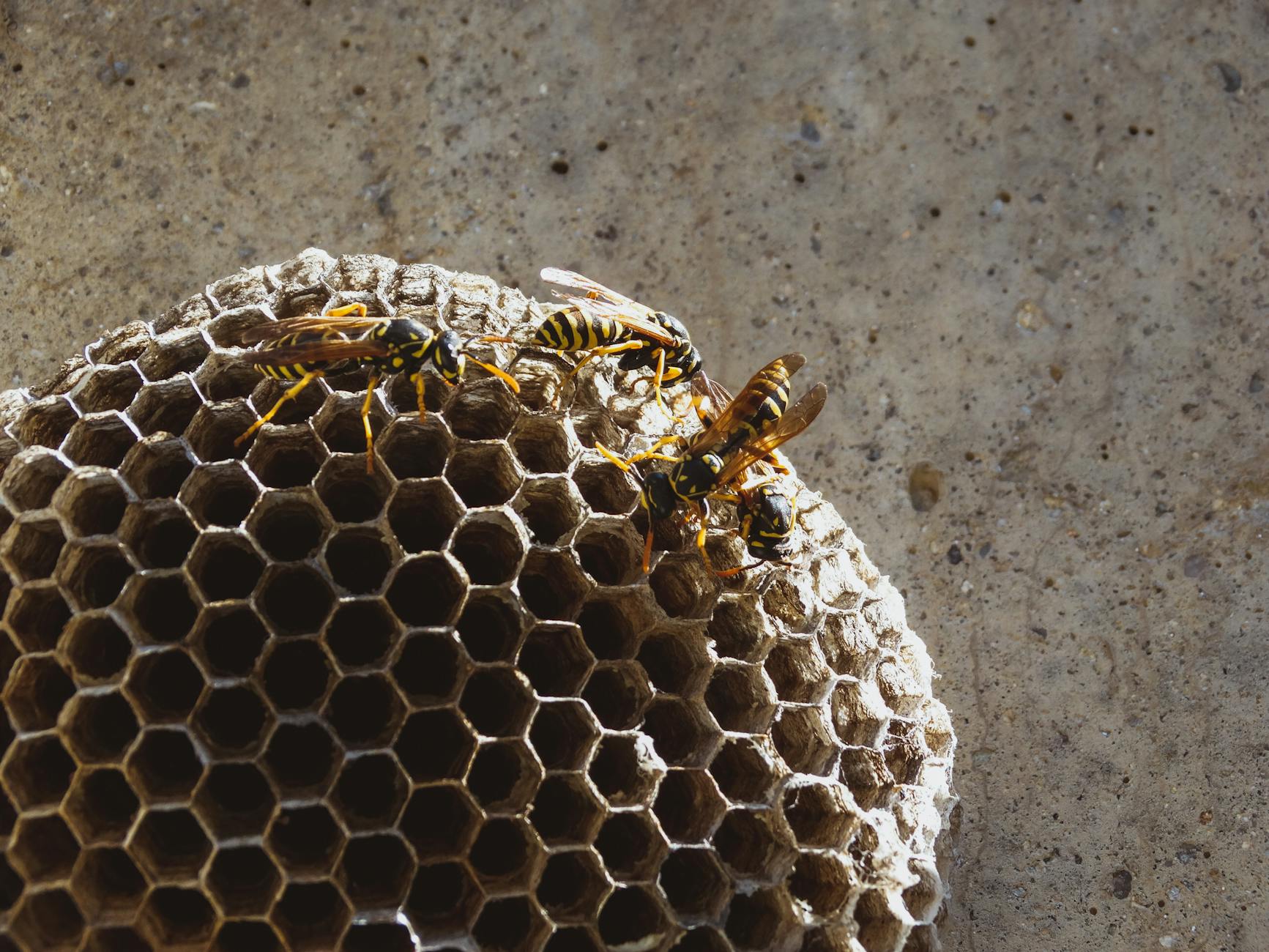
Paper wasp nests are open, umbrella-shaped structures often found under eaves, attics, or trees. Hornet nests are larger, enclosed, and commonly shaped like a football. Recognizing these differences tells you which species you are dealing with and how large the nest may grow.
How to Spot Wasp Nest Activity Inside Your Home
Wasps sometimes build nests inside wall voids and attics. You may hear faint buzzing behind drywall or notice wasps entering and exiting a gap along interior trim. Yellowjackets are a common cause of impacted wall void nests. If you see wasps indoors repeatedly, a hidden nest may already be growing within the structure.
Where Wasp Nest Activity Shows Up Around Homes
Outdoor nests appear in a range of locations. According to Purdue Extension, most yellowjacket species build subterranean nests in areas such as creek banks, lawns, and garden and flower beds. These ground nests share a similar internal architecture to baldfaced hornet nests but remain hidden below the surface, making them easy to miss until you walk over one.
Mud dauber nests turn up on rafters, under bridges, and along exterior walls. Baldfaced hornet nests hang from tree branches or building facades, often high enough that they go unnoticed until they reach a noticeable size.
Exterior Entry Points Wasps Use
Gaps in walls, eaves, and attics are common entry points. Wasps and hornets can squeeze through small openings to establish nests in sheltered cavities. Regularly inspecting and sealing these gaps helps reduce nesting opportunities. Pay attention to eaves and overhangs around your roofline, where nest-building activity often concentrates during warmer months.
Why Wasp Nest Problems Develop
Wasp nests start small in spring and can grow large by late summer. Understanding why nests develop and expand around your home helps you stay ahead of the problem before a colony reaches its peak population.
Outdoor Nesting Areas for Wasps
Social wasps build paper nests in a wide range of outdoor locations. A colony consists of an egg-laying queen and many sterile female workers that expand the nest throughout the season. According to Kansas State University Extension, the founding female starts with only a few cells in spring, and the colony grows quickly as workers help expand the papery nest and provide food.
Yellowjackets often nest in the ground, and bumble bees follow a similar pattern. These ground-level colonies can be difficult to spot until foot traffic or yard work disturbs them. Wasp nests are also commonly found under eaves or on buildings.
Food and Shelter That Attract Wasps
Paper wasps are caterpillar predators, so yards with active insect populations can draw nesting activity closer to your home. As colonies grow through summer, workers range farther looking for food. found under eaves as natural food sources dwindle, driving them to scavenge near human activity.
Sheltered spots along walls, attics, and gaps in eaves offer the protection wasps need to build and maintain a nest for the full season. A nest is used only during the season it is built, so each year new queens seek out fresh shelter.
How Wasps Move Around Homes
Early in the season, a founding female may relocate if her initial nest is disturbed. According to UC IPM, knocking down a newly started paper wasp nest will cause the founding female to go elsewhere to start again or join a neighboring nest as a worker. This means early-season activity near your home can shift to a new spot rather than disappear.
Social wasp colonies are annual and last only one season. However, new queens may attempt to build nests in or near the same location the following year, which can create recurring activity around the same areas of your home.
Trails and Entry Points Wasps Use
Wasps access homes through gaps in walls, eaves, and attics. Yellowjackets can establish nests inside wall voids, making them harder to detect until the colony is well developed. Sealing these openings helps reduce the chance of interior nesting.
A mishandled nest, particularly a yellowjacket colony, poses a serious sting risk. Disturbing an established nest can trigger defensive behavior, and nests near high-traffic areas deserve careful attention. Regularly inspecting common entry points around your home is a straightforward way to catch nesting activity while colonies are still small.
Risks From Large Wasp Nests
As a wasp nest grows larger, the risks it poses to your household increase. Understanding what those risks look like helps you decide when a nest needs attention and when it can be left alone.
Health Risks Linked to Wasp Nests
Paper nest wasps can sting if provoked, even though they do not aggressively defend their nests the way yellowjackets and other more social wasps do. According to Purdue Extension, when these wasps nest away from where humans live or work, they can actually be considered beneficial, and controls are not needed. The concern grows when a nest is attached to a high-traffic area of your home, such as an eave or doorway, where accidental contact is more likely.
Yellowjackets and European hornets present a higher sting risk because their colonies can grow large inside structures. The bigger the colony, the more defensive workers are present, and any disturbance near the nest entrance can trigger a response.
Property Damage From Wasp Nests
Some yellowjackets, typically the German yellowjacket, and the European hornet may build their colonies inside wall voids, attics, and sometimes basements, as Purdue Extension notes. Over time, a colony expanding inside these spaces can stress building materials. If a nest is left untreated and later abandoned, decaying biological material inside the structure can attract secondary pest issues.
The client guide notes that if nest removal inside a wall is declined, the homeowner is responsible for any future structural issues caused by decaying material. That makes early awareness worthwhile.
Food Areas and Wasp Nest Activity
As colonies reach peak population in late summer and fall, wasps become more aggressive in searching for food, often scavenging near human activity. Outdoor dining areas, uncovered garbage, and sugary drinks can draw foraging workers closer to your living spaces. Larger nests mean more foragers spreading out from the colony.
When to Look Closer at Wasp Nest Activity
A small paper nest attached to a structure by a single point and located well away from foot traffic may not need treatment. However, if you notice a nest growing near an entry door, on a low eave, or if you spot wasps entering and exiting a gap in your siding or soffit, the colony may be building inside the structure. Repeated wasp traffic around the same opening is a sign worth investigating before the colony grows further.
Professional Pest Control for Large Wasp Nests
When a wasp nest grows beyond a manageable size, professional pest control is often the safest path forward. Colonies can be large and are often located far from the entrance hole, deep into a structure. That hidden depth makes DIY removal risky and incomplete.
How to Reduce Attractants for Wasps
Preventing a nest from reaching its full potential size starts with limiting what draws wasps to your property. Remove exposed garbage and sugary drinks from outdoor areas. Regularly inspect eaves, attics, and wall gaps where wasps may begin building. According to Mississippi State University Extension, the only way to prevent large numbers of overwintering wasps in attic or building locations is to practice good, proactive exclusion.
Seal gaps in walls, eaves, and attics before nesting season begins. Paper wasp nests may not require treatment unless they are near people, so focus your prevention efforts on high-traffic areas around your home.
Why Wasp Nest Control Starts With Inspection
Inspection is the first step in any pest control plan because nest size and location determine the right approach. At Pest Pros of Michigan, a free site evaluation helps identify the pest species and pinpoint the nest. Colonies can sit deep within wall voids or underground, making a full inspection of the nest location, species, and access points essential before any treatment begins.
Yellowjackets, for example, are commonly found in ground nests, wall voids, or around foliage near the home. Knowing the nest type and placement helps a technician plan low-risk, targeted treatment.
What to Expect During Professional Wasp Nest Treatment
As Purdue Extension notes, protective gear and quick, efficient application is imperative when treating large colonies. Pest Pros of Michigan technicians wear bee suits and can treat eaves up to 25 feet high. Some spray products are designed to reach nests from 15 feet or more, which helps when distance is needed for safety.
Most nests show reduced activity within 24 to 48 hours, though some treatments may take up to two weeks to work through the entire colony. Residual activity from returning stragglers can continue during that window. If activity persists beyond two weeks, additional treatment may be needed.
What to Expect From a Wasp Nest Control Plan
Pest Pros of Michigan includes a three-month warranty on treated areas with each one-time treatment. For high-up nests, removal is often unnecessary because they degrade over time. However, nests inside a structure may need physical removal to prevent issues from decaying material.
New queens may attempt to build a nest in the same area the following year, since wasps do not reuse old nests but often choose nearby spots. Regular inspections and sealing entry points help reduce repeat nesting in the same location.
Bottom Line on Wasp Nest Size
Wasp nests can grow considerably over a single season, and colonies that build in wall voids or sheltered areas may expand far beyond what you can see from the outside. Because disturbing a large nest carries real sting risks, professional removal is the safer route. Sealing gaps in eaves, walls, and attics before nesting season starts is one of the best steps you can take to keep colonies from establishing on your property.
If you spot a nest growing near your home, contact Pest Pros of Michigan for a free site evaluation to determine the best course of action.
Frequently Asked Questions
Do Wasps Build a New Nest Every Year?
Wasps and hornets do not reuse old nests. Each spring, new queens build fresh nests, though they often choose locations near previous nesting sites. An old nest on your home does not mean it will be reoccupied, but the same area may attract a new colony the following year.
Why Are Wasps More Aggressive in Late Summer?
As colonies reach their peak population and natural food sources decline, wasps scavenge for food more intensely. This often brings them closer to outdoor dining areas, trash bins, and sugary drinks, increasing the chance of stings near your home.
What Should I Do If a Nest Is Inside My Walls?
Wall void nests can be large and located far from the visible entry hole, deep within the structure. Treatment may involve opening sections of drywall for removal.
How Long Does It Take for a Nest to Die After Treatment?
Most nests go inactive within 24 to 48 hours after treatment, though some may take up to two weeks for all activity to stop. Stragglers returning to the treated nest can cause residual activity during that window. If activity continues beyond two weeks, additional treatment may be needed.

 Serving Michigan since 2018
 Pest-free guarantee
 Small, local business
 10+ years of pest control experience
 President and CEO of Pest Pros of Michigan
 Resident of Michigan