Michigan has hundreds of beetle species, but a handful show up as consistent pest problems in homes, stored food, and trees. The ones that matter most to identify quickly are the Asian lady beetle, which overwinters indoors in large numbers; the drugstore beetle, which infests pantry goods and packaged items; carpet beetles, which damage fabric and natural fibers; and wood-boring beetles, which damage trees and structural wood. Getting the species right determines whether the response is a pantry cleanout, a fabric inspection, exterior sealing, or a call to a pest professional.
Key Takeaways
- Asian lady beetles enter Michigan homes every fall to overwinter and are identified by their orange to yellow coloring, variable black spots, and the black M-shaped marking behind the head.
- Drugstore beetles are small reddish-brown beetles about 2 to 3 mm long found near infested pantry goods. They can chew through many types of packaging to reach food.
- Carpet beetles damage wool, silk, leather, and dried animal products. Shed bristly larval skins in closets or under furniture are usually the first sign.
- Wood-boring beetles leave circular or oval exit holes in wood, frass that resembles fine sawdust, and sometimes sap staining on tree bark. The emerald ash borer specifically leaves S-shaped galleries under bark and D-shaped exit holes.
Quick Identification: Michigan’s Four Common Pest Beetles
Use this table to narrow down the species before reading the full identification sections below.
| Beetle | Size | Color | Key ID Feature | Where Found |
|---|---|---|---|---|
| Asian Lady Beetle | ~1/4 inch | Orange to yellow, variable black spots | Black M-shaped marking behind the head | Exterior walls in fall; wall voids, attics, windows indoors |
| Drugstore Beetle | 2–3 mm | Reddish-brown | Cylindrical body with grooved wing covers; attracted to light | Near pantry goods, windowsills, closets |
| Carpet Beetle (Varied) | 2–3 mm | White, brown, yellowish irregular scales | Bristly, carrot-shaped larvae; irregular holes in fabric | Closets, under furniture, ductwork, natural fiber items |
| Emerald Ash Borer | ~1/2 inch | Metallic green | D-shaped exit holes; S-shaped galleries under bark | Ash trees; not found indoors |
| Re-Infesting Wood Borers | Varies | Brown to black | Round exit holes; fine powdery frass near holes | Structural lumber, finished wood, wooden furniture |
The Asian Lady Beetle: Michigan’s Most Recognized Fall Invader
The Asian lady beetle is the beetle Michigan residents encounter most often indoors, and it’s frequently misidentified as a harmless native ladybug. MSU Extension has documented the species’ overwintering behavior in Michigan specifically, and the distinction from native lady beetles matters for deciding whether to treat.
Asian Lady Beetle Identification: The M-Marking Is the Key
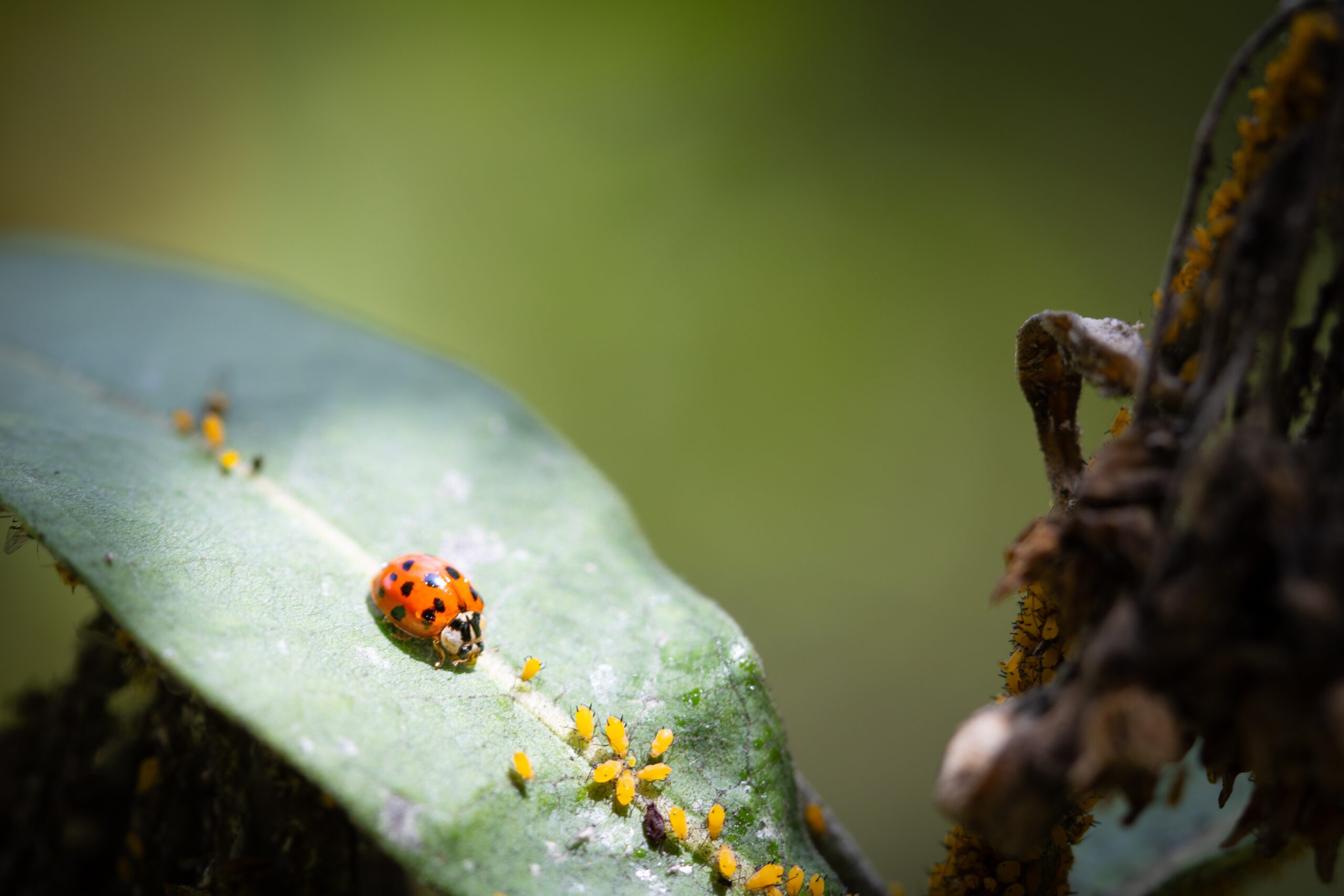
The multicolored Asian lady beetle (Harmonia axyridis) is oval-shaped, about a quarter inch long, and ranges in color from bright orange to dull yellow. The number of black spots varies from zero to 19. The most reliable identifying feature is a black M-shaped marking on the white area directly behind the head. Native ladybugs lack this marking. MSU Extension confirms this M-shaped pattern is what separates the Asian species from other Michigan lady beetles.
Why the Same Building Gets Invaded Every Fall
The species overwinters by entering buildings in large numbers through gaps around windows, doors, and siding. MSU Extension notes the beetles are attracted to light-colored buildings and the south-facing side of structures where warmth accumulates. They release a pheromone that draws more beetles to the same overwintering site, which is why the same building sees the same problem year after year. The beetles do not reproduce indoors, but large accumulations can trigger allergic reactions in sensitive individuals due to the dust produced by dead beetles in wall voids. They also bite occasionally and release a foul odor and staining when crushed.
The Drugstore Beetle: What’s in Your Pantry
The drugstore beetle is small, easy to miss, and able to infest a wider range of materials than most homeowners expect. Pest Pros of Michigan’s ACE-certified team documented an infestation traced to an overlooked box of dog biscuits that had been stored for over a year — the source wasn’t obvious until every item in the closet was inspected systematically.
Drugstore Beetle Identification: Small, Cylindrical, Drawn to Light
Drugstore beetles (Stegobium paniceum) are reddish-brown, cylindrical, and about 2 to 3 mm long. Fine grooves run along their wing covers, though these are only visible up close. They are attracted to light, which is why they frequently appear on windowsills or near lamps even when the infestation source is elsewhere in the home.
What They Infest and Where to Look
The species will infest grains, spices, dried herbs, flour, dried pet food, pharmaceuticals, and non-food materials including paper, books, and packaging. The infestation source is often a forgotten item in a cabinet or closet rather than recently purchased food. Finding the source requires systematically checking every stored item in the affected area, including things that have been there for months.
Carpet Beetles: Damage You Find After the Fact
Carpet beetle damage is almost always discovered well after the larvae have been feeding. The adults enter through windows and doors in spring and summer feeding on pollen outdoors, then lay eggs on natural fiber materials inside — wool, silk, leather, fur, and feathers — where the larvae feed undisturbed in dark, quiet areas.
Carpet Beetle Identification: Scales, Bristles, and Two Common Species
The varied carpet beetle (Anthrenus verbasci) and black carpet beetle (Attagenus unicolor) are the two species most commonly found in Michigan homes. Varied carpet beetles are small, about 2 to 3 mm, roughly round, with irregular white, brown, and yellowish scales. Black carpet beetles are slightly larger and uniformly dark brown to black. The larvae, the damaging stage, are covered in bristly hairs and are carrot-shaped.
Why Carpet Beetle Damage Appears Long After Entry
Damage shows up as irregular holes in wool, silk, leather, fur, feathers, and dried animal products including pet food and taxidermy. Shed larval skins are often the first sign, found in dark undisturbed areas like the backs of closets, under furniture, or in ductwork. Adults are often found on windowsills or near flowers well before any interior damage is visible, which is why their presence in spring and summer is worth noting even when no fabric damage has appeared yet.
Wood-Boring Beetles: Tree Damage and Structural Damage Are Two Different Problems
Wood-boring beetles in Michigan split into two distinct categories with different responses. Those attacking living trees, led by the emerald ash borer, require urgent action and in most cases a DNR report. Those attacking structural lumber and finished wood inside buildings require inspection and treatment of the affected wood, not tree removal.
The Emerald Ash Borer
The emerald ash borer (Agrilus planipennis) is a metallic green beetle about half an inch long that attacks all species of ash trees and has caused widespread ash mortality across Michigan. MSU Extension describes the key signs: S-shaped feeding galleries visible when bark is peeled back, D-shaped exit holes about an eighth of an inch wide, and woodpecker damage on the upper trunk as birds excavate for larvae. A suspected infestation should be reported through the Michigan Department of Natural Resources.
Re-Infesting Wood-Boring Beetles
Re-infesting wood borers, including powderpost beetle species and the old house borer, attack already-cut and processed wood in structures rather than living trees. They leave small circular exit holes and fine powdery frass. Pest Pros of Michigan’s commercial pest control page lists re-infesting wood-boring beetles as a target pest in their wood-destroying insect inspections.
How to Tell the Signs Apart From Other Wood Damage
Exit holes from wood-boring beetles are round to oval with clean edges. Carpenter ant damage looks different: no exit holes, just galleries excavated along the grain. Weathering and mechanical damage produces irregular splits and cracks rather than discrete holes. Fine frass poured out near holes is the clearest indicator of insect activity rather than any other cause.
When to Call Pest Pros of Michigan
Call us when you have identified Asian lady beetles entering the home repeatedly through the same points, when a pantry infestation has a source you cannot locate, when fabric or stored materials are showing unexplained damage, or when you suspect wood-boring beetle activity in structural wood. Getting the species right before treating saves time and prevents the wrong approach from being applied to the wrong pest.
Professional service makes sense when:
- Asian lady beetles are entering in large numbers and exterior sealing hasn’t resolved the entry point.
- A pantry infestation has continued after removing obviously infested items and you cannot locate the source.
- You are finding fabric damage, shed larval skins, or the beetles themselves in multiple areas of the home.
- You have found exit holes, frass, or gallery damage in structural wood and want the species confirmed before acting.
- A tree on your property is showing signs of wood-borer activity and you need the species identified.
Pest Pros of Michigan provides beetle control and property damage pest services for homes and businesses across Michigan, including wood-destroying insect inspections, stored product beetle identification, and treatment for overwintering beetle invasions.
Schedule a Beetle Inspection in Michigan
If you have found beetles in your home and want a confirmed identification before deciding on a response, we can inspect the property, locate the source, and recommend a targeted approach based on what you actually have.
Contact Pest Pros of Michigan to request a beetle inspection in Michigan.
Frequently Asked Questions
How do I tell an Asian lady beetle from a native ladybug?
Look for the black M-shaped marking on the white area directly behind the head. This marking is present on Asian lady beetles and absent on native species. Color and spot count vary widely on Asian lady beetles and are not reliable identifiers on their own.
I found small brown beetles in my pantry. What are they likely to be?
The most common pantry beetles in Michigan are drugstore beetles and rice weevils. Drugstore beetles are reddish-brown, cylindrical, about 2 to 3 mm, and attracted to light. Finding the source requires checking all stored goods, including items that have been in the cabinet for months. Sealed, rigid containers for dry goods reduce the risk of a repeat infestation after the source is removed.
What do wood-boring beetle exit holes look like?
Exit holes from wood-boring beetles are round to oval with clean edges, typically between an eighth and a quarter inch in diameter depending on species. Fine powdery frass near the holes is a reliable secondary sign. Emerald ash borer exit holes are distinctly D-shaped, which distinguishes them from the round holes left by powderpost beetles and other wood borers.
Are Asian lady beetles dangerous to people or pets?
Asian lady beetles are not medically significant to people. They can bite, producing a minor irritation, and release a foul-smelling fluid that stains surfaces when crushed. Large accumulations of dead beetles in wall voids can produce dust that triggers allergic reactions in sensitive individuals. They can cause digestive problems in dogs and cats if consumed in quantity, so reducing their presence around pet areas is advisable.

 Serving Michigan since 2018
 Pest-free guarantee
 Small, local business
 10+ years of pest control experience
 President and CEO of Pest Pros of Michigan
 Resident of Michigan